

A good router for a high-demand home network supports the latest Wi-Fi standards like Wi-Fi 6 for faster speeds and better performance with multiple devices. It should also have advanced security with protocols like WPA3 and regular firmware updates to protect your data. Features like MU-MIMO and dual- or tri-band options help handle multiple streams efficiently, while mesh capabilities expand coverage. Keep exploring to find out which features will keep your network fast, secure, and reliable.

Prime made for students and young adults
- Fast, free delivery for dorm and study essentials
- Prime Video and Amazon Music included
- Member-only deals
Key Takeaways
- Supports Wi-Fi 6 (802.11ax) for higher speeds, lower latency, and efficient performance in crowded environments.
- Includes advanced security protocols like WPA3 and regular firmware updates for enhanced protection.
- Features MU-MIMO technology to handle multiple data streams simultaneously without speed reduction.
- Offers dual- or tri-band capabilities and mesh compatibility for optimal coverage and reduced congestion.
- Provides robust hardware with high throughput, strong coverage, and additional features tailored for high-demand households.
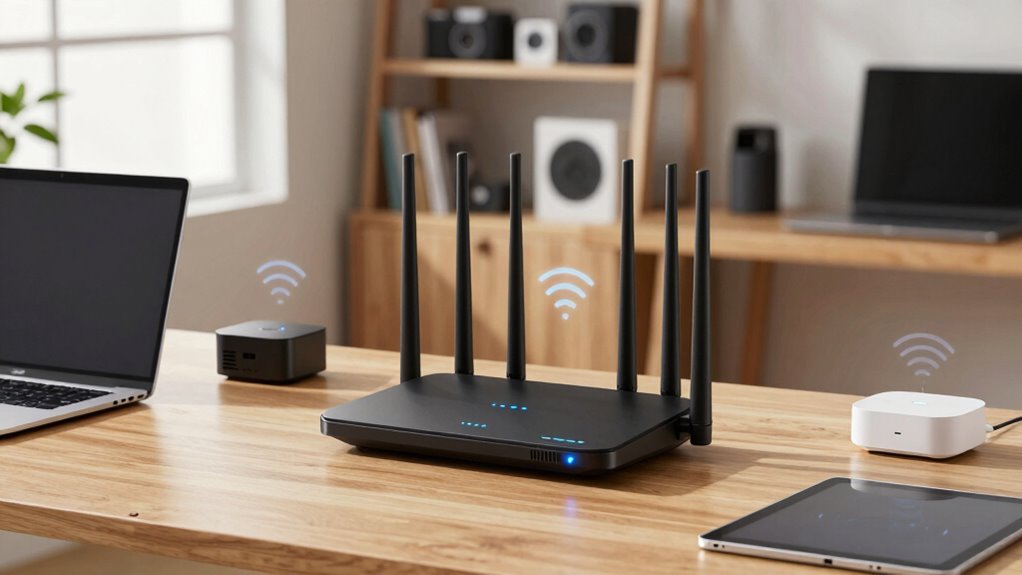
Are you struggling with slow internet speeds and constant disconnects in your busy home? If so, your router might not be up to the task. High-demand home networks require a device that can handle multiple devices simultaneously while providing fast, reliable connections. One of the most important factors to contemplate is the router’s wireless standards. These standards—such as Wi-Fi 5 (802.11ac) and the newer Wi-Fi 6 (802.11ax)—determine how quickly your network can transmit data and how many devices it can support efficiently. Wi-Fi 6, for instance, offers higher speeds, lower latency, and improved performance in crowded environments, making it ideal for homes with many smart devices, streaming services, and gaming consoles.
Upgrade to Wi-Fi 6 for faster speeds and better performance in crowded smart home environments.
Beyond speed, a good router for a high-demand home also needs robust security protocols. Your network’s security isn’t just about keeping out hackers; it’s also about protecting your personal data and preventing unauthorized access to your devices. Modern routers support advanced security protocols like WPA3, which encrypts your wireless communications more effectively than previous standards. When shopping for a router, make sure it offers the latest security features to guard your network against evolving cyber threats. It’s equally important to change default passwords and keep your router’s firmware updated regularly to patch vulnerabilities. Additionally, wireless security protocols play a crucial role in safeguarding your network’s integrity.
Another key aspect is the router’s ability to handle multiple streams of data simultaneously. Look for features like MU-MIMO (Multi-User, Multiple Input, Multiple Output), which allows your router to communicate with several devices at once without sacrificing speed. This technology prevents bottlenecks when multiple family members are streaming videos, playing online games, or working from home. Additionally, dual-band or tri-band routers help distribute your devices across different frequency bands, reducing congestion and improving overall performance.
Finally, evaluate the router’s coverage area and its ability to support mesh networking if your home is large or has thick walls. High-demand homes often require a broader range to ensure every corner receives a strong signal. Mesh systems allow multiple units to work together seamlessly, expanding coverage without sacrificing speed or stability. When selecting a router, prioritize those with strong performance specifications, modern standards, and security features to create a network that can handle your busy household’s demands effortlessly.
Wi-Fi 6 router for high-demand home
As an affiliate, we earn on qualifying purchases.
As an affiliate, we earn on qualifying purchases.
Frequently Asked Questions
How Often Should I Update My Router’s Firmware?
You should update your router’s firmware as often as the manufacturer releases new updates, ideally every few months. Regular firmware updates improve router stability, security, and performance, which are essential for a high-demand home network. Don’t wait too long—outdated firmware can leave your network vulnerable or cause connectivity issues. Check your router’s settings or the manufacturer’s website regularly to stay current and guarantee your network runs smoothly.
Can a Router Support Multiple Devices Simultaneously Without Slowdown?
Yes, a good router can support multiple devices simultaneously without slowdown, especially if it offers bandwidth management and device prioritization features. These tools help allocate bandwidth efficiently, ensuring high-demand devices get the speed they need while preventing lag for others. By setting priorities and managing traffic, you keep your network running smoothly, even with several devices connected at once, making your high-demand home network more reliable.
What Security Features Should I Look for in a High-Demand Router?
You should look for a router with strong security features like advanced encryption protocols, such as WPA3, to protect your network from unauthorized access. Parental controls are essential for managing content and screen time for family members. Guarantee the router offers frequent firmware updates, a built-in firewall, and guest networks, which all bolster your home network’s defenses against cyber threats and keep your connected devices safe.
How Does Router Placement Affect Network Performance?
Think of your router as the heart of your home network, pumping essential signals. Proper placement is key—keep it elevated and central to minimize wireless interference and maximize signal strength. If it’s tucked away in a closet or near thick walls, signals weaken, causing sluggish performance. Position it wisely to guarantee your devices receive strong, consistent connections, keeping your high-demand home running smoothly and efficiently.
Is a Mesh Network Better Than a Traditional Router for Busy Homes?
A mesh network often outperforms traditional routers in busy homes because it provides better wireless coverage and reduces signal interference. With multiple nodes, it guarantees consistent connection throughout your home, eliminating dead zones. Unlike a single router, a mesh system dynamically adjusts to network demands, handling multiple devices smoothly. If you want reliable internet everywhere, a mesh network is generally the smarter choice for high-demand households.
mesh Wi-Fi system for large house
As an affiliate, we earn on qualifying purchases.
As an affiliate, we earn on qualifying purchases.
Conclusion
In the end, choosing the right router is like wielding a magic wand that keeps your digital kingdom running smoothly. With the right features, you can conquer the chaos of connected devices and streaming marathons. Remember, a good router isn’t just a device—it’s your gateway to seamless, high-demand home living. So, pick wisely, and let your network be as legendary as the tales of old, always ready to serve your needs effortlessly.
As an affiliate, we earn on qualifying purchases.
dual-band tri-band Wi-Fi 6 router
As an affiliate, we earn on qualifying purchases.
As an affiliate, we earn on qualifying purchases.
Fall Picks
fall essentials
As an affiliate, we earn on qualifying purchases.