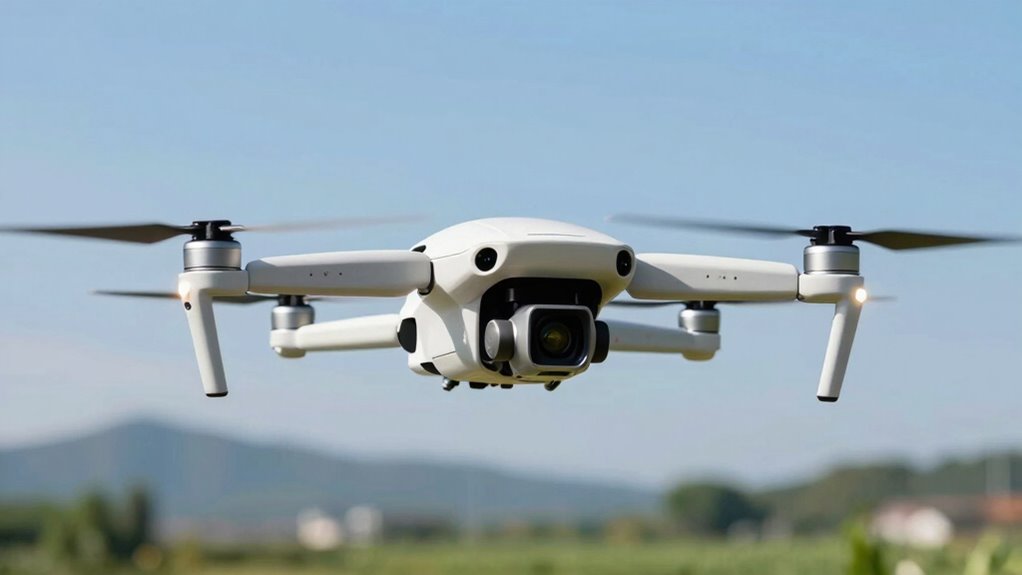

Understanding drone specs helps you find the right model for your needs. Key features include camera stabilization for smooth footage and safety functions like obstacle avoidance and GPS stability to prevent crashes. Flight performance metrics, such as flight time, altitude, and range, show how well the drone suits your environment. Battery capacity impacts flight duration and durability, while weather resistance guarantees you can fly in various conditions. Keep exploring these details to make an informed choice.

Prime made for students and young adults
- Fast, free delivery for dorm and study essentials
- Prime Video and Amazon Music included
- Member-only deals
Key Takeaways
- Understand how camera stabilization and gimbals improve footage quality and smoothness during flight.
- Learn about safety features like obstacle sensors and GPS for collision avoidance and stable positioning.
- Consider battery capacity and durability to determine flight time, environmental resistance, and overall performance.
- Review flight metrics such as range, altitude, and flight time to match drone capabilities with your needs.
- Recognize additional features like weather resistance and sensor quality that enhance safety and usability.
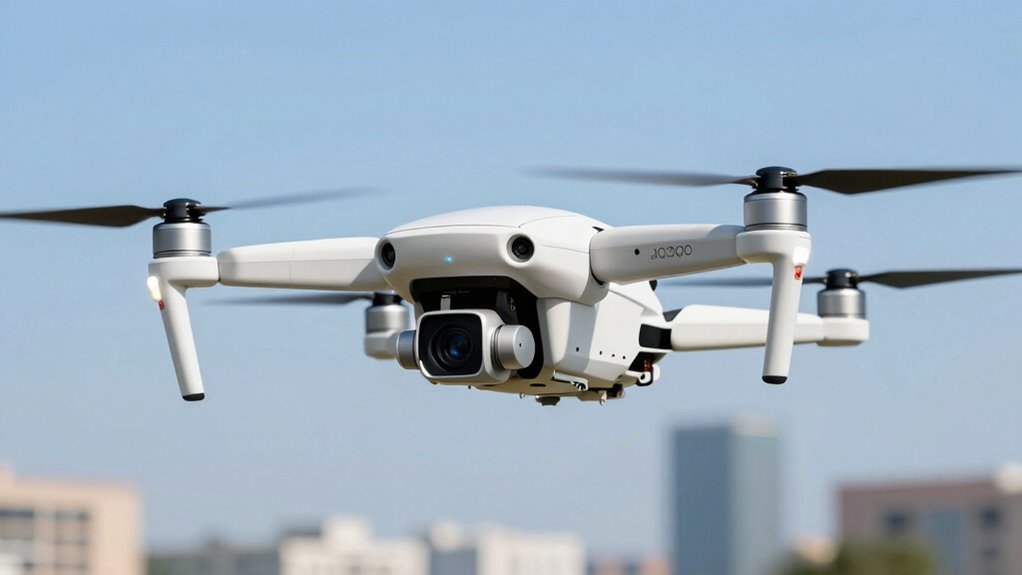
Understanding drone specifications can seem intimidating at first, but knowing what each number and term means helps you make smarter choices. When you’re looking at different models, details like camera stabilization and flight safety features are vital to consider, especially if you want high-quality footage and a secure flying experience. Camera stabilization refers to how well the drone can keep its camera steady during flight, which directly impacts the clarity and smoothness of your videos and photos. Drones with advanced stabilization systems, such as gimbal mechanisms, offer much smoother footage, even when the drone encounters wind or maneuvering challenges. This feature is fundamental if you’re aiming for professional-looking shots or just want to avoid shaky footage that can ruin your footage.
Camera stabilization ensures smooth, high-quality footage even in challenging flying conditions.
Flight safety, on the other hand, involves the drone’s ability to avoid accidents and operate reliably. Look for specifications like obstacle avoidance sensors, GPS stability, and return-to-home functions. Obstacle avoidance sensors help prevent crashes by detecting objects around the drone and automatically adjusting its course. GPS stability ensures the drone maintains a fixed position, even in windy conditions, which makes controlling it easier and safer. Return-to-home features allow the drone to navigate back to its takeoff point automatically if it loses connection or runs low on battery, reducing the risk of losing your drone altogether. Additionally, obstacle avoidance sensors are an essential safety feature that can significantly reduce the likelihood of crashes during flight. Moreover, understanding the battery capacity can help you plan your flight sessions more effectively, as it influences not only flight duration but also the overall weight of the drone, which in turn affects maneuverability. Being aware of these specifications can also assist in assessing the drone’s overall durability and suitability for different environments. It’s also helpful to consider weather resistance, especially if you plan to fly in varying conditions, as some drones are built to withstand elements like wind or light rain.
When analyzing drone specs, pay attention to the flight time, which indicates how long you can fly before needing a recharge. Longer flight times give you more flexibility for capturing footage without frequent interruptions. Also, consider the maximum flight altitude and range, especially if you plan to fly in larger areas or want to capture expansive landscapes. These numbers tell you how high the drone can go and how far it can travel from you, respectively.
Battery capacity and charging time are also important. A higher-capacity battery usually means a longer flight time, but it might also add weight, affecting maneuverability. Faster charging times can help maximize your flying sessions, letting you get back in the air more quickly after recharging. By understanding these specifications — from camera stabilization to flight safety features — you’ll be better equipped to choose a drone that matches your skill level and your intended use, whether it’s casual photography or professional videography.
As an affiliate, we earn on qualifying purchases.
Frequently Asked Questions
How Long Do Drone Batteries Typically Last per Charge?
Typically, drone batteries last between 20 to 30 minutes per charge, depending on the drone’s size and usage. You’ll notice the battery life varies with flight conditions and camera load. Charging time usually takes about 1 to 2 hours, so plan accordingly. To maximize your flying time, consider carrying spare batteries and keeping them charged. Always monitor your drone’s battery level to avoid unexpected power loss during flights.
Can Drones Fly in Rainy or Snowy Weather Conditions?
Drones generally can’t handle rainy or snowy weather well because their weather resistance is limited. Moisture can damage internal components, and snow can cause rotor issues, affecting flight stability. If you want to fly in such conditions, look for drones with weather resistance features like waterproof casings and sealed electronics. Always check your drone’s specifications before flying in adverse weather to prevent damage and guarantee safe, stable flights.
What Is the Maximum Altitude a Drone Can Reach Legally?
You can reach a maximum altitude of 400 feet legally, which is like climbing a tower twice as tall as the Statue of Liberty! Federal Aviation Administration (FAA) rules set altitude limits to keep drones safe and within sight. Always stay within these legal restrictions, as exceeding them can lead to fines or drone confiscation. Remember, flying higher isn’t worth risking legal trouble or safety concerns.
How Do I Update the Firmware on My Drone?
To update your drone’s firmware, first check your drone’s compatibility with the latest firmware version, ensuring it’s compatible with your specific model. Connect your drone to your computer or mobile device via the manufacturer’s app or software, then follow the on-screen instructions for firmware updates. Make sure your drone is fully charged and stays connected during the process to avoid any issues. Regular firmware updates improve performance and add new features.
Are Spare Parts Widely Available for All Drone Brands?
Spare parts for drones are like a well-stocked toolbox—some brands keep plenty on hand, while others make it harder to find what you need. When it comes to drone repair, spare part availability varies widely across brands. Major manufacturers often offer extensive replacement options, but lesser-known brands might have limited supplies. To avoid delays, research your drone’s brand support and consider third-party suppliers for essential parts.
drone obstacle avoidance sensors
As an affiliate, we earn on qualifying purchases.
As an affiliate, we earn on qualifying purchases.
Conclusion
So, now you’re all set to impress your friends with your drone smarts—who knew specs could be so exciting? Just remember, understanding those numbers isn’t a guarantee you’ll master the skies or avoid crashing into a tree. But hey, at least you’ll look like a tech genius while trying. Happy flying, and may your drone’s battery last longer than your patience for tangled propellers!
As an affiliate, we earn on qualifying purchases.
As an affiliate, we earn on qualifying purchases.
Halloween Picks
halloween
As an affiliate, we earn on qualifying purchases.