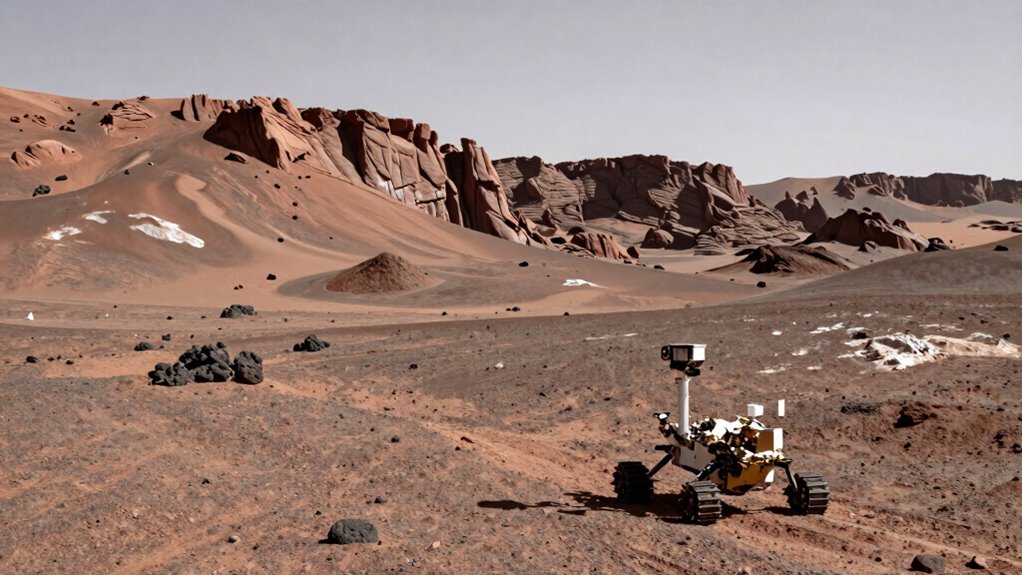

Mars fascinates you because its mysterious geology and history spark curiosity about past conditions and potential life. Its rust-colored surface, ancient riverbeds, and volcanoes reveal stories about a once thicker atmosphere and liquid water. You’re intrigued by the challenges of transforming such a planet and how science works to overcome them. By exploring Mars’s natural features, you discover clues that could shape humanity’s future. If you keep exploring, you’ll uncover even more about this enthralling world.

Prime made for students and young adults
- Fast, free delivery for dorm and study essentials
- Prime Video and Amazon Music included
- Member-only deals
Key Takeaways
- Mars’s unique geology and history offer clues about planetary evolution and potential past life.
- Its surface features, like volcanoes and ancient riverbeds, inspire curiosity and scientific investigation.
- The challenge of terraforming and environmental modification sparks innovation and exploration efforts.
- Studying Mars’s mineral composition and geological history helps identify resources for future missions.
- The mystery of whether life ever existed on Mars captivates both scientists and the public’s imagination.
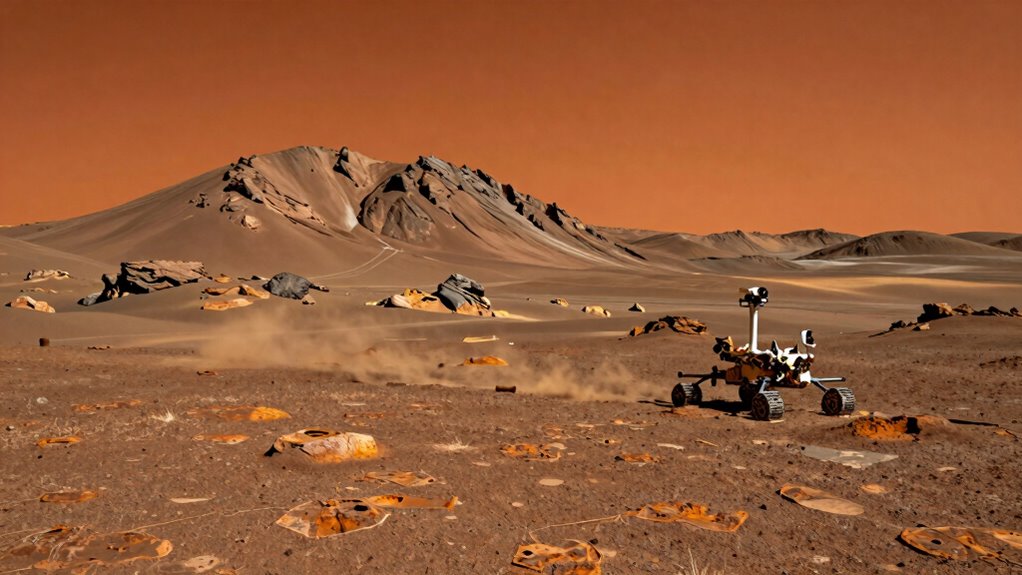
Mars has long captivated both scientists and the public because it represents a tantalizing possibility: that life once existed or could someday exist there. This curiosity drives space agencies and private companies alike to explore the Red Planet, fueling a desire to understand its mysteries. You might wonder what makes Mars so compelling, and a big part of that fascination comes from the planet’s unique geology and the formidable challenges of transforming it into a livable environment. The process of terraforming—changing Mars’s environment to support human life—poses complex hurdles, not least because of its distinctive geology. Its surface is riddled with rust-colored dust, ancient riverbeds, and towering volcanoes, all telling stories of a planet that once had liquid water and a thicker atmosphere. These geological features hint at the planet’s potential, but they also pose significant obstacles in any effort to modify its environment. You need to understand the planet’s geology to figure out how to make it more Earth-like. For example, Mars’s thin atmosphere is mostly carbon dioxide, which makes it impossible for humans to breathe and difficult for water to stay liquid. To terraform it, you’d have to find ways to thicken the atmosphere and increase surface temperatures, but the planet’s geology complicates this. The presence of minerals and frozen water beneath the surface offers some hope, yet accessing and utilizing these resources isn’t straightforward. You also face challenges related to Mars’s crust, which is composed of volcanic and sedimentary rocks that influence how heat and gases interact with the surface. The planet’s volcanic activity, although now mostly dormant, provides clues about its past and potential future. Its geology influences how you might engineer the environment, from releasing gases trapped underground to creating a magnetic field that can shield the planet from solar radiation. These endeavors are not easy—they demand a deep understanding of Martian geology to avoid unintended consequences. As you think about terraforming, the planet’s geological history reminds you that transforming Mars isn’t just about adding water or oxygen; it’s about working with its natural features and limitations. Understanding Martian geology is essential for developing effective strategies and ensuring the sustainability of future habitats. Additionally, technological advancements are continually improving our ability to analyze planetary geology remotely, making exploration safer and more efficient. Moreover, ongoing research into Mars’s mineral composition helps scientists identify the most accessible resources for future exploration. Studying the planet’s geological history reveals how its surface and atmosphere have changed over time, guiding future efforts. The fascination comes from the challenge: can you, with enough ingenuity, adapt a world that’s fundamentally different from Earth? Mars continues to draw your attention because it’s a puzzle—an alien world with clues etched in its rocks and terrain, waiting for you to decode them. That’s why ongoing geological research is crucial for future exploration and potential habitation efforts, as it helps reveal how best to work with the planet’s natural features. This blend of scientific mystery and technological challenge keeps both scientists and the public captivated, inspiring dreams of a future where humans might call Mars home.
As an affiliate, we earn on qualifying purchases.
Frequently Asked Questions
Could Mars Ever Support Human Life Permanently?
Mars could support human life permanently someday, but it’s a complex challenge. Terraforming possibilities involve warming the planet and creating a breathable atmosphere, though it’s still theoretical. You’d also need to take into account human adaptation—how people adjust to low oxygen, radiation, and extreme temperatures. While technology advances, making Mars habitable remains uncertain. Still, with continued efforts, permanent human presence on Mars might become a reality in the future.
What Are the Biggest Challenges in Mars Colonization?
The biggest challenges in Mars colonization include overcoming terraforming obstacles, like creating a sustainable atmosphere and stable water sources, and dealing with radiation hazards from space. You’ll need advanced technology to shield colonists from harmful radiation and develop methods to modify Mars’ environment. Without solving these issues, establishing a permanent, safe human presence on Mars remains a significant hurdle, requiring innovation and persistent effort.
How Does Mars’ Climate Compare to Earth’s?
Imagine Mars as a distant, frozen desert, much colder than Earth. Its thin Martian atmosphere offers little warmth, with temperatures often plummeting well below freezing. You’d find polar ice caps, composed of water and dry ice, similar to Earth’s polar regions but far more extreme. Unlike Earth’s balanced climate, Mars’s environment is harsh, arid, and inhospitable, making it a challenging, yet fascinating, frontier for exploration.
Are There Any Signs of Past Life on Mars?
Yes, there are signs of past life on Mars. You should know that scientists have found fossil evidence of ancient microbes in Martian rocks, suggesting that life once existed there. These fossils reveal microbial structures resembling those on Earth, hinting at a once-habitable environment. Ongoing research continues to explore this possibility, making Mars a fascinating place that might hold clues to the origin of life beyond our planet.
What Technological Advancements Are Needed for Mars Exploration?
To explore Mars effectively, you’ll need advancements in robotics and terraforming challenges. Imagine a rover that autonomously navigates harsh terrains, collecting samples and analyzing data in real-time—this technology is essential. Developing sustainable life support systems and efficient propulsion methods will make crewed missions feasible. As these innovations emerge, they’ll turn the dream of colonizing Mars into reality, bringing the red planet closer to human reach.
As an affiliate, we earn on qualifying purchases.
Conclusion
So, next time you stare up at the night sky, remember that Mars isn’t just a dusty red dot—it’s the universe’s way of teasing us with hope, mystery, and just enough danger to keep us hooked. While scientists tirelessly chase the dream of colonization, the rest of us can sit back and marvel at humanity’s eternal obsession with turning a distant, lifeless planet into our next great adventure. Because, really, who needs stability when you’ve got Mars?
As an affiliate, we earn on qualifying purchases.
As an affiliate, we earn on qualifying purchases.
Halloween Picks
halloween
As an affiliate, we earn on qualifying purchases.