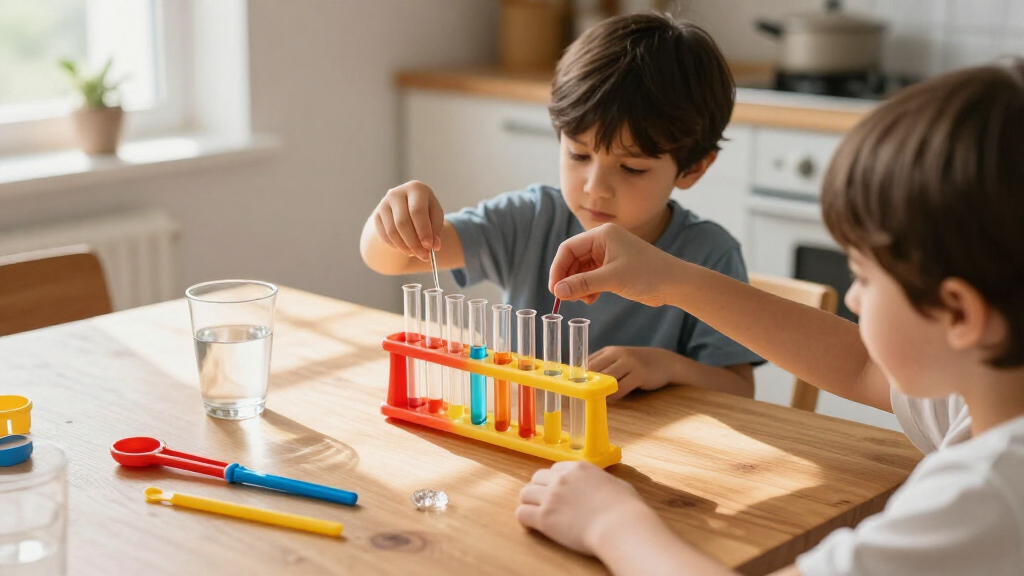

Kids’ educational chemistry sets range from gentle preschool activities to large experiment collections, so the right pick depends on a child’s age, adult supervision, and appetite for repeat experiments. I’d choose the National Geographic Chemistry Set with 45 Experiments as the best overall starting point for school-age kids, while the Thames & Kosmos Kids First Chemistry Set suits younger beginners and the UNGLINGA 250+ Science Experiments Kit stands out for sheer variety. The main tradeoff is not simply experiment count: a focused kit may be easier to use, while a broad set can offer more activities but span several science topics. Presentation also matters, since magic-themed kits prioritize surprising demonstrations over a traditional lab experience. Read on for the full comparison and help matching a set to your child.

Prime made for students and young adults
- Fast, free delivery for dorm and study essentials
- Prime Video and Amazon Music included
- Member-only deals
Key Takeaways
- The 45-experiment National Geographic Chemistry Set is my best overall pick because it offers a more focused chemistry experience than broad science bundles while still giving school-age learners a range of activities.
- Age fit separates beginner kits from larger sets. Thames & Kosmos Kids First and Learning Resources’ preschool and primary lab options are geared toward early exploration, not the same kind of independent chemistry work as kits aimed at ages eight and up.
- High experiment counts do not always mean deeper chemistry. UNGLINGA’s 250+ and 210-experiment kits promise breadth, but buyers should check whether the activities are chemistry-focused or spread across science subjects.
- Magic-themed sets trade lab structure for performance. National Geographic’s Science Magic Kit and Magic Chemistry Set can make demonstrations memorable, while a conventional chemistry set is a closer match for children who want to follow experiments and observe reactions.
- Specialized formats serve different interests. Ooze Labs centers the experience around a chemistry station, while Beaker Creatures adds collectible-style play; these can be engaging, but they are narrower choices than a general experiment set.
| Thames & Kosmos Kids First Chemistry Set |  | Best for Core Chemistry Foundations | Brand: Thames & Kosmos | Age range: 8–15 years | Educational objective: STEM | VIEW LATEST PRICE | See Our Full Breakdown |
| National Geographic Chemistry Set with 45 Experiments for Kids Ages 8 and Up |  | Best for Spectacular Chemistry Activities | Brand: National Geographic | Recommended age: 8 years and up | Listed experiment count: 45 | VIEW LATEST PRICE | See Our Full Breakdown |
| National Geographic Science Magic Kit for Kids |  | Best for Science-Shy Performers | Brand: Blue Marble | Age range: 8 years and up | Activities: 20 included experiments and 85+ additional ideas | VIEW LATEST PRICE | See Our Full Breakdown |
| Learning Resources Rainbow Reactions Preschool Science Lab |  | Best for Preschool Chemistry Play | Brand: Learning Resources | Recommended age: 4–10 years | Piece count: 14 | VIEW LATEST PRICE | See Our Full Breakdown |
| UNGLINGA 250+ Science Experiments Kit for Kids |  | Best for Maximum Activity Variety | Brand: UNGLINGA | Recommended age: 8 years and up | Number of experiments: 250+ | VIEW LATEST PRICE | See Our Full Breakdown |
| Discovery Radical Reactions Science Kit, 31 Chemistry Experiments for Kids Ages 8+ |  | Best for Guided Variety | Total activities: 31 | Guided kit experiments: 16 | Bonus DIY experiments: 15 | VIEW LATEST PRICE | See Our Full Breakdown |
| National Geographic Magic Chemistry Set: 10 Science Tricks for Kids Ages 8–12 |  | Best for Chemistry-as-Entertainment | Brand: Blue Marble | Recommended age: 8 years and up | Experiments: 10 | VIEW LATEST PRICE | See Our Full Breakdown |
| Ooze Labs Chemistry Station Experiment Set |  | Best for a Dedicated Mini Lab | Brand: Thames & Kosmos | Recommended age: 6 years and up | Number of pieces: 57 | VIEW LATEST PRICE | See Our Full Breakdown |
| National Geographic Junior Chemistry Set with 50 Experiments |  | Best for Younger Beginners | Brand: Blue Marble | Recommended age: 4 years and up | Experiments: 50 | VIEW LATEST PRICE | See Our Full Breakdown |
| National Geographic Amazing Chemistry Set with 100+ Experiments |  | Best for Household-Supply Experiment Ideas | Brand: Blue Marble | Recommended age: 8 years and up | Kit-based experiments: 15 | VIEW LATEST PRICE | See Our Full Breakdown |
| Kids First Science Kit: Chemistry Experiment Set |  | Best for Early Chemistry Concepts | Brand: Thames & Kosmos | Recommended age: 5–10 years | Experiments: 12 | VIEW LATEST PRICE | See Our Full Breakdown |
| Playz Extreme Chemistry Educational Science Kit for Kids Ages 8–12 |  | Best for Repeat Experiment Variety | Brand: Playz | Age range: 8 years and up | Experiments: 52+ | VIEW LATEST PRICE | See Our Full Breakdown |
| Learning Resources Beaker Creatures Liquid Reactor Super Lab | 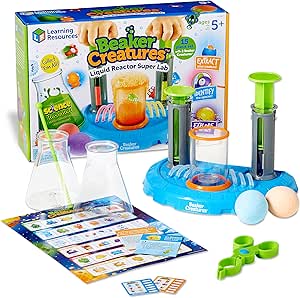 | Best for Mystery-Reaction Play | Brand: Learning Resources | Age range: 5–8 years | Number of pieces: 15 | VIEW LATEST PRICE | See Our Full Breakdown |
| UNGLINGA 210-Experiment Science Kit for Kids |  | Best for Cross-Subject Experiment Range | Brand: UNGLINGA | Experiments: 210+ | Recommended age: 8 years and up | VIEW LATEST PRICE | See Our Full Breakdown |
| Learning Resources Primary Science Lab Set |  | Best for Preschool Lab Play | Brand: Learning Resources | Recommended age: 3 years and up | Pieces: 22 | VIEW LATEST PRICE | See Our Full Breakdown |
| kids educational chemistry set | Brand | Recommended age |
|---|---|---|
| Thames & Kosmos Kids First Che | Thames & Kosmos | — |
| National Geographic Chemistry | National Geographic | 8 years and up |
| National Geographic Science Ma | Blue Marble | — |
| Learning Resources Rainbow Rea | Learning Resources | 4–10 years |
| UNGLINGA 250+ Science Experime | UNGLINGA | 8 years and up |
| Discovery Radical Reactions Sc | — | 8 years and up |
| National Geographic Magic Chem | Blue Marble | 8 years and up |
| Ooze Labs Chemistry Station Ex | Thames & Kosmos | 6 years and up |
| National Geographic Junior Che | Blue Marble | 4 years and up |
| National Geographic Amazing Ch | Blue Marble | 8 years and up |
| Kids First Science Kit: Chemis | Thames & Kosmos | 5–10 years |
| Playz Extreme Chemistry Educat | Playz | — |
| Learning Resources Beaker Crea | Learning Resources | — |
| UNGLINGA 210-Experiment Scienc | UNGLINGA | 8 years and up |
| Learning Resources Primary Sci | Learning Resources | 3 years and up |
More Details on Our Top Picks
Thames & Kosmos Kids First Chemistry Set
I’d choose the Thames & Kosmos Kids First Chemistry Set for families who want activities tied directly to foundational chemistry, rather than a broad collection of science themes. Its experiments introduce acids and bases, chromatography, crystallization, and carbon dioxide, while the 48-page illustrated manual gives children and supervising adults a shared guide. Compared with the National Geographic Chemistry Set, which emphasizes showy activities such as a volcano, geyser, and rocket launch, this kit has a more focused chemistry curriculum. That focus suits learners who want to see how different concepts work, but it offers fewer listed experiments. The count is also inconsistent—one description says 25 and another says 27—and some activities need household materials. I’d pick it for guided learning, not for a kit promising a precise activity count or all-in-one supplies.
Pros:- Covers several core chemistry topics, including acids and bases and chromatography.
- Full-color, 48-page manual supports guided activities with an adult.
- Uses common household materials alongside the included equipment.
Cons:- Experiment count is inconsistent across the product information: 25 or 27.
- Some activities require household materials that are not included.
Best for: Families with children ages 8–15 who want adult-guided activities centered on foundational chemistry concepts.
Not ideal for: Buyers who want every experiment’s materials included or need a consistent, clearly stated activity count.
- Brand:Thames & Kosmos
- Age range:8–15 years
- Educational objective:STEM
- Experiment count:25 listed; manufacturer description also mentions 27
- Instruction manual:48-page, full-color
- Language:English
- Model number:642921
- Manufacturer warranty:30 days against manufacturer defects
Our verdict“Choose this set for a focused, manual-led introduction to chemistry; pick the National Geographic Chemistry Set instead for more spectacle-driven activities.”
National Geographic Chemistry Set with 45 Experiments for Kids Ages 8 and Up
The National Geographic Chemistry Set is my pick for children who are most likely to engage when chemistry produces a visible event. Its listed 45 activities include a volcano eruption, geyser, and rocket launch, with illustrated instructions that also introduce scientific thinking and safe experiment practices. Compared with the Thames & Kosmos Kids First Chemistry Set, which gives more attention to topics such as chromatography and crystallization, this one leans toward dramatic demonstrations over a clearly defined set of core concepts. That makes it an appealing way to get a reluctant experimenter involved, but less suited to buyers seeking a tightly focused chemistry sequence. The activity count also needs a careful read: the listing says 45 experiments, while the included-components description mentions 100-plus experiments. I’d choose it for activity variety, not count certainty.
Pros:- Activities include attention-grabbing volcano, geyser, and rocket experiments.
- Illustrated instructions introduce scientific process and safe experiment practices.
- No batteries are required.
- Offers a different, more spectacle-led approach than chemistry concept-focused kits.
Cons:- The listed count of 45 conflicts with an included-components description that mentions 100-plus experiments.
- Its dramatic activity emphasis may offer less depth in specific chemistry topics than the Thames & Kosmos set.
Best for: Families with children ages 8 and up who respond to energetic, visible experiments and illustrated directions.
Not ideal for: Buyers who want a dependable experiment count or a kit centered on a structured progression through chemistry concepts.
- Brand:National Geographic
- Recommended age:8 years and up
- Listed experiment count:45
- Educational objective:STEM
- Battery requirement:No battery required
- Dimensions:8.78 × 3.19 × 11.93 inches
- Item weight:2.9 pounds
- Model number:NGMEGACHEMX
Our verdict“Pick this for engaging, showy experiments and illustrated guidance, but not if a consistent activity count is a priority.”
National Geographic Science Magic Kit for Kids
I’d point children who enjoy performing tricks toward the National Geographic Science Magic Kit, which uses entertainment as its route into hands-on science. The kit includes materials for 20 magic experiments and a booklet with more than 85 additional ideas, so it can extend beyond the activities supplied in the box. That differs from the Thames & Kosmos Kids First Chemistry Set, whose manual focuses more directly on chemistry topics such as acids and bases and chromatography. Here, the magic framing may help a child stay interested in demonstrations, but the product description does not establish that all 100-plus ideas are chemistry activities or that materials for the extra ideas are included. I’d treat it as a science-and-performance kit, not a substitute for a chemistry curriculum. It also has a narrower focus on tricks than the National Geographic Chemistry Set’s more varied activity format.
Pros:- Combines hands-on science with a magic-trick format that can encourage participation.
- Includes materials for 20 experiments and a booklet with 85-plus additional ideas.
- Requires no batteries.
- Provides a performance-oriented alternative to the more conventional National Geographic Chemistry Set.
Cons:- The additional ideas are not described as chemistry-specific or as having their materials included.
- Its magic focus may offer less direct chemistry instruction than the Thames & Kosmos Kids First Chemistry Set.
Best for: Children ages 8 and up who enjoy performing tricks and are more engaged by science demonstrations than formal chemistry lessons.
Not ideal for: Families seeking a chemistry-first curriculum or expecting materials for every idea in the additional activity booklet.
- Brand:Blue Marble
- Age range:8 years and up
- Activities:20 included experiments and 85+ additional ideas
- Educational objective:STEM
- Power:Manual; no batteries required
- Item weight:1.5 pounds
- Dimensions:8.86 × 3.15 × 12 inches
- Materials:Metal and paper
Our verdict“Choose this for a child who wants to present science tricks, not for a family looking for a focused chemistry course.”
Learning Resources Rainbow Reactions Preschool Science Lab
The Learning Resources Rainbow Reactions Preschool Science Lab is the youngest-child option here: its 10 guided activities use color mixing to introduce observation and simple experimentation. Kid-sized tools can make pouring and handling materials more manageable for small hands, while the pieces store inside the lab after play. Compared with the Thames & Kosmos Kids First Chemistry Set, which covers a wider range of topics for older children, Rainbow Reactions keeps its scope deliberately narrow and accessible. That makes it a better fit for early science play than for building a broad chemistry foundation. The compact, self-storing design also gives it a practical advantage over kits with many loose components, but the experiments may feel basic to older learners. Some activities need household ingredients, so the 14-piece set is not a fully self-contained activity box.
Pros:- Ten guided color-mixing experiments provide a simple entry point to experimentation.
- Kid-sized tools support handling and fine motor practice.
- Components store inside the lab, helping keep the small pieces together.
- Offers a more age-accessible starting point than the Thames & Kosmos Kids First Chemistry Set.
Cons:- The color-mixing focus is narrower than chemistry kits covering several concepts.
- Some experiments require common household ingredients.
Best for: Caregivers introducing children ages 4–10 to color mixing, observation, and simple hands-on science with appropriately sized tools.
Not ideal for: Older children seeking varied chemistry topics, or families who want all experiment ingredients supplied in the kit.
- Brand:Learning Resources
- Recommended age:4–10 years
- Piece count:14
- Included experiments:10
- Lab dimensions:10 × 8.5 × 4.5 inches
- Language:English
- Model number:LER2894
- UPC:765023028942
Our verdict“Choose Rainbow Reactions for preschool-friendly color experiments and tidy storage, but move to a broader kit as chemistry interests grow.”
UNGLINGA 250+ Science Experiments Kit for Kids
For families who want a large activity menu, the UNGLINGA 250+ Science Experiments Kit covers more ground than the chemistry-focused options here, mixing chemistry with Earth science and physics. Its listed activities include volcanoes, lava lamps, and surface tension, while pipettes and test tubes provide familiar tools for hands-on work. A color, step-by-step manual gives children a route through the experiments. Compared with the National Geographic Chemistry Set, which foregrounds a shorter list of dramatic chemistry activities, UNGLINGA promises substantially broader variety; that breadth may help sustain interest over time, but it also makes this less of a focused chemistry curriculum. The headline count is not a guarantee that every activity uses the included equipment: some household items are needed, and the description does not detail how many experiments rely on them. I’d favor it for variety over a tightly scoped lesson sequence.
Pros:- Lists more than 250 activities across chemistry, Earth science, and physics.
- Includes pipettes and test tubes for hands-on experiments.
- Color instruction manual provides step-by-step guidance.
- Broader subject range than the National Geographic Chemistry Set.
Cons:- Some experiments require household items that are not included.
- The mix of science subjects may provide less focused chemistry instruction than the Thames & Kosmos Kids First Chemistry Set.
Best for: Families with children ages 8 and up who want a broad supply of chemistry, Earth science, and physics activities in one kit.
Not ideal for: Buyers seeking a chemistry-only learning path or an activity set that supplies every required material.
- Brand:UNGLINGA
- Recommended age:8 years and up
- Number of experiments:250+
- Educational objective:STEM
- Themes:Chemistry, Earth science, and physics
- Material:Plastic
- Included components:Science experiment kit
- Dimensions:12 × 10.8 × 3.9 inches
Our verdict“Choose UNGLINGA for a wide-ranging activity library, but choose a chemistry-focused kit if subject depth matters more than breadth.”
Discovery Radical Reactions Science Kit, 31 Chemistry Experiments for Kids Ages 8+
Sixteen supplied-material experiments give this kit a stronger ready-to-start foundation than National Geographic Amazing Chemistry Set, where materials cover 15 activities and the other 85 rely on household supplies. Discovery adds 15 more activities that use items from home, extending the project list across acid-base chemistry, gas production, density, and pH. The mix of test tubes, measuring tools, a volcano mold, and other components supports different kinds of hands-on demonstrations rather than one repeated activity format. That variety can help keep several sessions fresh, though buyers should distinguish the 16 fully kitted experiments from the 31 total: some listed activities need household materials. Adult supervision is required, so this is a better fit for a parent-guided activity than independent play.
Pros:- Includes materials for 16 guided experiments
- Adds 15 household-item activities for more project options
- Covers several concepts, including pH, density, and gas production
- Includes safety instructions and explanations
Cons:- Only 16 of the 31 activities are described as guided kit experiments with supplied materials
- Some activities depend on household items such as water and vinegar
- Adult supervision is required
Best for: Families with children 8 and older who want a mix of supplied experiments and additional activities to extend chemistry sessions.
Not ideal for: Buyers seeking a self-directed kit with materials for every activity, or children expected to work without adult supervision.
- Total activities:31
- Guided kit experiments:16
- Bonus DIY experiments:15
- Recommended age:8 years and up
- Included materials:Baking soda, citric acid, pop crystals, instant snow, glow paint, plaster, volcano mold, tornado connector, test tubes, mixing bowls, measuring cup, balloons, and more
- Adult supervision:Required
Our verdict“Choose this for supervised chemistry sessions that balance supplied experiments with extra household-material activities.”
National Geographic Magic Chemistry Set: 10 Science Tricks for Kids Ages 8–12
Ten chemistry tricks framed as magic make this the performance-minded pick in this group. Children can make a coin float, change water color, or create instant snow, then use the illustrated guide to connect the surprising result to its science. Compared with the broader National Geographic Junior Chemistry Set, which offers 50 experiments and more than 20 lab tools, this set trades breadth for a tighter, show-and-explain format. The included wand and gloves add to the presentation, while supplied experiment materials help make the activities feel like a complete themed kit. The limitation is scope: ten tricks offer less variety for repeated chemistry practice, and its recommended age starts at eight, so it is not the best fit for younger beginners.
Pros:- Presents chemistry activities as engaging magic tricks
- Includes materials and tools for the experiments
- Illustrated guide explains the science behind each trick
- Wand and gloves support a performance-style activity
Cons:- Offers only 10 experiments, fewer than the National Geographic Junior Chemistry Set
- The magic-trick theme is narrower than a general chemistry curriculum
- Recommended for ages 8 and up, limiting its fit for younger children
Best for: Children ages 8–12 who enjoy performing simple science demonstrations for family and want explanations behind the effects.
Not ideal for: Younger children or families looking for a large set of varied experiments and lab activities rather than a small collection of magic-themed demonstrations.
- Brand:Blue Marble
- Recommended age:8 years and up
- Experiments:10
- Included components:Experiment materials, magic wand, gloves, full-color learning guide
- Set name:Single Set
- Model number:NGSCIMAGIC
- Manufacturer:JMW Sales, Inc.
Our verdict“Pick this for an 8-to-12-year-old who is more drawn to performing science tricks than working through a broad experiment collection.”
Ooze Labs Chemistry Station Experiment Set
A 57-piece lab station gives this set a more organized, equipment-centered feel than National Geographic Magic Chemistry Set, which is built around a smaller series of tricks. Its experiment cards clip onto the station, keeping instructions visible while children work through about 20 activities involving slime, fizzing reactions, and chromatography. That setup is useful for kids who enjoy handling lab tools and returning to a defined workspace, while the non-hazardous chemicals and borax-free formulation may suit families seeking a kit that specifies those features. The tradeoff is that it is less flexible than a household-item-heavy activity guide: some experiments depend on the kit’s chemicals and equipment. Its age recommendation of six and up also makes it accessible to younger children, though adult help may still be appropriate.
Pros:- Includes a 57-piece lab setup with vessels and measuring tools
- Offers about 20 activities across slime, fizzing reactions, and chromatography
- Uses non-hazardous chemicals and does not contain borax
- Experiment cards clip onto the station for easy reference
Cons:- Some experiments rely on the kit’s chemicals and equipment
- About 20 activities provide fewer listed options than National Geographic Junior Chemistry Set’s 50
- The station and components call for a dedicated workspace and storage
Best for: Families with children six and older who want a reusable lab station, visible experiment cards, and a varied set of hands-on activities.
Not ideal for: Buyers who prefer activities that rely mostly on common household supplies or want a larger list of experiment ideas than about 20.
- Brand:Thames & Kosmos
- Recommended age:6 years and up
- Number of pieces:57
- Approximate experiments:20
- Chemicals:Non-hazardous; does not contain borax
- Included components:Plastic chemistry station, experiment cards, vessels, syringe, measuring cup, pipette, spatula, tube, petri dish, funnel, chemicals, full-color manual
- Warranty:1 year against manufacturer defects
- Model number:642105
Our verdict“Choose this for children who want a more organized, equipment-focused home lab rather than a large activity list built around household items.”
National Geographic Junior Chemistry Set with 50 Experiments
An age recommendation of four and up sets this apart from the other chemistry-focused kits here, most of which start at six or eight. The 50 illustrated, step-by-step activities and more than 20 child-friendly lab tools give young learners plenty of guided options, while the emphasis on familiar supplies such as baking soda and vinegar can make activities easier to stage at home. Compared with Discovery Radical Reactions, it lists more experiments and serves a younger age group, but Discovery supplies materials for 16 guided experiments and calls for adult supervision; this set’s instructions may also benefit from an adult nearby. Household items are needed for some experiments, so the activity count does not mean every project is ready from the box. It is the broadest early-start choice, not a fully stocked chemistry lab.
Pros:- Lists 50 hands-on experiments
- Includes more than 20 child-friendly lab tools
- Illustrated, step-by-step instructions support early learners
- Recommended for children as young as four
Cons:- Some activities require household items not included in the set
- The broad age range and junior framing may feel basic to older children
- The activity count does not mean materials for all experiments are supplied
Best for: Families introducing hands-on science to children ages four and up who want illustrated instructions and a substantial activity list.
Not ideal for: Buyers who need all experiment materials included, or older children seeking a more advanced, equipment-centered chemistry kit.
- Brand:Blue Marble
- Recommended age:4 years and up
- Experiments:50
- Lab tools:More than 20
- Included components:Chemistry kit with test tubes, goggles, and other lab tools
- Educational objective:STEM
- Battery requirement:No battery required
- Dimensions:11 x 4.22 x 9.64 inches
- Weight:0.72 kg
Our verdict“This is a strong starting point for younger children who can work with an adult and have access to common household supplies.”
National Geographic Amazing Chemistry Set with 100+ Experiments
More than 100 activity ideas give this set the biggest stated experiment count in this batch, but the split matters: materials are included for 15 experiments, while 85 additional activities use common household items. That makes it a useful idea bank for families who would rather extend a kit with supplies they already have than store a large collection of lab chemicals. Compared with Discovery Radical Reactions, it offers a much larger total activity list but one fewer kit-based experiment; Discovery’s 16 guided experiments make its supplied-material share slightly larger. Test tubes, beakers, and pipettes add a hands-on lab feel, and the guide includes crystal-growing and reaction activities. The main compromise is clear: the headline count does not represent 100 ready-to-run experiments straight from the box.
Pros:- Provides a guide to more than 100 experiment ideas
- Includes materials for 15 kit-based experiments
- Uses lab tools such as test tubes, beakers, and pipettes
- Additional activities use common household items
Cons:- Only 15 experiments have included materials
- The other 85 activities require household supplies
- Its larger activity count may overstate how much is ready to use directly from the box
Best for: Families with children eight and older who enjoy following activity ideas and are comfortable supplying common household materials for most of them.
Not ideal for: Buyers who want materials provided for most experiments or prefer a smaller set with a higher share of ready-to-run activities.
- Brand:Blue Marble
- Recommended age:8 years and up
- Kit-based experiments:15
- Additional activities:85, using common household items
- Included components:Chemistry kit with materials for experiments
- Educational objective:STEM
- Item dimensions:8.78 x 3.19 x 11.93 inches
- Item weight:1.8 pounds
- Model number:NGMEGACHEMAR
Our verdict“Choose this if your family values a large supply of chemistry ideas and is willing to gather materials for most of them.”
Kids First Science Kit: Chemistry Experiment Set
For children just starting to explore chemistry, this kit prioritizes clear concepts over a large experiment count. Its 12 guided activities introduce solutions, mixtures, density, buoyancy, and surface tension, while the illustrated 28-page manual gives young learners visual, step-by-step support. That makes it a more focused first chemistry experience than Playz Extreme Chemistry, which offers far more activities but targets older children from age 8. The lab station and reusable tools also leave room for simple follow-up exploration after the instructions are finished. The tradeoff is limited breadth: a dozen experiments may not sustain a child looking for a long sequence of new projects, and some activities need adult supervision. I’d choose it for concept-led introductions, not for maximum experiment variety.
Pros:- Introduces foundational ideas including mixtures, density, and surface tension
- Illustrated manual supports young readers and step-by-step participation
- Includes a lab station and tools for hands-on activities
- Tools can support further exploration beyond the listed experiments
Cons:- The guided program is limited to 12 experiments
- Some activities may require adult supervision
Best for: Families with children ages 5–10 who want guided introductions to core chemistry ideas using child-friendly instructions.
Not ideal for: Older children seeking dozens of varied experiments or a kit designed to occupy them independently.
- Brand:Thames & Kosmos
- Recommended age:5–10 years
- Experiments:12
- Manual:28-page, full-color illustrated manual
- Included tools:2 lidded test tubes, 2 pipettes, spatula, and tweezers
- Included materials:4 packets of blue alginate powder and dye tablets
- Model number:567022
Our verdict“Choose this for a young beginner who benefits from visual guidance and core chemistry concepts more than a high experiment count.”
Playz Extreme Chemistry Educational Science Kit for Kids Ages 8–12
Playz stands out for families who want a substantial menu of chemistry activities rather than a short introductory sequence. With 52+ experiments ranging from a foaming volcano to density stacks, it offers a broader activity runway than the Kids First Science Kit’s 12 guided projects. The reusable lab tools and full-color manual support repeat work at home, so children can revisit activities instead of treating the kit as a one-time demonstration. It is aimed at ages 8 and up, making it a better fit for school-age learners than Learning Resources’ Primary Science Lab Set, which is designed for preschool-age exploration. The main drawback is that the product details do not identify the 51+ tools individually, so buyers have less clarity about exactly what equipment arrives. Its large format may also be less convenient to store.
Pros:- Includes more than 52 hands-on chemistry experiments
- Reusable tools support repeating activities
- Full-color instruction manual provides activity guidance
- Offers more experiment variety than the 12-activity Kids First kit
Cons:- The individual tools are not specified in the product details
- Listed as a large kit, which may take more storage space
- Designed for ages 8 and up, so it is not a fit for very young beginners
Best for: Families with children ages 8–12 who want many guided chemistry activities and reusable equipment for repeated home experiments.
Not ideal for: Preschoolers, buyers who need a clearly itemized tool list, or households with little storage space.
- Brand:Playz
- Age range:8 years and up
- Experiments:52+
- Tools:51+; individual tools not specified
- Manual:Full-color instruction manual
- Theme:Chemistry
- Size:Large
- Item weight:0.94 kg
Our verdict“Pick Playz for an older child who wants a broad set of repeatable chemistry activities and does not need a detailed inventory before buying.”
Learning Resources Beaker Creatures Liquid Reactor Super Lab
This set makes chemistry feel like a discovery game: children dissolve mystery reactor pods, watch fizzing reactions, then identify collectible creatures. That reveal-based format can draw in younger children who might be less interested in a conventional experiment workbook. The included beakers, hydroplungers, tongs, and classification materials also connect the reaction to observation and sorting, while an overflow tray helps contain spills. Compared with the Kids First Science Kit, this is more centered on a few memorable pod reactions than on introducing a wider range of concepts such as density and buoyancy. The main limitation is clear: only two reactor pods are included, which restricts the supplied reaction material. Supervised play is also recommended, so this is better for shared activity than independent experimentation.
Pros:- Mystery pods give each reaction a playful discovery hook
- Includes beakers, hydroplungers, tongs, and a stir rod
- Classification cards encourage observation after the reaction
- Overflow tray helps manage spills during play
Cons:- Only two reactor pods are included
- Designed for supervised play
- Focuses on pod reactions rather than a broad range of chemistry topics
Best for: Families with children ages 5–8 who are motivated by mystery reveals, fizzing reactions, and hands-on sorting.
Not ideal for: Buyers seeking a large supply of experiments or a chemistry kit children can use without adult supervision.
- Brand:Learning Resources
- Age range:5–8 years
- Number of pieces:15
- Reaction materials:2 reactor pods
- Included equipment:Liquid reactor base, 2 hydroplungers, 2 beakers, tongs, and stir rod
- Learning materials:2 classification cards, 2 mini-posters, experiment guide, and full-size poster
- Learning objectives:Critical thinking, exploratory skills, observation, and STEM
- Warranty:No manufacturer warranty
Our verdict“Choose Beaker Creatures for a younger child who will engage with chemistry through mystery reactions, rather than a wide curriculum of experiments.”
UNGLINGA 210-Experiment Science Kit for Kids
UNGLINGA is the widest-ranging option here for families who want chemistry alongside other science subjects. Its 210+ experiments include activities such as volcano building and crystal growing, with the kit also covering physics, geology, and nature. That breadth sets it apart from Playz Extreme Chemistry, which keeps its stated focus on chemistry, and from the more tightly guided Kids First Science Kit. A color step-by-step manual helps make the large activity count usable for group projects or home exploration. The tradeoff is that this is not a chemistry-only set: children seeking a focused progression through chemistry concepts may prefer a narrower kit. It is also recommended for ages 8 and up, and some activities may call for adult participation. Its compact listed dimensions make storage easier than a large-format kit.
Pros:- More than 210 activities provide a broad project selection
- Includes chemistry, physics, geology, and nature topics
- Color manual supplies step-by-step activity guidance
- Suitable for group activities and school projects
Cons:- Broader science coverage may feel less focused on chemistry than Playz
- Recommended for ages 8 and up
- Some activities may need adult participation
Best for: Families, teachers, or activity groups with children ages 8 and up who want one kit spanning chemistry and several other science areas.
Not ideal for: Buyers looking for a chemistry-only learning path or an unsupervised activity set for younger children.
- Brand:UNGLINGA
- Experiments:210+
- Recommended age:8 years and up
- Themes:Chemistry and geology; description also lists physics and nature
- Manual:Color instruction manual with step-by-step guidance
- Material:Plastic
- Dimensions:11 x 8 x 3 inches
- Number of items:1
Our verdict“Choose UNGLINGA when variety across science subjects matters more than a chemistry-focused sequence.”
Learning Resources Primary Science Lab Set
This is the youngest-child pick in the group: its 22 child-sized pieces invite pouring, sorting, magnifying, and pretend lab work from age 3. Ten double-sided activity cards offer simple experiments using household ingredients, giving adults a starting point without asking preschoolers to follow a long chemistry manual. Compared with the Kids First Science Kit, this set begins earlier and leans more on broad early-science exploration than on named chemistry concepts like density or buoyancy. Its durable plastic tools and included goggles are suited to enthusiastic handling, though the equipment is introductory rather than a substitute for a more developed chemistry kit. Buyers also need to supply the household ingredients themselves. I’d treat it as a first science-tool set, not as the strongest choice for older children who want a large collection of chemistry experiments.
Pros:- Suitable from age 3, younger than the Kids First Science Kit
- Child-sized tools support hands-on and imaginative play
- Ten double-sided activity cards guide simple experiments
- Includes goggles meeting ANSI Z87.1 safety standard
Cons:- Household ingredients for activities are not included
- Focuses on early science concepts rather than an extensive chemistry sequence
- Preschool-level activities may not hold older children’s interest
Best for: Caregivers of children ages 3–5 who want durable, child-sized tools and simple adult-guided science activities.
Not ideal for: Older children seeking a substantial chemistry curriculum, or families who want all experiment materials included.
- Brand:Learning Resources
- Recommended age:3 years and up
- Pieces:22
- Included tools:Beaker, magnifying glass, funnel, eyedropper, flask, tweezers, goggles, test tubes with lids, and test-tube stands
- Activity cards:10 double-sided cards
- Material:Durable plastic
- Educational focus:STEM and early science
- Goggle safety standard:ANSI Z87.1
Our verdict“Choose this as a first lab-tool set for a preschooler, but look to Kids First Science Kit or Playz for more developed chemistry activities.”
How We Picked
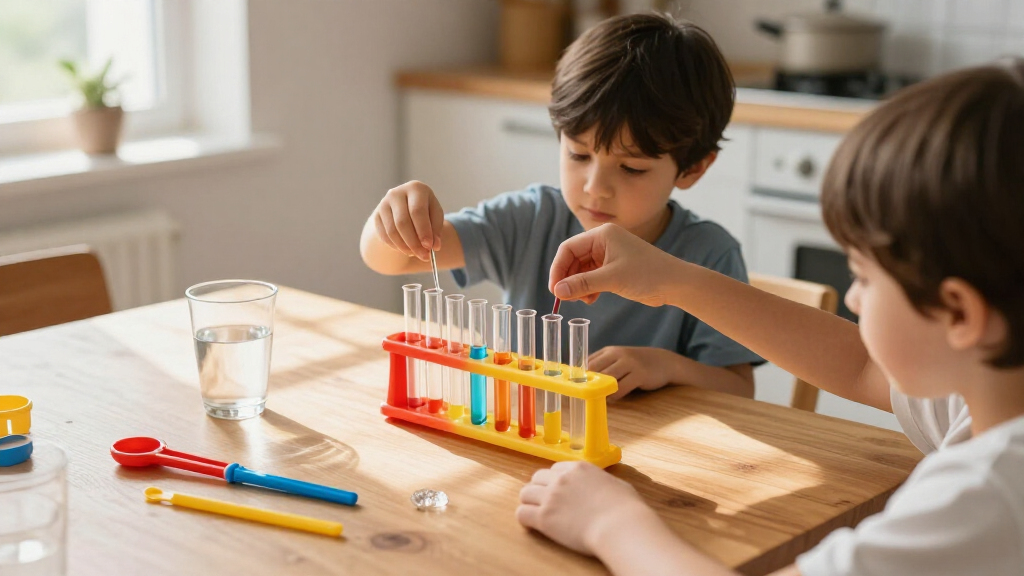
I compared the 15 sets by how directly they serve the search for kids’ educational chemistry: age guidance, chemistry focus, the kind of hands-on activity offered, and how clearly each product’s format matches a child’s interests. I also weighed experiment variety against usability. A large activity count can be useful for a family seeking ongoing projects, but it does not automatically beat a smaller, more focused kit if the child is new to science or needs a straightforward starting point.
The order favors products that appear to balance chemistry learning, accessible use, and a clear audience, with more specialized magic, preschool, and play-led kits placed according to their narrower fit. I treated broad science kits as strong options for variety, not as direct substitutes for chemistry-focused sets. Because children’s ages, supervision needs, and interest in repeat experiments differ, the rankings reflect likely buyer fit rather than a claim that one format works for every household.
| kids educational chemistry set | Brand |
|---|---|
| Thames & Kosmos Kids First Che | Thames & Kosmos |
| National Geographic Chemistry | National Geographic |
| National Geographic Science Ma | Blue Marble |
| Learning Resources Rainbow Rea | Learning Resources |
| UNGLINGA 250+ Science Experime | UNGLINGA |
| Discovery Radical Reactions Sc | — |
| National Geographic Magic Chem | Blue Marble |
| Ooze Labs Chemistry Station Ex | Thames & Kosmos |
| National Geographic Junior Che | Blue Marble |
| National Geographic Amazing Ch | Blue Marble |
| Kids First Science Kit: Chemis | Thames & Kosmos |
| Playz Extreme Chemistry Educat | Playz |
| Learning Resources Beaker Crea | Learning Resources |
| UNGLINGA 210-Experiment Scienc | UNGLINGA |
| Learning Resources Primary Sci | Learning Resources |
Factors to Consider When Choosing Kids Educational Chemistry Sets
Before choosing a set, I’d match the format to the child and the way your household will use it. Experiment totals and colorful packaging can catch the eye, but a good fit depends on the child’s age, the adult’s role, available space, and whether the goal is chemistry practice or general science play.
Match the activities to the child’s age and independence
Age labels are a starting point, not a promise that a child can complete every activity alone. Younger children often benefit from simple actions, visible results, and an adult who can explain what is happening; older children may want clearer procedures and room to repeat or vary an experiment. Check whether the product is meant for guided play, independent reading, or shared adult-child use. A common mistake is buying a more advanced kit because a child is curious, then finding that setup and instructions require more support than expected. If siblings will share one set, choose around the youngest child who will handle materials, and plan for adult oversight even when older children lead.
Decide whether chemistry or general science is the real goal
Some kits are built around chemistry experiments, while others combine chemistry with broader science activities. A wide-ranging set can keep a curious child busy across subjects, but the chemistry learning may feel less sustained than it would in a focused kit. Read the activity list rather than relying on the product name or the headline experiment count. If the child is already interested in reactions, mixtures, or lab-style activities, a chemistry-centered choice is likely to feel more relevant. For a child who has not settled on a favorite subject, a broad kit can be a sensible way to test interests without committing to one narrow format.
Look beyond the experiment count
A large number of listed activities can signal variety, but it may include small variations, short demonstrations, or projects drawn from several science fields. Ask whether the child is likely to repeat experiments, follow a sequence, or use the kit for occasional family activities. A smaller set with a clear theme may be easier to return to, especially for a beginner who could feel overwhelmed by a long menu. Also check whether the instructions name the materials needed for each project and explain the steps at a child-appropriate level. The better measure is not how many activities appear on the box, but how many suit your child’s interests and can realistically be completed.
Factor in adult supervision and household routines
Science activities can involve liquids, small pieces, cleanup, and careful handling, so think about where experiments will happen and who will help. A kit that works well at a kitchen table may be a poor match for a family that needs quick, low-mess activities between other commitments. Before buying, review the age guidance, safety information, and any notes about adult involvement or extra household supplies. Avoid assuming that “for kids” means suitable for unsupervised use. If a caregiver has limited time, favor a format with manageable setup and clearly explained steps over a kit whose appeal depends on doing many activities in one sitting.
Choose between lab-style learning and performance-led play
Traditional experiment sets, science-magic kits, and character-led laboratory play can all spark curiosity, but they do so in different ways. A magic-themed activity may be a better hook for a child who enjoys demonstrations and showing results to others. A more conventional set may suit a child who wants to follow procedures and observe changes without a performance element. Play-led formats can make science approachable, though they may place less emphasis on building a connected understanding of chemistry. Think about what keeps the child engaged after the first surprise; the best format is the one that invites questions and repeat use, not just a quick reveal.
Check what is included and what the child can revisit
Do not assume every kit supplies all the materials needed for every experiment. Review the contents and instructions for any added household items, consumables, or pieces that may need to be replaced before the child can continue. Reusable equipment can support repeat exploration, while activities that depend on consumable materials may be better suited to occasional sessions. Storage matters too: a dedicated station can keep equipment together, but it takes more room than a compact activity box. For a gift, confirm that the recipient has a suitable place to store the set and an adult available to help with setup.
Frequently Asked Questions
Which chemistry set makes the most sense for a child who has never done a science experiment?
I’d favor an age-appropriate beginner kit with clear, guided activities over the set with the largest experiment count. Thames & Kosmos Kids First is positioned for younger starters, while the National Geographic Chemistry Set with 45 Experiments is a stronger option for a school-age child ready for a more conventional chemistry experience. Check the age guidance and whether an adult is expected to help with setup. Starting with a manageable set can build confidence before moving to a broad collection with many activity choices.
Should I choose a kit with 250 experiments over one with 45?
Not automatically. The UNGLINGA 250+ kit may appeal to families seeking a wide range of science activities, but the count alone does not tell you how many are chemistry-focused, how involved each one is, or whether the child will want to repeat them. A smaller chemistry-centered set may deliver a clearer learning path for a child specifically interested in reactions. Compare the activity list, the child’s age, and the amount of adult help likely needed. Choose breadth for variety and a focused kit for a more direct chemistry theme.
Are science-magic kits a good substitute for a chemistry set?
They can introduce science through surprising demonstrations, but they serve a different purpose from a conventional chemistry kit. National Geographic’s Science Magic Kit and Magic Chemistry Set are better fits for children who enjoy performing or sharing a result, while a standard experiment set better matches a child seeking a lab-style activity. A magic format can be a useful first hook, though it may not offer the same feeling of a connected sequence of chemistry experiments. If you are unsure, think about whether the child prefers explaining how something works or presenting an unexpected effect.
Can one kit work for children of different ages?
Sometimes, especially when an adult can adapt the activity and supervise the younger child, but one set may not satisfy both children equally. Preschool-oriented options such as Rainbow Reactions are aimed at early exploration, while kits marked for ages eight and up may rely on different reading and activity expectations. Choose based on the youngest child who will handle the materials, then check whether older siblings will still find the activities engaging. Taking turns on adult-led experiments can help, but separate age-appropriate roles may be safer and more enjoyable than expecting both children to work independently.
What should I check before giving a chemistry set as a gift?
Confirm the recipient’s age, the adult’s willingness to help, and whether the home has a suitable place for setup and cleanup. Read the contents and safety information so you know whether activities call for additional household materials or close supervision. Consider the child’s interest: a performance-minded child may prefer a magic kit, while a child who likes structured projects may prefer a conventional chemistry set. Also check storage needs, particularly for a station-style product. These practical checks can prevent a well-meant gift from becoming a kit that is difficult to use.
Conclusion
For a balanced, school-age chemistry introduction, I’d pick the National Geographic Chemistry Set with 45 Experiments as my best overall choice. Families seeking a broad activity collection can look to the UNGLINGA 250+ Science Experiments Kit as a best-value-style pick for variety, while recognizing that a large mixed-science collection is not the same as a focused chemistry course. For beginners, I’d start with Thames & Kosmos Kids First Chemistry Set or choose a Learning Resources preschool option when the child is younger. The National Geographic Amazing Chemistry Set with 100+ Experiments is the best premium-style choice for buyers drawn to a larger chemistry activity menu, while Ooze Labs suits children who want a station-based format and Beaker Creatures suits play-led science fans. Match the set to the child’s age, preferred style, and available adult support, and the right choice should become clear.
Halloween Picks

Spirit Halloween Scary Sitting Scarecrow Animatronic, 4 ft 6 in

Kalolary 11 ft Halloween Inflatable Archway Ghost House Tunnel

27FT Giant Inflatable Pumpkin Lighted Outdoor Halloween Decor
As an affiliate, we earn on qualifying purchases.