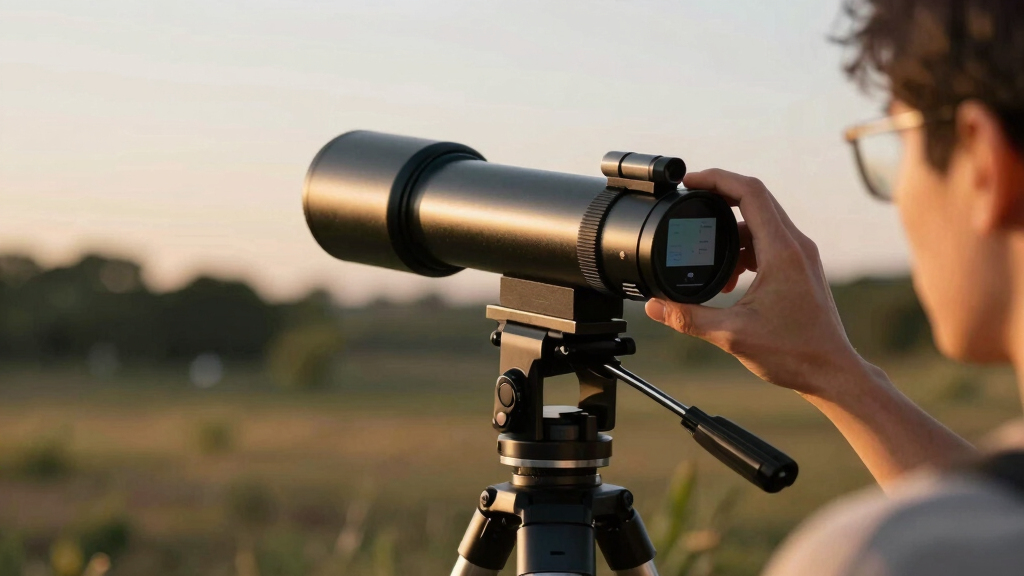

Finding the best smart telescopes for beginners can feel overwhelming with so many options that vary in complexity, size, and features. The Celestron NexStar 8SE stands out as the best overall pick thanks to its powerful optics and full automation. For a more affordable entry point, the Gskyer 70mm offers ease of use and portability, perfect for casual stargazing. The main tradeoffs involve balancing ease of setup, advanced features, and budget constraints. Continue reading for a detailed breakdown of each option to help you make an informed choice.
Key Takeaways
- Top picks balance user-friendly features with powerful optics for beginner-friendly stargazing.
- Automation and smartphone integration are key advantages in smart telescopes for ease of use.
- Size and portability vary significantly, influencing suitability for travel or home use.
- Budget options like the Gskyer provide great value but often lack advanced features.
- More advanced models like the NexStar 8SE offer greater versatility at a higher price point.


More Details on Our Top Picks
Celestron StarSense Explorer LT 114AZ App-Enabled Telescope
This option stands out for its simplicity and smartphone-guided setup, making it ideal for absolute beginners who want quick access to the Moon and planets. Unlike the more advanced Celestron NexStar 8SE, the LT 114AZ offers a more approachable, app-based experience that minimizes the learning curve. However, its manual mount and limited tracking capabilities mean it’s less suited for prolonged or precise observations. The 114mm aperture provides bright, detailed views that are impressive for a beginner scope, especially considering its affordability. While it requires a smartphone for optimal use, its user-friendly design and included accessories make it a strong choice for casual stargazing. This pick makes the most sense for newcomers seeking an easy, guided introduction to astronomy without the complexity of computerized mounts.Pros:- User-friendly for beginners with smartphone app guidance
- High-quality 114mm aperture provides bright, detailed views
- Includes multiple eyepieces and full-height tripod
Cons:- Requires smartphone for optimal use
- Manual mount may limit tracking precision
Best for: Beginners who want a straightforward, app-assisted telescope with minimal setup
Not ideal for: Those aiming for precise tracking or astrophotography, as it lacks advanced tracking features
- Aperture:114mm
- Type:Newtonian Reflector
- Mount:Manual Altazimuth
- Eyepieces:10mm and 25mm
- Compatibility:Android 12+, iOS 18+
- Warranty:2 years
Bottom line: This telescope is perfect for newcomers seeking an easy, guided stargazing experience with minimal fuss.
Celestron NexStar 8SE Computerized Telescope – 8-Inch Schmidt-Cassegrain Optical Tube with Fully Automated GoTo Mount
The NexStar 8SE offers a significant upgrade over basic models like the StarSense Explorer LT 114AZ, with its high-powered 8-inch aperture and fully automated GoTo system. It’s better suited for those who want a combination of ease-of-use and advanced features, especially with the SkyAlign setup that simplifies alignment. Compared with smaller or manual scopes, the 8SE’s larger aperture produces brighter, more detailed lunar and planetary views, making it ideal for casual observers ready to explore more. However, its weight and price can be deterrents for complete novices expecting a lightweight, budget-friendly option. Its robust optics and computerized tracking make it a worthwhile investment for anyone interested in delving deeper into astronomy without sacrificing ease of operation. This telescope makes the most sense for beginners who are willing to invest in a versatile, upgradeable instrument that grows with their skills.Pros:- Powerful 8-inch aperture delivers bright, detailed views
- Automated GoTo and SkyAlign simplify setup and object location
- Compatible with a wide range of accessories for future expansion
- High-quality Starbright XLT coatings for clear images
Cons:- Relatively heavy and may need sturdy mount for stability
- Learning curve for those unfamiliar with computerized systems
- Higher cost compared to simpler models
Best for: Beginners ready to invest in a more capable, computerized telescope for serious viewing
Not ideal for: Those seeking a lightweight, portable starter scope or on a tight budget
- Aperture:8 inches
- Optical Design:Schmidt-Cassegrain
- Mount Type:GoTo computerized
- Object Database:40,000+ objects
- Warranty:2 years
Bottom line: This scope is ideal for beginners ready to explore astronomy more deeply with automated features and high-quality optics.
Celestron StarSense Explorer DX 130AZ App-Enabled Telescope
Compared to smaller or more basic telescopes, the DX 130AZ stands out with its 130mm aperture, delivering vivid, bright views of planets and nebulae that captivate beginners. Its smartphone app-based object locating system simplifies finding celestial targets, similar to the StarSense Explorer LT 114AZ, but with a larger aperture for more detailed views. The ease of setup and smooth manual tracking make it accessible for casual stargazers, yet it’s not ideal for those seeking advanced tracking or astrophotography capabilities. Its manual operation and reliance on smartphone guidance are tradeoffs for the impressive aperture size at this price point. This telescope is best suited for newcomers who want big, bright views and straightforward operation without the complexity of computerized mounts.Pros:- Easy to set up with smartphone app guidance
- Large 130mm aperture provides bright, detailed views
- Includes smartphone dock for convenient viewing
Cons:- Manual tracking may require some practice
- Limited to beginner and casual astronomy
Best for: Beginners interested in bright, wide-field views and simple smartphone-guided tracking
Not ideal for: Users wanting precise tracking or astrophotography, as it relies on manual operation and basic tracking
- Aperture:130mm
- Type:Newtonian Reflector
- Mount:Altazimuth
- Compatibility:iPhone & Android
- Warranty:2 years
Bottom line: This scope offers a large aperture and simple operation, making it excellent for beginners seeking bright views without complex features.
Celestron NexStar Evolution 8 WiFi Enabled Computerized Telescope
The NexStar Evolution 8 combines the power of an 8-inch Schmidt-Cassegrain with modern convenience, including WiFi control via the SkyPortal app and a built-in 10-hour lithium battery. It surpasses the manual control of the StarSense Explorer models, offering high-precision tracking and easy smartphone integration. Compared to the simpler DX 130AZ or StarSense Explorer LT 114AZ, this scope provides a more sophisticated experience suitable for enthusiasts who want to explore deep-sky objects with minimal fuss. Its heavier build and higher price may be barriers for absolute beginners on a tight budget or those seeking a lightweight setup. The high-quality optical coatings ensure sharp, bright images, making it ideal for both visual and basic imaging pursuits. This model is best for those who want a balance of advanced features and portability without complex wiring or setup.Pros:- Wireless control via smartphone app simplifies operation
- Bright, sharp views with high-quality optical coatings
- Built-in long-lasting battery for portable use
- Manual clutches for quick manual adjustments
Cons:- Requires compatible smartphone or tablet for full control
- Relatively high price for entry-level users
- Limited to 8-inch aperture, less ideal for deep-sky astrophotography
Best for: Beginners who want a portable, WiFi-enabled telescope with high-quality optics for visual astronomy
Not ideal for: Those who prefer manual control or are on a very tight budget, as it’s more expensive and heavier than basic models
- Optical System:8-inch Schmidt-Cassegrain
- Optical Coatings:StarBright XLT
- Mount Type:Fork-mounted
- Tracking Accuracy:High precision
- Battery:10-hour lithium-iron phosphate
- Control:WiFi via SkyPortal app
Bottom line: This scope is perfect for beginners seeking a portable, WiFi-enabled telescope with high-quality optics for versatile observing.
Celestron StarSense Explorer 10-inch App-Enabled Telescope
Compared to smaller or more portable options, the 10-inch StarSense Explorer offers a dramatic increase in light-gathering power, revealing fainter deep-sky objects that smaller scopes miss. Its smartphone app-guided navigation makes it accessible despite its size, making it easier to find targets in the vast sky. The Dobsonian base ensures stability and straightforward setup, even for newcomers. However, its heavy weight and bulk can limit portability, and the reliance on a smartphone for optimal use may be inconvenient for some. This telescope emphasizes big, bright views and ease of use, but it’s best suited for those willing to handle its size for more immersive astronomy experiences. It’s an excellent choice for beginners eager to see more of the universe at a relatively affordable price.Pros:- Smartphone-guided sky navigation simplifies locating objects
- Large 254mm aperture delivers bright, detailed images
- Easy setup with a stable Dobsonian base
- Compatible with most modern smartphones
Cons:- Heavy and bulky for portability
- Requires smartphone for optimal use
- Learning curve with app features for some users
Best for: Beginners who want a large aperture for bright, detailed deep-sky views and don’t mind the weight
Not ideal for: Travelers or those seeking a lightweight, portable starter scope, due to its heavy build
- Aperture:10 inches (254mm)
- Type:Dobsonian reflector
- Focuser:2-inch Crayford
- Compatibility:iOS 18+, Android 12+
- Warranty:2 years
Bottom line: This telescope excels for beginners wanting large, bright views and straightforward setup, provided size and weight are not concerns.
Celestron StarSense Explorer LT 80AZ App-Enabled Telescope – 80mm Refractor for Beginners
This model stands out for its straightforward setup and user-friendly smartphone app, making it perfect for absolute beginners. Unlike the larger, more complex Celestron NexStar 8SE, the LT 80AZ emphasizes simplicity over advanced features, which can be limiting for those wanting to grow into astrophotography. The app-guided navigation helps locate celestial objects quickly, providing bright, detailed views thanks to its 80mm refractor. However, the manual altazimuth mount and reliance on a smartphone mean it’s less suited for precise tracking or serious long-exposure imaging. Compared to larger telescopes, this is ideal for casual stargazing and educational use, but not for those seeking advanced tracking capabilities. Its lightweight design and full-height tripod make it easy to transport and set up, especially for outdoor family outings. The main tradeoff is that it’s dependent on your phone’s compatibility and limited to basic movement, which may frustrate more ambitious users.Pros:- Simple to set up and operate, ideal for absolute beginners
- Smartphone app offers real-time sky guidance, reducing frustration
- Bright, detailed views of the Moon, planets, and deep-sky objects
- Includes multiple eyepieces and a full-height tripod for stability
Cons:- Dependent on a compatible smartphone for full functionality
- Manual mount limits precise tracking for longer observations
Best for: Beginners who want an easy-to-use, guided experience with minimal setup
Not ideal for: Users looking to pursue astrophotography or detailed tracking, due to manual mount limitations
- Aperture:80mm
- Type:Refractor
- Mount:Manual altazimuth
- Eyepieces:10mm and 25mm
- Tripod:Full-height
- Compatibility:Android 12+, iOS 18+
Bottom line: This telescope makes the most sense for newcomers who prefer guided stargazing without complex controls.
Celestron StarSense Explorer 150AZ App-Enabled Telescope – 150mm Tabletop Dobsonian for Beginners
This telescope is a standout for its larger 150mm aperture, providing brighter images of the Moon, planets, and deep-sky objects compared to the 80mm refractor of the LT 80AZ. Its Newtonian reflector design and tabletop Dobsonian mount make it particularly accessible for beginners, especially those who value portability and quick setup. Unlike the more basic LT 80AZ, the 150AZ offers a wider aperture that captures more light, resulting in more vivid images. The smartphone guidance system simplifies object location, but the manual tabletop mount can be less stable during long observations, requiring occasional adjustments. It’s less suited for astrophotography due to its manual tracking and tabletop design, but it’s ideal for casual, family-friendly astronomy sessions. The included accessories, such as the red dot finderscope and smartphone dock, enhance ease of use, making it a compelling choice for those wanting more punch in a beginner telescope without complexity.Pros:- Larger 150mm aperture provides brighter, more detailed images
- Easy to set up and operate with smartphone guidance
- Compact, portable design ideal for travel or small spaces
- Includes useful accessories like a red dot finder and smartphone dock
Cons:- Manual tracking can be cumbersome for extended viewing sessions
- Tabletop mount limits stability and flexibility for long observations
Best for: Beginners seeking brighter views and portability, especially families or casual stargazers
Not ideal for: Users interested in astrophotography or more advanced tracking capabilities, as the mount is manual and less stable
- Aperture:150mm
- Type:Newtonian reflector
- Mount:Altazimuth tabletop Dobsonian
- Eyepieces:10mm and 25mm
- Included Accessories:Red dot finder, smartphone dock
- Warranty:2 years
Bottom line: This telescope is a solid choice for beginners wanting a brighter view with portable convenience, but not for those aiming at astrophotography.
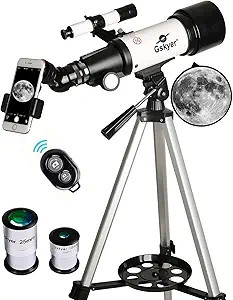
Gskyer 70mm Aperture 400mm AZ Mount Refracting Telescope for Kids and Beginners
This Gskyer model emphasizes affordability and portability, making it perfect for young explorers or casual adults new to astronomy. Its 70mm aperture offers decent viewing of the Moon, stars, and planets, though it won’t match the brightness or detail of larger telescopes like the 150AZ. The included smartphone adapter, wireless remote, and adjustable tripod make it easy to capture images and explore the sky on the go. Compared to the other two options, it’s more limited in magnification and stability, especially with manual focus and a basic AZ mount, but these tradeoffs keep it lightweight and simple. It’s especially suited for kids or those who want a lightweight travel scope to spark early interest, rather than serious observing or astrophotography. The main challenge lies in manual focus, which can be tricky for younger users or those unfamiliar with focusing a telescope.Pros:- Affordable and lightweight, ideal for kids and beginners
- Includes smartphone adapter and remote for simple astrophotography
- Portable with adjustable tripod and carry bag
- Fully coated optics for clearer images
Cons:- Manual focus can be challenging for inexperienced users
- Limited stability and magnification compared to larger telescopes
Best for: Kids and casual beginners looking for an affordable, portable, and easy-to-use telescope
Not ideal for: Serious astronomy enthusiasts or those wanting to do astrophotography with high precision, due to manual focus and limited stability
- Aperture:70mm
- Focal Length:400mm
- Mount Type:AZ Mount
- Eyepieces:Two replaceable
- Additional Features:3x Barlow lens, wireless remote
- Included Accessories:Phone adapter, carry bag, tripod
Bottom line: This telescope is a great entry-level option for young astronomers and casual stargazers, but not for those seeking detailed imaging or long-term use.
How We Picked
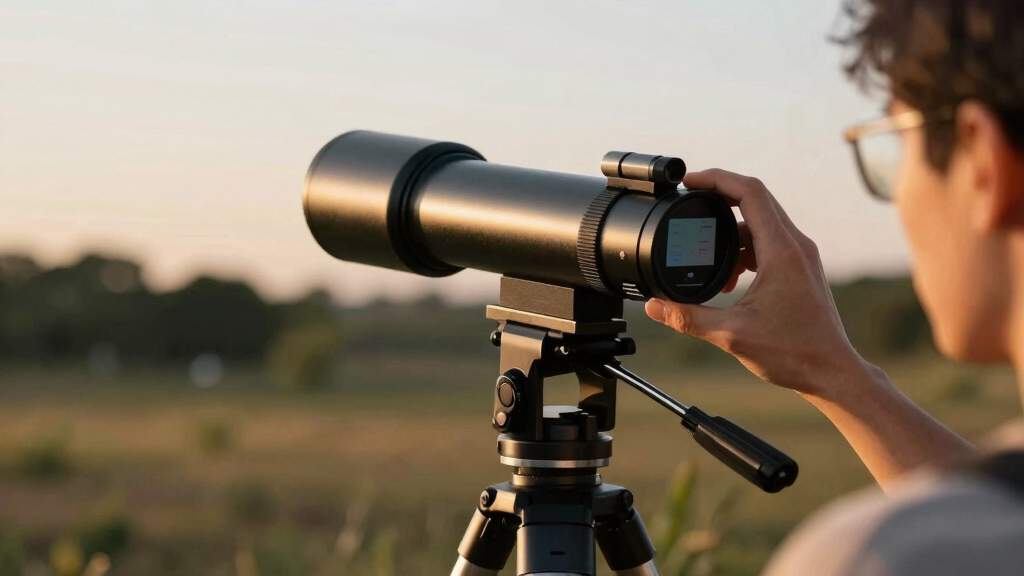
Our evaluation focused on performance, ease of use, build quality, and value for beginner astronomers. We prioritized telescopes with smart features like app integration and automated object tracking, which simplify the learning curve. Durability and setup complexity also played a role, as beginner users need straightforward, reliable equipment. The ranking balances affordability with features that enhance the stargazing experience, ensuring each pick suits different beginner needs and budgets.Factors to Consider When Choosing Best Smart Telescopes For Beginners
Choosing the best smart telescope for a beginner involves weighing several factors beyond just specifications. It’s important to consider ease of setup and operation, especially if you’re new to astronomy. Portability can matter if you plan to take your telescope to different locations. Additionally, smart features like app control and automation can dramatically improve the experience, but sometimes come at a higher cost. Understanding these broader considerations will help you pick a telescope that fits your goals and comfort level.Ease of Use and Setup
For beginners, a telescope that is simple to assemble and operate is essential. Look for models with automated GoTo systems or smartphone app controls, which reduce the learning curve and minimize frustration. Avoid overly complex setups that require extensive calibration unless you’re eager to learn every detail from the start. A straightforward interface will allow you to spend more time observing and less time troubleshooting.
Portability and Size
Consider how often you’ll move or travel with your telescope. Compact models like the Gskyer 70mm are easy to carry and store, making them ideal for spontaneous star gazing sessions. Larger, more powerful telescopes like the NexStar 8SE provide better views but tend to be heavier and less portable. Balance your space constraints and mobility needs against your desire for increased viewing power.
Optical Quality and Magnification
While high magnification isn’t always necessary for beginners, good optical quality helps ensure clear, bright images. Reflector and refractor designs each have strengths; reflectors typically offer larger apertures at lower costs, ideal for faint objects like nebulae. However, larger optics can be bulkier. Choose a model that offers a balance between optical performance and ease of handling, especially if you are just starting out.
Smart Features and Automation
Features like app control, object tracking, and automated star alignment make novice astronomy more enjoyable. These tools help locate objects quickly and accurately without requiring extensive manual alignment. However, they can add to the cost and sometimes require regular software updates. Decide if these features are worth the extra expense based on how much you want to automate your stargazing experience.
Budget and Long-Term Value
Beginners often face a tradeoff between affordability and advanced features. Cheaper models like the Gskyer are excellent for casual use and learning basic astronomy, but may lack automation or high-quality optics. Investing in a slightly more expensive model like the Celestron StarSense Explorer LT provides better performance and future-proofing. Consider how much you’re willing to spend now versus potential upgrades later.
Frequently Asked Questions
Do I need to be an expert to use a smart telescope?
No, most smart telescopes are designed with beginners in mind. Features like app control and automated object finding make setup and operation straightforward, even for those new to astronomy. Many models include guided tutorials or intuitive interfaces that help you learn as you go. While some familiarity with basic star charts can enhance your experience, you don’t need prior expertise to start enjoying stargazing with a smart telescope.
Are smart telescopes suitable for outdoor use in all weather conditions?
Many smart telescopes are built with durable materials suitable for outdoor use, but their resistance to weather varies. It’s best to check the manufacturer’s specifications for water and dust resistance. Even weather-resistant models should be stored properly after use to prevent damage. For consistent outdoor use, consider models with protective coatings or weatherproof features, especially if you plan to use your telescope in less-than-ideal conditions.
Can I use a smart telescope without a smartphone or tablet?
Most smart telescopes rely on smartphone or tablet apps for full functionality, such as object tracking and alignment. Without these devices, your options may be limited to manual operation if available. Some models include built-in controls, but these are less common. If you prefer a more standalone experience, look for models with dedicated controls, though they may lack some of the automation features that make smart telescopes appealing for beginners.
Is a larger aperture always better for beginners?
Generally, a larger aperture allows for brighter, more detailed views of faint objects, which is advantageous for beginners interested in deep-sky observing. However, larger apertures tend to be heavier, more expensive, and less portable. For casual stargazing or if you have limited space, smaller models with manageable sizes like the 80mm or 70mm can still provide excellent views and be easier to handle. The best choice depends on your specific goals and setup preferences.
How long will it take to learn how to use a smart telescope effectively?
The learning curve for a smart telescope is usually gentle thanks to automation and app controls. Most beginners can start observing within minutes of setup, with more advanced features becoming intuitive over time. Regular use helps improve your understanding of the night sky and telescope operation. Patience and practice will lead to more satisfying sessions, but initial familiarization is typically quick and straightforward with these devices.
Conclusion
For those new to astronomy seeking an all-around capable device, the Celestron NexStar 8SE offers powerful optics combined with full automation, making it ideal for dedicated beginners willing to invest a bit more. If budget and portability are priorities, the Gskyer 70mm provides easy setup and decent views for casual stargazing. The Celestron StarSense Explorer LT 80AZ strikes a balance between simplicity and performance, perfect for newcomers who want an upgrade over basic models. Ultimately, your choice depends on your budget, space, and how much automation you want—select the telescope that best matches your stargazing goals.