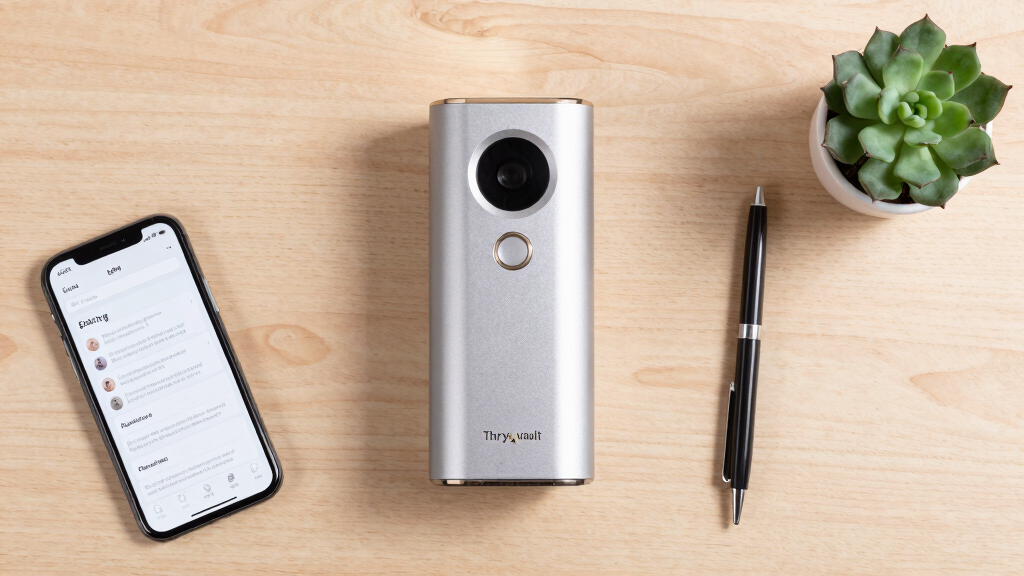

📊 Full opportunity report: Thrymvault: A System Around Your Content on ThorstenMeyerAI.com — validation score, market gap, and execution plan.
TL;DR
Thrymvault introduces a self-hosted content management system that consolidates ideas, drafts, assets, and feedback into a unified workspace. It combines document and database functionalities with AI-driven workflows and secure client portals, aiming to streamline content production and collaboration.
Thrymvault has launched a new self-hosted content workspace that consolidates the entire content creation and management process into a single platform. This development aims to reduce the scattered, multi-tool workflows that many creators and agencies currently face, offering a unified environment where ideas, drafts, assets, feedback, and client interactions are interconnected.
Thrymvault is built as a private, self-hosted solution that integrates content creation, structured data, AI workflows, and client-facing portals. Unlike typical tools that separate documents and databases, Thrymvault combines both in one environment, allowing users to manage long-form drafts, research, and structured records within the same interface. It supports rich pages, flexible databases, full-text search, threaded comments, and public portals with customizable access, all hosted on the user’s own infrastructure.
The platform’s core innovation is its approach to AI: instead of simple chatbots, it offers a library of saved prompts that can be reused across multiple records or pages, enabling consistent workflows such as summarization, content generation, and transformation. These prompts can be applied in bulk, reducing repetitive manual work and increasing efficiency. Additionally, Thrymvault’s portals enable users to share polished content with clients or stakeholders via secure, branded links that reveal only selected properties, avoiding exposure to the messy middle of the workflow.
Feedback and collaboration are tightly integrated, with threaded comments and notifications staying attached to specific records. The platform also features robust access controls, including item-level sharing and role-based permissions, ensuring secure collaboration without compromising privacy. The emphasis is on streamlining the entire content lifecycle—from idea to publication—within a single, customizable environment.
A System Around Your Content
One self-hosted workspace where ideas, drafts, assets, clients, feedback, and reusable AI prompts finally know about each other — instead of scattered across notes, sheets, folders, and chat threads.
Typed properties, relations, and saved views mean the same records become a writing queue, a kanban board, a calendar, or a searchable archive — and each record carries a rich-text body, so the plan and the draft live together.
+ token
+ passphrase
- This is the capability set. Drawn from Thrymvault’s own product documentation — what the workspace is for and how its pieces fit.
- Early-stage, in active build. Some surfaces are more settled than others; treat described capabilities as design, not a finished-product guarantee.
- No deploy-and-verify story yet. Unlike the shipped products in this series, there’s no public-launch writeup attached here — when there is, it gets the same treatment.
- The promise is “lose less.” Not “do more” — less time hunting, copying, asking, and rebuilding, because the pieces share one roof you own.
Independent commentary, produced with AI assistance under human editorial oversight. The views are the author’s own and may change. This is not business, financial, legal, or technical advice. Thrymvault is an early-stage, self-hosted product in active development; described capabilities reflect its design and may change. Product, model, and company names are trademarks of their respective owners; mention does not imply endorsement.
Why Thrymvault’s Unified Approach Matters for Content Teams
This launch addresses a common pain point among content creators, agencies, and teams: the fragmentation of tools and workflows. By consolidating drafts, assets, prompts, and feedback into one self-hosted platform, Thrymvault reduces time wasted on searching, copying, and syncing between multiple apps. Its ability to combine document flexibility with structured data and AI workflows offers a new level of efficiency, control, and security. For organizations handling sensitive content or client work, the platform’s privacy features and portaled sharing capabilities provide a significant advantage, enabling transparent yet protected collaboration.
Overall, Thrymvault’s integrated environment could reshape how content teams operate, shifting from scattered toolchains to a cohesive content operating system that adapts to various workflows and scales with the user’s needs.
self-hosted content management system
As an affiliate, we earn on qualifying purchases.
As an affiliate, we earn on qualifying purchases.
Background: Fragmented Tools and the Need for Integration
Many content creators and agencies currently rely on a combination of separate tools: document editors, spreadsheets, project management apps, and cloud storage. This scattered approach leads to inefficiencies, version confusion, and security concerns. While some platforms attempt to unify parts of this process, most still separate unstructured content from structured data, forcing users to switch contexts or duplicate information.
Previous efforts in the space have focused on either document management or database-driven workflows, but few have successfully merged both into a seamless, self-hosted environment that also incorporates AI workflows and client portals. Thrymvault positions itself as filling this gap, emphasizing privacy, flexibility, and automation.
“Our goal is to eliminate the scattered chaos of content workflows by creating one environment where everything knows about everything else.”
— Thorsten Meyer, founder of Thrymvault
AI prompt library for content creation
As an affiliate, we earn on qualifying purchases.
As an affiliate, we earn on qualifying purchases.
Unanswered Questions About Platform Adoption and Scalability
It is not yet clear how widely Thrymvault will be adopted outside initial users or how well it scales for large teams and complex workflows. Details about pricing, deployment options, and long-term support are still emerging, and user feedback will be crucial to assess its practical impact.
As an affiliate, we earn on qualifying purchases.
Upcoming Developments and User Rollout Plans
Thrymvault plans to open broader access to its platform in the coming months, with updates focused on expanding AI capabilities, enhancing portal customization, and integrating additional collaboration features. Monitoring user feedback and real-world use cases will determine how the platform evolves and whether it becomes a standard tool for content professionals.
As an affiliate, we earn on qualifying purchases.
Key Questions
Is Thrymvault a cloud-based or self-hosted platform?
Thrymvault is designed as a self-hosted solution, giving users control over their data and infrastructure.
Can Thrymvault integrate with existing tools like Google Drive or project management apps?
While specific integrations are still under development, the platform emphasizes internal workflows and structured data, with future plans likely to include external tool compatibility.
What types of content can be managed within Thrymvault?
It supports long-form drafts, research, ideas, media assets, and structured records such as content calendars, campaign statuses, and feedback threads.
Is Thrymvault suitable for large teams or enterprise use?
Details on scalability are still emerging, but the platform’s architecture aims to support team collaboration with role-based permissions and secure sharing.
How does Thrymvault handle client collaboration and feedback?
Through secure portals that reveal only selected properties, along with threaded comments and notifications, enabling transparent yet private client interactions.
Source: ThorstenMeyerAI.com