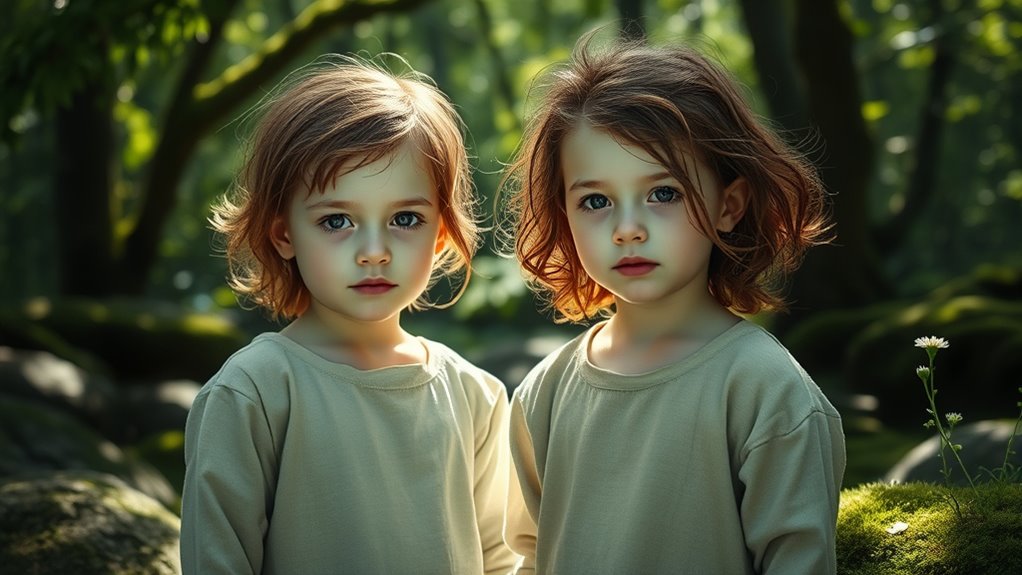

The Green Children of Woolpit are a fascinating example of folklore blending with science. You see, their story involves mysterious siblings with green skin who appeared in 12th-century England, which many interpret as a supernatural tale. However, modern science suggests that their unusual skin color might stem from a genetic condition like hypochromic anemia. If you want to uncover the deeper mysteries behind their story and what modern explanations reveal, there’s more to explore.

Prime made for students and young adults
- Fast, free delivery for dorm and study essentials
- Prime Video and Amazon Music included
- Member-only deals
Key Takeaways
- The story blends medieval folklore about supernatural origins with scientific explanations like genetic mutations causing green skin.
- Hypochromic anemia is a possible genetic condition that could explain the children’s unusual skin discoloration.
- Their inability to speak English initially may indicate they came from a different region or realm, blending myth with real-world genetics.
- Over time, the children learned local customs, suggesting they were human with physical traits influenced by genetic factors.
- The tale illustrates how folklore and scientific hypotheses intersect to explain mysterious phenomena like the Green Children of Woolpit.
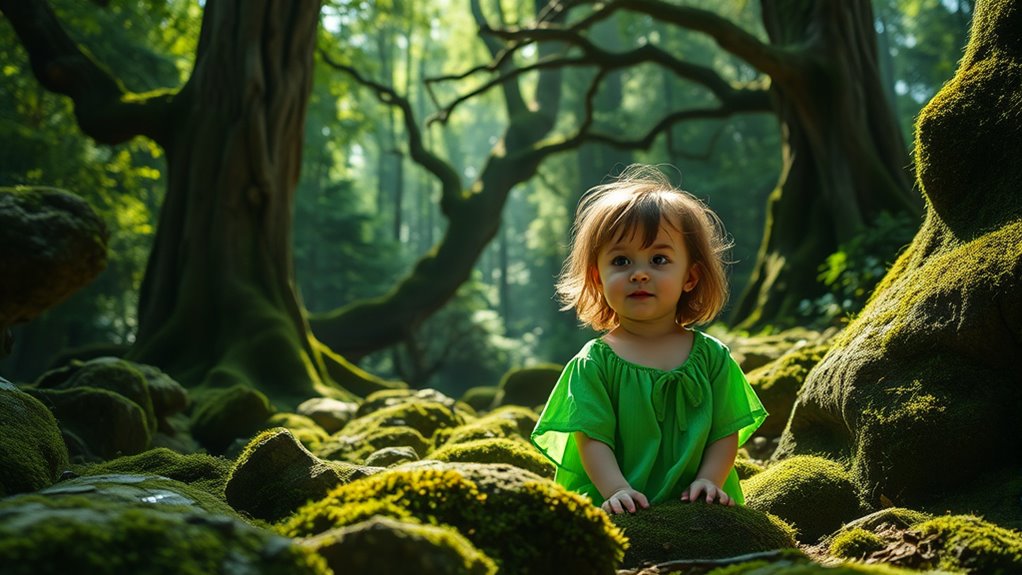
The Green Children of Woolpit are a mysterious pair of siblings who appeared in the English village of Woolpit during the 12th century. Their unusual appearance and strange story have captivated people’s imaginations for centuries, blending elements of medieval folklore with possible scientific explanations like genetic mutations. When you first hear about them, you might wonder whether their story is rooted in legend or if there’s some truth behind it. As with many medieval folklore tales, their story has been passed down through generations, often tinged with mystery and local superstition. The children’s green skin, along with their inability to speak English initially, sets them apart from ordinary villagers, prompting many to speculate about their origins.
The Green Children of Woolpit, with their mysterious green skin and unusual origins, continue to intrigue and inspire legends.
In medieval folklore, tales like these often served as moral lessons or reflections of societal fears and beliefs. The story of Woolpit’s children fits this pattern, with some believing they came from a supernatural or otherworldly domain. Others have suggested that their story could be a metaphor for cultural differences or unknown phenomena. However, modern science offers alternative explanations, notably the possibility of genetic mutations. Some researchers propose that the children’s green hue might have resulted from a rare genetic condition, such as hypochromic anemia, which can cause skin discoloration. This theory gains credence because, in medieval times, unexplained skin conditions were often attributed to supernatural causes, and folklore would naturally incorporate these features into their stories. Additionally, the story illustrates how medieval beliefs influenced interpretations of unexplained phenomena.
If you think about it, the idea that their color could be explained by genetic mutations makes sense. These mutations could have caused pigmentation changes or other physical anomalies, making them stand out sharply in a small village community. Over time, their story might have been exaggerated or embellished, blending fact with myth. The children’s inability to speak English initially is also understandable—if they truly came from a different region or even an otherworldly place, language barriers would be expected. As they integrated into Woolpit society, they reportedly learned to speak English and adopted local customs, which suggests they were not supernatural but rather individuals with unusual physical traits.
Ultimately, whether you view their story as medieval folklore or a real event influenced by genetic mutations, it highlights how humans have always sought explanations for the mysterious. Their story encapsulates the blending of cultural storytelling with potential scientific realities, reminding you that history often straddles the line between myth and fact. The Green Children of Woolpit continue to spark curiosity, inviting you to contemplate the complex ways in which stories evolve and how science can sometimes shed light on ancient legends.
Popular right now

Bose QuietComfort Ultra Earbuds (2nd Gen), Wireless Noise-Cancelling Earbuds, Black

Ninja Mega Kitchen System Blender and Food Processor, 1500W, 72 oz Pitcher, 8-Cup Bowl, Black (BL770)

TCL F8D Series 75-Inch 4K QLED Smart Fire TV, 144Hz, HDR (75F8D, 2026)
As an affiliate, we earn on qualifying purchases.
Frequently Asked Questions
Are There Any Modern Sightings Similar to the Woolpit Children?
You might wonder if modern sightings resemble the Woolpit children. While extraterrestrial sightings and paranormal encounters often spark curiosity, there haven’t been credible reports directly comparable to Woolpit’s story. People sometimes share stories of strange beings or unusual phenomena, but these lack solid evidence. If you’re interested, keep an eye on recent reports, yet remember that most remain unverified, blending folklore with modern-day mystery.
What Other Folklore Features Children With Unusual Traits?
Imagine stumbling upon a hidden world where mythical creatures embody folklore symbolism, like children with unusual traits. You might hear tales of the fairies with shimmering wings, or the lost children of the forest, each representing deeper stories. These folklore features often symbolize innocence, mystery, or otherworldliness, much like the Green Children of Woolpit. Such stories evoke wonder, blurring lines between reality and myth, capturing imaginations across generations.
Has Genetic Research Identified Any Links to Similar Cases Worldwide?
You might wonder if genetic research has found links to similar cases worldwide. In population studies, scientists analyze genetic markers to identify common traits among individuals with unusual features. While some cases show genetic mutations causing unique traits, there’s no definitive evidence connecting these to folklore stories like the Green Children of Woolpit. Ongoing research continues to explore potential genetic links, but clear connections remain elusive.
Could Environmental Factors Explain the Children’s Green Skin?
Think of environmental impact as a painter altering a canvas; it can change skin pigmentation, too. While some suggest exposure to certain plants or minerals might cause greenish skin, there’s little scientific evidence supporting this. Environmental factors could influence pigmentation temporarily, but permanent green skin is unlikely without genetic factors. You should consider both genetics and environmental impacts when exploring why the children’s skin appeared green, but genetics probably play a bigger role.
What Is the Historical Credibility of the Woolpit Story?
You wonder about the historical credibility of the Woolpit story. The medieval record veracity is debated, as some believe the tale evolved from local folklore, blending fact and myth over time. While it’s intriguing, there’s no conclusive evidence to confirm the story’s authenticity. Its folklore evolution suggests it may be more a reflection of cultural storytelling than a documented event, leaving its true origins uncertain.
Conclusion
So, next time you hear about the green children of Woolpit, consider whether folklore might hint at a deeper, genetic mystery. Could their story be more than just legend, perhaps rooted in real events or biological phenomena? It’s fascinating how tales like theirs blend history, mystery, and science. After all, isn’t it intriguing how stories from the past can still make us question what’s possible today? Maybe some legends hold more truth than we think.