
📊 Full opportunity report: Unlocking AI Efficiency: How Quantization Shapes Local LLMs In 2026 on ThorstenMeyerAI.com — validation score, market gap, and execution plan.

Prime made for students and young adults
- Fast, free delivery for dorm and study essentials
- Prime Video and Amazon Music included
- Member-only deals
TL;DR
Quantization, particularly trained-in low-precision formats like MXFP4, is enabling frontier-scale large language models to run efficiently on consumer hardware in 2026. This shift from post-training to trained-in quantization changes the landscape of local inference, making models smaller and faster without significant accuracy loss.
Quantization techniques have evolved in 2026 to enable frontier-scale large language models (LLMs) to run efficiently on consumer hardware, shifting from post-training to trained-in quantization. This development makes models like Kimi K3 smaller, faster, and more accessible, marking a significant breakthrough in local AI deployment.
Recent advances in quantization formats such as MXFP4 and MXFP8, native to hardware like Blackwell-class GPUs, allow models to be trained directly in low-precision formats, reducing their size dramatically. For more details, see Mac vs GPU Tower for Local LLMs. For example, Kimi K3, a 2.8-trillion-parameter model, is trained with 4-bit weights, resulting in a native size of approximately 1.4TB—a fraction of the 5.6TB FP16 version—making it feasible to run on high-end consumer hardware.
This shift from the traditional post-training quantization (PTQ) to quantization-aware training (QAT) means models are inherently more robust to low precision, reducing the accuracy loss typically associated with aggressive quantization. Learn more about local inference hardware in this guide. As a result, models like K3 are less forgiving when pushed below their native bit-depth, requiring new approaches like dynamic mixed-precision quantization to squeeze further compression without sacrificing performance.
Quantization is the lever that turns a model needing a datacenter into one needing a workstation. In 2026 it stopped being a simple after-the-fact shrink — and Kimi K3 is the clearest example of why.
Quantization stores the same weights at coarser precision. Fewer bits per weight means less memory and bandwidth, and slightly less accuracy. The size scales almost linearly with bit-depth.
bytes ≈ parameters × bits ÷ 8. K3 figures are Unsloth-reported for the 2.8T model.“Quantized” isn’t one thing. The format decides which hardware, which loader, and which trade-offs you get.
For years, labs shipped at FP16 and the community shrank the model afterward. Kimi K3 inverts that — and it changes the advice.
- Precision reduced after the model is trained
- Exploits the slack between FP16 and 4-bit
- “Just download a smaller quant” — the old default
- K3 ships natively at MXFP4, MXFP8 activations
- The compression was spent before release
- Can’t be squeezed further uniformly — the slack is gone
If K3 can’t be squeezed uniformly, how does a 594GB 1-bit build exist? Mixed precision — most weights at 1–2 bits, the load-bearing layers upcast to 8-bit, the whole thing measured against a lossless reference.
Both distort the simple bytes-equals-params-times-bits math, and both bite hardest on the frontier models people most want to run.
The abstractions resolve into a hard boundary. Drawn on a 512GB M3 Ultra:
Choosing a quant is choosing a point on a curve — steep at the ends, flat in the middle.
Now the frontier labs are spending the compression before you download it.
Implications of Native Low-Precision Training for Local AI Deployment
This evolution in quantization significantly impacts how large language models are deployed at the edge. Smaller, more efficient models can now run on consumer hardware like Mac Studios and high-end laptops, increasing accessibility and reducing reliance on cloud inference. It also shifts the development focus towards training models directly in low-precision formats, which could accelerate innovation in hardware acceleration and model architecture design.
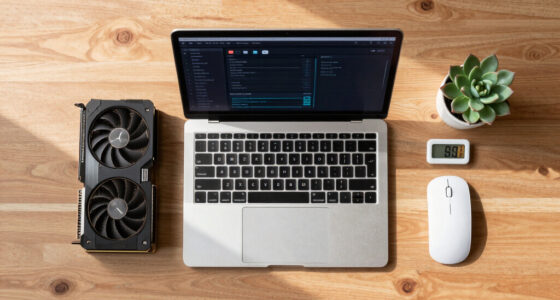
consumer hardware for local AI inference
As an affiliate, we earn on qualifying purchases.
As an affiliate, we earn on qualifying purchases.
2026 Shift from Post-Training to Trained-In Quantization
Historically, the community relied on post-training quantization (PTQ) to compress models after they were trained at full precision, typically FP16 or BF16. This process was lossy but manageable. In 2026, models like Kimi K3 invert this paradigm by training directly in low-precision formats such as MXFP4, which preserves more information during training. This change is driven by advances in hardware acceleration, notably Blackwell-class GPUs, and the development of native quantization formats optimized for these architectures.
This transition was enabled by the advent of hardware-native formats and the ability to calibrate mixed-precision models dynamically, allowing for aggressive compression while maintaining accuracy. It also reflects a broader trend toward making large models more accessible for local inference, reducing dependency on cloud-based services.
"The compression that normally shrinks an open model after release was already spent before it. You cannot casually take K3 from 4-bit down to 3-bit with a uniform method and expect it to survive, because the usual slack — the gap between FP16 and 4-bit — is not there. It was used during training."
— Thorsten Meyer
As an affiliate, we earn on qualifying purchases.
Remaining Questions About Quantization Limits and Compatibility
It is still unclear how widely adopted trained-in quantization will become across different architectures and whether future hardware will support even lower bit-depth formats without accuracy loss. The long-term stability and interoperability of these native formats also remain under observation, especially for models beyond Kimi K3.
quantization-aware training hardware
As an affiliate, we earn on qualifying purchases.
As an affiliate, we earn on qualifying purchases.
Next Steps for Hardware and Model Development in 2026
Expect continued refinement of native low-precision training techniques, with hardware manufacturers expanding support for formats like MXFP4. Future models will likely be trained directly in these formats, further reducing size and increasing efficiency. Developers and researchers will explore dynamic mixed-precision quantization to push compression boundaries while maintaining accuracy, making frontier-scale models more accessible for local deployment.
high-performance GPU for AI modeling
As an affiliate, we earn on qualifying purchases.
As an affiliate, we earn on qualifying purchases.
Key Questions
How does trained-in quantization differ from traditional post-training quantization?
Trained-in quantization involves training the model directly in low-precision formats, making it inherently robust to quantization effects. In contrast, post-training quantization compresses a full-precision model after training, which can lead to accuracy loss.
Why are native low-precision formats like MXFP4 important?
They enable models to be trained and run directly in low-precision, significantly reducing size and improving efficiency on hardware like Blackwell GPUs, making large models feasible for local use.
What hardware advancements support these quantization techniques?
Blackwell-class GPUs and Apple silicon's unified memory architecture are key to supporting native low-precision formats, allowing for faster inference and better memory management.
Will all models adopt trained-in quantization?
While many frontier models are moving toward this approach, widespread adoption depends on hardware support, training infrastructure, and the need for accuracy preservation at extreme compression levels.
Source: ThorstenMeyerAI.com
Halloween Picks
halloween
As an affiliate, we earn on qualifying purchases.