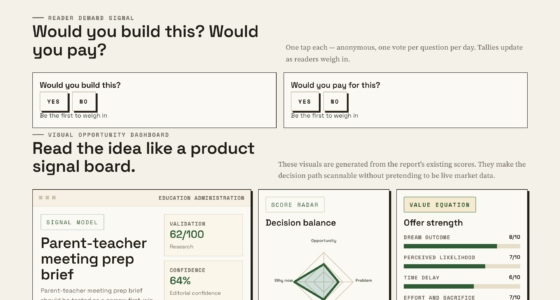
📊 Full opportunity report: The Impact Of Attention-Burden On K-12 Edtech Selection And Student Well-being on IdeaNavigator AI — validation score, market gap, and execution plan.
TL;DR

A new method to measure the cumulative attention burden of school apps is being developed for district administrators. This aims to improve student well-being and influence edtech procurement by accounting for stacked app features like notifications and rewards.
IdeaNavigator AI is developing a cumulative attention-burden score for K-12 school software portfolios, aiming to provide district administrators with a comprehensive measure of how stacked app features impact student attention and well-being. This initiative responds to growing concerns over screen time, notifications, and variable rewards in educational technology, which are now influencing procurement decisions and policy discussions at the district level.
The core innovation involves analyzing the total effect of multiple classroom apps, which individually may pass review but collectively create an ‘attention load’ through autoplay features, streaks, notifications, and rewards. These elements, while designed to engage students, can produce an ‘always-on’ attention drain that is difficult to measure and manage.
According to an anonymous researcher involved in the project, the goal is to ingest a district’s entire app portfolio, extract per-app ratings, and then layer a model that accounts for the cumulative effects of stacking these features across a typical student day. The output would be a portfolio score, a report suitable for presentation to school boards, and a procurement gate to evaluate new apps based on their attention impact.
This approach is motivated partly by recent policy shifts, including phone bans and lawsuits over excessive screen time, which have heightened the need for a portfolio-level, defensible metric rather than isolated app ratings. The model aims to provide a ‘first-win’ workflow for district administrators responsible for managing the overall edtech ecosystem.
Initial validation involves scoring the app portfolios of three districts, presenting these findings to their boards, and measuring whether the reports influence procurement decisions within two quarters. The subscription-based model scales with district size, offering annual licensing and per-review gating for new app approval.
Implications for Student Well-being and Edtech Procurement
This development could significantly influence how school districts select and manage educational technology by shifting focus from individual app safety to the overall attention impact of the entire software portfolio. By quantifying the cumulative attention load, districts can make more informed decisions that prioritize student well-being and reduce the risk of overexposure to distracting features.
Implementing such a score could lead to a more responsible edtech market, encouraging developers to minimize addictive mechanics and design more student-friendly interfaces. It also offers districts a defensible, data-driven approach to procurement amidst increasing scrutiny of screen time and digital distraction policies.
However, the approach remains in early testing stages, and its effectiveness in changing procurement behaviors and improving student outcomes is yet to be proven. The success of the pilot will determine whether this model becomes a standard part of district decision-making processes.
student attention monitoring software
As an affiliate, we earn on qualifying purchases.
As an affiliate, we earn on qualifying purchases.
Growing Concerns Over Student Attention and Screen Time
Over recent years, concerns about excessive screen time and digital distraction have prompted policy actions such as phone bans and lawsuits targeting screen-time overreach. These developments have increased pressure on school districts to evaluate the true impact of educational apps on student attention and mental health.
While individual app reviews focus on safety and privacy, they often overlook how multiple apps, used sequentially or simultaneously, contribute to an overall attention load. This gap has led to calls for more comprehensive assessments that consider stacking effects, especially as districts seek to balance educational benefits with student well-being.
In response, some districts have begun exploring new metrics and tools to better understand the cumulative effects of their digital ecosystems. The development of the attention-burden score by IdeaNavigator AI is part of this broader movement toward responsible edtech management.
As an affiliate, we earn on qualifying purchases.
Uncertainties About Effectiveness and Adoption
It is not yet clear how accurately the attention-burden score will reflect real student experiences or whether districts will adopt it widely. The pilot phase will determine its practical utility and influence on procurement decisions.
Further, the model’s ability to predict long-term impacts on student well-being remains unproven, and there may be disagreements over how to weight different app features or stacking effects.
screen time management for students
As an affiliate, we earn on qualifying purchases.
As an affiliate, we earn on qualifying purchases.
Next Steps in Pilot Testing and Validation
Within the next two quarters, IdeaNavigator AI plans to score three district app portfolios, present findings to their boards, and evaluate whether the reports influence procurement choices. Success in this phase could lead to broader adoption and integration into standard district workflows.
Additional research will focus on refining the scoring model, validating its correlation with student well-being metrics, and expanding the system to include more districts. Stakeholders will watch for changes in app procurement patterns and student engagement outcomes.
As an affiliate, we earn on qualifying purchases.
Key Questions
How does the attention-burden score differ from existing app ratings?
The score considers the cumulative effects of stacking app features like notifications, streaks, and rewards across a typical student day, rather than evaluating apps in isolation.
Will this scoring system be mandatory for districts?
At this stage, it is a pilot initiative; widespread adoption will depend on validation results and district interest.
Can app developers influence their scores?
Yes, developers can reduce attention load by minimizing addictive mechanics and designing more student-friendly interfaces, potentially improving their ratings.
What are the potential challenges in implementing this system?
Challenges include accurately modeling stacking effects, gaining district buy-in, and ensuring the score reflects real student experiences and outcomes.
How might this impact student mental health policies?
If effective, the score could support policies aimed at reducing digital distraction and promoting healthier screen time habits in schools.
Source: IdeaNavigator AI