TL;DR

Prime made for students and young adults
- Fast, free delivery for dorm and study essentials
- Prime Video and Amazon Music included
- Member-only deals
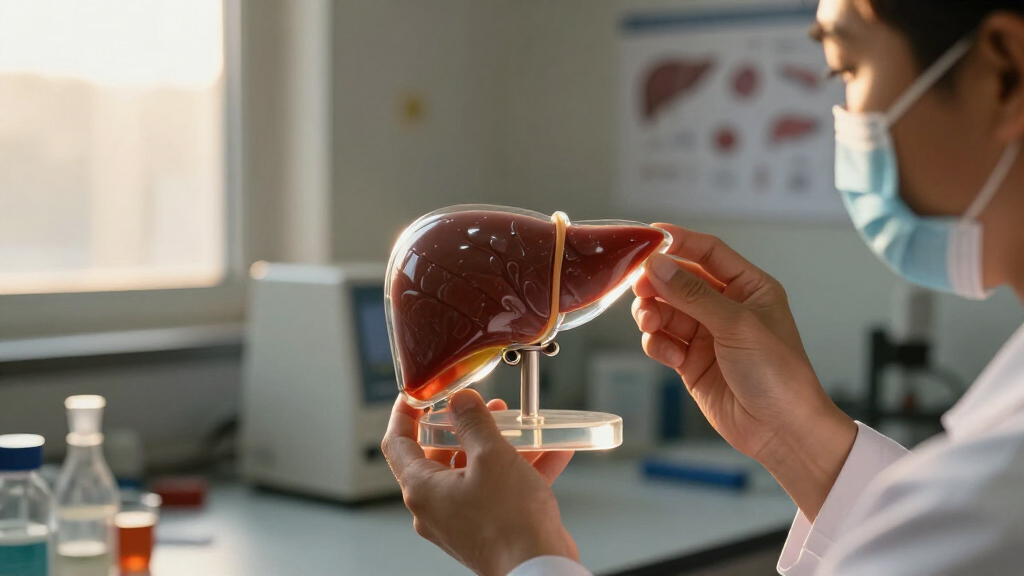
The liver’s extraordinary ability to regenerate has long fascinated scientists. Recent research is uncovering the biological mechanisms behind this, with potential implications for regenerative medicine. However, many aspects remain uncertain, and understanding continues to evolve.
Recent advancements in liver regeneration research have identified key cellular and molecular mechanisms that enable the organ to restore itself after injury or partial removal. These findings highlight the remarkable capacity of hepatocytes to proliferate rapidly and efficiently, offering promising insights for medical applications.
The liver can regenerate up to 70% of its mass within a few weeks following injury or partial removal, a process that involves rapid proliferation of hepatocytes—the main functional cells of the liver. Researchers have identified that this regenerative process is driven by a complex interplay of signaling pathways, growth factors, and gene expression changes. Notably, cytokines such as tumor necrosis factor-alpha (TNF-alpha) and hepatocyte growth factor (HGF) are central to initiating and sustaining regeneration, according to recent findings published in scientific journals.
Recent investigations suggest that the liver’s regenerative capacity is partly due to its unique cellular environment, which allows hepatocytes to re-enter the cell cycle after being quiescent for long periods. Unlike most organs, which rely on stem cells for regeneration, the liver primarily uses mature hepatocytes to replicate, making its process distinct. Researchers are also exploring how the liver’s immune cells, such as Kupffer cells, contribute to regeneration by releasing signaling molecules that promote tissue growth.
Despite these advances, many details remain uncertain. For example, scientists are still unraveling how the liver balances regeneration with preventing overgrowth, which could lead to cancer. Additionally, the exact molecular triggers that switch hepatocytes from a resting to a proliferative state are not fully understood. These gaps in knowledge are the focus of ongoing research aimed at translating this understanding into regenerative therapies.
Understanding Liver Regeneration’s Impact on Medicine
The liver’s extraordinary regenerative ability has significant implications for medicine, especially in treating liver diseases such as cirrhosis and liver failure. By deciphering the mechanisms that enable such rapid tissue renewal, scientists hope to develop therapies that can stimulate regeneration in damaged organs or improve outcomes for transplant patients. Furthermore, insights into liver regeneration could inform regenerative medicine approaches for other tissues, potentially revolutionizing how organ failure is treated in the future.
Additionally, understanding the regulation of liver growth is critical for cancer research, since uncontrolled proliferation can lead to hepatocellular carcinoma. Clarifying how the liver controls this balance may help prevent or treat liver cancers more effectively. Overall, the unique biology of liver regeneration offers a promising avenue for advancing both basic science and clinical applications.
As an affiliate, we earn on qualifying purchases.
Historical and Scientific Background of Liver Regeneration
The ability of the liver to regenerate was first observed centuries ago, but only in recent decades have scientists begun to understand the cellular and molecular basis of this process. Early studies identified that hepatocytes could re-enter the cell cycle after injury, but the specific signaling pathways involved remained elusive until advancements in molecular biology allowed for more detailed investigation.
In the late 20th and early 21st centuries, research identified key growth factors such as HGF and cytokines like TNF-alpha as central to liver regeneration. Animal models, particularly in rodents, have been instrumental in uncovering these mechanisms. More recently, the focus has shifted toward understanding the role of the immune system, cellular microenvironment, and genetic regulation in controlling regeneration. Interest in this topic has surged in 2023, driven by a combination of scientific breakthroughs and increased public and academic curiosity, especially amid rising liver disease prevalence and the potential for regenerative therapies.
As an affiliate, we earn on qualifying purchases.
Key Unknowns in Liver Regenerative Biology
Despite significant progress, many aspects of liver regeneration remain unclear. For instance, the precise molecular signals that initiate hepatocyte proliferation are not fully identified. Researchers also debate how the liver prevents excessive growth, which could lead to tumor formation. The role of immune cells and the microenvironment in fine-tuning regeneration is still being explored, with some findings suggesting they have dual roles in promoting and restraining growth. Moreover, how these processes differ in humans compared to animal models is an ongoing question, complicating the translation of findings into clinical therapies.
hepatocyte growth factor supplements
As an affiliate, we earn on qualifying purchases.
As an affiliate, we earn on qualifying purchases.
Future Research Directions and Clinical Implications
Next steps include detailed studies to map the signaling networks that control liver regeneration at the molecular level. Advances in gene editing, single-cell sequencing, and imaging technologies are expected to accelerate this research. Clinically, scientists aim to develop drugs or biological agents that can stimulate regeneration in patients with liver damage. Additionally, ongoing research will seek to understand how to prevent overgrowth and cancer risk during regenerative processes. The hope is that, over the next few years, these insights will lead to innovative treatments that can repair or replace damaged liver tissue more effectively.
As an affiliate, we earn on qualifying purchases.
Key Questions
Why is the liver uniquely capable of regeneration?
The liver’s ability to regenerate primarily relies on mature hepatocytes that can re-enter the cell cycle, unlike most organs that depend on stem cells. Its microenvironment and signaling pathways are uniquely suited to support rapid tissue growth.
Can liver regeneration be enhanced or stimulated in patients?
Researchers are exploring drugs and biological therapies that could stimulate liver regeneration, especially for patients with liver diseases. However, translating these findings into safe, effective treatments is still in progress.
Are there risks associated with liver regeneration?
Yes, uncontrolled regeneration can lead to tumor formation. Understanding how the liver controls growth is crucial to prevent such risks while promoting healing.
How does immune response influence liver regeneration?
Immune cells like Kupffer cells release signaling molecules that can promote or inhibit regeneration, making immune regulation a key area of research in understanding liver repair.
What are the main challenges in studying liver regeneration?
Key challenges include deciphering complex signaling networks, understanding species differences, and translating animal model findings into human therapies.
Source: hn
Fall Picks
fall essentials
As an affiliate, we earn on qualifying purchases.