
🔍 Read the full analysis: Build An AI NLC Watch Around The Twilight Dial At 83 Km on ThorstenMeyerAI.com

Prime made for students and young adults
- Fast, free delivery for dorm and study essentials
- Prime Video and Amazon Music included
- Member-only deals
TL;DR
ThorstenMeyerAI.com describes “Noctilucent — NLC Watch at 83 km,” an AI-built exhibition about real high-altitude ice clouds. The fictional project uses an interactive twilight dial and browser-generated visuals to show how sunlight can still reach clouds above a darkened ground.
ThorstenMeyerAI.com has presented “Noctilucent — NLC Watch at 83 km,” an AI-built interactive exhibition that uses a solar-depression dial to illustrate how high-altitude clouds can remain sunlit after the ground is dark, as detailed in the original project analysis. The site describes the observing project and its field journal as fictional; it is not a real company or a live scientific monitoring service.
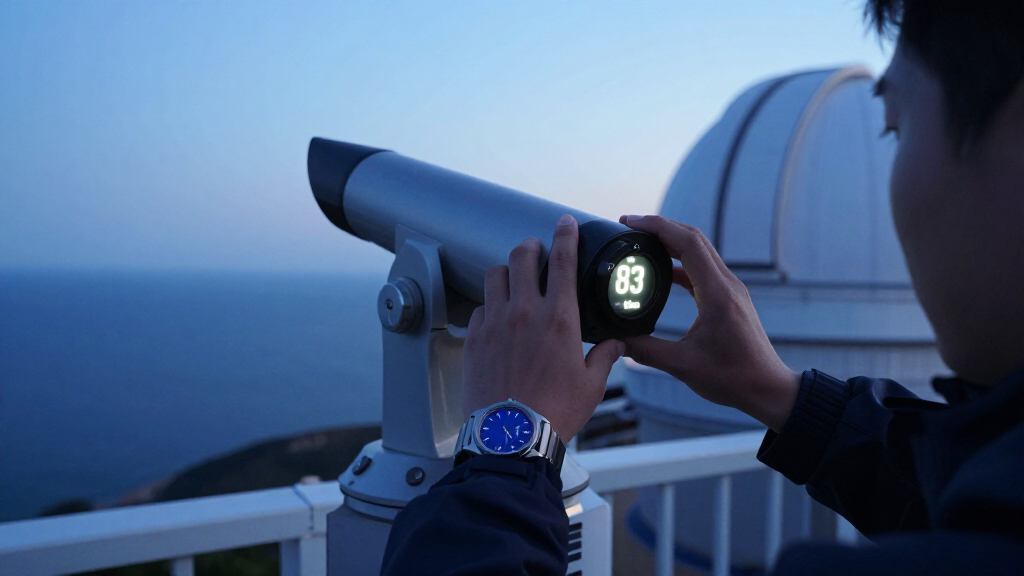
The exhibition centers on a dial that varies the Sun’s position from six to 16 degrees below the horizon. As visitors move it, the page changes connected visual elements, including the sky’s brightness, shadow, cloud glow, ambient color, grain and horizon flare. The experience is designed to make twilight geometry legible through interaction rather than present the sky as a fixed illustration.
The source describes noctilucent clouds as real ice clouds at high altitude that can remain illuminated when observers below are already in darkness. The page sets its fictional cloud band at 83 kilometres and includes diagrams and explanatory text about cloud forms, ice crystals, seasonal observation and the horizon. Its cloud illustrations distinguish billows, whirls and bands through different wave patterns.
A later interaction asks visitors to hold a control while ground-level haze recedes and the cloud band becomes clearer; the sighting fades if they release early. The site says the interaction supports pointer and keyboard input, with touch-like key input also described. Visuals are generated in the browser using Canvas, inline SVG and CSS, rather than image assets. The source also says animation pauses when the page is hidden and is simplified for reduced-motion settings.
Interactive exhibition · Twilight geometry
Build an AI NLC Watch Around the Twilight Dial at 83 km
A fictional field journal turns a real atmospheric phenomenon into an interactive lesson: explore how high ice clouds can catch sunlight after the ground has fallen into darkness.
Real clouds, fictional observer network
Noctilucent clouds are real high-altitude ice clouds. The exhibit explains their glow through the geometry of summer twilight.
Ice above the dark
At great altitude, clouds may still receive sunlight when an observer below is already in darkness.
Billows, whirls, bands
Different wave patterns distinguish the forms, giving the diagrams a vocabulary for reading the sky.
Summer-night watch
The creative brief emphasizes solstice weeks and latitudes of 55–65°, as editorial framing for the experience.
Turn the twilight dial
The central idea is to let one meaningful variable influence the whole experience, rather than decorate a fixed illustration.
From six to sixteen degrees below the horizon
As the visitor moves the dial, the exhibition changes sky brightness, shadow, cloud glow, ambient color, grain and horizon flare. The dial makes the changing geometry visible through interaction.
A patient watch, built in the browser
The experience pairs scientific explanation with a slow, atmospheric reveal—and describes practical input and motion behavior.
Set the angle
Move the solar-depression control to shift the simulated twilight conditions.
Hold to reveal
Keep a control pressed as ground haze recedes and the cloud band comes into clearer view.
Explore the forms
Read diagrams and explanations about ice crystals, cloud forms, seasonal observation and the horizon.
Exhibition or monitoring service?
Keep the artwork’s educational purpose distinct from scientific observation and operational claims.
| Question | What the source says | Status |
|---|---|---|
| Is NLC Watch real? | A fictional observing project and field journal. | ✗ Not a real service |
| Are noctilucent clouds real? | Yes. High-altitude ice clouds can remain sunlit after the ground darkens. | ✓ Real phenomenon |
| Does it show live sightings? | The supplied description does not report live observations or monitoring data. | ✗ No live feed stated |
| Is 83 km a measurement? | It is the exhibit’s designed cloud-band altitude, not an active observation. | ~ Design feature |
What remains unknown
The available description explains the concept and controls, but leaves several verification questions open.
Date and creator
No publication date or individual creator is specified in the supplied material.
Accuracy and performance
No independent scientific accuracy review, educational evaluation or performance measurements are provided.
Current access
The source refers to a live site and design guide, but their URLs are not included here, so current availability cannot be confirmed.
Future plans
No launch date, research partnership, live data feed or future scientific milestone is announced.
Artwork today, research separately
Any later coverage should distinguish changes to the interactive artwork from developments in noctilucent-cloud research.
“The result pairs scientific explanation with the mood of a patient summer-night watch.”
ThorstenMeyerAI.com
Visit, if available
Inspect the exhibition and design guide directly to see the dial and implementation.
Read the design
Look for the lighting model, procedural graphics, visibility pause and reduced-motion behavior.
Track claims carefully
Treat the current report as an AI-built educational experience, not a record of sightings.
Key questions
A compact guide to what the described exhibition does—and what it does not claim.
Is NLC Watch a real cloud-monitoring service?
No. It is described as a fictional observing project and field journal, not a live scientific service or real company.
What does the solar-depression dial do?
It moves from 6° to 16° below the horizon and changes several visual elements, including sky light, shadows and cloud glow.
Are noctilucent clouds real?
Yes. They are real high-altitude ice clouds that can catch sunlight after the ground below has become dark.
How are the visuals made?
The source describes browser-generated visuals using Canvas, inline SVG and CSS, without image assets.
Turning Twilight Geometry Into Interaction
The project’s main value is as a visual explanation of a real atmospheric phenomenon, not as a source of new observations. By linking one control to the sky, clouds and supporting explanations, it offers visitors a way to explore how illumination changes as the Sun drops farther below the horizon. That approach may make the contrast between a dark ground and still-lit high clouds easier to understand than a static diagram alone.
The distinction between a designed exhibit and a scientific service matters. The named observing network, stations and field logs are part of the fictional presentation described by the source. Readers should not treat the page as a source of live sightings, verified measurements or operational monitoring. Its stated contribution is an interactive educational experience and a demonstration of browser-based visual design.
Popular right now

Samsung 48 4K OLED Smart TV (2026) with WireLogic 8ft Ultra High Speed HDMI Cable

Ninja Crispi Microwave & Air Fryer with FusionCrisp Technology, 14-in-1, Black (MW101BK1)

Shark NV752 Rotator Powered Lift-Away TruePet Upright Vacuum, Bordeaux
As an affiliate, we earn on qualifying purchases.
Real Clouds, Fictional Observer Network
Noctilucent clouds, also called NLCs, are the real subject of the exhibit. The source explains their signature appearance through sunlight reaching clouds high above the observer after the lower sky has entered darkness. It frames the experience around summer-night observation and the changing angle of twilight, while identifying the fictional project as an invented field journal.
The page’s creative brief places its most expressive dial setting near 11 degrees below the horizon and calls for seasonal material focused on solstice weeks and latitudes of 55–65 degrees. These are presented as design elements and editorial framing in the supplied material, not as a report of a new scientific study or a verified observing campaign. The source also describes a three-pass construction process: building the page, reviewing it for clarity and interaction, and then conducting an art-direction review.
““Noctilucent — NLC Watch at 83 km” is an AI-built exhibition piece: a fictional field journal for a fictional observing project, not a real company or live scientific service.”
— ThorstenMeyerAI.com
Limits of the Published Information
The supplied material does not specify a publication date, identify an individual creator, or provide independent technical testing of the page. It describes the controls and rendering behavior, but does not include performance measurements or evidence that the educational presentation has been evaluated for scientific accuracy. The specified altitude and dial range are features of the exhibit’s design; they are not measurements from an active observation.
The source refers readers to a live site and a design guide, but does not provide their URLs here. It is therefore not possible from the material alone to verify the current availability of the experience or inspect its implementation. No claims about actual cloud sightings, current weather, or a functioning observer network are reported.
The Experience and Build Notes
The next step for readers interested in the project is to visit the exhibition and its design guide, if available, to inspect the dial and implementation directly. The source says the guide covers the lighting model, procedural graphics, animation that responds to page visibility and reduced-motion behavior. It does not announce a launch date, research partnership, live data feed or future scientific milestone.
Any later coverage should distinguish changes to the interactive artwork from developments in noctilucent-cloud research. Based on the material provided, the current news is the presentation of a fictional, AI-built educational experience; whether it will receive updates or be used in a broader educational project remains unknown.
Key Questions
Is NLC Watch a real cloud-monitoring service?
No. ThorstenMeyerAI.com describes it as a fictional observing project and field journal, not a live scientific service or real company.
What does the solar-depression dial do?
It moves through a range from six to 16 degrees below the horizon and changes several parts of the display, including sky light, shadows and cloud glow.
Are noctilucent clouds real?
Yes. The source identifies noctilucent clouds as real high-altitude ice clouds that can still catch sunlight after the ground below has become dark.
Does the page show live cloud sightings?
The supplied description presents the experience as an interactive exhibition and does not say it uses live observations or current monitoring data.
How are the visuals made?
The source says the sky and cloud forms are generated with Canvas, diagrams use inline SVG, and CSS provides layout and visual effects. It says the page does not rely on image assets.
Source: ThorstenMeyerAI.com