

For families who want science to spark conversation as well as play, Gizmos: 2nd Edition is my best overall pick for its hands-on-feeling engine building and broad appeal to strategy-minded players. Cytosis offers a more direct route into cell biology, while MindWare Science Trivia Challenge is a simpler choice for younger players and quick rounds. The main tradeoff is between accessible trivia or light play and deeper games that ask families to learn rules and think several turns ahead. Theme also matters: chemistry, biology, astronomy, and ecology each offer a different kind of science experience. Continue reading for the full breakdown and guidance on choosing a game that fits your family’s ages, patience, and play style.

Prime made for students and young adults
- Fast, free delivery for dorm and study essentials
- Prime Video and Amazon Music included
- Member-only deals
Key Takeaways
- Gizmos stands out as the strongest all-around strategy pick for families ready to build combinations and plan ahead, while its richer rules may not suit a very young or casual group.
- Cytosis and Cellulose make biology playable through different lenses: Cytosis focuses on cell processes, while Cellulose shifts attention to plant cells and resource management.
- MindWare Science Trivia Challenge is the clearest entry point for younger players because question-and-answer play asks less of new board-game players than strategy titles do.
- Subatomic, Compounded, Peptide, and Periodic divide chemistry into distinct experiences—from building atoms and compounds to assembling proteins or recognizing elements—so subject preference matters more than choosing a single universal chemistry game.
- Planet Voyagers, Ecosystem, On the Origin of Species, and Organ Attack broaden the shortlist beyond lab science, covering astronomy, habitats, evolution, and playful anatomy with different levels of strategy and silliness.
| Subatomic: An Atom Building Game (2nd Edition) |  | Best for Older Kids Learning Deck-Building | Brand: Genius Games | Edition: 2nd Edition | Players: 2–4 | VIEW LATEST PRICE | See Our Full Breakdown |
| Cytosis: A Cell Biology Board Game |  | Best for Classroom-Style Cell Biology | Brand: Genius Games | Game type: Educational, family board game | Listed player counts: 2, 3, 4, or 10+ | VIEW LATEST PRICE | See Our Full Breakdown |
| MindWare Science Trivia Challenge Board Game for Ages 7 and Up | 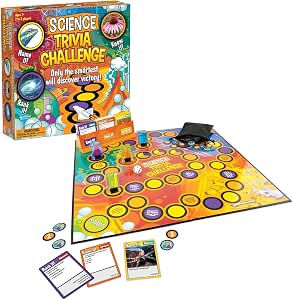 | Best for Mixed-Age Family Groups | Brand: MindWare | Game type: Educational trivia board game | Recommended age: Ages 7 and up | VIEW LATEST PRICE | See Our Full Breakdown |
| Gizmos Board Game, 2nd Edition |  | Best for Chain-Reaction Strategy | Brand: CMON | Edition: 2nd Edition | Genre: Strategy | VIEW LATEST PRICE | See Our Full Breakdown |
| Cellulose: A Plant Cell Biology Strategy Board Game |  | Best for Solo and Small-Group Play | Brand: Genius Games | Players: 1–5 | Playing time: 60–90 minutes | VIEW LATEST PRICE | See Our Full Breakdown |
| Compounded: The Peer-Reviewed Edition Chemistry Strategy Board Game |  | Best for Strategic Chemistry Play | Players: 2–5 | Playing time: 45 minutes | Recommended age: 14 years and up | VIEW LATEST PRICE | See Our Full Breakdown |
| Peptide: A Protein Building Strategy Card Game |  | Best for Biology-Minded Families | Game type: Strategy card game | Players: 2–5 | Playing time: 30–45 minutes | VIEW LATEST PRICE | See Our Full Breakdown |
| Periodic: A Game of the Elements |  | Best for Learning the Periodic Table | Players: 2–6 | Recommended minimum age: 10 years | Genre: Strategy | VIEW LATEST PRICE | See Our Full Breakdown |
| SimplyFun Planet Voyagers Astronomy Game for Ages 8+, 2–5 Players |  | Best for Younger Space Explorers | Players: 2–5 | Recommended age: 8–10 years | Grade level: 3rd–5th grade | VIEW LATEST PRICE | See Our Full Breakdown |
| On the Origin of Species: Darwin-Inspired Strategy Board Game |  | Best for Longer Science-and-History Sessions | Players: 2–4 | Playing time: 90 minutes | Recommended age: 8 years and up | VIEW LATEST PRICE | See Our Full Breakdown |
| The Awkward Yeti Organ Attack Card Game |  | Best for Anatomy with a Sense of Humor | Game type: Card game | Players: 2–6 | Recommended age: 8 years and up | VIEW LATEST PRICE | See Our Full Breakdown |
| Ecosystem: A Family Card Game About Building Habitats |  | Best for Quick Ecology Play | Game type: Card drafting game | Players: 2–6 | Playing time: 15–20 minutes | VIEW LATEST PRICE | See Our Full Breakdown |
| science board games for familie | Players | Recommended age | Playing time | Brand |
|---|---|---|---|---|
| Subatomic: An Atom Building Ga | 2–4 | 14 years and up | 40–60 minutes | Genius Games |
| Cytosis: A Cell Biology Board | — | — | — | Genius Games |
| MindWare Science Trivia Challe | Up to 4 | Ages 7 and up | — | MindWare |
| Gizmos Board Game | 2–4 | 14 years and up | 40–50 minutes | CMON |
| Cellulose: A Plant Cell Biolog | 1–5 | 14 years and up | 60–90 minutes | Genius Games |
| Compounded: The Peer-Reviewed | 2–5 | 14 years and up | 45 minutes | — |
| Peptide: A Protein Building St | 2–5 | 10 and up | 30–45 minutes | Genius Games |
| Periodic: A Game of the Elemen | 2–6 | — | — | Genius Games |
| SimplyFun Planet Voyagers Astr | 2–5 | 8–10 years | 30 minutes | — |
| On the Origin of Species: Darw | 2–4 | 8 years and up | 90 minutes | Genius Games |
| The Awkward Yeti Organ Attack | 2–6 | 8 years and up | 30–90 minutes | — |
| Ecosystem: A Family Card Game | 2–6 | — | 15–20 minutes | — |
More Details on Our Top Picks
Subatomic: An Atom Building Game (2nd Edition)
Subatomic pairs deck-building with a clear science goal: players gather particle cards, improve their decks, and assemble atoms to score. Scientist cards and end goals add choices beyond simply collecting the right pieces, while the included Science Behind booklet connects the play to atomic science. At 40–60 minutes, it is a shorter commitment than Cytosis, which lists a 90-minute playing time and asks players to manage a wider set of cell processes. The tradeoff is age fit: Subatomic is recommended for ages 14 and up, so it is less suited to younger family members than MindWare Science Trivia Challenge, which starts at age 7. I would choose it for families wanting a focused strategy game, not a quick all-ages science quiz.
Pros:- Connects deck-building decisions to building atoms and scoring.
- Scientist cards and end goals add strategic variety.
- Science Behind booklet explains the concepts represented in play.
- Plays in 40–60 minutes, shorter than Cytosis’s listed 90 minutes.
Cons:- The recommended age of 14 and up rules out many younger family players.
- Requires at least two players, so it cannot serve as a solo game.
- The science theme centers on atomic structure rather than a broad range of topics.
Best for: Families with teens who want to learn deck-building alongside an atomic-science theme.
Not ideal for: Families with younger children or anyone seeking a solo option; it is recommended for ages 14 and up and requires at least two players.
- Brand:Genius Games
- Edition:2nd Edition
- Players:2–4
- Recommended age:14 years and up
- Playing time:40–60 minutes
- Material:Cardboard
- Model number:GOT1012
- Model year:2019
Our verdict“Choose Subatomic for teen-led family groups seeking a moderately paced, strategic introduction to deck-building and atomic science.”
Cytosis: A Cell Biology Board Game
Cytosis makes cell biology the engine of a worker-placement strategy game: players take actions to collect resources and build enzymes, hormones, and receptors. That gives the subject more room to shape decisions than MindWare Science Trivia Challenge, where science learning comes through questions and observation tasks. Its fact-based booklet, reviewed by PhDs and doctors, adds a reference point for families who want to discuss the biology after play. The main family tradeoff is time: the listed estimate is 90 minutes, making it a longer session than Subatomic or Gizmos. The player information is also unusual, listing 2, 3, 4, or 10+ rather than a simple continuous range. I would favor Cytosis for older, patient groups who enjoy detailed strategy over a short, casual game.
Pros:- Uses worker placement to make cell processes part of players’ decisions.
- Covers enzymes, hormones, receptors, and cell organelles.
- Includes a fact-based booklet reviewed by PhDs and doctors.
- Can support family play or educational settings.
Cons:- The estimated 90-minute playing time may be a difficult fit for shorter family sessions.
- The listed player counts of 2, 3, 4, or 10+ leave the supported group size unclear.
- Its cell-biology focus and strategy mechanisms may be demanding for younger or casual players.
Best for: Families with science-curious players aged 10 and up who enjoy worker placement and have time for a longer game.
Not ideal for: Households seeking a short weeknight game or a clear, conventional player-count guide.
- Brand:Genius Games
- Game type:Educational, family board game
- Listed player counts:2, 3, 4, or 10+
- Estimated playing time:90 minutes
- Minimum recommended age:10 years
- Edition:Cytosis Game
- Included components:Cytosis: A Cell Biology Game
- Model number:GOT1006
Our verdict“Pick Cytosis when your family wants a substantial cell-biology strategy session and can set aside a longer stretch of time.”
MindWare Science Trivia Challenge Board Game for Ages 7 and Up
Science Trivia Challenge is the most accessible pick here for families spanning elementary-school ages and adults. Its double-sided cards provide beginner and advanced questions, so players can engage at different difficulty levels instead of expecting everyone to know the same facts. That makes it a better fit for mixed ages than Subatomic or Gizmos, both recommended for ages 14 and up. With 216 cards, observation tokens, a die, and pawns, it also mixes recall with observation and deduction rather than relying only on a strategy system. The tradeoff is that it offers less sustained game-engine planning than Cytosis or Cellulose. It supports solo play or groups, but the listed group limit is four, so larger family gatherings may need to split up.
Pros:- Beginner and advanced questions accommodate different knowledge levels.
- Supports solo play as well as group play.
- Combines science questions with logic, deduction, and observation.
- Includes 216 cards and 50 observation tokens for varied prompts and tasks.
Cons:- Limited to up to four players, which may not suit larger family gatherings.
- Trivia-based play offers less strategic development than Cytosis or Cellulose.
- The age recommendation of 7 and up may leave younger children out.
Best for: Families with children aged 7 and up who want adjustable science questions for adults and kids to play together.
Not ideal for: Groups larger than four or strategy-game fans who want resource management and long-term planning rather than trivia and observation.
- Brand:MindWare
- Game type:Educational trivia board game
- Recommended age:Ages 7 and up
- Players:Up to 4
- Included components:216 cards, die, 50 observation tokens, token bag, 4 pawns
- Material:Paper
- Language:English
- Model:Science Trivia Challenge
Our verdict“Choose Science Trivia Challenge for adjustable, question-led family play, especially when children and adults have different science backgrounds.”
Gizmos Board Game, 2nd Edition
Gizmos turns its science-fair premise into a competition to collect energy spheres and build devices that trigger chain reactions. The appeal is the payoff of arranging effects so one action can set off another; that gives it a more combo-focused feel than Subatomic, where deck-building and atom construction guide play. A variable card selection also changes which options players face from game to game. Its 40–50-minute session is shorter than Cytosis‘s listed 90 minutes, which can make Gizmos easier to schedule for a focused family game night. The limitation is audience: it is recommended for ages 14 and up and supports only 2–4 players. I would choose it for teens and adults who enjoy tactical planning, not for families whose main goal is accessible science play for young children.
Pros:- Chain reactions make engine-building choices affect later turns.
- Variable card selection changes the options available between plays.
- Energy dispenser, spheres, dashboards, and tokens give play a tactile resource system.
- 40–50-minute playing time is shorter than Cytosis’s listed 90 minutes.
Cons:- Recommended for ages 14 and up, limiting play with younger children.
- Supports only 2–4 players.
- Its science-fair theme is expressed through device-building mechanics rather than detailed biological or atomic instruction.
Best for: Families with teens who enjoy building combos and planning efficient turns in a science-themed strategy game.
Not ideal for: Families with children under 14 or groups larger than four; its age guidance and player limit narrow its family fit.
- Brand:CMON
- Edition:2nd Edition
- Genre:Strategy
- Players:2–4
- Recommended age:14 years and up
- Playing time:40–50 minutes
- Language:English
- Included components:112 Gizmos cards, 52 energy spheres, 1 plastic energy dispenser, 4 energy rings, 20 victory point tokens, 1 rules leaflet, 4 player dashboards, 1 list of effects
Our verdict“Pick Gizmos for teen and adult family groups that value combo-building and a shorter strategic session over broad age accessibility.”
Cellulose: A Plant Cell Biology Strategy Board Game
Cellulose stands apart in this lineup by combining plant-cell biology with worker placement while supporting both solo play and groups of up to five. Players compete for limited resources, activate organelles, and pursue different scoring strategies; the solo mode adds an Ivy AI, an additional board, and a deck. That flexibility makes it a stronger choice for one-player science gaming than Cytosis, while its five-player capacity also exceeds the four-player limits listed for Subatomic and Gizmos. Cactus and Mangrove scenarios offer further variation, and a Science Behind the Game booklet explains the biology. The costs are a 60–90-minute session and competition over scarce action spaces and resources, which can frustrate players who prefer relaxed, low-conflict family games.
Pros:- Supports solo play as well as groups of up to five.
- Ivy AI mode includes an additional board and deck.
- Cactus and Mangrove scenarios add alternate play options.
- Science booklet connects photosynthesis and other plant-cell concepts to the game.
Cons:- The 60–90-minute playing time can be long for a family session.
- Limited action spaces and shared resources create direct competition.
- Recommended for ages 14 and up, so it is not suited to younger children.
Best for: Science-minded solo players or families of up to five who want plant biology, worker placement, and scenario variation.
Not ideal for: Families seeking a short, low-conflict game or players who dislike competing for limited actions and shared resources.
- Brand:Genius Games
- Players:1–5
- Playing time:60–90 minutes
- Edition:Standard Edition
- Language:English
- Genre:Educational, Strategy
- Scenarios:Cactus and Mangrove
- Solo mode:Includes Ivy AI, an additional board, and a deck
- Recommended age:14 years and up
Our verdict“Choose Cellulose if you want a solo-capable, replayable plant-biology strategy game and are comfortable with longer, competitive sessions.”
Compounded: The Peer-Reviewed Edition Chemistry Strategy Board Game
Compounded makes chemistry a hands-on planning challenge: players collect and trade elements, then assemble compounds to score. Its mix of worker placement, hand management, and negotiation gives family members several ways to shape a turn, while the larger components and periodic-table scoring aid help connect play to real chemistry. Compared with Periodic: A Game of the Elements, which focuses on moving around the table and spotting trends, Compounded asks players to gather specific ingredients and manage a lab. That makes it a stronger fit for families who enjoy resource planning, but less approachable for younger or less patient players. The press-your-luck element adds tension, yet explosions can destroy compounds, so progress may feel fragile. Its age recommendation of 14 and up also narrows its family audience.
Pros:- Uses real elements and compounds as the basis for collecting and scoring.
- Combines trading, worker placement, and hand management for varied strategic choices.
- Periodic-table scoring aid supports chemistry learning during play.
- Larger pieces and a bigger elements bag are designed to make handling easier.
Cons:- Explosions can destroy compounds, which may frustrate players who prefer steady progress.
- Risk management and collecting the right elements may be demanding for casual players.
- The 14-and-up age recommendation makes it less suitable for younger family members.
Best for: Families with teens who enjoy trading, resource planning, and learning chemistry through strategic decisions.
Not ideal for: Families with younger children or players who prefer low-risk, quick-to-learn games; compounds can be lost to explosions, and the recommended age starts at 14.
- Players:2–5
- Playing time:45 minutes
- Recommended age:14 years and up
- Edition:The Peer-Reviewed Edition
- Game mechanics:Hand management, trading, worker placement
- Educational objective:Learn about chemistry, elements, and compounds
- Language:English
- Item weight:1.07 kg
Our verdict“Choose Compounded for teen-and-adult families who want chemistry paired with trading and risk management, rather than a lighter introduction to the periodic table.”
Peptide: A Protein Building Strategy Card Game
Peptide turns protein synthesis into a card-driven planning puzzle: players collect amino acids and matching mRNA nucleotides to build protein chains. The open drafting gives players meaningful choices without requiring a large board, and its mRNA-to-protein translation theme reaches beyond basic biology vocabulary to include organelles, tRNA, and ATP. Compared with Cytosis, which covers a broader set of cell processes, Peptide concentrates on one biological pathway; that focus can make the science easier to follow for players who are curious about how proteins are built. The tradeoff is that the subject is specialized, so families looking for chemistry or astronomy will get more from Periodic or Planet Voyagers. Its 30–45-minute play time also asks for more attention than a very short card game, and it supports no more than five players.
Pros:- Connects amino acids and mRNA cards to the process of building protein chains.
- Introduces biology terms including organelles, tRNA, and ATP.
- Open card drafting gives players strategic choices from turn to turn.
- A 2–5 player range works for small family groups and classroom tables.
Cons:- The protein-building theme may not interest players who prefer chemistry, astronomy, or general science.
- The 2–5 player limit excludes larger family groups.
- Its biology terminology may take explanation for players unfamiliar with the topic.
Best for: Families with children ages 10 and up who are curious about genetics, protein building, and card-drafting strategy.
Not ideal for: Families wanting a broad mix of science topics or games for groups larger than five; its protein-building focus is specific and its player count is capped.
- Game type:Strategy card game
- Players:2–5
- Playing time:30–45 minutes
- Recommended age:10 and up
- Science concepts:mRNA-to-protein translation, polypeptide chains, proteins, amino acids, organelles, tRNA, ATP
- Brand:Genius Games
- Model number:GOT1003
Our verdict“Pick Peptide for a small family group that wants a focused biology lesson delivered through card drafting and protein-chain planning.”
Periodic: A Game of the Elements
Periodic gives players a reason to study the periodic table: they use periodic trends to move, discover elements, and compete for achievements. Tactical movement and set collection make the science part of the decisions rather than a separate trivia round, while the 2–6 player range gives it more room for a family group than Peptide or Compounded. It also has a younger stated minimum age than Compounded, making it a more plausible chemistry pick for families with preteens. The tradeoff is that players need to engage with chemistry terms and the table’s structure; it is not the best match for children who want a science theme without learning the underlying concepts. Compared with Compounded’s lab-building and explosion risks, Periodic puts more emphasis on navigating a shared science framework through movement and action choices.
Pros:- Uses periodic trends and element discovery as part of the core play.
- Combines tactical movement, action choices, and set collection.
- Supports groups of up to six, more than Peptide or Compounded.
- Designed for STEM and NGSS-related learning.
Cons:- Players need to engage with chemistry concepts and terminology to follow the strategy.
- The minimum recommended age of 10 may leave younger siblings out.
- Its chemistry focus offers less subject variety than a broader science game.
Best for: Families with players ages 10 and up who want to learn periodic-table structure and trends while competing on a shared board.
Not ideal for: Families seeking a science-themed game with little terminology or players younger than the stated age recommendation.
- Players:2–6
- Recommended minimum age:10 years
- Genre:Strategy
- Edition:Standard Edition
- Educational focus:Periodic table structure, periodic trends, and chemistry
- Standards:STEM and NGSS
- Brand:Genius Games
- Model number:GOT1008
Our verdict“Choose Periodic when your family wants a chemistry-focused strategy game with room for six, and skip it if periodic-table terminology is likely to dampen the fun.”
SimplyFun Planet Voyagers Astronomy Game for Ages 8+, 2–5 Players
Planet Voyagers is the most accessible age fit in this group: its stated range begins at 8, and its roughly 30-minute play time is shorter than the longer strategic sessions in Compounded and On the Origin of Species. Players use cards to move rockets, deploy research probes, and gather planetary information, so planning and space facts share the spotlight. The route toward Neptune and the alternate points goal offer a clear target for younger players, while the reading and word-recognition objectives add a literacy angle missing from the chemistry-heavy picks. That broader school-age appeal comes with a lighter player ceiling of five, and small parts call for care around children under three. It is intended for indoor play, so families wanting an outdoor activity should look elsewhere.
Pros:- Ages 8–10 and grades 3–5 make it the youngest-oriented pick in this batch.
- Combines solar-system learning with rocket movement, probes, and card play.
- Supports reading, phonics, word recognition, math, and space-science learning.
- A 30-minute duration suits families looking for a shorter session.
Cons:- Small parts present a choking hazard for young children.
- The 2–5 player limit may not fit larger family gatherings.
- Designed for indoor play rather than outdoor science activities.
Best for: Families with children in grades 3–5 who want a short astronomy game that combines planetary facts, reading, and planning.
Not ideal for: Families with toddlers around small game pieces, groups larger than five, or buyers seeking an outdoor game.
- Players:2–5
- Recommended age:8–10 years
- Grade level:3rd–5th grade
- Playing time:30 minutes
- Game type:Educational strategy board game
- Game mechanics:Area control, card drafting, strategy
- Educational objectives:Reading, phonics, word recognition, math, and earth and space science
- Materials:Cardstock, paper, plastic
- Batteries:Not required
Our verdict“Planet Voyagers is the clearest fit for elementary-age families who want a short space-science strategy game with reading practice built in.”
On the Origin of Species: Darwin-Inspired Strategy Board Game
On the Origin of Species pairs species discovery with Darwin’s Beagle journey, asking players to research habitats, use that knowledge to place species, and advance the ship. The two linked choices—gathering habitat information or acting on it—give the game more strategic texture than Planet Voyagers, whose shorter session and younger audience make it easier to bring out on a school-night evening. The Darwin theme also adds a clear history connection alongside the natural-science subject. The cost in attention is time: at about 90 minutes, it is the longest option in this batch, and players must track habitat knowledge, cards, and points. Its 2–4 player range is smaller than Periodic’s, so it suits a focused family table better than a larger group.
Pros:- Links species discovery to Charles Darwin’s Beagle journey for a science-and-history theme.
- Research and species-placement actions create meaningful strategic choices.
- A habitat-knowledge system connects player decisions to the subject matter.
- The 2–4 player range can suit a smaller family table.
Cons:- A 90-minute playing time is a substantial commitment for a family game night.
- Players must track habitat knowledge, cards, and points at once.
- The 2–4 player limit is narrower than Periodic’s 2–6 range.
Best for: Families with patient players who enjoy natural history, species research, and a longer strategy session for two to four people.
Not ideal for: Families with limited game-night time, younger players who struggle to track several systems, or groups larger than four.
- Players:2–4
- Playing time:90 minutes
- Recommended age:8 years and up
- Game type:Strategy board game
- Theme:Charles Darwin’s Beagle journey and species discovery
- Language:English
- Edition:Standard Edition
- Brand:Genius Games
- Manufacturer:Artana Games
Our verdict“Choose this Darwin-inspired game for a small group ready to spend a longer session on species research and strategy, not for a quick family game night.”
The Awkward Yeti Organ Attack Card Game
Organ Attack makes human anatomy the setting for a playful, take-that card game: players use afflictions to attack organs and immunity cards to defend them, with the last player holding an organ winning. That gives families a reason to talk about organs and health while they play, rather than learning through trivia questions as in MindWare Science Trivia Challenge. Its portable hardcover case also makes it easier to pack than a larger board-game box. The tradeoff is that the humor around illness may not suit every household, and the competitive attacks can matter more to the game than the science. A 30–90-minute playing time is also a wider, longer commitment than Ecosystem’s short rounds. I’d choose this for families who want anatomy woven into lively card play, not a detailed biology lesson.
Pros:- Connects organ and health concepts to card effects and game decisions.
- Supports 2–6 players, making it suitable for small groups and family gatherings.
- Hardcover book-style case is portable and provides a defined storage place for the cards.
- The humorous, competitive format can appeal to children, teens, and adults.
Cons:- Illness and affliction humor may not work for every family or classroom.
- The 30–90-minute playing time can be a longer commitment than quick science card games.
- Players need at least one opponent, so it is not a solo learning option.
Best for: Families with players ages 8 and up who enjoy playful, competitive card games and want a light introduction to anatomy.
Not ideal for: Families seeking a short, calm science activity or anyone uncomfortable with jokes about illnesses and afflictions.
- Game type:Card game
- Players:2–6
- Recommended age:8 years and up
- Playing time:30–90 minutes
- Educational objective:Human anatomy and health
- Included components:Cards
- Container:Hardcover book-style case
- Material:Paper
Our verdict“Choose Organ Attack for family groups that want anatomy concepts folded into humorous, competitive card play and are comfortable with its illness-themed jokes.”
Ecosystem: A Family Card Game About Building Habitats
Ecosystem earns its place as a family-friendly way to explore how animals fit into habitats. Players draft and arrange cards, so ecological ideas such as biodiversity and sustainability are linked to decisions about building a functioning habitat. Its 15–20-minute play time makes it easier to fit into a busy evening than Organ Attack’s 30–90-minute range, while the 2–6-player count suits families or classroom groups. Compared with MindWare Science Trivia Challenge, it puts the focus on arranging and planning rather than answering questions. The tradeoff is that players who want a direct, fact-led lesson may find the learning less explicit, and the game’s easy-to-learn, difficult-to-master design can create a gap between younger players and experienced strategists. I’d pick it for families who want brisk ecological play with room to improve their card choices.
Pros:- Introduces habitats, ecology, biodiversity, and sustainability through card placement.
- Short 15–20-minute sessions fit more easily into a family evening than longer strategy games.
- Supports 2–6 players and is described for both family and classroom use.
- Screen-free card play needs no electronic device.
Cons:- Drafting and arranging cards calls for strategic planning that may not suit every younger player.
- The easy-to-learn, difficult-to-master design may give experienced players an advantage over newcomers.
- The educational content is built into play rather than presented as a direct trivia lesson.
Best for: Families or educators looking for a screen-free, 15–20-minute game that introduces ecology through habitat-building decisions.
Not ideal for: Players who prefer straightforward science questions, minimal strategic choices, or a game that teaches facts explicitly as it is played.
- Game type:Card drafting game
- Players:2–6
- Playing time:15–20 minutes
- Card types:11
- Topics:Ecology, biodiversity, sustainability, and strategic thinking
- Gameplay:Draft and arrange cards to build ecosystems
- Suggested settings:Family game nights and classrooms
- Screen requirement:No electronics or screens required
Our verdict“Choose Ecosystem for quick, screen-free family sessions where players can learn ecology by making habitat-building choices.”

How We Picked
I ranked these games for the realities of family play: whether the science theme is clear during play, how easily a mixed-age group can learn the rules, and whether decisions stay engaging across repeated turns. I also weighed the likely fit for different households, including families seeking short, approachable rounds and groups willing to spend more time on strategic play. A game’s educational subject was not enough on its own; it needed a playable format that could hold family attention.
The order favors broad usefulness across family types, then gives credit to games with a more focused audience or a narrower play style. That puts Gizmos first for its combination of accessible theme and strategic depth, while Cytosis and MindWare Science Trivia Challenge serve distinct needs—science-forward strategy and easier entry, respectively. Specialized titles such as Peptide and Periodic can be better picks for a particular interest, but their narrower appeal makes them less universal recommendations.
| science board games for familie | Brand |
|---|---|
| Subatomic: An Atom Building Ga | Genius Games |
| Cytosis: A Cell Biology Board | Genius Games |
| MindWare Science Trivia Challe | MindWare |
| Gizmos Board Game | CMON |
| Cellulose: A Plant Cell Biolog | Genius Games |
| Compounded: The Peer-Reviewed | — |
| Peptide: A Protein Building St | Genius Games |
| Periodic: A Game of the Elemen | Genius Games |
| SimplyFun Planet Voyagers Astr | — |
| On the Origin of Species: Darw | Genius Games |
| The Awkward Yeti Organ Attack | — |
| Ecosystem: A Family Card Game | — |
Factors to Consider When Choosing Science Board Games For Families
Before choosing a science game, I’d match the play experience to the people at the table rather than buying by subject alone. These broader checks can help prevent a game that sounds educational from becoming a poor fit for family game night.
Match the Rules to the Youngest Regular Player
Age guidance is only a starting point; reading fluency, patience, and comfort with competition can matter just as much. A child may enjoy science topics but still find multi-step strategy hard to follow without an adult helping. Think about whether your family is happy to explain rules and coach through early turns, or whether everyone needs to play independently from the start. Trivia and lighter card play can be easier to teach, while games with layered actions often reward older or more experienced players. A common mistake is choosing for the oldest child and expecting younger players to keep pace. If ages vary widely, favor a game where adults can adjust support without making younger players feel like spectators.
Choose the Science Subject That Will Get Played
Science games can focus on very different interests: cell biology, chemistry, astronomy, ecology, evolution, or the human body. A child who loves space may be less drawn to a precise biology game, even if the biology title has more detailed concepts. Ask which subjects already prompt questions at home, then look for a game whose actions repeatedly connect to that subject. Also distinguish between thematic flavor and science content that shapes decisions; some games use science mainly as a setting, while others make the concepts central to play. The best educational fit is often the one your family will choose to replay. Avoid buying several games from one subject area unless that topic is a shared favorite.
Decide How Much Learning You Want During Play
Some families want players to absorb ideas through the game’s systems, while others prefer direct questions, facts, and discussion. Neither approach is automatically better: a strategic game may invite repeated reasoning, but it can leave less room for explaining terminology during a busy turn. Trivia makes knowledge visible and can prompt conversation, though players who do not already know the material may feel at a disadvantage. Consider whether you want a game to introduce unfamiliar concepts, reinforce school topics, or simply make science a fun theme for family play. Parents can add context after a round, but that works best when the rules leave space for conversation. Treat a game as a shared activity, not a substitute for a lesson or reference book.
Be Realistic About Strategy and Playtime
Longer or more involved games can offer richer choices, but those choices only help if your group enjoys planning and can stay engaged through the full session. Families with limited time may prefer a compact game that can be set up, taught, and played without a long rules explanation. Check the listed player range and playtime, then think about how often your household actually has that many people available. A game designed for several players may feel less lively when played at its minimum count, while a highly interactive group game may be awkward for a smaller household. One frequent buying error is focusing on the advertised maximum players rather than the number who usually sit down together. Choose for your typical game night, not the rare gathering.
Weigh Replay Variety Against Ease of Setup
Games with changing objectives, card combinations, or multiple paths can stay interesting over repeated sessions, but may take longer to explain and organize. A straightforward format is easier to bring out spontaneously and can work better for occasional family play. Consider whether your group likes to learn a system deeply or would rather rotate among different kinds of games. Components and rules that need careful sorting can also affect how readily a game returns to the table, especially with younger children helping clean up. Paying more makes sense when added variety or depth matches your family’s habits; extra complexity is not a benefit if the game stays on the shelf. Look for a balance between fresh decisions and a setup your household will tolerate.
Treat Learning Value and Family Fun as Separate Checks
A game can have accurate science content yet still be too competitive, too demanding, or too slow for your group. Before buying, ask whether your family enjoys direct competition, shared discussion, or building toward individual goals. Consider how the game handles knowledge gaps: does a child need prior facts to compete, or can they learn the relevant ideas as they play? Also think about whether adults want to participate fully or act as facilitators. A title that prompts questions and laughter may serve your family better than one that covers more terminology but feels like a quiz assignment. The strongest match is one that leaves your family wanting another round, even when the science topic is new.
Frequently Asked Questions
Which science board game is easiest for a family that rarely plays strategy games?
I’d start by looking for a straightforward format rather than choosing the game with the most detailed science theme. MindWare Science Trivia Challenge is the most direct option in this lineup for families comfortable with questions and answers, while Organ Attack offers a more playful card-game route. Trivia can be less satisfying if players have very different background knowledge, so decide whether your group enjoys guessing and learning together. If you want strategy but need a gentler first step, consider whether the adults are willing to help teach the opening round. A short rules explanation is often a better beginner signal than a game’s subject or packaging.
Which games work best if my child already loves biology?
Start with the kind of biology that interests your child. Cytosis centers on cell biology, while Cellulose narrows the focus to plant cells; Peptide explores protein building, and Ecosystem shifts to habitats and ecological relationships. These titles differ in how specialized their subject matter is, so a strong interest in cells does not automatically mean a plant-cell game is the best match. Check whether your child enjoys strategic resource choices or would prefer a more lighthearted way to engage with science. Choosing a specific interest can make the game feel more relevant, but a narrower theme may be less appealing to siblings.
Are science board games useful if my family does not want a lesson disguised as a game?
Yes, but the best fit depends on how much explicit teaching your household enjoys. Strategy titles can make scientific ideas part of the decisions players take, while trivia formats put factual knowledge more visibly at the center. If you want play first, look for a game whose turns remain enjoyable even when players are still learning the subject. You can keep discussion optional rather than pausing to explain every term. A useful test is whether family members would still enjoy the game if they remembered only a few new facts from the session. That keeps expectations realistic and leaves room for curiosity without turning game night into a class.
How should I choose between a science trivia game and a strategy game?
Choose trivia when your family likes quick questions, shared guessing, and seeing what players already know. It can be easier to explain, but knowledge differences may affect how fair or fun a round feels. Strategy games are a stronger fit for groups that enjoy planning and learning rules, especially when you want science concepts woven into repeated decisions. They can make prior knowledge less central, though a more involved system may require patience from younger players. Think about the mood you want on a typical evening: lively recall and conversation, or focused turns and planning. If your family is split, a simpler game is usually easier to bring out often.
Should I buy a highly specialized science game or a broader family game?
A specialized title is a smart choice when someone at home has a strong, lasting interest in its subject, such as atoms, cells, or proteins. A broader game may reach more family members and stay useful across different interests, though it may offer less depth on any single topic. Ask who is likely to request the game after the first session, not just who is excited about its theme today. If you are buying for a family with mixed tastes, a broader subject or playful format can reduce the risk of one-person-only appeal. If the specialist is the main player and other family members enjoy learning alongside them, a focused game can be the better purchase. The right choice depends on expected repeat play, not how much science the title appears to cover.
Conclusion
For the best overall family balance, choose Gizmos if your group enjoys strategy and is ready for more involved decisions. For best value in approachability, MindWare Science Trivia Challenge is my pick for families who want a simple way to bring science questions to the table, while Cytosis makes the strongest sense for biology-minded players who want the subject built into play. For a premium-style, deeper strategy experience, look to Gizmos or a focused title such as Cellulose if plant biology is the draw; the tradeoff is greater rules commitment and narrower appeal. Beginners should favor trivia or a light card format, while families seeking specific subjects can choose Planet Voyagers for astronomy, Ecosystem for habitats, or Subatomic, Compounded, Peptide, or Periodic for different chemistry interests. My shortlist starts with the game your family will want to play again, then uses the science theme to break the tie.