
The best interactive science book for most kids is The Highlights Book of How, which links everyday questions to explanations of how the world works. For hands-on learning, 101 Great Science Experiments offers step-by-step activities, while Lift-the-Flap Questions and Answers About Science suits younger readers who enjoy uncovering answers. The main tradeoff is choosing between tactile pages, broad reference coverage, and projects that require supplies and adult help. Age range, reading level, and the kind of interaction your child enjoys matter as much as the topic. Read on for the full breakdown of all 12 options and how to match one to your child.

Prime made for students and young adults
- Fast, free delivery for dorm and study essentials
- Prime Video and Amazon Music included
- Member-only deals
Key Takeaways
- The Highlights Book of How earns the best-overall role by connecting familiar questions with science explanations, rather than limiting interaction to flaps or activities.
- The two lift-the-flap titles target different stages: the science edition is labeled for ages 4–7, while the weather book is labeled for ages 5–8 and narrows its focus to one subject.
- 101 Great Science Experiments and 101 Science Experiments and Projects for Children prioritize doing science, but project books ask families to check for supplies, setup, and supervision.
- Reference titles such as 100,000 Whys for Smart Kids and The Elements Book are better suited to browsing and topic discovery than to guided, hands-on learning.
- The six-book Science Essentials set offers breadth across multiple books; a focused anatomy, biology, weather, or physical science title makes more sense when a child already has a strong interest.
| Biology Made Simple for Kids: Exploring Life, Plants, and Animals |  | Best for Young Biology Beginners | Subject: Biology | Age range: 5–8 years | Topics: Living things, plants, and animals | VIEW LATEST PRICE | See Our Full Breakdown |
| See Inside Your Body: An Interactive Flap Book About Anatomy and Organs for Children Ages 6–9 |  | Best for Hands-On Anatomy | Format: Interactive flap book | Topic: Human anatomy and organs | Age range: 6–9 years | VIEW LATEST PRICE | See Our Full Breakdown |
| Science Essentials: Science Made Easy Boxed Set (6 Books) |  | Best Multi-Book Science Starter Set | Format: Boxed set | Number of books: 6 | Illustrated: Yes | VIEW LATEST PRICE | See Our Full Breakdown |
| The Science Spell Book: 30 Enchanting Experiments for Kids |  | Best for Experiment-Led Learning | Experiments: 30 | Theme: Enchanting | Intended audience: Kids | VIEW LATEST PRICE | See Our Full Breakdown |
| 100,000 Whys for Smart Kids: A Visual Encyclopedia for Curious Kids |  | Best for Broad Curiosity and Brain Challenges | Format: Visual encyclopedia | Age range: 6–12 years | Brain challenges: 500 | VIEW LATEST PRICE | See Our Full Breakdown |
| Lift-the-Flap Questions and Answers About Weather: An Interactive Book for Kids Ages 5–8 |  | Best for Weather-curious Beginners | Format: Interactive lift-the-flap book | Flaps: More than 60 | Included activities: Quiz and experiments | VIEW LATEST PRICE | See Our Full Breakdown |
| The Elements Book: A Visual Periodic Table Encyclopedia for Kids |  | Best Visual Reference for Chemistry-curious Kids | Format: Visual periodic table encyclopedia | Subject: The elements | Series: DK Our World in Pictures | VIEW LATEST PRICE | See Our Full Breakdown |
| Physical Science Interactive Workbook for Kids |  | Best for Structured Supplemental Learning | Format: Interactive workbook | Topics: Matter, energy, sound, force and motion, chemistry, physics, and scientists | Activities: Puzzles, secret codes, and reading comprehension | VIEW LATEST PRICE | See Our Full Breakdown |
| 101 Great Science Experiments: A Step-by-Step Guide |  | Best for Experiment-led Exploration | Format: Step-by-step experiment guide | Experiments: 101 | Subject: Science | VIEW LATEST PRICE | See Our Full Breakdown |
| The Highlights Book of How: Discover the Science Behind How the World Works |  | Best for Hands-on Everyday Discovery | Format: Book | Activities: More than 100 | Activity types: Hands-on activities and experiments | VIEW LATEST PRICE | See Our Full Breakdown |
| 101 Science Experiments and Projects for Children: 101 Fun Activities |  | Best for Activity Variety | Format: Book | Number of activities: 101 | Activity types: Science experiments and projects | VIEW LATEST PRICE | See Our Full Breakdown |
| Lift-the-Flap Questions and Answers About Science: An Interactive Book for Kids Ages 4–7 |  | Best for Hands-On Early Learning | Format: Lift-the-flap interactive book | Age range: 4–7 years | Interactive features: Over 60 flaps | VIEW LATEST PRICE | See Our Full Breakdown |
| interactive science books for kid | Format | Age range | ASIN |
|---|---|---|---|
| Biology Made Simple for Kids: | Not specified | 5–8 years | — |
| See Inside Your Body: An Inter | Interactive flap book | 6–9 years | — |
| Science Essentials: Science Ma | Boxed set | Not specified | — |
| The Science Spell Book: 30 Enc | — | Not specified | — |
| 100,000 Whys for Smart Kids: A | Visual encyclopedia | 6–12 years | — |
| Lift-the-Flap Questions and An | Interactive lift-the-flap book | 5–8 years | 1835405177 |
| The Elements Book: A Visual Pe | Visual periodic table encyclopedia | — | 1465456600 |
| Physical Science Interactive W | Interactive workbook | — | B0GWKZS5T9 |
| 101 Great Science Experiments: | Step-by-step experiment guide | Not specified in the provided product information | 1465428267 |
| The Highlights Book of How: Di | Book | — | 1644728494 |
| 101 Science Experiments and Pr | Book | — | 9354402305 |
| Lift-the-Flap Questions and An | Lift-the-flap interactive book | 4–7 years | 1805318144 |
More Details on Our Top Picks
Biology Made Simple for Kids: Exploring Life, Plants, and Animals
A gentle first step into biology makes this book a better match for younger children than the broader 100,000 Whys for Smart Kids, which spans a wider range of questions and ages. Its focus on living things, plants, and animals gives a new reader a manageable subject area, while the kid-friendly approach is intended for ages 5–8. The tradeoff is that the available details do not describe activities, flaps, or other hands-on features, so I would treat it as an introductory reading choice rather than a clearly interactive activity book. The listing also leaves out the book’s length and format, making it harder to judge how much material a child gets. Choose it for a simple biology starting point, not for experiments or tactile exploration.
Pros:- Designed for a specific early-reader age range of 5–8
- Keeps the subject focused on biology and living things
- Covers plants and animals alongside living things
- Uses a simple, child-friendly approach
Cons:- No interactive feature or activity is specified in the provided details
- Book length and physical format are not provided
- The focused biology subject offers less variety than a broad visual encyclopedia
Best for: Families with children ages 5–8 who want a straightforward introduction to plants, animals, and living things.
Not ideal for: Buyers seeking confirmed hands-on features, experiments, or details about book length and format.
- Subject:Biology
- Age range:5–8 years
- Topics:Living things, plants, and animals
- Approach:Simple, kid-friendly introduction
- Book length:Not specified
- Format:Not specified
Our verdict“Choose this for a young child’s first biology read, but pick a book with described hands-on features if interaction is your priority.”
See Inside Your Body: An Interactive Flap Book About Anatomy and Organs for Children Ages 6–9
Lift-the-flap exploration gives this anatomy title a more directly interactive format than Biology Made Simple for Kids, whose provided details describe a simple introduction but no physical activity. The flaps invite children ages 6–9 to explore the body and its organs, making this a natural fit for readers who learn by opening, looking, and returning to a page. Its subject is also more tightly defined than the six-book Science Essentials: Science Made Easy Boxed Set, which offers broader science coverage. That focus is a strength for body-curious kids, but it also limits the range of science topics. The available information does not specify the number or durability of flaps, so I would not choose it for rough handling or expect a particular depth of anatomy detail.
Pros:- Interactive flaps give children a hands-on way to explore pages
- Focuses on human anatomy and organs
- Designed for children ages 6–9
- A clearly defined topic can suit readers with a specific interest in the body
Cons:- Covers anatomy rather than a wide range of science topics
- The number and durability of flaps are not specified
- No experiments or other activity types are described
Best for: Children ages 6–9 who are curious about body parts and organs and enjoy learning through lift-the-flap interaction.
Not ideal for: Families looking for a broad science survey, experiments, or confirmed details about flap count and durability.
- Format:Interactive flap book
- Topic:Human anatomy and organs
- Age range:6–9 years
- Interaction:Lift-the-flap exploration
- Number of flaps:Not specified
- Other activity types:Not specified
Our verdict“Pick this for an anatomy-curious child who wants to explore through flaps, not for a general science collection.”
Science Essentials: Science Made Easy Boxed Set (6 Books)
Six illustrated books in one set make this the broadest ready-made collection among these five picks. Compared with the focused body topic in See Inside Your Body or the biology introduction in Biology Made Simple for Kids, this set is suited to children who want several simplified science reads rather than one subject explored through a specific interactive feature. Illustrations may help make concepts approachable, but the product details do not identify topics, activities, or age guidance. That uncertainty matters: the set’s size suggests variety, yet I cannot tell whether it includes experiments, flaps, or material matched to a particular reader. Choose it for a bundle of accessible, illustrated science books; skip it if a clearly hands-on format or a tightly targeted subject is the main goal.
Pros:- Includes six books in one boxed set
- Illustrated presentation may support accessible reading
- Simplifies science concepts for children
- Offers a multi-book alternative to a single-topic title such as See Inside Your Body
Cons:- Specific subjects covered are not listed in the provided data
- No hands-on activities or interactive features are specified
- An intended age range is not provided
Best for: Families seeking several illustrated, simplified science books for a child who enjoys exploring different concepts.
Not ideal for: Buyers who need a specified age range, named subject coverage, or confirmed interactive activities such as experiments or flaps.
- Format:Boxed set
- Number of books:6
- Illustrated:Yes
- Intended audience:Kids
- Approach:Simplified science concepts
- Specific topics:Not specified
- Age range:Not specified
Our verdict“Choose this set for breadth across six illustrated science books, but look elsewhere if you need confirmed hands-on learning or age guidance.”
The Science Spell Book: 30 Enchanting Experiments for Kids
Thirty experiments give this title the clearest activity-led premise in this group, setting it apart from reading-focused options such as 100,000 Whys for Smart Kids and the illustrated Science Essentials set. The enchanting theme may help turn science activities into an inviting choice for children who prefer doing over reading. The main limitation is that the available product data says nothing about experiment subjects, required materials, instructions, or age suitability. That leaves parents with less information for judging preparation and supervision needs. I would choose it when the number of experiments and playful framing appeal, while checking the book’s activity details before buying if materials, safety guidance, or a child’s reading level are key factors.
Pros:- Includes 30 science experiments
- An experiment-led format offers a more active alternative to visual reference books
- Uses an enchanting theme to present science
Cons:- Experiment topics and instructions are not described in the provided data
- Required materials are not specified
- Age range and safety guidance are not provided
Best for: Families looking for an experiment-centered science book for a child who enjoys activity-based learning and imaginative themes.
Not ideal for: Caregivers who need to know the experiments, materials, safety guidance, or age range before choosing a book.
- Experiments:30
- Theme:Enchanting
- Intended audience:Kids
- Experiment topics:Not specified
- Required materials:Not specified
- Age range:Not specified
- Safety guidance:Not specified
Our verdict“Choose this for its experiment-first concept, but verify activity details and materials before relying on it for a child’s project.”
100,000 Whys for Smart Kids: A Visual Encyclopedia for Curious Kids
Broad questions, clear explanations, and 500 brain challenges give this visual encyclopedia more variety than the focused biology of Biology Made Simple for Kids. Its stated age range of 6–12 also covers a wider span, making it a possible shared reference for children at different reading stages. The challenge count adds an activity element, though the provided details do not say whether those challenges involve experiments, puzzles, or another format. That means this is better suited to question-led browsing and thinking prompts than to children seeking physical projects. Compared with The Science Spell Book, it offers more explicit breadth of information but does not promise a set of experiments. Choose it for curiosity across many questions, not a tactile or experiment-first experience.
Pros:- Combines big questions, unusual facts, and clear explanations
- Includes 500 brain challenges
- Designed for a broad age range of 6–12
- A visual encyclopedia format supports browsing across topics
Cons:- The subjects covered are not specified in the provided details
- The format of the brain challenges is not described
- No physical experiments or tactile interaction are specified
Best for: Curious children ages 6–12 who like browsing visual explanations and tackling short brain challenges.
Not ideal for: Families seeking a specific science subject, lift-the-flap interaction, or a clearly described experiment program.
- Format:Visual encyclopedia
- Age range:6–12 years
- Brain challenges:500
- Content:Big questions, unusual facts, and clear explanations
- Presentation:Visual
- Specific topics:Not specified
Our verdict“Choose this for broad, question-led browsing and brain challenges, rather than hands-on experiments or a focused science topic.”
Lift-the-Flap Questions and Answers About Weather: An Interactive Book for Kids Ages 5–8
For children who learn best by asking and revealing answers, this weather book makes interaction its main teaching tool. Its 60+ lift-the-flap features give young readers repeated chances to guess what is happening before reading the explanation, while the quiz and experiments add ways to revisit ideas beyond the pages. Compared with The Elements Book, which organizes information visually around the periodic table, this title is narrower in subject but more explicitly hands-on. The ages 5–8 focus suits early elementary readers, though adults may still need to help with experiments. The tradeoff is that its appeal centers on weather; families seeking broad coverage of physics, chemistry, and other sciences may get more range from the Physical Science Interactive Workbook for Kids.
Pros:- More than 60 flaps invite children to predict and reveal information
- Quiz offers a way to revisit the material
- Experiments extend learning beyond reading
- Age range is specified for children 5–8
Cons:- Focuses on weather rather than a range of science subjects
- The supplied details do not describe the experiments or how much adult help they need
Best for: Early elementary children who enjoy guessing answers, lifting flaps, and exploring weather with an adult nearby.
Not ideal for: Families seeking a broad science reference or older children who have outgrown simple question-and-answer exploration.
- Format:Interactive lift-the-flap book
- Flaps:More than 60
- Included activities:Quiz and experiments
- Subject:Weather
- Age range:5–8 years
- ASIN:1835405177
Our verdict“Choose this for a young reader who wants an interactive introduction to weather, not a broad science survey.”
The Elements Book: A Visual Periodic Table Encyclopedia for Kids
This pick is for children who like to scan images and follow a subject by category. Its visual periodic table format gives the elements a clear organizing structure, making it a different kind of interaction from opening flaps or completing activities. Compared with Lift-the-Flap Questions and Answers About Weather, it appears better suited to browsing and looking up information than to guided experiments. The DK Our World in Pictures series and child-focused presentation make it a plausible starting point for chemistry-curious readers, but the supplied details do not specify activities, reading level, or how much information each entry contains. That limited detail makes it harder to judge its hands-on value; children who want puzzles or experiments may find the Physical Science Interactive Workbook for Kids a clearer fit.
Pros:- Uses a visual periodic table to organize element information
- Designed as a children’s reference
- Part of DK’s Our World in Pictures series
Cons:- The provided information does not specify hands-on activities
- Details about contents and format are limited
- The supplied data does not identify an age range or reading level
Best for: Children drawn to visual reference books who want to explore elements and the periodic table at their own pace.
Not ideal for: Kids looking for experiments, quizzes, or clearly described interactive activities rather than a visual encyclopedia.
- Format:Visual periodic table encyclopedia
- Subject:The elements
- Series:DK Our World in Pictures
- Audience:Kids
- ASIN:1465456600
- Activity details:Not specified in the provided product information
Our verdict“Pick this as a visual introduction to the elements, but choose an activity-led book if hands-on participation is the priority.”
Physical Science Interactive Workbook for Kids
For families who want science practice organized across several subjects, this workbook offers more breadth than the weather-focused flap book and a more school-like structure than The Highlights Book of How. Its coverage includes matter, energy, sound, force and motion, chemistry, and physics, with puzzles, secret codes, and reading comprehension to vary the work. That mix can help a child engage with concepts through both reading and activities, especially in a homeschool or supplemental-learning routine. The tradeoff is that a workbook is less discovery-led than a book built around experiments, and the supplied information gives no page count or details about included materials. Buyers should also expect a wider topic spread rather than the concentrated, tactile exploration offered by the weather lift-the-flap title.
Pros:- Covers multiple physical science subjects, including matter, energy, and motion
- Uses puzzles and secret codes to vary the activities
- Includes reading comprehension alongside science topics
- Identified for homeschool or supplemental learning
Cons:- Page count and included materials are not specified
- The described activities are workbook-based rather than clearly hands-on experiments
Best for: Homeschooling families or caregivers seeking varied physical science practice across several topics.
Not ideal for: Children who want primarily hands-on experiments, or buyers who need a confirmed page count and detailed materials list before choosing.
- Format:Interactive workbook
- Topics:Matter, energy, sound, force and motion, chemistry, physics, and scientists
- Activities:Puzzles, secret codes, and reading comprehension
- Intended use:Homeschool or supplemental learning
- Page count:Not specified in the provided product information
- ASIN:B0GWKZS5T9
Our verdict“Choose this for broad, structured science practice; choose The Highlights Book of How for a more explicitly hands-on activity focus.”
101 Great Science Experiments: A Step-by-Step Guide
When the main goal is to do science rather than work through a topic-by-topic workbook, this title’s 101 experiments give it a clear role in the lineup. The step-by-step format signals guided activities, making it a stronger match for experiment-seeking families than The Elements Book, whose supplied details describe a visual encyclopedia. Its appeal is the promise of many practical entry points, but the available product information says nothing about experiment subjects, age suitability, required materials, or adult supervision. That leaves more uncertainty for caregivers than with Lift-the-Flap Questions and Answers About Weather, which specifies an age range and includes a quiz. This is a sensible shortlist choice for activity-focused readers, provided buyers check whether the experiments fit their child and household.
Pros:- Includes 101 science experiments
- Step-by-step presentation offers a guided activity format
- Experiment-centered approach suits readers who prefer doing over reference browsing
Cons:- The supplied details do not identify experiment topics
- No age range is provided in the product information
- Materials and adult-supervision requirements are not specified
Best for: Families seeking a large collection of guided science experiments and willing to check activity suitability before buying.
Not ideal for: Caregivers who need a stated age range, clear subject coverage, or information about materials and supervision.
- Format:Step-by-step experiment guide
- Experiments:101
- Subject:Science
- Age range:Not specified in the provided product information
- Materials:Not specified in the provided product information
- ASIN:1465428267
Our verdict“Choose this for a broad experiment-led experience if you can first confirm that its activities suit your child and available materials.”
The Highlights Book of How: Discover the Science Behind How the World Works
This book makes its strongest case through the number of ways children can explore science: it offers 100+ hands-on activities and experiments tied to how the world works. That everyday framing gives it a broader discovery feel than the focused weather flap book, while its activity count sets it apart from the workbook’s mix of puzzles and reading comprehension. For a child who learns by making, trying, and observing, the range can keep science connected to the world around them rather than confined to one subject. The tradeoff is that the supplied details do not list specific topics, age range, or activity requirements, so caregivers have less guidance when matching projects to a child. Compared with 101 Great Science Experiments, this title clearly connects activities to everyday science, though the other guide specifies a step-by-step format.
Pros:- Includes more than 100 activities and experiments
- Provides hands-on ways to explore science
- Connects activities to how the world works
Cons:- The supplied details do not list individual topics or activities
- No age range is specified in the provided product information
- Materials and supervision needs are not described
Best for: Curious children who like trying hands-on activities and exploring the science behind everyday things.
Not ideal for: Families who need a specified age range, detailed topic list, or clear information about materials before choosing activities.
- Format:Book
- Activities:More than 100
- Activity types:Hands-on activities and experiments
- Focus:Science behind how the world works
- Audience:Kids
- ASIN:1644728494
Our verdict“Choose this for a large set of hands-on activities linked to everyday science, while checking project suitability for your child.”
101 Science Experiments and Projects for Children: 101 Fun Activities
With 101 experiments and projects, this book is the activity-focused choice for families who want a substantial set of science ideas in one volume. Its project count gives it a different role from Lift-the-Flap Questions and Answers About Science, which invites young readers to explore facts through flaps rather than make activities the main event. I’d shortlist this title for children who enjoy doing things, though the available product information doesn’t describe the experiments, materials, or instructions. That lack of detail makes it harder to judge whether projects suit a child’s age, available supplies, or need for adult help. Compared with 101 Great Science Experiments: A Step-by-Step Guide, there’s also no supplied information here to confirm how the instructions are structured. The breadth is appealing, but buyers have less guidance before choosing.
Pros:- Includes 101 science experiments and projects
- Activity-centered format can suit children who prefer doing over reading explanations
- Designed for children
- Offers a large range of projects within a single book
Cons:- Available product details do not identify the activities or science topics
- Materials and preparation requirements are not provided
- The supplied information does not specify age range or instruction style
Best for: Families seeking a book centered on a large number of science activities and comfortable checking the book’s contents before choosing projects.
Not ideal for: Caregivers who need to know activity difficulty, required materials, or supervision needs before buying.
- Format:Book
- Number of activities:101
- Activity types:Science experiments and projects
- Intended audience:Children
- ASIN:9354402305
- Materials information:Not provided
Our verdict“Choose this for its promise of 101 child-focused projects, but pick a better-detailed experiment guide if you need to plan around age, materials, or adult involvement.”
Lift-the-Flap Questions and Answers About Science: An Interactive Book for Kids Ages 4–7
For children ages 4–7, this book makes interaction part of the reading: more than 60 liftable flaps let young readers reveal answers as they explore biology, physics, and nature. That format gives it a clearer fit for preschool and early-primary readers than the activity collection 101 Science Experiments and Projects for Children, whose supplied details don’t say what its projects involve or which ages they suit. The tradeoff is that this is a question-and-answer book, not a guide to doing experiments; children looking for projects may prefer an experiment-focused title such as 101 Great Science Experiments: A Step-by-Step Guide. The broad subject mix offers variety, while the stated age range and interactive format make its audience easier to identify than for the other book in this batch.
Pros:- More than 60 flaps give children a hands-on way to reveal answers
- Designed for a stated age range of 4–7 years
- Covers biology, physics, and nature
- Question-and-answer format can support short, interactive reading sessions
Cons:- Does not serve as an experiment or project guide
- The supplied details do not specify page count or the depth of explanations
- Flap-based interaction may be less suited to older children seeking more detailed science content
Best for: Caregivers of children ages 4–7 who want a shared-reading science book with physical interactions and coverage across several topics.
Not ideal for: Families looking for experiments or projects children can carry out, rather than questions answered through lift-the-flap reading.
- Format:Lift-the-flap interactive book
- Age range:4–7 years
- Interactive features:Over 60 flaps
- Topics:Biology, physics, and nature
- Content format:Questions and answers
- ASIN:1805318144
Our verdict“Pick this for an interactive first science read for ages 4–7; choose an experiment guide instead if hands-on projects are the priority.”
How We Picked
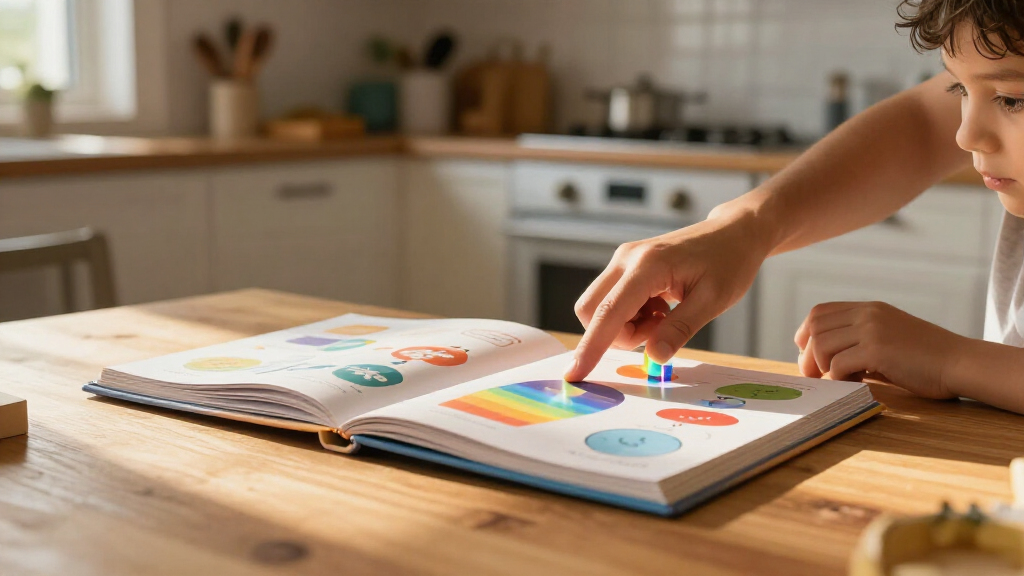
I compared these 12 books by the kind of participation they invite: lifting flaps, following an experiment, answering questions, completing workbook activities, or browsing visual reference material. I also weighed the stated age ranges, subject breadth, clarity of the learning path, and how easily a child could use each book independently. A book can be engaging without being hands-on, so I treated visual discovery, physical interaction, and practical experimentation as distinct strengths rather than interchangeable features.
The ranking favors options that pair clear science explanations with useful interaction and broad appeal. That puts The Highlights Book of How first for its everyday-question approach, while the experiment guides rank higher for families seeking activities and the lift-the-flap books for younger readers who benefit from short reveals. Specialized references, workbooks, and the boxed set serve narrower needs or require a more specific learning style, so their placement reflects fit rather than a lack of educational value. The available product information does not establish details such as page durability, supply lists, or adult-supervision needs, so I avoid treating those as confirmed advantages.
Factors to Consider When Choosing Interactive Science Books For Kids
Before choosing a title, decide what you want your child to do with it. The word interactive can mean a flap to lift, a question to answer, an experiment to perform, or simply an illustrated page that invites browsing. Matching that form of participation to your child’s age, attention span, and home routine can matter more than choosing the broadest science topic.
Match the Interaction to Your Child
Interaction works best when it fits how a child likes to learn. A child who enjoys discovering hidden details may return to a flap book, while one who wants to mix, build, or observe may prefer an experiment guide. Workbooks suit children who are happy to pause and complete a task on the page, but can feel like extra schoolwork to a reluctant reader. Do not assume that a book labeled interactive will include activities; check whether the child is meant to lift, answer, draw, or make something. If you are unsure, choose the format your child already enjoys in other books or games.
Use Age Guidance Alongside Reading Readiness
Age labels are useful starting points, not exact reading-level guarantees. A younger child may understand the ideas in an older-age book when an adult reads aloud, while a confident reader may want more detailed explanations than a preschool-oriented title offers. Look at sentence complexity, the amount of text on a page, and whether the book relies on independent reading or shared discussion. Younger readers often benefit from short sections and immediate visual payoff; older children may prefer connected explanations and more room to explore a subject. When buying a gift, ask about the child’s reading habits rather than choosing by age alone.
Choose Broad Coverage or a Focused Subject
A wide-ranging book can spark new interests, but it may only introduce each topic briefly. A focused title on weather, anatomy, biology, physical science, or the periodic table gives an interested child more room to stay with one subject. Avoid choosing a broad encyclopedia simply because it covers many topics if the child is already asking detailed questions about one area. On the other hand, a specialized book may see less use once that interest fades. A practical approach is to start with the child’s current questions and choose breadth only when exploration matters more than depth.
Check the Real Commitment of Experiment Books
An experiment book can turn reading into observation and action, but the activity count alone does not tell you how easy it will be to use. Before buying, check whether the activities call for household materials, advance preparation, cleanup, or adult supervision. A project that depends on supplies you do not have may be less useful than a simpler activity your child can start quickly. Think about where the work will happen and how much help you can offer, especially for younger children. Paying for a hands-on format makes the most sense when your household can support the projects it contains.
Think About Durability and Repeated Use
Interactive features can face more wear than ordinary pages: flaps may be lifted repeatedly, and activity books may be written in or handled near materials. For a younger child or a shared family copy, check product details for binding, page construction, and whether the activities are reusable before making a choice. A consumable workbook may work well for one child but be a poor fit if you want siblings to share it. Reference books and question-led titles can offer more flexible browsing over time, though their usefulness depends on whether the child returns to them. Treat durability as a buying question to verify, not an assumption based on a book’s format.
Decide Whether a Set or a Single Book Fits Better
A boxed set can provide variety across subjects and may suit a child who has not settled on one area of science. Its tradeoff is that some volumes may get less attention, and a set can take more shelf space than a single focused title. A standalone book is the safer choice when a child has a clear interest or when you want to test whether a particular format holds their attention. Consider who will use the books, how often they will be read, and whether variety or depth is the bigger goal. For a classroom or family with several curious readers, a set may serve more needs; for a single learner, one well-matched title may be more useful.
Frequently Asked Questions
Which type of interactive science book works best for a child who is not reading independently yet?
Choose a format that lets an adult and child share the page, such as short questions, visual explanations, or lift-the-flap reveals. A labeled age range can help, but check whether the text can be read aloud without losing the point of the activity. Flaps can give a young child something to do while an adult explains the science, while a long reference entry may need more guidance. If the child wants to handle materials or try actions, an experiment book can work with close adult participation. The best fit is the one that makes shared reading easy to repeat.
Should I choose an experiment book or a book with flaps and questions?
Choose an experiment book if your child wants to make observations and carry out activities, and your household can manage the supplies and supervision. Flap and question books are a better match for short reading sessions, independent browsing, or children who like revealing answers without setting up a project. Neither format is automatically more educational; they invite different kinds of engagement. Think about whether your child usually finishes practical projects or prefers to move quickly between ideas. If you are uncertain, a question-led book is often simpler to use spontaneously, while experiments reward planned time together.
Is a broad science encyclopedia a better choice than a topic-specific book?
A broad reference is useful when a child likes browsing across subjects or has not found a lasting science interest. A focused book can be more satisfying when they repeatedly ask about one topic, since it keeps the reading centered on that curiosity. Breadth can mean brief introductions rather than detailed coverage, so check the intended use before expecting a reference title to teach a subject step by step. Topic-specific books also carry a risk: a child’s interest may shift. Let their current questions and habits guide the decision, not the number of subjects listed on the cover.
What should I check before buying a science experiment book as a gift?
Check the intended age range, whether the instructions assume an adult is present, and whether activities need materials beyond common household items. Also look for clues about preparation and cleanup, since a book that requires advance planning may be harder for a child to use on their own. If the book is for a family with limited space or time, shorter activities may be more practical than elaborate projects. Ask whether the recipient enjoys making things or mostly wants to read about science. That distinction often predicts whether an activity collection will be used.
Is a science book set a good choice if I do not know the child’s favorite topic?
A set can make sense when the child enjoys variety and is still exploring different areas of science. It gives them several starting points, though it does not guarantee that every volume will match their interests or reading level. If space, independent reading, or the child’s attention is limited, one broadly appealing title may be easier to use. For a gift, consider whether the child likes browsing collections or prefers finishing one book at a time. A set is most useful when variety is part of the appeal, not just because it contains more books.
Conclusion
For the best overall fit, choose The Highlights Book of How if you want everyday questions connected to science explanations. For hands-on learning, pick 101 Great Science Experiments, after checking that its activity format suits your available time and supplies; 101 Science Experiments and Projects for Children is another choice for families seeking a project-centered book. For beginners, Lift-the-Flap Questions and Answers About Science is the age-labeled option for younger readers, while the weather title suits children with a specific interest. For broad browsing, consider 100,000 Whys for Smart Kids or the Science Essentials set; for a focused interest, look to the anatomy, biology, weather, elements, or physical science titles. I would choose by the kind of interaction the child will actually use, rather than by topic count alone.