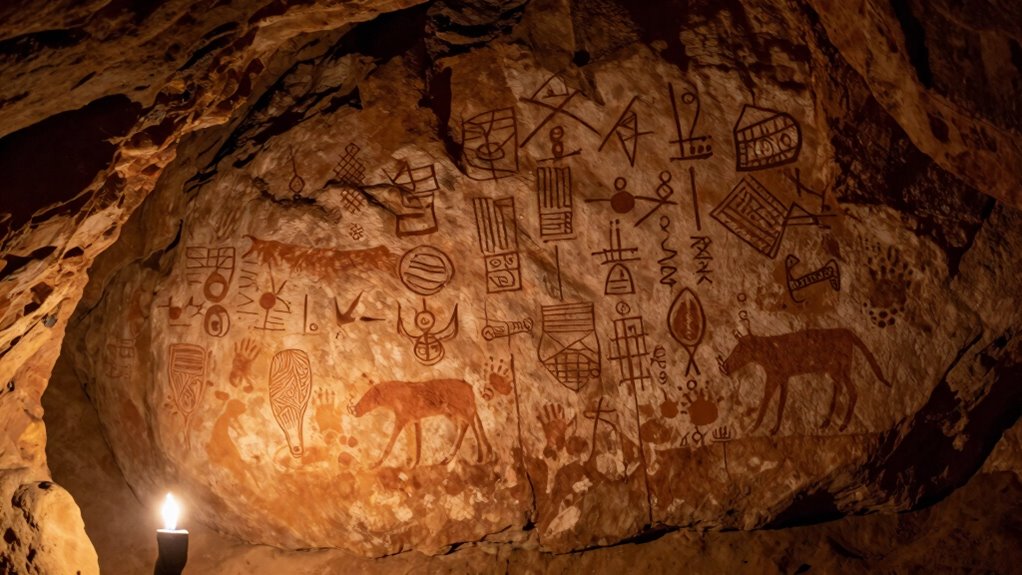

Cave art wasn’t just about creating images; it served many essential purposes. It acted as a tool for spiritual rituals, helping early humans connect with spirits, gods, or sacred animals. It also strengthened social bonds and conveyed stories or myths across generations. Some theories suggest it was used for hunting magic or early communication. If you keep exploring, you’ll uncover more about how these ancient artworks reveal complex societies and beliefs.

Prime made for students and young adults
- Fast, free delivery for dorm and study essentials
- Prime Video and Amazon Music included
- Member-only deals
Key Takeaways
- Cave art likely served ritualistic and spiritual functions, acting as portals to sacred realms or tools for shamanic practices.
- It functioned as early symbolic communication, conveying myths, societal values, and shared knowledge across groups.
- Many artworks were created for hunting magic, depicting animals with exaggerated features to influence success.
- Cave art played a role in social bonding, reinforcing group cohesion, kinship ties, and cultural identity through shared rituals.
- Scientific dating and research suggest these artworks were integral to early humans’ worldview, reflecting beliefs about life, death, and the supernatural.
As an affiliate, we earn on qualifying purchases.
What Is Cave Art and Why Does It Matter?
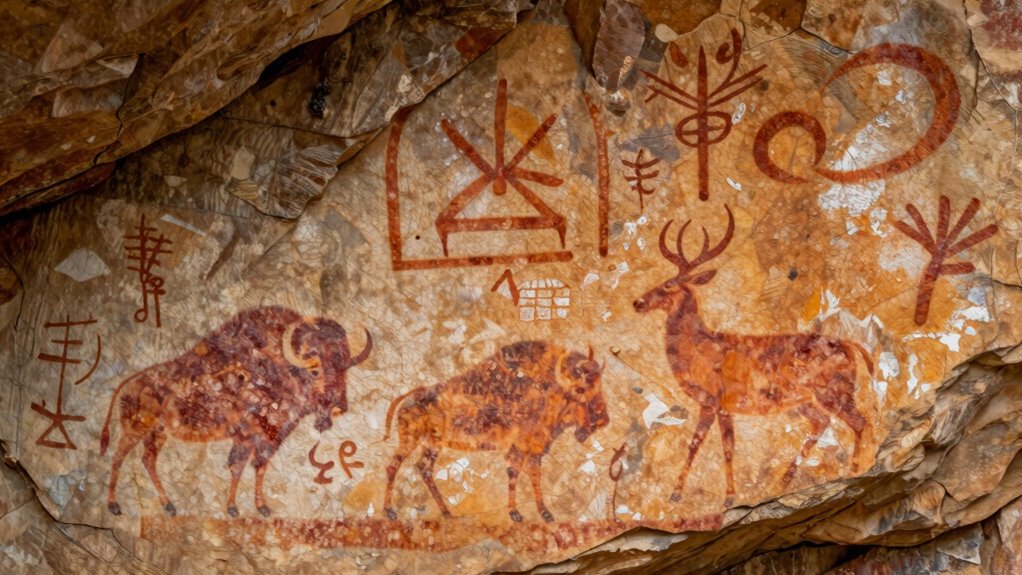
Have you ever wondered why ancient humans went to the trouble of creating cave art? It wasn’t just decoration; it held deep meaning through prehistoric symbolism. These images, often depicting animals or abstract shapes, reflected their understanding of the world and possibly their beliefs. The artistic techniques used—such as engraving, painting with mineral pigments, and shading—demonstrate their skill and creativity. Cave art connects us to early humans, revealing their attempts to communicate, record events, or express ideas beyond words. This art matters because it offers insight into their lives, thoughts, and culture. It’s a window into a distant past, showing that even thousands of years ago, humans used visual storytelling to make sense of their surroundings. The recurring themes and symbols found in cave art suggest they may have played a role in cryptid mysteries or spiritual rituals, highlighting the complex beliefs of prehistoric peoples. Additionally, the artistic techniques employed reveal their innovative approaches to visual expression and communication. Studying these symbolic representations helps us understand their cultural significance and the development of human cognition. Recognizing the cultural significance of cave art underscores its importance in prehistoric communication and the emergence of complex symbolic thinking.
prehistoric cave painting supplies
As an affiliate, we earn on qualifying purchases.
As an affiliate, we earn on qualifying purchases.
Did Cave Art Serve Ritualistic or Spiritual Purposes?
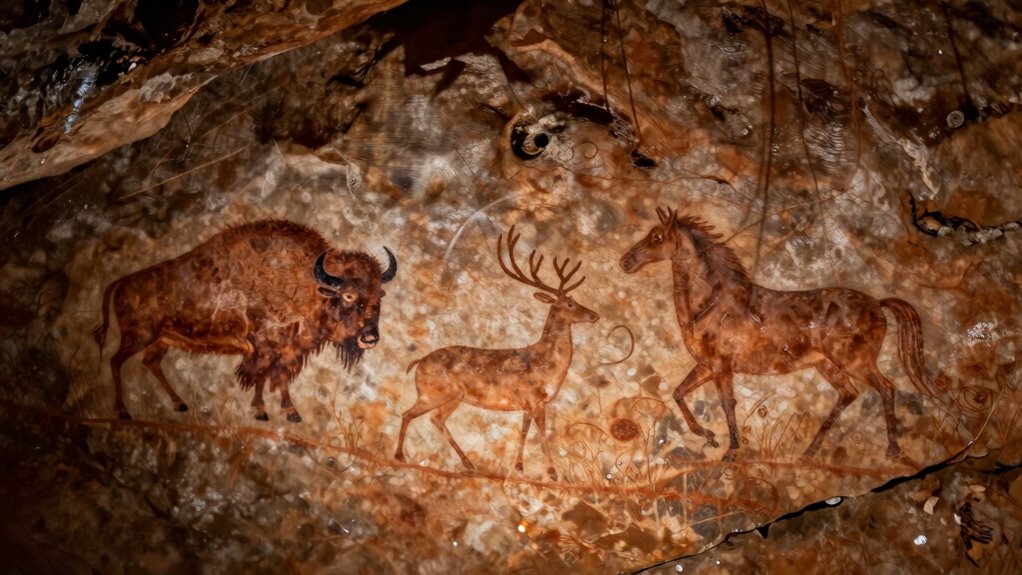
Many researchers believe that cave art was more than simple decoration; it likely served ritualistic or spiritual purposes. You might imagine these images as part of shamanic practices, connecting humans with unseen forces. Consider these possibilities: 1. They acted as portals to spiritual domains, helping shamans access higher states of consciousness. 2. The symbols conveyed spiritual symbolism, representing gods, spirits, or sacred animals. 3. The paintings facilitated rituals aimed at ensuring successful hunts or healing. 4. They created a shared spiritual experience, strengthening community bonds. These artworks weren’t just visual expressions—they were essential tools for engaging with the spiritual world, transforming caves into sacred spaces. By understanding their purpose, you see how early humans sought meaning beyond the physical, tapping into deeper spiritual realities. Understanding spiritual symbolism helps us appreciate how these ancient images served as more than mere decoration—they were integral to their worldview and spiritual practices. Additionally, the recurring themes and motifs suggest a symbolic language used to communicate complex spiritual ideas across generations. Recognizing the ritualistic significance of these images allows us to better understand the cultural context in which they were created.
archaeology excavation kit for kids
As an affiliate, we earn on qualifying purchases.
As an affiliate, we earn on qualifying purchases.
Was Cave Art an Early Form of Communication?
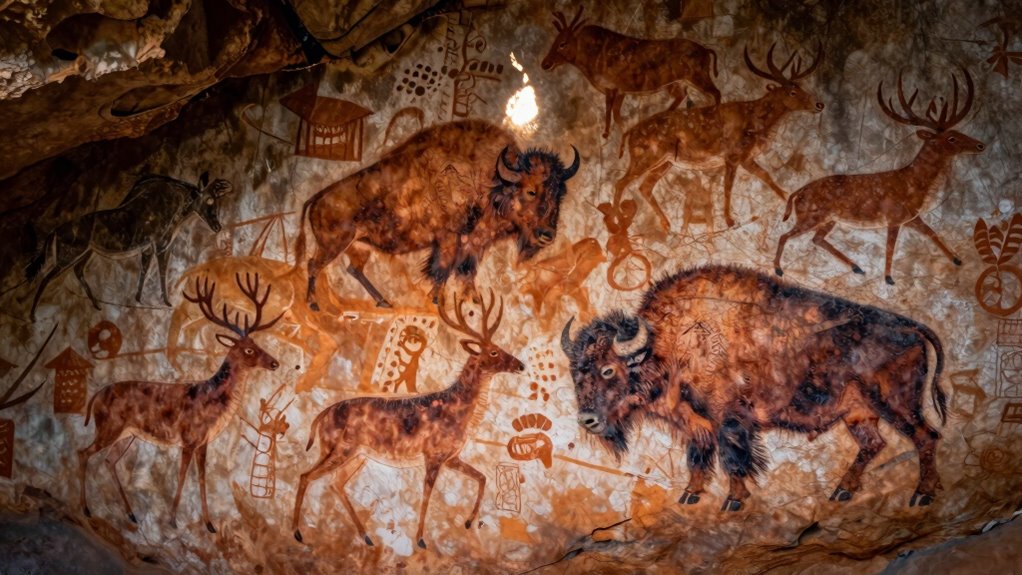
While cave art may have served spiritual or ritualistic purposes, it also raises the question of whether these images functioned as an early form of communication. Many researchers believe prehistoric symbolism was used to convey messages, ideas, or experiences across generations. These images might represent a form of ancient storytelling, sharing information about hunting, environment, or social events. By creating recognizable symbols, early humans could communicate complex concepts beyond spoken language, especially in groups with diverse dialects. Cave art’s strategic placement and recurring motifs suggest it wasn’t just decoration but a way to transmit knowledge. This perspective views cave art as a primitive yet effective method for establishing shared understanding and social cohesion within early communities. Additionally, some experts consider that the symbolic representations found in cave art could have been used to teach or pass down important survival skills to younger generations. Furthermore, the use of symbols in cave art indicates an early understanding of how visual communication could transcend language barriers and serve as a lasting record for future groups. In fact, the development of symbolic communication in prehistoric times laid the groundwork for more sophisticated forms of human expression and record-keeping.
As an affiliate, we earn on qualifying purchases.
How Did Cave Art Help Social Bonding and Group Identity?
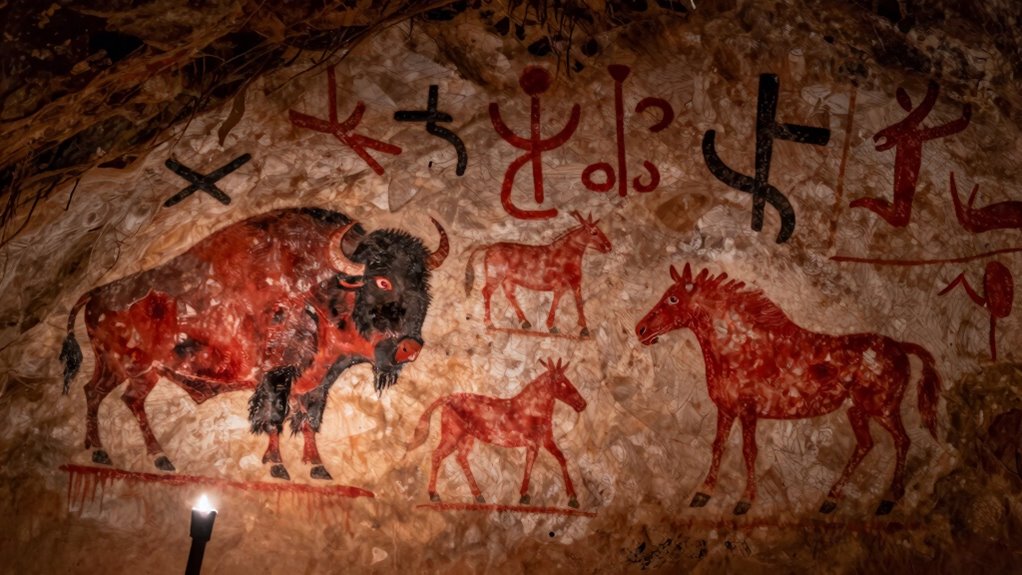
How did cave art strengthen social bonds and reinforce group identity? It served as a powerful tool for tribal cohesion, creating shared experiences and memories. Through participating in creating and viewing these images, you and your group felt connected, united by a common purpose. Cave art often played a role in social rituals that reinforced traditions and values. Consider these ways it promoted group identity: 1. It symbolized collective beliefs and stories, strengthening your tribe’s sense of purpose. 2. It acted as a visual language that everyone understood, fostering communication. 3. It established boundaries, defining who belonged and who was an outsider. 4. It provided a sense of pride and shared achievement, boosting social cohesion. Additionally, the act of creating support breakfast together could have helped build cooperation and trust within the group. In this way, cave art was more than decoration; it was a social fabric binding your community together.
Was Cave Art Used for Hunting Magic and Success?
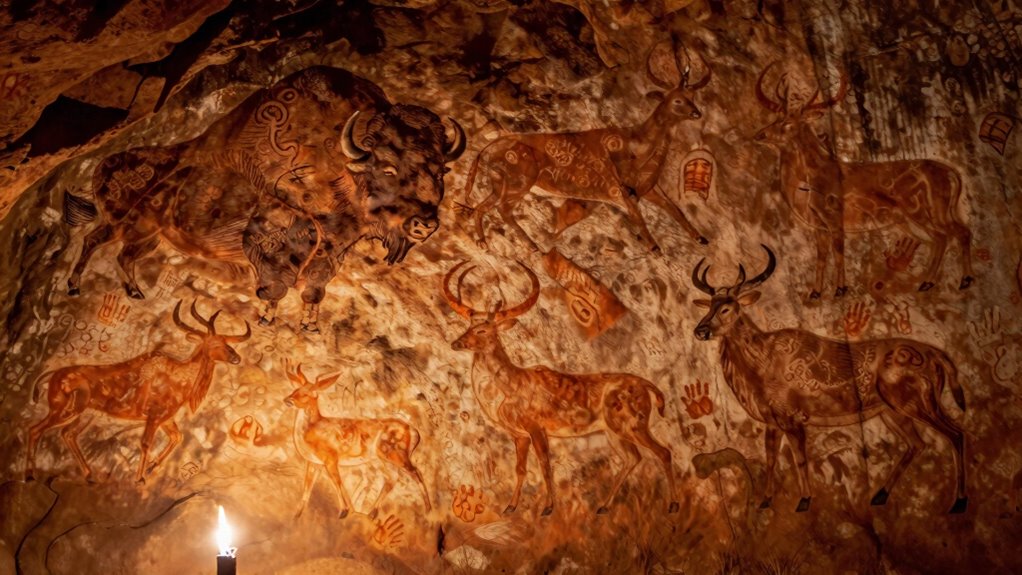
People have long believed that cave art was more than just decoration; it was a tool to influence hunting success. Animal symbolism in these paintings likely served a purpose beyond mere representation, possibly harnessing spiritual or magical powers to ensure a good hunt. By depicting animals with specific artistic techniques—such as exaggerated features or dynamic poses—early humans may have aimed to capture the animals’ essence or power. Some theories suggest that these images functioned as part of hunting magic, where drawing and animating prey could increase the chances of a successful hunt. This idea hinges on the belief that visualizing success through art could influence real-world outcomes, turning cave paintings into tools for survival rather than simple decorations. Incorporating visual symbolism into their artwork might have helped early humans communicate with spiritual forces or invoke protective spirits.
Did Cave Paintings Play a Role in Initiation or Sacred Rituals?
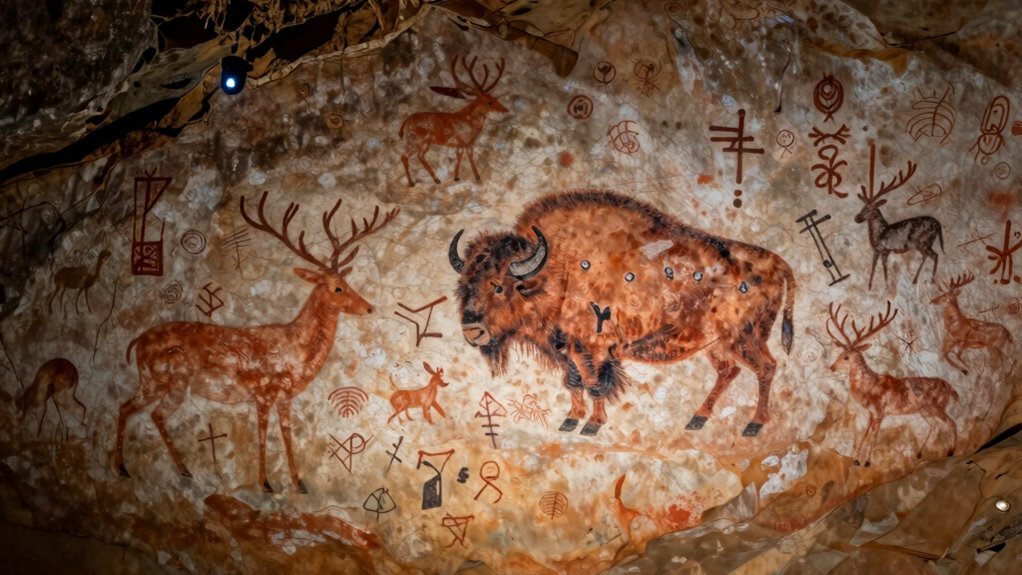
Many researchers believe that cave paintings served more than just artistic or practical purposes; they may have played a central role in initiation and sacred rituals. These images could have been integral to shamanic practices, guiding individuals through transformative experiences. Consider how these paintings might have been part of initiation ceremonies, marking a passage into spiritual or social roles. Additionally, some scholars suggest that such art was connected to Gold IRA Markets, reflecting ancient values and societal structures. They could have helped participants enter altered states of consciousness. They might have been used to invoke spirits or ancestors during sacred rites. They may have served as visual symbols for spiritual journeys. They could have strengthened community bonds during ritual practices. The recurring themes and symbols in cave art support the idea that they functioned as spiritual symbols within these rituals. These symbols often embody sacred meanings, emphasizing their role in spiritual communication. If you see these paintings as more than art, you may realize they were essential tools for connecting with the sacred, shaping spiritual and social identities in early societies.
What Evidence Shows Cave Art Was Symbolic or Mythological?
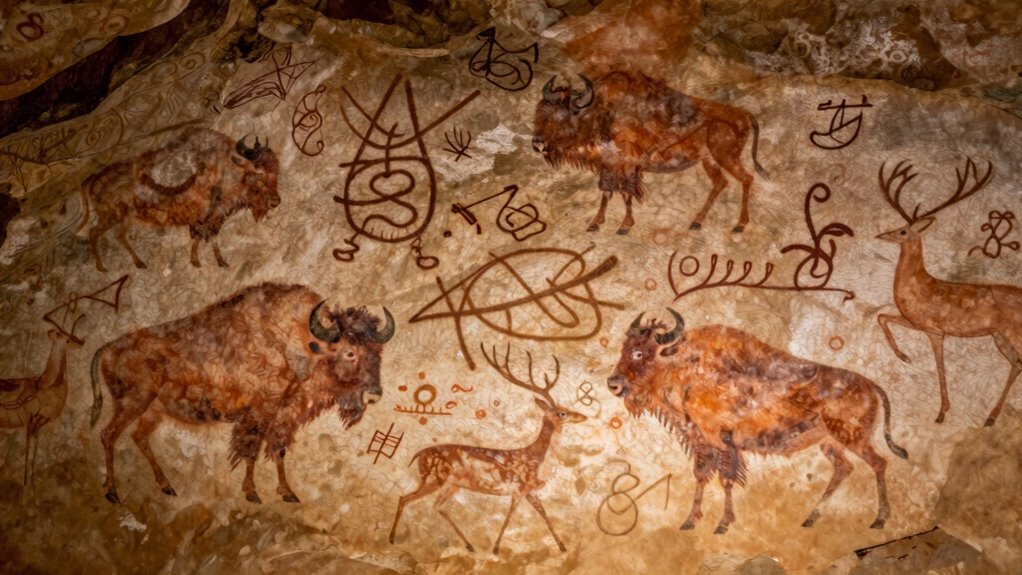
What evidence suggests that cave art was more than simple decoration and held symbolic or mythological meanings? Many experts point to animal symbolism found in the images, where specific creatures recur across different sites, implying deeper significance beyond mere representation. Additionally, the presence of mythological imagery—such as composite creatures or scenes that combine multiple animals—indicates mythic stories or spiritual beliefs. These artworks often depict animals in ways that suggest they held special meaning, possibly serving as symbols of spiritual power or ritual importance. The consistent focus on particular animals and mythological motifs across diverse regions supports the idea that cave art was used to communicate complex symbolic messages, connecting early humans to their spiritual and mythological worlds.
Did Cave Art Have Practical Uses Beyond Spirituality?
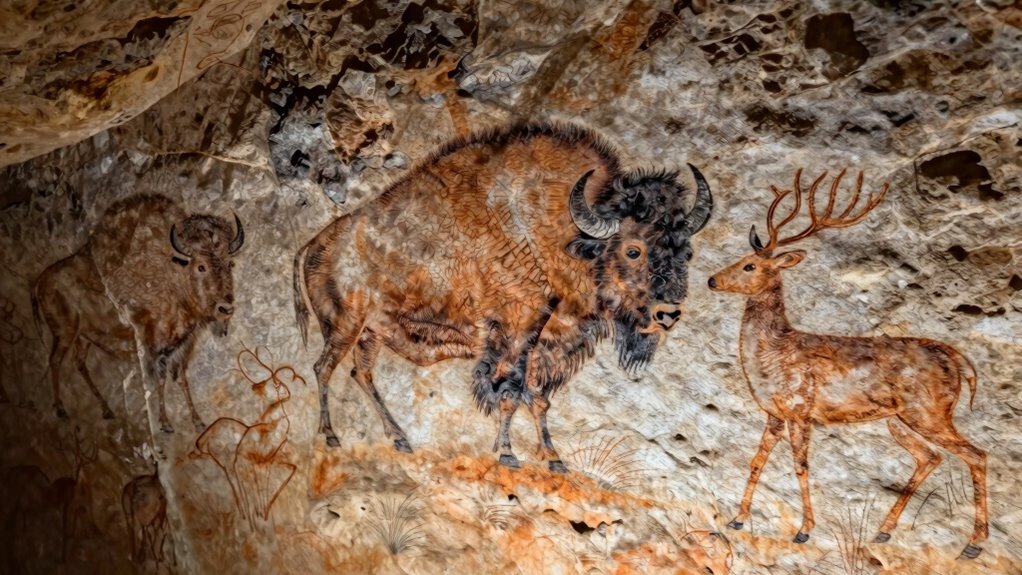
You might wonder if cave art served purposes beyond spiritual beliefs. Some theories suggest it played a role in hunting magic or rituals to improve success. Others believe it helped strengthen social bonds and establish group identity among early humans. Additionally, the detailed depictions could have served as a form of early communication, conveying important information or stories. Studies of ancient art indicate that such images might also have been used for ritualistic practices, emphasizing their multifaceted significance in prehistoric societies. Furthermore, the use of symbolically rich imagery could reflect early attempts at spiritual expression, linking these artworks to broader religious or ritualistic meanings. Exploring the plant properties of herbs used in ancient practices might shed light on how these symbols connected to healing or spiritual rituals. The integration of artistic techniques could suggest an understanding of visual symbolism that extended into early conceptual thinking and cultural development.
Hunting Magic and Rituals
Here are some possible functions:
- Ensuring success by invoking animal spirits during hunts.
- Controlling prey through symbolic rituals.
- Strengthening group cohesion via shared hunting magic.
- Passing down knowledge of animal behaviors and locations.
Social Bonding and Identity
Could cave art have served purposes beyond spiritual rituals, particularly in strengthening social bonds and shaping group identity? It’s possible that creating and sharing art reinforced ancient kinship ties, helping groups recognize and remember their collective history. This shared activity fostered group cohesion, giving members a sense of belonging and purpose. To illustrate:
| Purpose | Effect | Significance |
|---|---|---|
| Reinforces kinship | Strengthens social ties | Maintains group stability |
| Shared identity | Promotes unity and pride | Preserves cultural norms |
| Collective memory | Anchors group history | Ensures continuity |
Through these functions, cave art might have been more than spiritual symbols; it could have been a practical tool for social cohesion and identity formation.
How Modern Research Is Changing Our Understanding of Cave Art’s Purpose
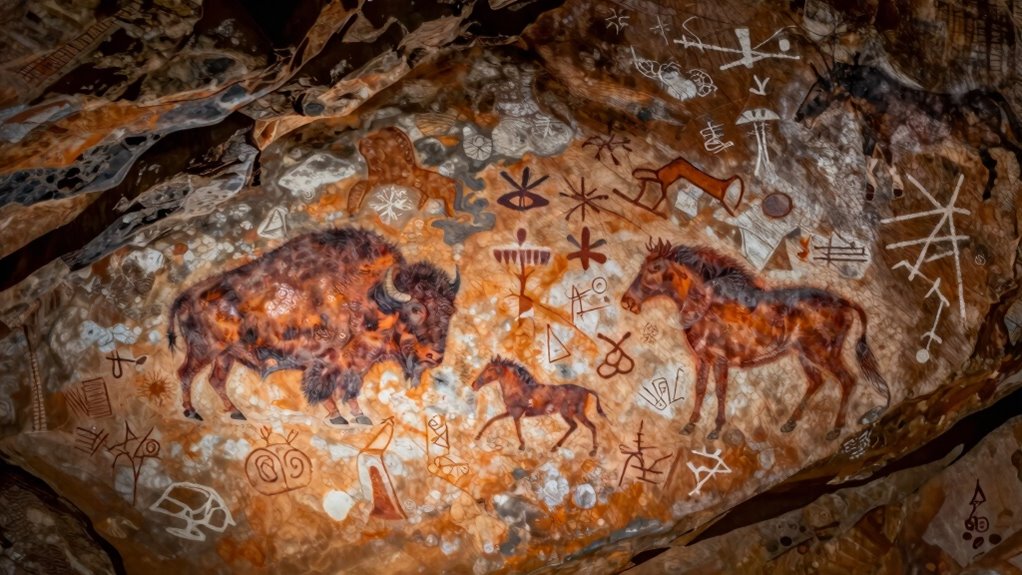
Recent scientific advancements have refined the dating of cave art, revealing it’s much older than previously thought. Evidence of symbolic communication suggests these artworks had meanings beyond simple decoration. These findings support the idea that cave art served ritualistic or social functions, reshaping how we understand its purpose. Additionally, understanding the psychological aspects of early humans can shed light on why such art was created. Recognizing the cognitive development of early humans helps explain the emergence of symbolic behavior underlying cave art. Exploring neurocognitive processes offers further insight into how early humans created and interpreted these symbolic images. Moreover, cultural transmission played a crucial role in the dissemination of artistic practices and symbolic ideas across groups.
Scientific Dating Advances
Advances in scientific dating methods have considerably reshaped our understanding of when cave art was created, offering more precise timelines than ever before. These breakthroughs reveal that early humans used sophisticated prehistoric symbolism and artistic techniques much earlier than previously believed. For example:
- Discoveries pushing art back over 40,000 years ignite awe for our ancestors’ creativity.
- Improved radiocarbon dating pinpoints art to specific moments, deepening our emotional connection to their lives.
- Precise timelines suggest art was not just decoration but part of complex cultural practices.
- New findings challenge old assumptions, making you realize this art was integral to their worldview. These advances illuminate the deep roots of symbolic communication, helping us understand that cave art was more than mere images—it was a essential part of early human existence.
Symbolic Communication Evidence
How do we comprehend that cave art served a symbolic purpose beyond simple decoration? Modern research provides strong communication evidence through visual symbolism. The detailed images of animals, human figures, and abstract signs suggest more than aesthetic expression; they likely conveyed ideas, stories, or cultural beliefs. For example, certain symbols appear repeatedly across sites, hinting at shared meanings or messages. Researchers analyze the context and composition of these images, revealing patterns that imply intentional symbolism. This evidence indicates that early humans used cave art as a form of symbolic communication—possibly to coordinate hunting, record myths, or express spiritual concepts. Such insights shift our view from viewing cave art as mere decoration to recognizing it as a sophisticated form of symbolic language.
Ritualistic Function Theories
Modern research suggests that cave art was not just about communication or decoration but also played a key role in ritualistic practices. You might imagine these spaces as sacred sites where early humans engaged in profound spiritual activities. These rituals could include:
- Connecting with spirits through shamanic practices, seeking guidance or protection.
- Conducting fertility rituals to ensure successful reproduction and community survival.
- Using images as symbols to invoke supernatural forces during ceremonies.
- Creating a shared spiritual experience that unified groups and reinforced social bonds.
What Do These Theories Reveal About Our Ancestors’ Minds and Cultures?
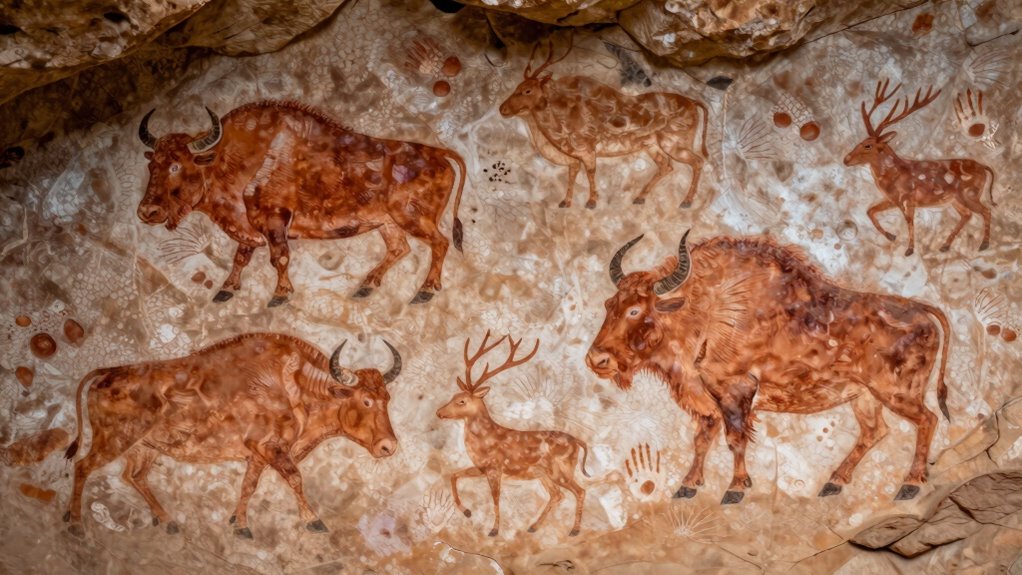
These theories about cave art offer a glimpse into the minds and cultures of our ancestors, revealing their beliefs, values, and daily concerns. They show how mythical symbolism played a role in shaping their worldview, often illustrating stories or spiritual concepts important to their society. Through these images, you can see cultural expressions that reflect their understanding of nature, life, and death. The emphasis on animals, spirits, and abstract patterns suggests a society deeply engaged with the supernatural and the sacred. These artworks weren’t just decoration; they were integral to their identity and shared knowledge. By analyzing these cultural expressions, you gain insight into how early humans communicated complex ideas and maintained social cohesion through symbolic and mythological storytelling.
Frequently Asked Questions
Could Cave Art Have Served Educational Purposes for Early Humans?
Yes, cave art could have served educational purposes for early humans. You might see it as a form of symbolic communication, helping to pass down vital survival knowledge. These images could have facilitated cultural transmission, teaching others about hunting strategies, animal behavior, and spiritual beliefs. By creating and sharing these artworks, early humans effectively educated their community, ensuring knowledge persisted across generations and strengthened social bonds.
Are There Any Signs That Cave Art Was Personalized or Individual?
You can see signs that cave art was personalized, like personal signatures and unique styles, suggesting individual expression. Imagine each artist leaving behind a signature, like a digital fingerprint, in ancient stone. These distinct marks hint that early humans valued their own identity, showcasing their skills and personalities. It’s as if each piece carries a whisper of the artist’s soul, making the art truly one-of-a-kind in a sea of prehistoric images.
How Did Climate and Environment Influence Cave Art Themes?
Climate and environment greatly influenced your cave art themes, shaping the flora symbolism and fauna representation you see. During colder periods, you might notice more images of tundra animals and hardy plants, reflecting survival needs. Conversely, warmer times brought more detailed scenes of lush vegetation and diverse wildlife. These themes reveal how your ancestors responded to their surroundings, emphasizing what was essential for their sustenance and spiritual beliefs.
Is There Evidence of Cave Art Being Altered or Reused Over Time?
You’ll find evidence that cave art was altered or reused over time, like pages in a well-loved book. Art preservation efforts and repainting techniques reveal layers of history, showing ancient artists revisited their work. Sometimes, new images overlay older ones, indicating reuse. This process highlights how cave art served ongoing cultural or spiritual purposes, changing and evolving just like the stories we pass down through generations.
What Role Did Women or Children Possibly Play in Creating Cave Art?
You might consider that female participation and child involvement played significant roles in creating cave art. Evidence suggests women could have been active contributors, possibly involved in painting or gathering materials. Children may have also participated, learning and practicing through observation and imitation. Their involvement indicates that cave art wasn’t solely the work of adult men but a shared activity, reflecting community and cultural importance across different age groups.
Conclusion
Ultimately, cave art isn’t just ancient doodling; it’s a window into your ancestors’ minds and worlds. Each stroke whispers secrets of rituals, communication, and social bonds that shaped humanity. As modern research uncovers new truths, you’re invited to see these images not just as art, but as echoes of your own origins—reminding you that, like them, you’re part of a story written long before your time. Isn’t that a fascinating connection?
Fall Picks
fall essentials
As an affiliate, we earn on qualifying purchases.