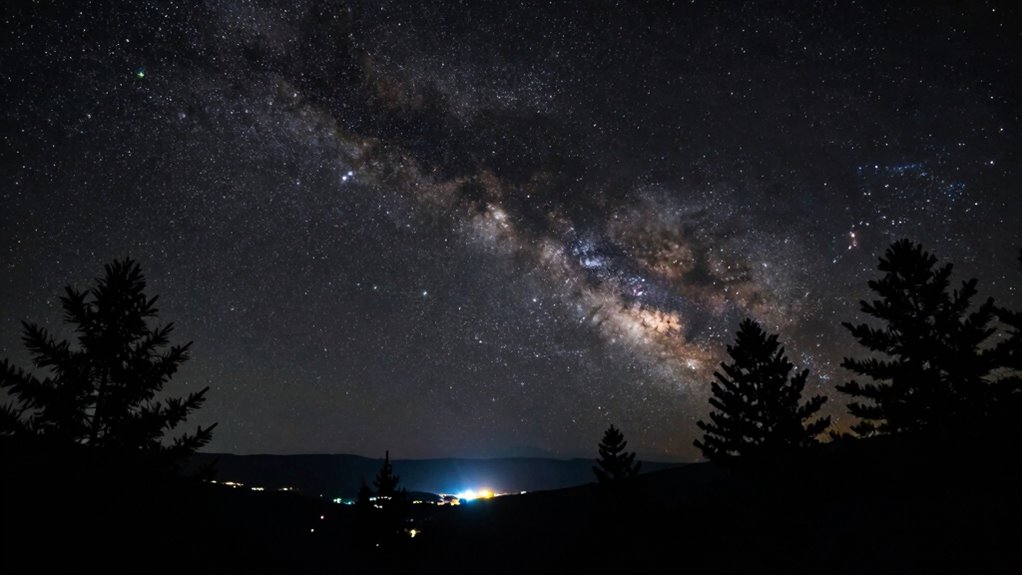

The night sky looks different depending on where you live because Earth’s rotation, orbit, and your geographic location shape what you see. Your position influences which stars and constellations are visible, and some, like Polaris or the Southern Cross, only appear in certain hemispheres. Seasonal changes also affect star visibility as Earth moves around the Sun. If you keep exploring, you’ll discover how Earth’s movement impacts the night sky and what it reveals.

Prime made for students and young adults
- Fast, free delivery for dorm and study essentials
- Prime Video and Amazon Music included
- Member-only deals
Key Takeaways
- Earth’s rotation and position change the visible stars and constellations from different locations.
- The hemisphere determines which constellations, like Polaris or the Southern Cross, are visible.
- Seasonal shifts affect star visibility due to Earth’s orbit around the Sun.
- Latitude influences star patterns, causing some constellations to appear or vanish.
- Earth’s movement causes stars to shift positions over time, altering night sky appearances.
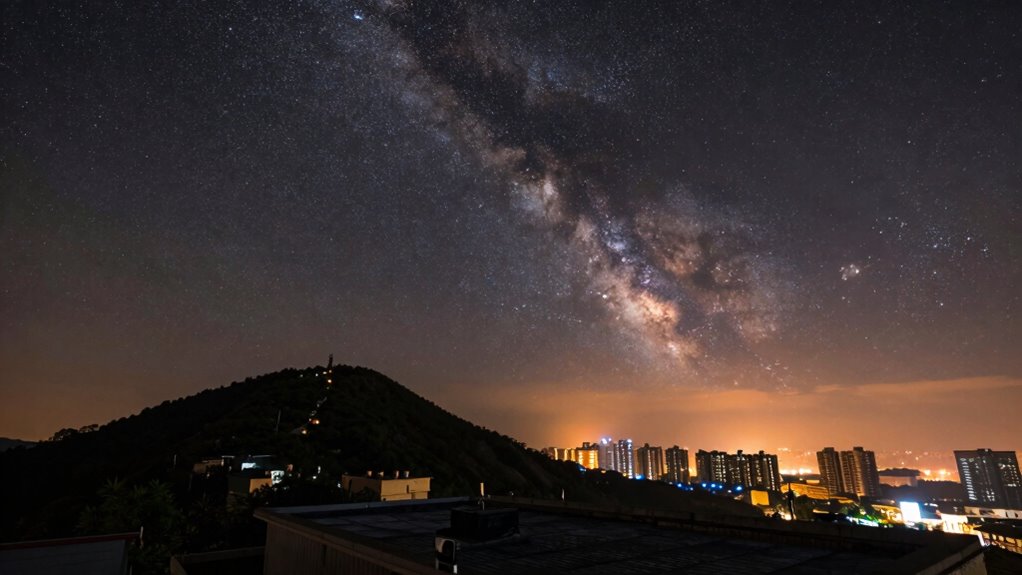
The night sky isn’t the same everywhere you look; it changes based on your location on Earth. As you stand under different skies, you’ll notice that the stars seem to form unique patterns, and certain constellations appear or disappear depending on where you are. This variation occurs because of Earth’s rotation and its position relative to the stars. When you practice celestial navigation, you realize how essential understanding these star patterns is for finding your way. By learning star mapping—the process of charting the positions of stars—you can identify your location or determine your direction even when GPS isn’t available. The night sky acts like a vast, natural compass, but only if you know how to interpret its signals.
If you’re in the Northern Hemisphere, you’ll see the North Star, Polaris, which remains nearly fixed in the sky. It’s a key point for star mapping and celestial navigation, helping travelers and sailors find true north. As you move toward the equator, Polaris dips lower, and the familiar patterns of the Big Dipper or Cassiopeia shift position. Southern Hemisphere observers won’t see Polaris at all; instead, they rely on different constellations, like the Southern Cross, to determine their bearings. The shift in visible stars is directly linked to your latitude, and understanding this makes the night sky more than just a beautiful spectacle—it becomes a practical tool. Recognizing how Earth’s rotation influences star visibility is crucial for accurate navigation.
Your location also influences which stars are visible at different times of the year. As Earth orbits the Sun, the night side faces different parts of space, revealing new constellations while hiding others. This cycle affects star mapping, as you need to know the right season to see specific star groups. For example, Orion is prominent in winter in the Northern Hemisphere but less visible in summer. This seasonal change is fundamental for navigators who rely on celestial cues to chart courses across the oceans or wilderness. Recognizing the Earth’s movement through space is essential for understanding these seasonal star patterns and how they relate to your position. Additionally, understanding the celestial sphere helps in visualizing how stars appear to move across the night sky from different locations. A deeper comprehension of celestial mechanics enhances the ability to predict star positions accurately.
Seasonal changes affect star visibility, guiding navigators with different constellations like Orion in winter and summer.
Ultimately, the variation in the night sky isn’t random. It’s dictated by your position on Earth and Earth’s movement through space. Whether you’re using star mapping techniques or practicing celestial navigation, recognizing how your location influences what you see can deepen your understanding of the universe—and help you find your way when all else fails. The stars are a universal language, but their meanings change depending on where you stand, making every sky a unique, navigational map waiting to be read.
Popular right now

Roborock Robot Vacuum and Mop with LiDAR Navigation and 10,000 Pa Suction

Dyson Ball Animal 3 Extra Upright Vacuum

Breville Bambino Espresso Machine, Brushed Stainless Steel
As an affiliate, we earn on qualifying purchases.
Frequently Asked Questions
How Does Local Light Pollution Affect Night Sky Visibility?
Local light pollution, especially urban glow, directly impacts your ability to see the night sky clearly. Higher population density means more artificial lights, which brighten the sky and drown out stars. You’ll notice fewer stars in busy cities because the artificial illumination scatters light in the atmosphere. To enjoy a better view of the stars, seek out darker areas away from city lights where light pollution is minimal.
Can the Curvature of the Earth Change What Stars Are Visible?
Yes, the Earth’s curvature affects what stars you see, especially at different latitudes. When you use celestial navigation, you rely on star visibility, which varies based on your position on Earth. Near the poles, you might see the circumpolar stars all year, while closer to the equator, different constellations become visible. The Earth’s curvature fundamentally determines your star horizon and which celestial bodies are accessible to observe.
Why Do Some Constellations Only Appear in Certain Hemispheres?
You can’t see the same constellations everywhere because, as the saying goes, “what’s good for the goose isn’t always good for the gander.” Your hemisphere’s position affects celestial navigation, making some constellations visible only from certain locations. These patterns hold cultural significance, guiding navigation and storytelling. So, the sky’s unique view reflects your place on Earth, shaping your understanding of the universe and your cultural identity.
How Do Atmospheric Conditions Alter the Appearance of Stars?
Atmospheric conditions, like turbulence and humidity, can distort the appearance of stars through atmospheric diffraction, causing twinkling and blurred images. In astrophotography, you use specific techniques to minimize these effects, such as choosing stable nights and using fast lenses. These conditions can make stars appear brighter or more scattered, influencing your photos. Understanding atmospheric effects helps you capture clearer, more detailed images of the night sky.
Does Altitude Influence the Clarity of the Night Sky?
Imagine standing atop a mountain, where the air feels crisper and the sky clearer—altitude effects become evident. Yes, higher altitudes improve sky clarity because there’s less atmosphere to scatter light and obscure stars. You notice more shimmering constellations and brighter planets, making the night sky more vivid. So, the higher you go, the better your view, as thinner air reduces atmospheric interference, revealing a more spectacular celestial display.
Conclusion
Just like a traveler who always carries a different map, your location shapes your view of the night sky. Imagine standing on a mountaintop, gazing at stars others only see in photos—each spot offers a unique story written in constellations. Whether you’re in a city or countryside, your position turns the sky into your personal canvas. Embrace your view, for it’s a reminder that where you are influences what you see—and how you see it.