Stargazing in cities demands different gear because artificial light from streetlamps, billboards, and buildings washes out the stars, making it harder to see celestial objects. You need equipment like large aperture telescopes and light pollution filters to improve contrast and reduce glare. Portable gear and accessories such as red LED flashlights help preserve your night vision and allow quick adjustments. Using the right tools and strategies can considerably improve your urban stargazing success—keep exploring to discover more about making the most of city skies.
Listen free for 30 days with Audible
Thousands of audiobooks and originals — cancel anytime.
As an affiliate, we earn on qualifying purchases.
Key Takeaways
- Urban light pollution brightens the sky, requiring specialized filters and equipment to enhance contrast and visibility.
- Bright artificial lighting from city sources diminishes the effectiveness of standard telescopes and binoculars.
- Portable, compact gear is essential for quickly accessing darker, less-lit areas within urban environments.
- Light pollution filters help block specific wavelengths of artificial light, improving celestial object clarity.
- Proper accessories like red LED flashlights and sturdy tripods are crucial for preserving night vision and stability.
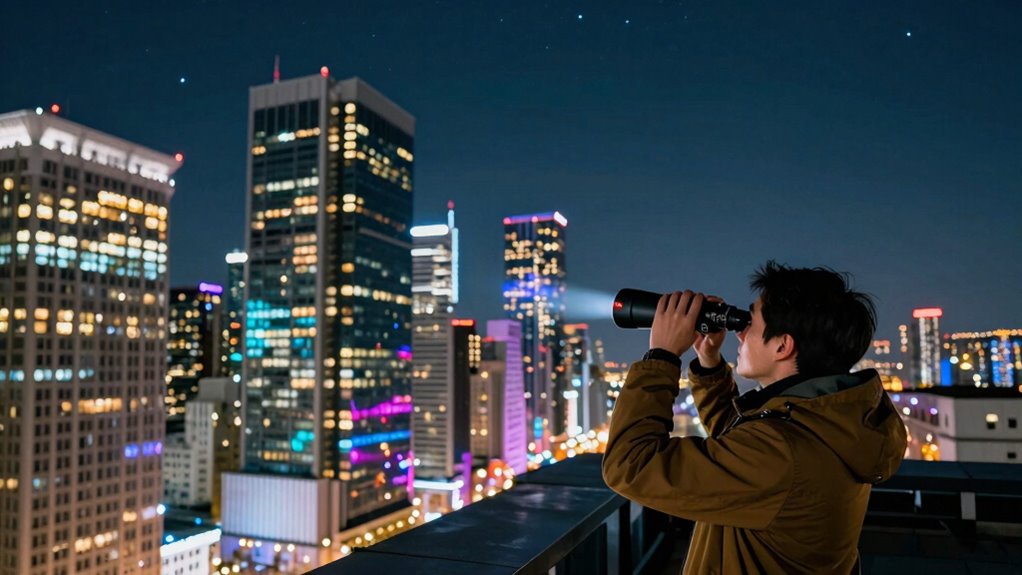
Even in the brightest cities, stargazing remains an achievable and rewarding activity. But you’ll quickly realize that city skies present unique challenges, especially when it comes to equipment. Light pollution from urban areas washes out many stars, making it harder to see the night sky clearly. This is where understanding urban light management becomes essential. Unlike rural settings, where darkness dominates, cities are filled with artificial lights from streetlamps, billboards, and buildings, all of which can interfere with your view of the stars. To compensate, you’ll need gear designed specifically for these conditions.
Urban skies challenge stargazing; choose gear that counters light pollution for clearer night sky views.
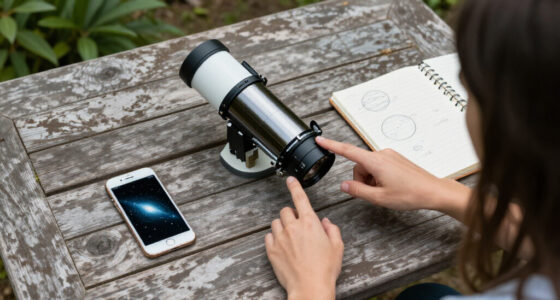
Standard telescopes and binoculars often aren’t enough when you’re surrounded by bright city lights. You’ll want gear that can cut through the haze of light pollution. For instance, a telescope with a large aperture helps gather more light, making faint stars and celestial objects more visible despite the glow of city lights. Additionally, using filters—like light pollution filters—can considerably improve your viewing experience. These filters block out specific wavelengths of artificial light, reducing glare and enhancing contrast, so you can see more stars and details in celestial objects.
Urban light management strategies also influence your gear choices. If you’re lucky, you might find spots with better light control, such as parks or rooftops with minimal light intrusion. In these spots, portable gear becomes especially valuable. Compact, lightweight telescopes and binoculars allow you to move easily between locations, maximizing your chances of catching clear views. You can also invest in apps or filters that help identify light pollution levels, guiding you to the darker corners of the city. Knowing how to manage urban light pollution can significantly enhance your stargazing success.
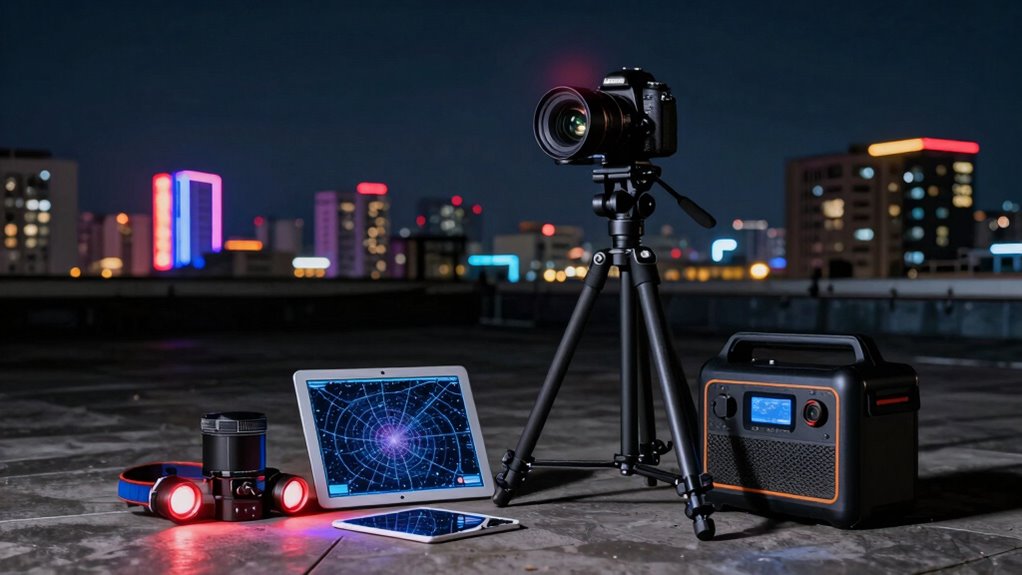
Beyond your optics, consider accessories that improve your overall stargazing experience. Red LED flashlights, for example, help preserve your night vision while you set up or adjust your equipment. A sturdy tripod can steady your binoculars or camera, reducing blurriness caused by shaky hands, which is especially helpful when trying to peek through city haze. Additionally, understanding urban light pollution can help you plan your outings more effectively by choosing the best times and locations for stargazing.
In essence, city stargazing demands gear that accounts for higher levels of light pollution and urban light management. You need equipment that enhances contrast, reduces artificial glare, and remains portable enough to seek out darker spots. While the challenges are greater, they aren’t insurmountable. With the right gear and a bit of planning, you can still enjoy the wonder of the night sky, even amid the glow of city lights.
light pollution filter for telescope
As an affiliate, we earn on qualifying purchases.
As an affiliate, we earn on qualifying purchases.
Frequently Asked Questions
How Does Light Pollution Affect Star Visibility?
Light pollution reduces star visibility by brightening the night sky, making it harder to see fainter stars. It diminishes sky clarity, so you struggle to observe celestial objects clearly. In cities, artificial lights scatter and create a glow that overwhelms the natural darkness needed for good stargazing. To counteract this, you need specialized gear like light filters or visit darker areas, as the increased light pollution directly impacts your ability to enjoy a clear view of the stars.
What Are the Best City Spots for Stargazing?
You’ll find the best city spots for stargazing where sky clarity is higher and rooftop access is available. Look for parks near city outskirts or skyscraper rooftops with fewer lights nearby. These locations reduce light pollution and improve your view of stars. Always check local regulations and safety guidelines before heading to rooftops. With the right spot, you’ll enjoy a clearer, more mesmerizing celestial display despite city lights.
Can Smartphone Apps Improve City Stargazing Experiences?
Smartphone apps can definitely enhance your city stargazing experience. Think of augmented reality as your celestial map, guiding you through the night sky like a lighthouse in darkness. These apps help with celestial navigation, pinpointing stars and planets amid city lights, making it easier to connect with the universe. With just your phone, you’ll feel more confident exploring the cosmos, even in urban environments where light pollution challenges visibility.
How Do Urban Weather Conditions Impact Star Viewing?
Urban weather conditions, like weather variability, markedly impact your star viewing. Cloud cover, humidity, and fog often obscure the sky, making it harder to see stars clearly. Additionally, urban light pollution can worsen visibility, especially during foggy or humid nights when light scatters more. You’ll need to plan around weather forecasts, choose clear nights, and find darker spots away from city lights to improve your stargazing experience despite these challenges.
Are There Any Safety Tips for Urban Night Sky Observations?
Imagine you’re under the night sky, and suddenly, an unexpected urban hazard appears—like a cyclist zooming past. Stay safe by carrying essential safety gear, such as reflective clothing and a flashlight. Keep aware of your surroundings, avoid poorly lit areas, and stay visible to others. These precautions help you navigate urban hazards confidently, ensuring your night sky observation remains enjoyable and safe amidst city life.
compact urban stargazing binoculars
As an affiliate, we earn on qualifying purchases.
As an affiliate, we earn on qualifying purchases.
Conclusion
So, next time you head out to stargaze in the city, remember that your gear needs to be just as adaptable as the skyline. Did you know that light pollution can reduce visible stars by up to 90%? That’s a huge difference, making the right equipment essential. With the right gear—like light pollution filters and portable telescopes—you can still enjoy incredible night skies, even amidst the city’s glow. Happy stargazing!
red LED flashlight for night sky viewing
As an affiliate, we earn on qualifying purchases.
As an affiliate, we earn on qualifying purchases.
portable telescope for city stargazing
As an affiliate, we earn on qualifying purchases.
As an affiliate, we earn on qualifying purchases.
Fall Picks
fall essentials
As an affiliate, we earn on qualifying purchases.