
TL;DR

Prime made for students and young adults
- Fast, free delivery for dorm and study essentials
- Prime Video and Amazon Music included
- Member-only deals
A total solar eclipse will be visible across North America on April 8, 2024. Millions are expected to witness the event, which is confirmed by astronomers. Details about viewing locations and safety are ongoing.
Scientists and astronomers have confirmed that a total solar eclipse will occur on April 8, 2024, visible across a wide swath of North America. Learn more about the eclipse map. This astronomical event is expected to attract millions of viewers, making it one of the most significant celestial phenomena of the decade.
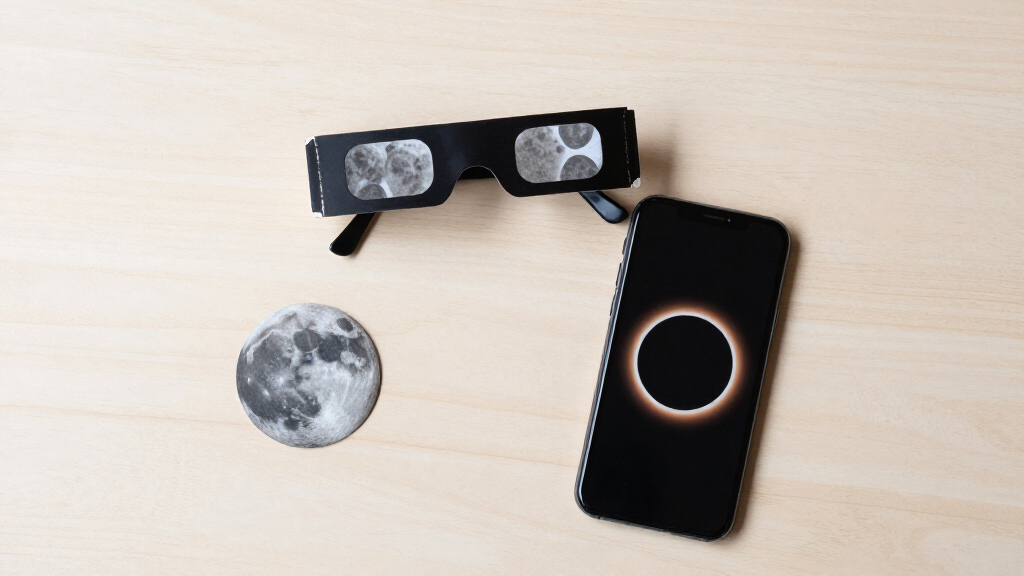
The eclipse will begin in the Pacific and move eastward across the United States, with the path of totality passing through states from Texas to Maine. Make sure to get your solar eclipse glasses for safe viewing. Observers outside this path will see a partial eclipse. Experts from NASA and other space agencies have verified the timing and visibility zones, urging viewers to use proper eye protection such as solar eclipse glasses to avoid eye damage.
The event is the result of the Moon passing directly between the Sun and Earth, temporarily blocking the Sun’s light in the path of totality. The last total solar eclipse visible in the U.S. occurred in 2017, and this upcoming event is considered a rare opportunity for widespread viewing.
Why the April 8, 2024, Solar Eclipse Matters for the Public
This eclipse offers a unique chance for millions to witness a rare astronomical event firsthand, fostering public interest in science and space. It also provides educational opportunities for schools and scientific organizations to engage communities in astronomy. Additionally, the event emphasizes the importance of safety precautions when viewing solar phenomena, as improper viewing can cause permanent eye damage.
solar eclipse glasses for safe viewing
As an affiliate, we earn on qualifying purchases.
As an affiliate, we earn on qualifying purchases.
Historical and Scientific Context of Solar Eclipses
Solar eclipses occur when the Moon aligns precisely between the Earth and the Sun, casting a shadow that temporarily obscures the Sun’s light in certain regions. Total solar eclipses happen approximately every 18 months somewhere on Earth, but their visibility from any specific location is rare. The last total eclipse visible across parts of the U.S. was in 2017, and experts have long predicted this upcoming event based on orbital calculations and astronomical models. Public anticipation has grown, especially with the availability of eclipse glasses and organized viewing events.
“The path of totality for the April 8 eclipse offers a prime viewing window across North America, and it’s a chance to witness a cosmic event that has fascinated humans for centuries.”
— Astronomer Dr. James Carter
As an affiliate, we earn on qualifying purchases.
Remaining Questions About Visibility and Safety Measures
While the timing and path of the eclipse are confirmed, details about specific viewing locations, safety instructions, and public preparedness vary by region. Weather conditions could also impact visibility in some areas, and authorities are still finalizing safety advisories and public information campaigns.
As an affiliate, we earn on qualifying purchases.
Upcoming Public Viewing Events and Safety Campaigns
Meteorological agencies and astronomical societies will release detailed viewing guides and safety tips in the coming weeks. Organized viewing events are expected in major cities along the eclipse path, and authorities will issue safety warnings to prevent eye injuries. The eclipse’s peak is forecasted for mid-afternoon local times, and observers are encouraged to plan ahead.
As an affiliate, we earn on qualifying purchases.
Key Questions
When will the total eclipse be visible in my location?
The eclipse will be visible along a narrow path across North America, from Texas to Maine, with peak times varying by region. Partial views will be available outside the path. Exact timings depend on your location; check local astronomical sources for precise information.
How can I safely view the solar eclipse?
Use approved eclipse glasses or viewers that meet international safety standards. Never look directly at the Sun without proper eye protection, as this can cause permanent damage. Avoid using regular sunglasses or homemade filters.
Will the eclipse be visible in the UK or Europe?
No, the total eclipse will be confined to North America. However, partial views may be visible in some regions, depending on local weather and viewing conditions. The next total eclipse visible in Europe is expected in 2026.
How long will the eclipse last?
The total phase of the eclipse will last up to 4 minutes in the best viewing locations. The entire event, including partial phases, can last several hours from first contact to last.
Source: google-trends
Halloween Picks
halloween
As an affiliate, we earn on qualifying purchases.