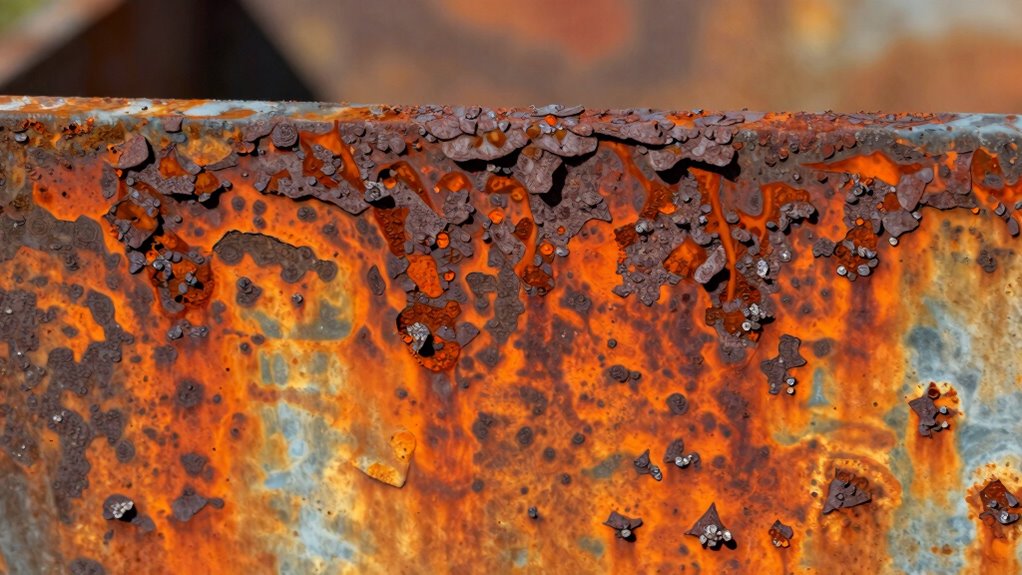

Metals rust because they react with moisture and oxygen in the environment. When exposed, the metal’s surface undergoes a chemical change called oxidation, creating iron oxide—rust. This weakens the metal, making it brittle and prone to breaking. Factors like humidity and protective coatings affect how quickly rust forms. Understanding this process helps you see why proper protection is essential. If you want to learn more about how rust can be prevented, keep exploring the details behind this natural process.

Prime made for students and young adults
- Fast, free delivery for dorm and study essentials
- Prime Video and Amazon Music included
- Member-only deals
Key Takeaways
- Rusting occurs when iron reacts with moisture and oxygen, forming iron oxide through oxidation.
- The chemical process involves electrons transfer, leading to corrosion and weakening of the metal.
- Protective coatings or galvanization prevent rust by blocking environmental exposure to moisture and oxygen.
- Metals like stainless steel resist rust by forming passive oxide layers that inhibit further corrosion.
- Environmental factors like humidity and water accelerate the rusting process, emphasizing the need for proper maintenance.
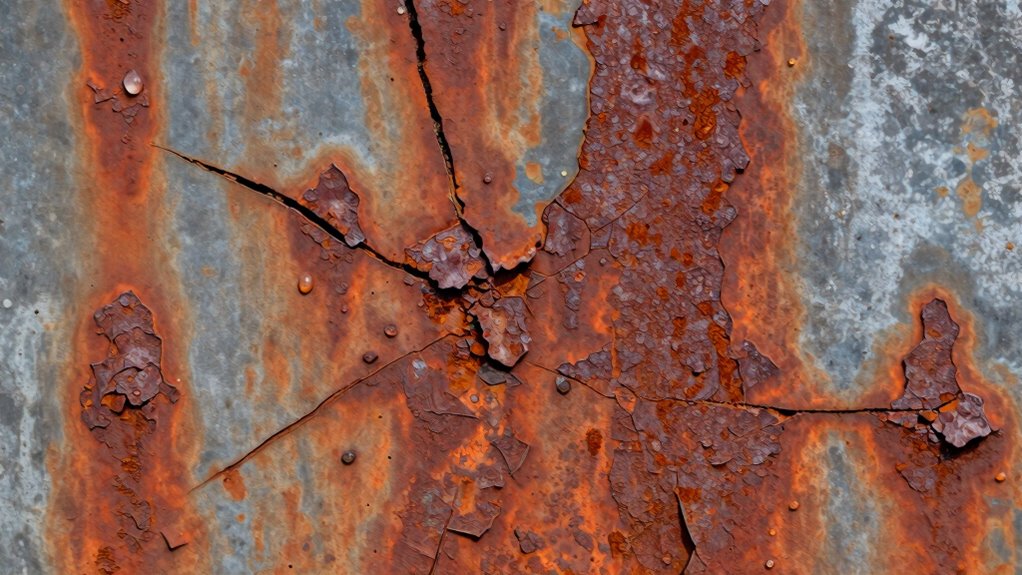
Rusting is a natural process that occurs when metals like iron react with moisture and oxygen in the environment. This reaction leads to the formation of rust, which is fundamentally iron oxide. Understanding this process helps you grasp why metals deteriorate over time and what you can do to prevent it. When metal surfaces are exposed to water and air, they undergo chemical changes through metal oxidation. This is a form of corrosion, a broader term describing the deterioration of metals due to chemical reactions. Metal oxidation isn’t just about losing the shiny appearance; it weakens the metal’s structure, making it brittle and more susceptible to breaking.
Rust forms when metals like iron react with moisture and oxygen, weakening their structure over time.
To combat this, corrosion prevention becomes crucial. You can employ various methods to slow down or stop rust from forming. Coatings like paint, oil, or specialized sealants act as barriers, preventing moisture and oxygen from reaching the metal surface. Applying a protective layer is one of the most straightforward ways to inhibit corrosion. Another effective method involves galvanization, where a layer of zinc is coated onto steel or iron. Zinc acts as a sacrificial anode, corroding preferentially and shielding the underlying metal from rust. This process is especially useful in outdoor environments where exposure to moisture is inevitable.
You should also consider environmental control to prevent rust. Keeping metals dry and reducing humidity levels considerably slows down metal oxidation. Using dehumidifiers or storing metals indoors in climate-controlled spaces can make a big difference. For outdoor objects, regular maintenance and inspections help catch early signs of corrosion before they become severe. Removing existing rust with wire brushes or chemical rust removers, then applying protective coatings, restores the metal’s integrity and prolongs its lifespan. Recognizing how environmental factors influence rust formation can help you better plan protective strategies. Additionally, understanding metal properties can guide you in choosing the most suitable materials for specific conditions, enhancing durability and resistance to corrosion. Knowing the corrosion resistance of different metals allows you to select materials that naturally withstand environmental challenges.
Furthermore, understanding how different metals respond to oxidation can guide you in choosing more resistant materials for specific applications. For instance, stainless steel contains chromium, which forms a passive layer that prevents further corrosion, making it more durable in harsh conditions. This knowledge about metal alloys can help you select metals that are better suited for specific environments and reduce maintenance needs. By understanding the science behind why metals rust, you gain the tools to effectively protect and preserve metal objects. Whether through corrosion prevention techniques or selecting corrosion-resistant alloys, you can profoundly extend the life of your metal possessions and reduce maintenance costs over time. A deeper knowledge of metal composition can further enhance your ability to make informed decisions about material durability and longevity.
As an affiliate, we earn on qualifying purchases.
Frequently Asked Questions
How Does Rust Affect the Structural Integrity of Metals Over Time?
Rust weakens the structural integrity of metals over time by accelerating corrosion mechanisms and causing material degradation. As rust forms, it creates flaky, brittle layers that reduce the metal’s strength and load-bearing capacity. You’ll notice it compromises the metal’s durability, making it more prone to cracks and breaks. Continuous rusting leads to significant deterioration, ultimately threatening safety and stability of structures or objects made from affected metals.
Can Rust Be Completely Removed From Metals?
In the spirit of the Renaissance, yes, rust can be completely removed from metals, but it’s often temporary. You’ll need to use corrosion prevention techniques like metal coatings or rust removers. These methods strip away existing rust and protect against future corrosion. Keep in mind, thorough cleaning and proper coating application are key to maintaining a rust-free surface over time, ensuring your metal stays strong and durable.
Are Some Metals More Resistant to Rust Than Others?
Yes, some metals are more resistant to rust than others due to their corrosion resistance. For example, stainless steel and aluminum naturally resist rust better than iron or steel. Metal alloys are often designed specifically to improve corrosion resistance by combining metals that inhibit rust formation. When choosing materials, consider these alloys for durability, especially in environments prone to moisture, to guarantee your metal stays protected longer.
How Does Environmental Pollution Influence Rust Formation?
Environmental pollution dramatically accelerates rust formation, turning metals into rusty ruins almost overnight. Pollution impact introduces aggressive chemicals like sulfur dioxide and nitrogen oxides into the air, which combine with moisture to create powerful acids. These acids eat away at metal surfaces, causing rust to form faster and more extensively. Environmental factors like humidity, temperature, and pollutants work together, turning everyday metals into corrosion victims in a matter of days or weeks.
What Are Modern Methods to Prevent Metal Rusting?
You can prevent metal rusting by applying corrosion inhibitors, which form a protective barrier on the metal surface, slowing down oxidation. Additionally, using protective coatings like paints, varnishes, or galvanization creates a physical shield against moisture and oxygen. Regular maintenance, such as cleaning and inspecting surfaces, also helps identify early signs of rust, ensuring your metals stay durable and corrosion-free longer.
As an affiliate, we earn on qualifying purchases.
Conclusion
So, next time you see a metal’s charming patina, remember it’s just nature’s gentle way of giving the metal a new story. Rust isn’t just a flaw; it’s a sign of life’s quiet dance with the elements. Embrace this subtle transformation as a reminder that even in change, there’s a kind of beauty waiting to be appreciated. After all, every aging piece has its own quiet elegance—just waiting for your admiration.
galvanized steel outdoor furniture
As an affiliate, we earn on qualifying purchases.
As an affiliate, we earn on qualifying purchases.
As an affiliate, we earn on qualifying purchases.
Evergreen bestsellers Picks
bestsellers
As an affiliate, we earn on qualifying purchases.