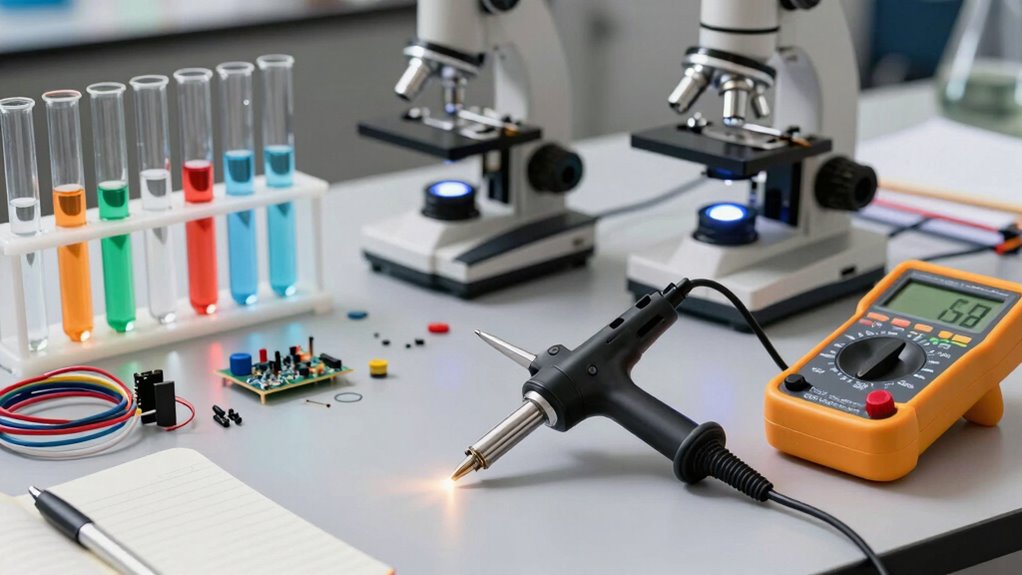
To turn your home lab into a serious research space, focus on essential microbiology tools like sterile petri dishes, inoculation loops, microscopes, and sterilization equipment such as autoclaves. Safety gear like gloves and lab coats help maintain a contamination-free environment. For electrical experiments, include multimeters, oscilloscopes, and basic tools like soldering irons. Adding renewable energy components and organization resources boosts your experiment potential. Keep exploring to discover more ways to elevate your DIY science adventures.

Get school and study supplies delivered free — and shop member deals
- Fast, free delivery on millions of items
- Access to Prime Big Deal Days deals on October 6–7
- Prime Video, Amazon Music and more included
Key Takeaways
- Essential microbiology tools like sterile petri dishes, inoculation loops, and microscopes enable detailed microbial research at home.
- Safety equipment such as gloves, lab coats, and sterilization devices ensure contamination prevention and personal protection.
- Precise measurement tools like multimeters and oscilloscopes are crucial for electrical experiments and data accuracy.
- Renewable energy components, including solar panels and small wind turbines, facilitate hands-on energy generation projects.
- Organized workspace setups with control tools promote safety, accuracy, and the ability to push experimental boundaries.
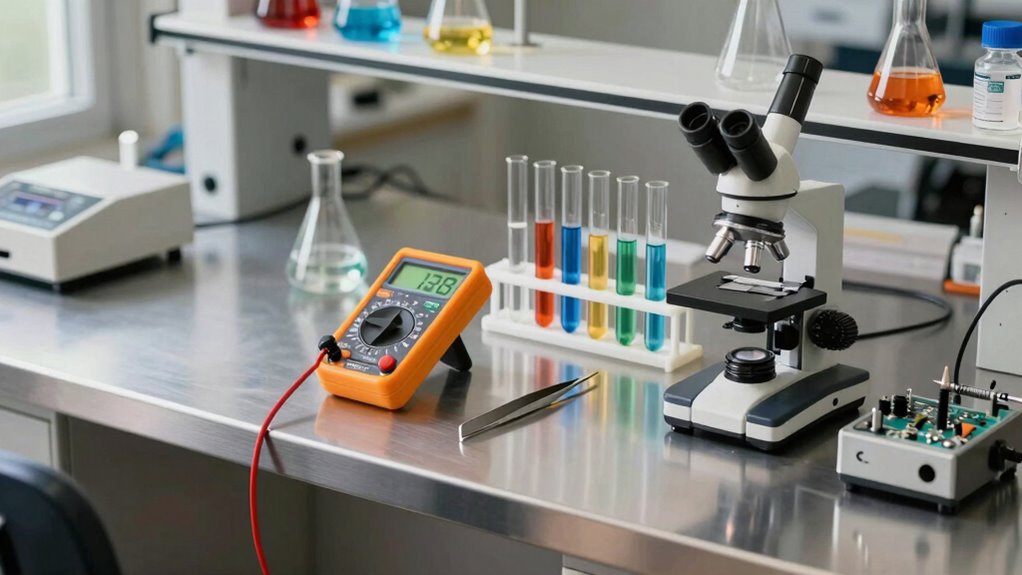
Setting up a home lab for serious science hobbyists is more accessible than ever, thanks to a wide array of specialized tools designed for precision and safety. Whether you’re diving into DIY microbiology or exploring renewable energy experiments, having the right equipment can make all the difference. With the right tools, you can conduct experiments confidently, gather accurate data, and push your scientific pursuits further.
Creating a home science lab is now more achievable than ever with tools for precision, safety, and groundbreaking discoveries.
For DIY microbiology, you’ll need basic but reliable equipment like sterile petri dishes, inoculation loops, and microscopes. A good-quality microscope allows you to observe microorganisms in detail, which is essential for identifying bacteria, fungi, or other microbes. Sterile tools and media ensure your experiments stay uncontaminated, so investing in autoclaves or pressure cookers for sterilization is wise. Agar plates, nutrient broths, and pipettes help you culture microbes safely and precisely. You should also have access to safety gear like gloves and lab coats to protect yourself from potential hazards. These tools create a controlled environment where you can study microbial growth patterns, test antimicrobial agents, or even develop new strains. Sterilization equipment is crucial for maintaining a contamination-free workspace. Additionally, proper storage solutions help keep your microbial cultures viable and uncontaminated over time. Implementing proper laboratory protocols ensures consistent results and safety during your experiments. Developing a clear understanding of microbial contamination prevention is vital for successful microbiology work. Employing quality control methods can further ensure the reliability of your results and minimize errors.
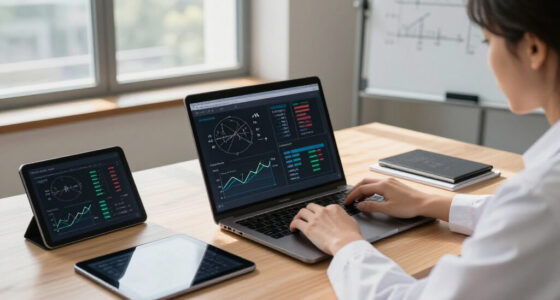
When it comes to renewable energy experiments, your toolkit expands to include components like solar panels, small wind turbines, and energy storage systems. Multimeters and oscilloscopes are essential for measuring voltage, current, and power output, giving you real-time data on your setups. You’ll also need basic electrical tools—wire strippers, soldering irons, and circuit testers—to assemble and troubleshoot your systems. For hands-on learning, kit-based projects like building your own solar charger or wind generator can be incredibly rewarding. These experiments not only deepen your understanding of renewable energy principles but also enhance your practical skills. Safety equipment, such as insulated gloves and eye protection, guarantees you can work confidently with electrical components.
Both DIY microbiology and renewable energy experiments benefit from a well-organized workspace and quality tools that promote accuracy and safety. Whether you’re cultivating microbes or generating renewable power, precision in measurement and safety protocols are non-negotiable. The right home lab tools enable you to push boundaries while maintaining control over variables, ensuring your experiments are both safe and scientifically sound. As you expand your toolkit, you’ll find that each new piece of equipment opens up more possibilities for discovery and innovation, transforming your home lab into a serious scientific laboratory.
sterile petri dishes for microbiology
As an affiliate, we earn on qualifying purchases.
As an affiliate, we earn on qualifying purchases.
Frequently Asked Questions
What Safety Precautions Should I Follow With Home Lab Tools?
You should follow strict lab safety protocols when working with home lab tools. Always wear protective gear like goggles, gloves, and lab coats to shield yourself from chemicals or splashes. Keep your workspace well-ventilated, and store chemicals safely. Never work alone, and familiarize yourself with emergency procedures. Regularly check your tools for damage, and clean up spills immediately to prevent accidents. Staying vigilant guarantees a safe and enjoyable science experience.
How Much Does a Basic Home Science Lab Typically Cost?
A basic home science lab typically costs between $200 and $500, depending on your equipment choices. To stay organized, invest in proper lab storage and labeling tools. Keep your equipment calibrated regularly to guarantee accurate results and safety. Prioritize quality over quantity, and gradually expand your setup. With good lab organization and consistent calibration, you’ll create a safe, efficient space for your experiments without overspending.
Can I Get Certification or Training for Home Lab Work?
Yes, you can pursue certification opportunities and advanced techniques in home lab work. While some may think formal training isn’t possible outside professional settings, many online courses and workshops offer credible certification options. These programs teach advanced techniques, ensuring your skills stay sharp. By earning certifications, you enhance your credibility and deepen your knowledge, turning your home lab into a serious science hub.
What Are Common Mistakes Beginners Make in Home Labs?
As a beginner in DIY experiments, you might overlook proper chemical storage, leading to safety hazards. Avoid rushing experiments, as it can cause mistakes or accidents. Always double-check your measurements and procedures, and don’t ignore safety protocols. Proper chemical storage is essential—keep chemicals labeled and stored separately. Staying organized and cautious helps prevent common mistakes, ensuring your home lab remains safe and productive while you learn and explore science.
How Do I Troubleshoot Equipment Malfunctions Effectively?
When troubleshooting equipment malfunctions, start by checking if your equipment is properly calibrated, as incorrect calibration can cause errors. Use precise data recording techniques to track when issues occur, helping you identify patterns or faulty components. Carefully inspect connections, power sources, and settings. If problems persist, consult manufacturer guidance or seek advice from experienced hobbyists. Consistent documentation and calibration are key to resolving issues efficiently.
digital microscope for microbial observation
As an affiliate, we earn on qualifying purchases.
As an affiliate, we earn on qualifying purchases.
Conclusion
With these tools, you’re ready to set out on your scientific adventures, turning your home into a true laboratory of discovery. Whether you’re tinkering with electronics or exploring chemistry, having the right gear makes all the difference. Remember, even in this digital age, a good old-fashioned Bunsen burner can still spark your curiosity. So gear up, stay curious, and keep pushing the boundaries—your journey into serious science has just begun!
autoclave sterilization equipment
As an affiliate, we earn on qualifying purchases.
As an affiliate, we earn on qualifying purchases.
microbiology lab safety gear set
As an affiliate, we earn on qualifying purchases.
As an affiliate, we earn on qualifying purchases.
Halloween Picks
halloween
As an affiliate, we earn on qualifying purchases.