
A new plastic-eating enzyme can break down common plastics like PET in just a few hours, offering a fast and efficient way to tackle plastic waste. This enzyme has been optimized to target polymer chains, speeding up the natural decomposition process considerably. It can reduce plastics in landfills and oceans, converting waste into harmless substances swiftly. If you want to discover how this innovation works and its future impact, there’s more to explore below.

Prime made for students and young adults
- Fast, free delivery for dorm and study essentials
- Prime Video and Amazon Music included
- Member-only deals
Key Takeaways
- The enzyme is a newly developed biological catalyst designed to rapidly degrade plastics like PET.
- It can break down plastic waste within hours, significantly faster than natural decomposition.
- The enzyme’s optimized structure enhances efficiency in breaking polymer chains during plastic degradation.
- It offers environmental benefits by producing harmless substances and reducing plastic pollution in landfills and oceans.
- Scaling production and ensuring stability across conditions are ongoing challenges for widespread application.
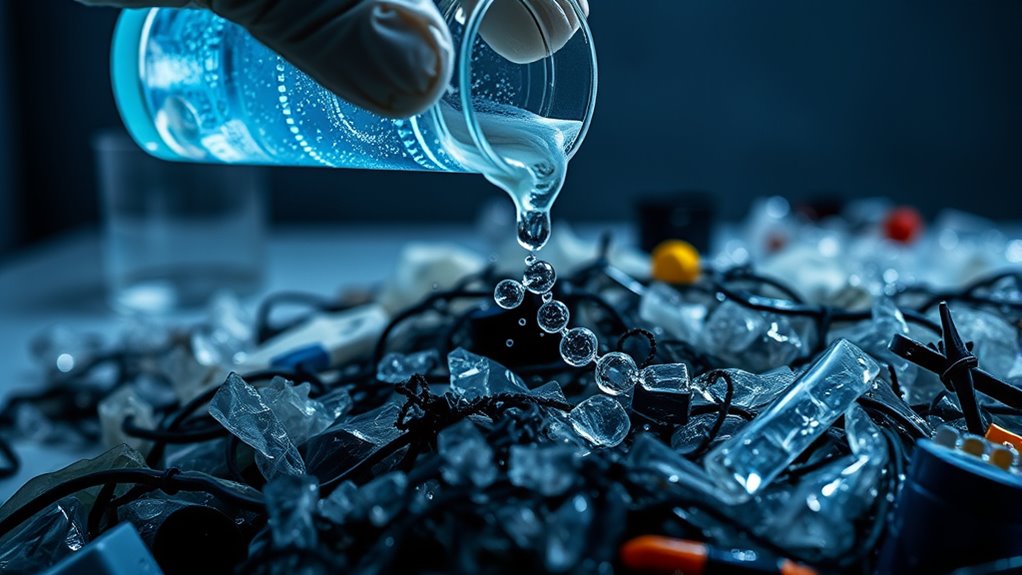
Have you ever wondered if there’s a way to reduce the massive plastic waste polluting our planet? Scientists have recently developed a groundbreaking plastic-eating enzyme that promises to do just that. This enzyme is designed to break down common plastics, like PET, at an astonishing speed—sometimes within just hours. Its remarkable enzyme efficiency could revolutionize how we manage plastic waste, making recycling faster and more effective. Instead of waiting weeks or months for plastics to decompose naturally, this enzyme accelerates the process, turning waste into harmless substances swiftly. That means fewer plastics ending up in landfills and oceans, which directly benefits our environment.
Scientists develop enzyme that rapidly breaks down plastics, promising faster, eco-friendly waste recycling and less pollution.
But how does this enzyme work so efficiently, and what does it mean for the environment? Enzymes are biological catalysts, meaning they speed up chemical reactions without being consumed in the process. Scientists have optimized this enzyme’s structure to target plastic molecules specifically, ensuring maximum efficiency in breaking down polymer chains. This high enzyme efficiency allows for rapid degradation, which is *essential* for large-scale waste management. Imagine recycling plants that can process plastic waste in hours instead of days or weeks—that could *greatly* reduce the environmental impact of plastic pollution. Additionally, ongoing research into enzyme stability aims to improve its performance in diverse conditions, making it more practical for widespread use.
Reducing plastic waste with this enzyme also minimizes the long-term environmental impact. Traditional disposal methods, like landfilling and incineration, pose serious threats—landfills take centuries to break down plastics, and burning releases toxic fumes. In contrast, enzymatic breakdown produces basic molecules that can be reused or safely returned to the environment. This process helps cut down greenhouse gas emissions associated with plastic disposal, contributing to climate change mitigation. *Furthermore*, it lessens the risk of plastics entering ecosystems, where they harm marine life, birds, and other wildlife.
Implementing this enzyme on a broad scale could transform waste management practices worldwide. Recycling facilities could become more efficient, turning plastic waste into valuable raw materials quickly and sustainably. Plus, the reduced environmental impact means healthier oceans, cleaner air, and a safer planet for future generations. While challenges remain, such as scaling up enzyme production and ensuring stability in diverse conditions, the potential benefits are enormous. You can see how this innovation might reshape the way we handle plastic waste, making our efforts to protect the environment more effective than ever before. With continued research and development, this enzyme could lead us toward a cleaner, greener world where plastic pollution is no longer a looming threat.
Frequently Asked Questions
How Long Does the Enzyme Remain Active in Real-World Conditions?
You should know that the enzyme remains active for several days in real-world conditions, depending on factors like temperature and pH. Its stability is vital, as it determines how long it can effectively break down plastics before degradation rate causes it to lose activity. Researchers are working on improving enzyme stability to extend its lifespan, ensuring more efficient waste processing and reducing environmental impact over time.
Can the Enzyme Be Safely Used on All Plastic Types?
Oh, sure, this enzyme is the superhero of plastics, right? Well, don’t get too excited. You can’t just toss every plastic type at it and expect a magic show. It’s not a one-size-fits-all solution. Chemical safety and plastic compatibility matter big time. Some plastics resist breakdown, while others might release unforeseen reactions. So, be cautious—test first, and don’t assume it’s safe for all plastics out there.
What Are the Environmental Impacts of Enzyme-Produced Byproducts?
You should consider that enzyme-produced byproducts may pose biodegradation risks if they aren’t properly managed. Toxic byproduct management becomes vital to prevent environmental harm, as some byproducts could be harmful or persist in ecosystems. To minimize impacts, rigorous testing and regulation are essential, ensuring that the enzyme’s use promotes safe biodegradation and doesn’t introduce new pollutants. Responsible handling protects ecosystems while benefiting from the enzyme’s waste-breaking capabilities.
Is the Enzyme Cost-Effective for Large-Scale Waste Management?
They say, “You get what you pay for,” and when it comes to this enzyme, it’s true. The economic feasibility depends on overcoming scalability challenges, but initial studies show promise. If production costs decrease and efficiency improves, it could be a cost-effective solution for large-scale waste management. Keep in mind, investing now might just turn the tide on plastic pollution, making it worth the effort.
How Does the Enzyme Perform in Diverse Recycling Facilities Worldwide?
You’ll find that the enzyme performs well across diverse recycling facilities, thanks to its high storage stability, allowing it to remain effective over time. Its enzyme specificity means it targets specific plastics efficiently, but this can vary with different plastic types and conditions. To optimize performance worldwide, facilities may need to adjust storage conditions and processing parameters, ensuring the enzyme maintains its effectiveness and enhances recycling outcomes.
Conclusion
Imagine a gentle solution that quietly transforms your plastic worries into harmless remains within hours. This innovative enzyme isn’t just a breakthrough; it’s like a whisper of hope, softly guiding us toward cleaner days. As we embrace this promising discovery, we step closer to a world where waste becomes a thing of the past—almost like a fleeting dream. Together, we can nurture this delicate change and look forward to a brighter, more mindful future.
Columbus Day / Indigenous Peoples' Day Picks
long weekend sales
As an affiliate, we earn on qualifying purchases.