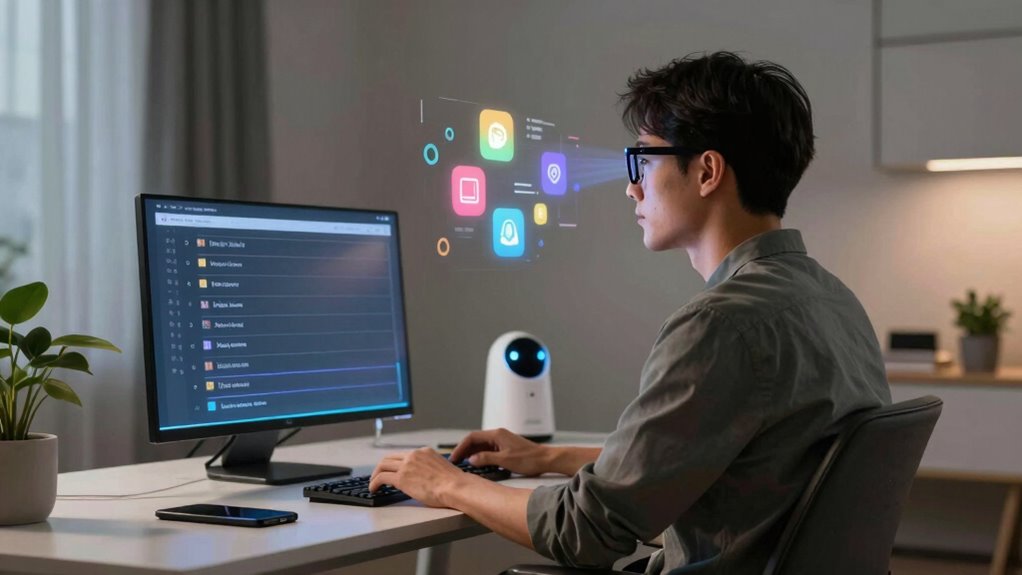

Assistive tech helps reduce your cognitive load by externalizing memory tasks with tools like reminders and note apps, so you don’t have to keep everything in your head. It streamlines focus through timers and notification filters, minimizing distractions. These tools also simplify complex tasks and manage responsibilities more efficiently, lowering mental fatigue. By leveraging assistive technology, you’ll work smarter with less stress. Keep exploring to discover more ways these tools can boost your mental performance.

Prime made for students and young adults
- Fast, free delivery for dorm and study essentials
- Prime Video and Amazon Music included
- Member-only deals
Key Takeaways
- Assistive tech offloads memory tasks through digital organizers and reminders, reducing mental effort needed for recall.
- Focus management tools like timers and notification filters minimize distractions, helping maintain sustained attention.
- External aids organize complex information and tasks, simplifying mental processing and reducing cognitive overload.
- These tools enable better prioritization, decreasing anxiety and mental fatigue associated with multitasking.
- Overall, assistive technology streamlines mental operations, enhancing efficiency and cognitive capacity.

Have you ever wondered how assistive technology can make complex tasks easier for your brain? When you’re juggling multiple responsibilities or trying to keep track of important details, your cognitive load can quickly become overwhelming. That’s where assistive tech steps in, helping you manage your mental resources more efficiently. By enhancing your memory and attention management, these tools reduce the mental effort needed to complete tasks, freeing your mind to focus on what truly matters.
Memory enhancement tools, like digital organizers, reminders, and note-taking apps, act as external memory aids. Instead of relying solely on your brain to remember appointments, deadlines, or important facts, you can offload that burden onto technology. For example, calendar apps alert you ahead of time about upcoming events, preventing you from forgetting essential commitments. This not only lessens the strain on your memory but also boosts your confidence, knowing that vital details are safely stored and accessible when needed. With these tools, your brain no longer needs to hold everything in working memory, which markedly decreases cognitive load.
Attention management is another pivotal aspect where assistive technology makes a difference. In today’s world, distractions are everywhere, pulling your focus in multiple directions. Technology solutions like focus timers, notification filters, and task prioritization apps help you stay on track. They enable you to concentrate on one task at a time and minimize interruptions, so your mental energy isn’t wasted switching between different stimuli. For instance, turning off non-essential notifications during work sessions helps you maintain sustained attention, reducing the mental fatigue that comes with constant interruptions. Additionally, task management apps allow you to organize your workload into manageable steps, making large projects feel less intimidating and more achievable. Recognizing cognitive load as a key factor in mental performance emphasizes the importance of these assistive tools in optimizing your brain’s efficiency. Incorporating external memory aids can further streamline your mental processes, making it easier to handle complex information and responsibilities.
As an affiliate, we earn on qualifying purchases.
Frequently Asked Questions
How Do Assistive Technologies Adapt to Individual Cognitive Needs?
Assistive technologies adapt to your cognitive needs through personalization strategies and adaptive interfaces. They analyze your usage patterns, preferences, and challenges to tailor features specifically for you. For example, adaptive interfaces adjust complexity based on your comfort level, simplifying tasks or providing prompts as needed. This customization helps reduce mental effort, making technology more accessible and easier to navigate, ultimately supporting your independence and confidence in completing daily activities.
Are There Specific Assistive Tools for Different Cognitive Impairments?
They say “a problem shared is a problem halved,” and specific assistive tools are designed for different cognitive impairments. For memory aids, you might use reminder apps or digital calendars, while focus enhancement tools like noise-canceling headphones or specialized software help improve concentration. These tools are tailored to your needs, making daily tasks easier and reducing mental strain. Identifying the right tools can truly transform your daily experience.
What Are the Limitations of Assistive Tech in Reducing Cognitive Load?
Assistive tech can face limitations like reduced user engagement if devices are complex or unintuitive, making it harder to stay motivated. Technological barriers, such as compatibility issues or lack of customization, can also hinder effectiveness. These factors may prevent you from fully benefiting, especially if the tools don’t adapt to your specific needs. Overcoming these challenges requires user-friendly designs and ongoing support to guarantee technology truly eases your cognitive load.
How Accessible Is Assistive Technology for Diverse User Groups?
You might think assistive tech is universally accessible, but ironically, it often isn’t. Its accessibility varies widely across diverse user groups, especially regarding sensory integration and user customization. Some devices cater well to specific needs, while others fall short, leaving many users feeling overlooked. To truly serve everyone, developers must prioritize adaptable features, ensuring assistive tech accommodates different sensory and customization requirements, making it genuinely inclusive.
What Training Is Required to Effectively Use Assistive Tech?
You need training to effectively use assistive tech, focusing on understanding the user interface and personalization options. You should learn how to navigate features, adjust settings, and customize tools to fit your needs. Practice makes perfect, so explore tutorials or workshops. Familiarizing yourself with the interface and tailoring the assistive tech to your preferences enhances usability, reduces frustration, and guarantees you gain maximum benefit from the technology.
reminder and task management app
As an affiliate, we earn on qualifying purchases.
As an affiliate, we earn on qualifying purchases.
Conclusion
By embracing assistive tech, you can lighten your cognitive load just like a trusty sidekick in your own superhero story. These tools help you organize, remember, and focus, making daily tasks feel less like deciphering ancient runes and more like a walk in the park—imagine having your own Jarvis! As you harness this technology, you’ll find your mental bandwidth expands, empowering you to conquer challenges with newfound confidence and clarity.
As an affiliate, we earn on qualifying purchases.
As an affiliate, we earn on qualifying purchases.
Halloween Picks
halloween
As an affiliate, we earn on qualifying purchases.