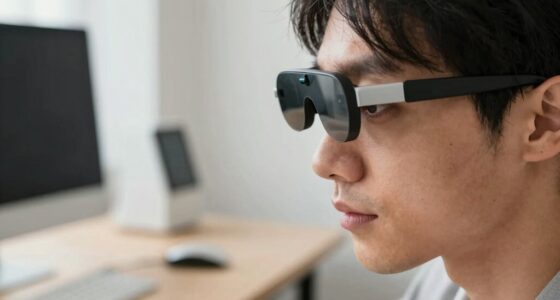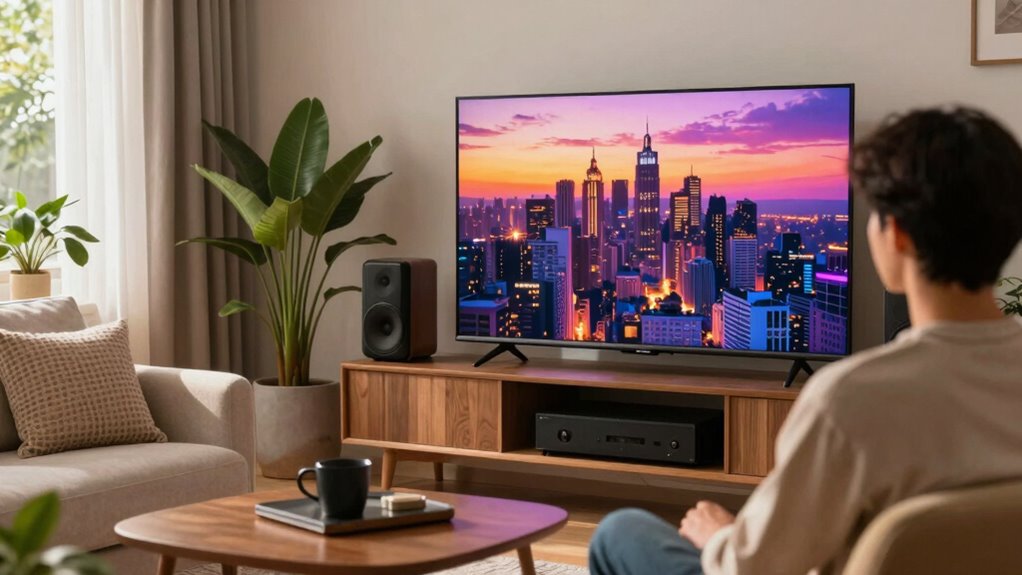

You experience how audio description opens visual content by hearing vivid narration that explains actions, settings, and expressions clearly and naturally. It fills in visual gaps without overwhelming you, helping you imagine scenes as if you see them. The narration highlights key details while blending smoothly with the story. For a better understanding of how this creates an immersive experience, keep exploring how these techniques make visual media more accessible and engaging.

Prime made for students and young adults
- Fast, free delivery for dorm and study essentials
- Prime Video and Amazon Music included
- Member-only deals
Key Takeaways
- Audio description provides vivid verbal narration that introduces and clarifies visual scenes for visually impaired viewers.
- It seamlessly integrates descriptions of actions, settings, and expressions to open up visual content.
- Descriptions highlight key visual elements, helping viewers understand scene context and details.
- Well-crafted audio descriptions evoke sensory experiences, bringing scenes to life through language.
- They ensure an inclusive experience by making visual content accessible and engaging for all audiences.
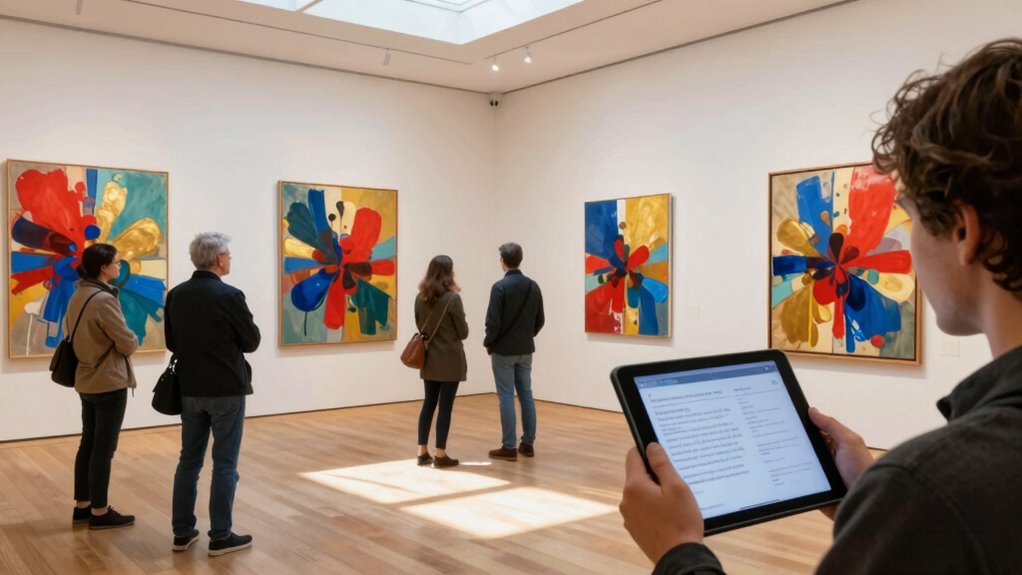
Have you ever wondered how people with visual impairments experience movies, TV shows, or online videos? Audio description is the key to accessing this experience, providing vivid verbal narration that complements visual content. This narration isn’t just about describing what’s happening on screen; it’s crafted with careful attention to narrative techniques that guarantee the story remains engaging and immersive. When done well, audio description brings scenes to life, filling in visual gaps without overwhelming the viewer with unnecessary detail. It’s a delicate balance—highlighting important actions, settings, and expressions in a way that feels natural and seamless.
Accessibility standards play a pivotal role in guiding how audio description is integrated into media. These standards assure that descriptions are consistent, clear, and accessible across different platforms and formats. They specify the quality and timing of narration, making sure it doesn’t interfere with dialogue or background sounds. By adhering to these standards, content creators affirm that viewers with visual impairments receive a comparable experience to sighted audiences. The goal isn’t just to describe, but to do so thoughtfully, enhancing understanding without disrupting the flow of the story. Understanding narrative techniques helps creators craft descriptions that are both informative and engaging, blending seamlessly with the visual content. Additionally, incorporating descriptive language that evokes sensory experiences can make scenes more vivid and memorable for listeners. Recognizing the importance of accessibility guidelines ensures that descriptions meet established quality benchmarks, benefiting all viewers. Properly integrating audio description involves applying these standards consistently, which ultimately supports more inclusive storytelling. Emphasizing the significance of content accessibility can also encourage creators to prioritize inclusive practices from the start.
As an affiliate, we earn on qualifying purchases.
Frequently Asked Questions
How Is Audio Description Integrated Into Live Broadcasts?
During live broadcasts, you’ll notice audio description is seamlessly integrated through technology that syncs with the event. It enhances audience engagement by providing real-time narration of visual elements, accessible via headphones or compatible devices. Broadcasters use advanced technology to embed audio description into live streams, ensuring viewers with visual impairments can follow along. This integration creates an inclusive experience, making sure everyone can enjoy the content equally.
What Training Do Describers Need to Create Effective Descriptions?
You need specialized training programs to develop effective describer skills, focusing on clarity, conciseness, and timing. These programs teach you how to analyze visuals quickly, prioritize important details, and craft engaging descriptions that complement the audio. Ongoing practice and feedback are essential. By honing your skills through dedicated training, you guarantee your descriptions are accessible, accurate, and enhance the viewer’s understanding of visual content.
Can Audio Description Be Customized for Individual Preferences?
You can definitely customize audio descriptions to suit your preferences through personalization options and an intuitive user interface. This means you can choose the level of detail, specific descriptions, or even the voice tone, making the experience more engaging. As you explore these features, you’ll find that tailored descriptions help you connect better with content, transforming your viewing experience into something uniquely suited to your needs and interests.
How Does Audio Description Differ Across Various Types of Media?
You’ll notice that audio description varies across media types because creators use different narrative techniques to suit each format. For movies, it offers detailed, cinematic descriptions, while TV employs concise summaries for quick viewing. In digital media, descriptions focus on interactive elements. Despite these differences, descriptive accuracy remains key, ensuring you receive clear, vivid visuals regardless of the medium, enhancing your understanding and enjoyment.
What Challenges Are Faced in Describing Complex Visual Scenes?
Describing complex visual scenes is like untangling a knot; it’s challenging to maintain clarity. You struggle with scene complexity, trying to provide enough detail without overwhelming the listener. Visual clarity is hard to achieve when scenes are crowded or fast-moving, making it tough to convey all elements clearly. You must balance detail and brevity, ensuring the listener understands the scene without missing key visual cues.
As an affiliate, we earn on qualifying purchases.
Conclusion
By embracing audio description, you open a world where visual content becomes a vivid symphony for everyone. It’s like opening a window to a brighter, more inclusive world where no one is left in the shadows. When you support and use audio description, you help paint a picture for all, turning silence into a shared story. Together, we can guarantee that every scene, every moment, is accessible — a melody of inclusion that resonates deeply.
As an affiliate, we earn on qualifying purchases.
As an affiliate, we earn on qualifying purchases.
Halloween Picks
halloween
As an affiliate, we earn on qualifying purchases.