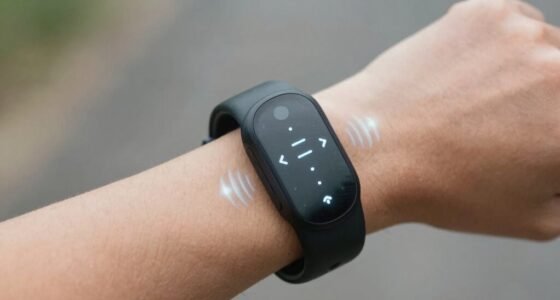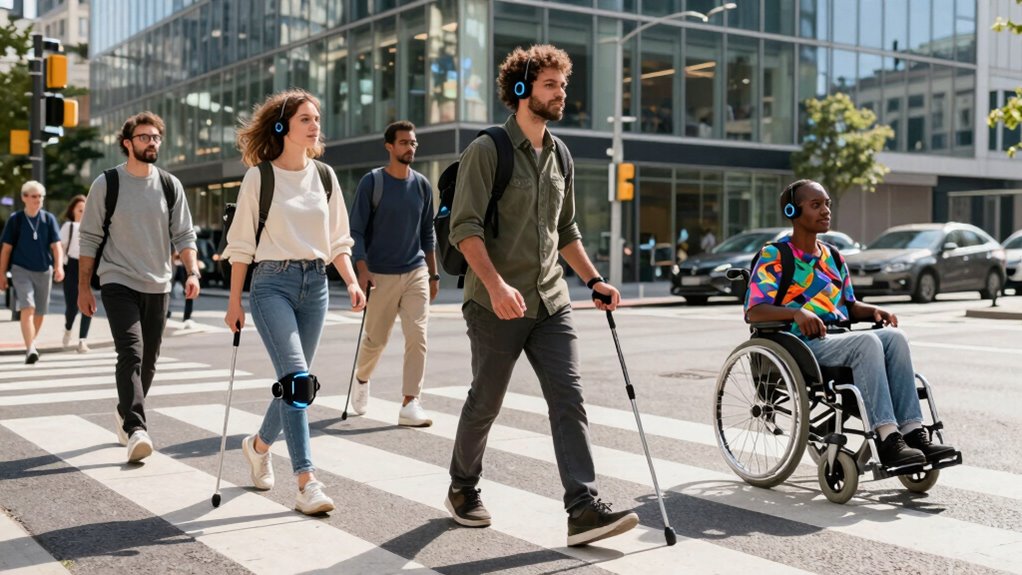

Personalized accessibility is becoming the future because it allows you to customize technology to fit your specific needs and preferences. Mainstream devices now include features like adjustable fonts, voice commands, and real-time captioning, making everyday tools more inclusive. As systems learn your habits, they automatically adapt, reducing barriers and boosting your independence. This shift creates more engaging, accessible environments tailored just for you—keeping you at the center of innovative solutions. To discover how this trend unfolds, keep exploring what’s on the horizon.

Prime made for students and young adults
- Fast, free delivery for dorm and study essentials
- Prime Video and Amazon Music included
- Member-only deals
Key Takeaways
- Mainstream devices now incorporate customizable assistive features, making accessibility more adaptable to individual needs.
- Inclusive design emphasizes flexibility, empowering users through personalized options rather than one-size-fits-all solutions.
- Intelligent, integrated assistive technologies learn from user interactions to enhance responsiveness and usability.
- Future systems will proactively adjust settings based on user habits, reducing manual interventions.
- Personalized accessibility minimizes barriers, fostering inclusive environments for learning, working, and social participation.
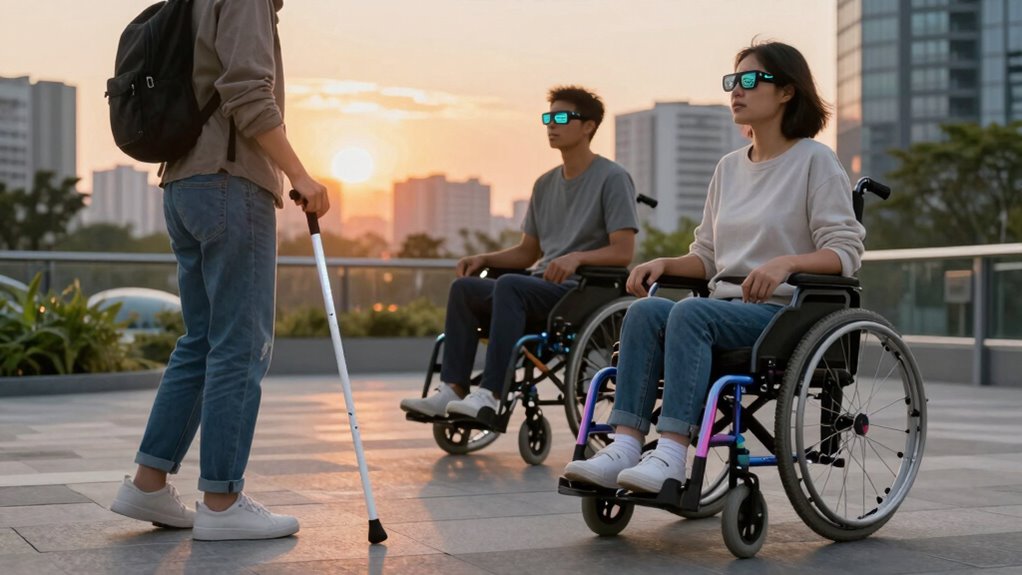
As technology advances, personalized accessibility is shaping the future of how everyone interacts with digital and physical environments. You’re increasingly likely to experience features tailored specifically to your needs, making daily interactions smoother and more intuitive. This shift is driven by the rapid development of assistive technology, which is no longer just for those with disabilities but is becoming an essential part of mainstream design. When technology adapts to your individual requirements, it creates a more inclusive environment where everyone can participate fully, regardless of their abilities.
You’ll notice that inclusive design principles are at the core of this transformation. Instead of creating one-size-fits-all solutions, designers now focus on flexibility and customization. For example, your smartphone may offer adjustable font sizes, voice commands, or real-time captioning, all easily personalized to suit your preferences. This approach guarantees that technology serves you better, addressing your unique challenges and enhancing your experience. It’s not just about accessibility; it’s about empowerment and independence.
Inclusive design empowers you with customizable features that enhance independence and make technology truly work for your needs.
Assistive technology continues to evolve, integrating seamlessly with everyday devices. From screen readers and magnifiers to wearable devices that monitor your health, these tools adapt in real-time to your needs. You don’t have to struggle with rigid systems anymore. Instead, you can customize your environment, making it more accessible and less frustrating. As these technologies become more intelligent and user-friendly, they help break down barriers that once limited participation or independence. Furthermore, the integration of assistive technology into mainstream devices highlights how inclusive design is becoming a standard part of technological progress. The increasing use of personalized features further exemplifies this trend toward customization and adaptability. Additionally, ongoing research into adaptive systems promises even smarter solutions that anticipate user needs before they are explicitly expressed. By leveraging data-driven insights, these systems learn from user interactions and improve their responsiveness over time, delivering more targeted assistance, making experiences even more seamless and intuitive.
The future of personalized accessibility is also about proactive solutions. Imagine systems that learn your habits and automatically adjust settings to optimize comfort and usability. For instance, if you have difficulty hearing, your devices might automatically amplify important sounds during conversations. If you find certain visual displays overwhelming, your devices could modify contrast or brightness accordingly. This level of personalization means you won’t have to manually adjust settings constantly; instead, your tech will anticipate and respond to your needs.
Ultimately, personalized accessibility transforms how you engage with the world. It’s about creating environments—both digital and physical—that are adaptable and inclusive by design. As assistive technology becomes more integrated and inclusive design principles guide development, you’ll find that barriers diminish, opening up new possibilities for learning, working, and socializing. This future isn’t just about making things accessible; it’s about making them meaningful and tailored specifically for you, ensuring everyone has the tools they need to thrive.
Frequently Asked Questions
How Is Personalized Accessibility Different From Standard Accessibility Measures?
Personalized accessibility differs from standard measures by tailoring experiences to individual needs, rather than applying a one-size-fits-all approach. You benefit from features like adjustable settings and adaptive interfaces that enhance your user experience. Unlike universal design, which aims to serve everyone equally, personalized accessibility focuses on customizing solutions for specific users, ensuring better inclusivity and usability for people with unique requirements.
What Technologies Enable Personalized Accessibility Solutions?
You use a variety of technologies to enable personalized accessibility solutions, including assistive devices like screen readers and speech recognition tools that adapt to your needs. User customization plays a key role, allowing you to tailor settings for maximum comfort and functionality. Smart software, AI-powered applications, and adaptive hardware work together to create a seamless experience, making technology more inclusive and responsive to your individual requirements.
Who Can Benefit Most From Personalized Accessibility Features?
You might think only those with disabilities need personalized accessibility, but irony strikes—everyone benefits. With inclusive design and user customization, you can tailor experiences to your preferences, making tasks easier and more enjoyable. Whether you’re tech-savvy or not, personalized features adapt to your needs, proving accessibility isn’t just for a few but a way to enhance daily life universally. Embracing this future benefits all, no exceptions.
Are Personalized Accessibility Options Affordable for Everyone?
Personalized accessibility options are becoming more affordable due to increased market availability and a favorable cost comparison. As more companies develop tailored solutions, prices tend to drop, making them accessible to a broader audience. You might find basic features at lower costs, while advanced customization can be slightly more expensive. Overall, the growing market and competition are helping make personalized accessibility options affordable for everyone, regardless of budget.
How Do Personalization Preferences Get Updated Over Time?
Did you know that over 60% of users prefer platforms that adapt to their needs? Your personalization preferences update through adaptive learning algorithms that analyze your interactions over time. As you engage more, these systems refine settings, making experiences more relevant and accessible. This continuous feedback loop guarantees your accessibility options evolve with your changing needs, boosting user engagement and making technology truly work for you.
Conclusion
So, don’t let the fear of complexity hold you back. Imagine a world where every device and app adapts seamlessly to your needs, making life easier and more inclusive. Personalized accessibility isn’t just a trend—it’s the future that empowers you to thrive, no matter your abilities. As technology evolves, you’ll find solutions tailored just for you, breaking down barriers and opening new doors. Embrace this future, and see how simple accessibility can truly change your life.
Halloween Picks
halloween
As an affiliate, we earn on qualifying purchases.