📊 Full opportunity report: Costco's Business Operations: An Anti-Amazon Perspective on IdeaNavigator AI — validation score, market gap, and execution plan.

Prime made for students and young adults
- Fast, free delivery for dorm and study essentials
- Prime Video and Amazon Music included
- Member-only deals
TL;DR
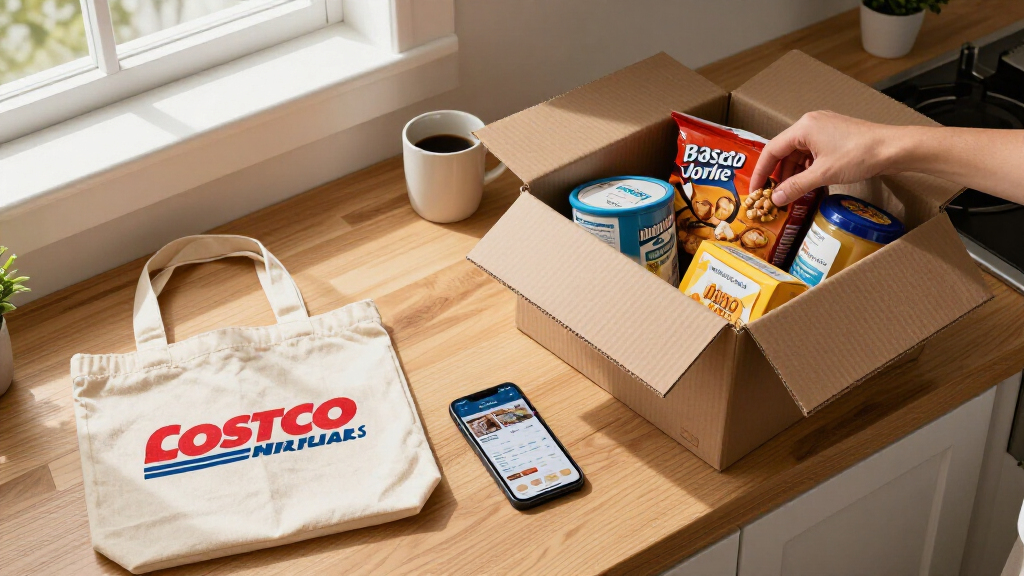
Costco’s business operations exemplify an anti-Amazon approach, emphasizing value, efficiency, and loyalty. This strategy offers a different blueprint for small businesses competing in e-commerce and retail.
Costco Wholesale Corporation is increasingly recognized for its business model that sharply contrasts with Amazon’s approach, emphasizing value, customer loyalty, and operational efficiency. This emerging perspective highlights Costco as an ‘anti-Amazon,’ offering insights for small business operators seeking alternative strategies amid rapid industry shifts.
Recent industry discussions and analyst observations suggest that Costco’s business operations prioritize a membership-based, low-margin, high-volume retail model that focuses on customer trust and long-term loyalty. Unlike Amazon, which invests heavily in technology, logistics, and rapid expansion, Costco maintains a more conservative growth strategy, emphasizing quality products and member satisfaction.
This approach has been noted in various industry signals, with some experts pointing out that Costco’s focus on bulk sales and limited product selection reduces supply chain complexity and operational costs. Additionally, Costco’s emphasis on in-store experience and limited online presence sets it apart from Amazon’s digital-first strategy.
Market analysts and small business founders are increasingly observing these differences, considering how Costco’s model could serve as a blueprint for resilience and sustainable growth in a volatile retail environment. The emphasis on value and loyalty over rapid scaling appears to be gaining traction as a strategic alternative.
Why Costco’s Approach Offers a Different Path for Small Businesses
This contrast matters because it presents small business operators with a viable alternative to the dominant Amazon model. Costco’s focus on customer trust, operational simplicity, and long-term value could inspire strategies that prioritize stability and loyalty over aggressive expansion. For small companies facing supply chain disruptions and market volatility, adopting elements of this model might improve resilience and customer retention.
In an era where rapid digital transformation often leads to burnout and unsustainable growth, Costco’s approach offers a different perspective—one that emphasizes sustainable, value-driven operations. Understanding this distinction can help small business leaders craft strategies that align with their resources and customer expectations, potentially leading to more stable growth.
Popular right now

Vitamix Propel Series 750 Professional-Grade Blender, 4 Programs, Black

Vitamix 5200 Professional-Grade Blender, 64 oz. Container, Black

Shark Navigator Robot Vacuum with Self-Empty Base, Dark Grey (RV2120AE)
As an affiliate, we earn on qualifying purchases.
Costco’s Business Model Compared to Amazon’s Strategy
Costco has long operated on a membership-based model, offering bulk products at low margins to a loyal customer base. Its focus on operational efficiency, limited product range, and in-store experience has allowed it to maintain steady growth without the aggressive expansion or technological arms race seen in Amazon’s strategy.
Amazon, by contrast, invests heavily in logistics, technology, and global infrastructure, aiming for rapid market capture and diversification. Its online-first approach and focus on data-driven personalization have driven explosive growth but also increased operational complexity and costs.
Recent signals, including industry reports and market analyses, suggest that small business founders are increasingly viewing Costco’s model as a counterpoint—less about scale and more about sustainable value, customer loyalty, and operational simplicity. This perspective is gaining relevance amid supply chain disruptions and economic uncertainty.
What Aspects of Costco’s Model Are Still Unclear for Small Businesses
It remains unclear how scalable Costco’s approach is for smaller or online-only businesses, and whether elements of its model can be effectively adapted outside large-scale retail. Additionally, the long-term impact of Costco’s strategy on customer loyalty and operational costs in different markets is still being studied.
Further analysis is needed to determine how small businesses can replicate or incorporate Costco’s emphasis on value and loyalty without the bulk sales infrastructure or membership model.
Next Steps for Small Business Leaders Considering Costco’s Strategy
Small business operators should monitor industry signals and case studies to assess how Costco’s approach influences market dynamics. Experimenting with loyalty programs, operational efficiencies, and value-focused offerings could be next steps. Additionally, watching for shifts in consumer preferences and supply chain adaptations will inform strategic decisions.
Further research and pilot programs may help determine how elements of Costco’s model can be tailored to smaller, online, or niche markets, providing a diversified toolkit for resilience and growth.
Key Questions
How does Costco’s business model differ from Amazon’s?
Costco emphasizes a membership-based, low-margin, high-volume retail model focused on customer loyalty, operational simplicity, and in-store experience. Amazon invests heavily in logistics, technology, and rapid expansion, prioritizing online sales and data-driven personalization.
Can small businesses adopt Costco’s approach successfully?
While some elements, like loyalty and operational efficiency, are adaptable, the scale and infrastructure of Costco are unique. Small businesses need to evaluate which aspects—such as value focus or customer trust—can be tailored to their resources and markets.
What are the risks of following a Costco-like strategy?
Potential risks include limited scalability, especially online, and the challenge of building the same level of customer loyalty without the bulk sales infrastructure. Market differences may also impact effectiveness.
How does this development impact the retail industry?
This highlights a growing divergence in retail strategies, with some companies emphasizing sustainable, loyalty-driven models as an alternative to aggressive growth and technological arms races. Small businesses may find new opportunities by adopting elements of Costco’s approach.
What should small business operators do next?
Monitor industry signals, experiment with loyalty and efficiency strategies, and stay alert to evolving consumer preferences. Pilot programs can help determine what elements of Costco’s model are most effective in their context.
Source: IdeaNavigator AI