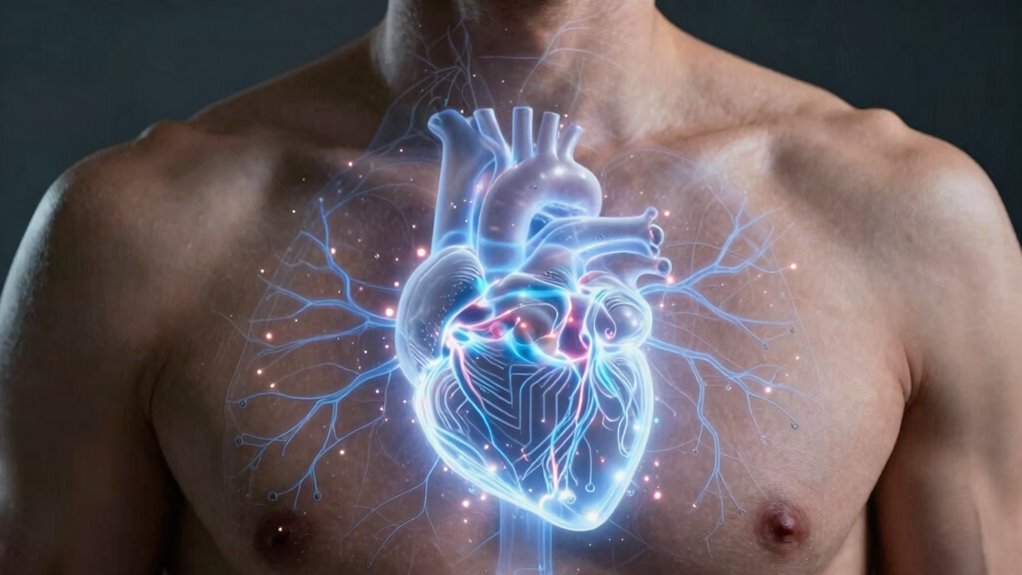

Your heart runs on electricity because it uses electrical signals to coordinate each beat, ensuring blood flows effectively throughout your body. These signals start from the sinoatrial (SA) node, your natural pacemaker, and travel through pathways to prompt your heart muscles to contract. This electrical system keeps a steady rhythm, but external factors like stress or medication can disrupt it. Interested in understanding how this essential process works and what keeps it running smoothly? Keep exploring to discover more.

Prime made for students and young adults
- Fast, free delivery for dorm and study essentials
- Prime Video and Amazon Music included
- Member-only deals
Key Takeaways
- The heart relies on electrical signals to coordinate contractions and ensure effective blood circulation.
- Electrical impulses originate from the sinoatrial (SA) node, the heart’s natural pacemaker.
- These signals travel through specialized pathways to regulate heartbeat timing and strength.
- Disruptions in electrical signals can cause irregular heartbeats or arrhythmias.
- Medical devices like pacemakers help regulate electrical activity for proper heart function.
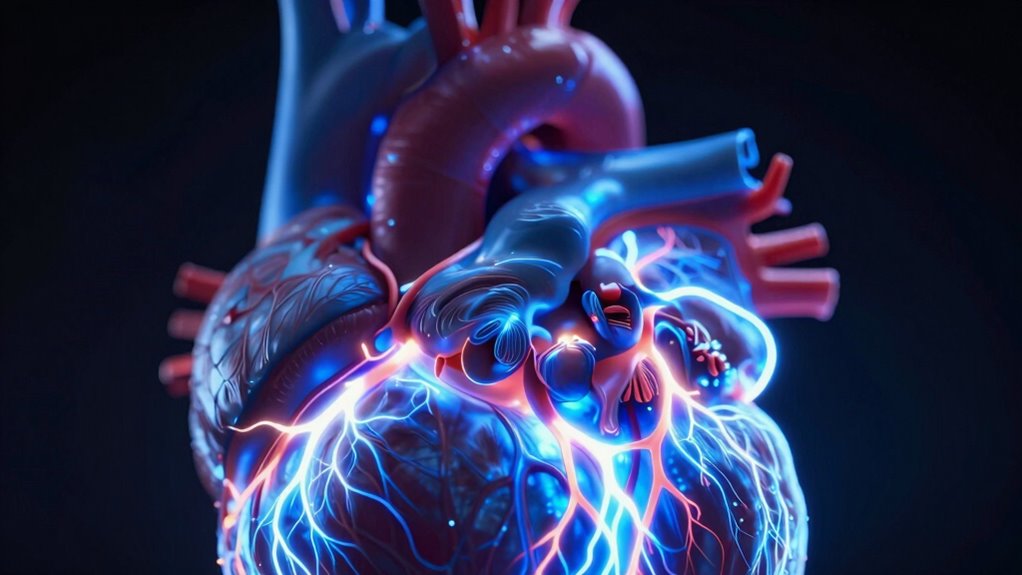
Your heart keeps beating because it runs on electrical signals that coordinate its contractions, ensuring blood flows efficiently throughout your body. This process hinges on electrical impulses traveling through your heart’s specialized conduction system. These impulses act as messengers, telling your heart muscles when to contract and relax, which keeps your heartbeat steady and synchronized. Without this precise cardiac signaling, your heart wouldn’t be able to pump blood effectively, and essential organs wouldn’t get the oxygen and nutrients they need.
Your heart’s electrical system keeps it beating steadily, ensuring blood flows efficiently and your organs receive vital oxygen and nutrients.
The electrical impulses originate from a tiny cluster of cells called the sinoatrial (SA) node, often called the heart’s natural pacemaker. Located in the right atrium, the SA node generates electrical signals automatically. When these signals are sent out, they spread through the atria, causing them to contract and push blood into the ventricles. From there, the impulses travel to the atrioventricular (AV) node, which acts as a relay station, briefly delaying the signal. This delay allows your ventricles to fill completely before they contract. Afterward, the electrical signals travel down specialized pathways called bundle branches and Purkinje fibers, rapidly spreading through the ventricles and prompting them to contract forcefully, pumping blood out to the lungs and the rest of your body.
This entire process is a marvel of biological electrical engineering. Your heart’s ability to regulate its rhythm depends on the precise timing and strength of these electrical impulses. When everything works correctly, your heartbeat remains regular and steady. But if there’s a disruption in cardiac signaling—due to issues like arrhythmias or conduction blockages—your heart may beat irregularly, too fast, or too slow. Such interruptions can lead to symptoms like dizziness, fatigue, or more serious complications requiring medical attention. The electrical system of your heart is self-sustaining, but it’s also sensitive. External influences like stress, certain medications, or underlying health conditions can interfere with electrical impulses. Advances in *nanotechnology* are increasingly being explored to develop more precise medical devices that could help monitor and regulate cardiac electrical activity at a microscopic level. Researchers are also investigating how electrical signals can be influenced or corrected using novel therapies. That’s why doctors sometimes use devices like pacemakers to help restore proper cardiac signaling if your heart’s natural electrical system malfunctions. In sum, your heart’s ability to beat in a coordinated rhythm is a testament to the complexity and precision of its electrical system, which keeps blood flowing and keeps you alive. Additionally, understanding the biological electrical engineering behind heart function can inspire innovations in medical technology aimed at preventing or treating cardiac disorders.
As an affiliate, we earn on qualifying purchases.
Frequently Asked Questions
How Does the Heart Generate Its Electrical Impulses Naturally?
Your heart generates electrical impulses through cardiac conduction, where specialized cells create and transmit signals. When these cells produce tiny electrical charges, they coordinate electrical synchronization across your heart muscle, causing it to contract rhythmically. The sinoatrial (SA) node acts as a natural pacemaker, initiating impulses that travel through the heart, ensuring each beat is synchronized. This process keeps your heartbeat steady and effective without conscious effort.
Can Electrical Problems in the Heart Be Inherited?
Yes, electrical problems in your heart can be inherited. Genetic predispositions and inherited conditions, like long QT syndrome or Brugada syndrome, can affect how your heart’s electrical system functions. If these conditions run in your family, you might be at higher risk of arrhythmias or other electrical issues. It’s crucial to get screened if there’s a family history, so your doctor can help manage or treat any inherited electrical problems effectively.
What Are Common Signs of Electrical Heart Issues?
You might notice irregular heartbeats or skipped beats, which are common signs of electrical heart issues. Don’t ignore arrhythmia symptoms like dizziness, shortness of breath, or chest discomfort—these could be mistaken for a heart attack. Recognizing these signs early helps prevent serious complications. If you experience any of these symptoms, see a healthcare professional promptly to get checked and guarantee your heart’s electrical system stays in sync.
How Do Pacemakers Restore Normal Heart Rhythm?
You can think of a pacemaker as a tiny electrical engineer that restores your heart’s rhythm by sending electrical signals. It does this through precise electrode placement on your heart to stimulate proper beats. The device’s battery longevity varies but typically lasts several years, ensuring it keeps working without frequent replacements. This helps your heart maintain a steady, normal rhythm, reducing symptoms like dizziness or fatigue.
Are Electrical Heart Treatments Safe for All Ages?
Electrical heart treatments are generally safe across all ages, but each case is unique. Think of electrode placement like carefully placing puzzle pieces; precise positioning guarantees effectiveness. Doctors tailor energy dosage to individual needs, minimizing risks. While most patients tolerate these treatments well, children and seniors might need special considerations. Always consult your doctor to weigh benefits and risks, ensuring the treatment fits your age and health condition perfectly.
heart electrical activity monitor
As an affiliate, we earn on qualifying purchases.
As an affiliate, we earn on qualifying purchases.
Conclusion
Your heart is like a delicate orchestra, each electrical signal a musician guiding the symphony of life. When these sparks falter, the melody of your existence pauses, reminding you that your essentiality hinges on unseen currents. Embrace the silent power within, for it symbolizes resilience and hope. As long as that electric rhythm persists, your spirit continues to dance, proving that even in stillness, the heartbeat’s quiet spark keeps your story alive.
As an affiliate, we earn on qualifying purchases.
As an affiliate, we earn on qualifying purchases.
Halloween Picks
halloween
As an affiliate, we earn on qualifying purchases.