TL;DR

Prime made for students and young adults
- Fast, free delivery for dorm and study essentials
- Prime Video and Amazon Music included
- Member-only deals
A new smartphone-based shade measurement system aims to objectively track teeth whitening progress at home. Developed as an MVP, it uses guided lighting and camera calibration to score tooth color against dental standards. This innovation could help consumers better assess whitening effectiveness and choose products more confidently.
Researchers and developers are testing a new smartphone app feature that uses guided lighting and camera calibration to objectively measure tooth shade at home, aiming to improve the accuracy of teeth whitening assessments. This innovation is designed for consumers who regularly cycle through whitening products like strips, trays, and LED kits, and who currently rely on subjective visual judgments. The development could significantly impact how consumers track their whitening progress and select products, with potential for commercial adoption in the consumer oral-care market.
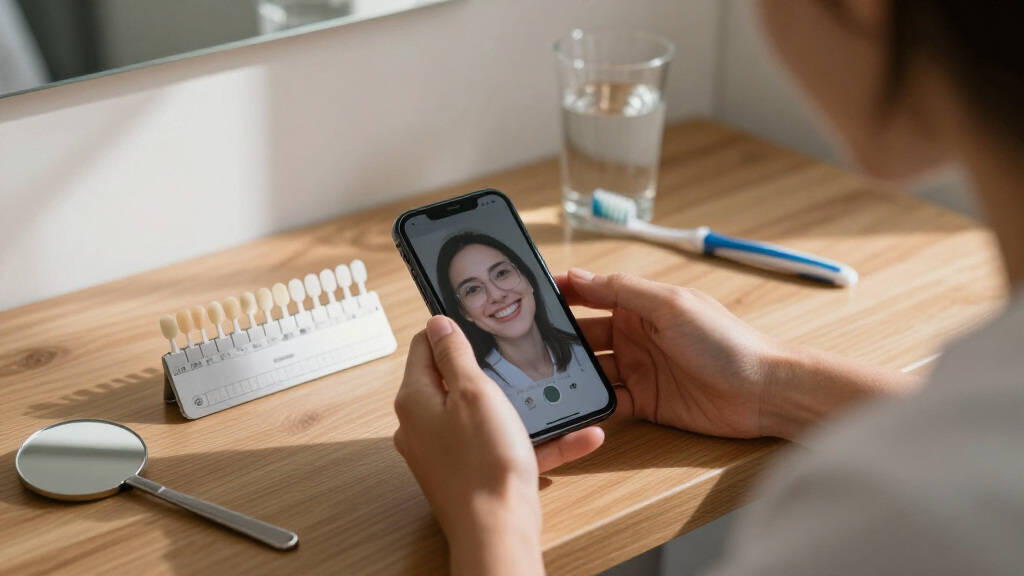
The new system leverages the capabilities of modern smartphone cameras combined with guided lighting to approximate the calibrated shade readings typically performed by dentists. According to sources familiar with the project, the app guides users through a photo flow that captures images of their teeth under controlled lighting conditions, then compares the resulting shade against the dental shade scale, such as the VITA scale used in dentistry.
Initial testing involves benchmarking the app’s shade scores against dentist readings for fifty users, with the goal of establishing a strong correlation that validates its accuracy. The app tracks changes over time, plotting the shade scores across weeks, and identifies which whitening products produce measurable improvements. It also offers personalized recommendations based on data from users with similar starting shades and whitening outcomes.
Revenue models for this technology include subscription fees for ongoing tracking and affiliate commissions from recommended whitening products that have demonstrated effective shade improvements. The developers see this as a way to add an objective measurement layer to the home whitening process, which is currently based largely on visual perception and subjective judgment.
Potential Impact on Consumer Teeth Whitening Practices
This development could transform the home teeth whitening market by providing consumers with an objective, easy-to-use tool to measure their progress accurately. Currently, many users rely on subjective visual assessments in bathroom mirrors, which can lead to inconsistent results and unnecessary product cycling. An app that offers reliable shade measurements could reduce guesswork, increase consumer confidence, and improve overall satisfaction with whitening routines.
Furthermore, the technology could foster more informed purchasing decisions, as users can see tangible evidence of shade improvements and identify which products are most effective for their individual needs. The integration of this measurement system into a subscription model also opens new revenue streams for companies and creates opportunities for personalized product recommendations based on measurable outcomes.
As an affiliate, we earn on qualifying purchases.
Advances in Smartphone Camera Technology and Market Demand
The idea of using smartphone cameras for dental shade measurement builds on recent advances in mobile imaging technology, including guided lighting and calibration techniques that can approximate professional dental tools. The timing aligns with a growing consumer demand for personalized, tech-enabled health and beauty solutions, particularly in oral care.
Market research indicates that the global teeth whitening industry is expanding rapidly, with consumers willing to invest hundreds of dollars cycling through various products. Despite this, there remains a lack of objective tools to assess progress, leading to frustration and inconsistent results. The proposed app aims to fill this gap by providing a standardized, accessible measurement method that can be used at home, potentially disrupting traditional dental and cosmetic practices.
Previous efforts have focused on subjective visual assessments or expensive professional tools. This new approach seeks to democratize shade measurement, making it affordable and convenient for everyday consumers while maintaining clinical relevance.
“The integration of guided lighting with smartphone cameras can produce shade readings comparable to those used by dental professionals, opening the door for reliable home assessments.”
— an anonymous researcher
As an affiliate, we earn on qualifying purchases.
Validation and Accuracy of Smartphone Shade Measurements
It is still unclear how well the app’s shade scores will correlate with professional dental readings across a broad user base. Validation testing is ongoing, and results are not yet publicly available. The long-term reliability and consistency of the measurements under different lighting conditions and camera models remain to be confirmed.As an affiliate, we earn on qualifying purchases.
Next Steps in Testing and Market Deployment
The developers plan to complete benchmarking against dentist readings with a larger sample size, aiming to validate the app’s accuracy. If successful, they will refine the user interface and expand testing to diverse smartphone models and lighting environments. Future releases could include integration with whitening product brands, personalized recommendations, and subscription services. Commercial rollout is anticipated after validation, potentially within the next year, subject to regulatory and market considerations.
home teeth whitening kit with shade tracking
As an affiliate, we earn on qualifying purchases.
As an affiliate, we earn on qualifying purchases.
Key Questions
How accurate is the smartphone shade measurement compared to professional dental tools?
Initial testing aims to establish a strong correlation between app scores and dentist readings. The accuracy will depend on validation results, which are currently in progress.
Can this app replace professional dental shade assessments?
The app is intended for home use to track progress, not to replace professional dental evaluations, especially for complex cases.
Will the app work on all smartphones?
The app is being tested on multiple devices, but performance may vary depending on camera quality and lighting conditions. Compatibility will be clarified after further testing.
How does guided lighting improve shade measurement?
Guided lighting standardizes the illumination conditions during photo capture, reducing variability and increasing measurement reliability.
When can consumers expect to use this technology?
If validation is successful, a commercial version could be available within the next 12 months, with ongoing updates and improvements planned.
Source: IdeaNavigator AI
Columbus Day / Indigenous Peoples' Day Picks
long weekend sales
As an affiliate, we earn on qualifying purchases.