
A functional trainer is versatile because it lets you customize resistance levels quickly and switch attachments like handles, bars, or ropes for a wide range of exercises. It supports natural movements, engages stabilizer muscles, and suits all fitness levels, including rehab needs. You can perform both strength and balance training in one space, making it ideal for a variety of workout goals. Keep exploring to uncover more ways this equipment can adapt to your fitness journey.

Prime made for students and young adults
- Fast, free delivery for dorm and study essentials
- Prime Video and Amazon Music included
- Member-only deals
Key Takeaways
- Adjustable pulleys and multiple attachments enable a wide variety of exercises for different muscle groups and movement patterns.
- Supports functional, natural movements that mimic real-life activities, enhancing overall movement efficiency.
- Facilitates both strength training and rehabilitation exercises, adaptable for all fitness levels and recovery stages.
- Enables unilateral and compound exercises, promoting muscle balance, stability, and coordination.
- Combines space-saving design with cost-effective versatility, replacing multiple machines in a compact form.
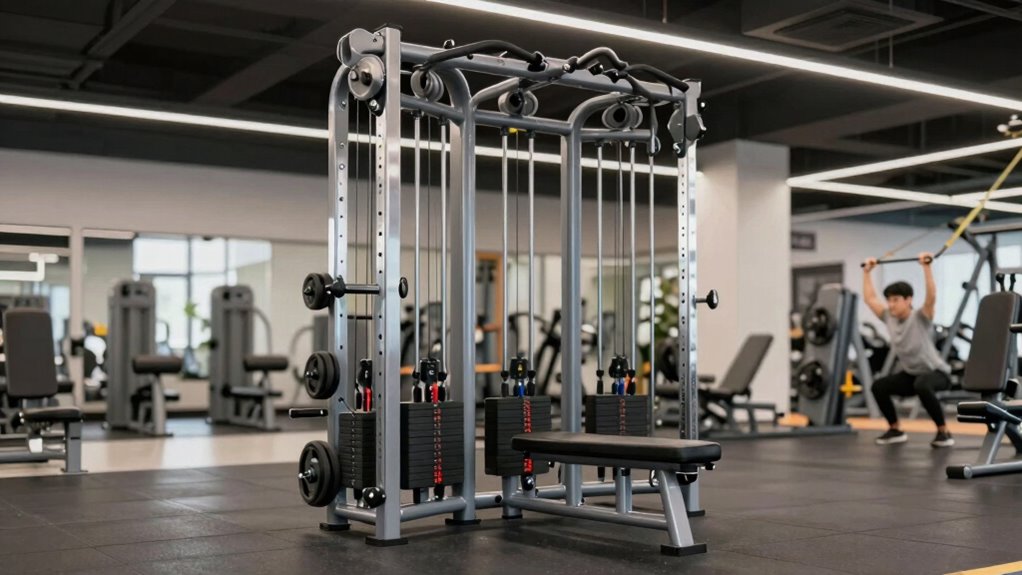
A functional trainer is a versatile piece of equipment that can transform your workout routine by allowing a wide range of exercises targeting different muscle groups. Its adjustable pulleys and multiple attachments give you the freedom to customize your workouts, making it suitable for beginners and advanced athletes alike. Whether you’re focusing on strength training or rehabilitation exercises, this equipment adapts to your needs, offering endless possibilities for movement and progression.
What makes a functional trainer stand out is its ability to mimic real-life movements. Unlike traditional machines with fixed paths, a functional trainer encourages natural motions, engaging stabilizer muscles that often get overlooked. This makes it an excellent choice if you’re looking to enhance overall functional strength, improve balance, or recover from injury. You can perform squats, presses, rows, and rotational movements easily, all on one device. This versatility saves space and money, eliminating the need for multiple machines in your home gym.
Strength training is a core benefit of using a functional trainer. The adjustable pulleys allow you to vary resistance levels quickly, enabling you to target specific muscles or perform compound movements. You can switch from light resistance for toning to heavier loads for building muscle mass without changing equipment. This adaptability makes your workouts more efficient and engaging, helping you progress steadily toward your fitness goals.
Rehabilitation exercises also benefit immensely from a functional trainer’s adaptability. If you’re recovering from an injury or managing a chronic condition, you need controlled, low-impact movements that promote healing and restore mobility. The adjustable cables let you perform gentle, guided exercises that help strengthen weakened areas without overstressing your joints. You can modify the range of motion, resistance, and speed to suit your recovery stage, making it a safe and effective tool for rehabilitation. Additionally, customizable resistance enhances the trainer’s ability to accommodate various fitness levels and recovery needs. Incorporating adjustable features can further optimize the trainer’s use for different exercises and user requirements. Understanding the importance of proper equipment in your fitness or recovery process can also improve your results and safety during workouts. Recognizing the role of appropriate safety measures when working with versatile equipment ensures you maximize benefits while minimizing risks. Moreover, being aware of proper technique is crucial to prevent injuries and ensure effective training with a functional trainer.
Furthermore, the ability to perform unilateral exercises—working one side of your body at a time—can correct imbalances and improve symmetry. This is especially useful in rehab settings or when aiming to prevent injuries. The wide array of attachments available, like handles, bars, and ropes, further expands your options, allowing you to target different muscle groups and movement patterns.
In essence, a functional trainer’s versatility lies in its adaptability. It supports a full spectrum of workouts, from strength training to rehabilitation and everything in between. With its adjustable features and all-encompassing exercise options, you can tailor your fitness journey to fit your specific needs, making every session effective and engaging.
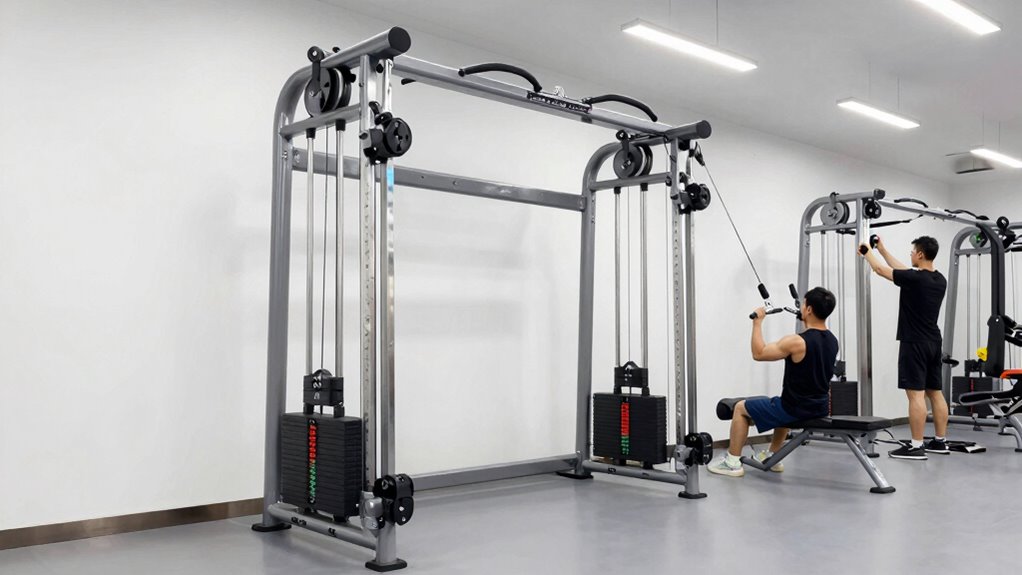
adjustable functional trainer with multiple attachments
As an affiliate, we earn on qualifying purchases.
As an affiliate, we earn on qualifying purchases.
Frequently Asked Questions
Can a Functional Trainer Replace All Other Gym Equipment?
A functional trainer can’t replace all gym equipment, but it comes close with its multi-exercise options and adjustable resistance. It allows you to perform a wide range of movements targeting different muscle groups, making it versatile for various workout routines. While specialized machines might be better for isolated exercises, this trainer offers the convenience of multiple workout types in one space, maximizing your workout efficiency and flexibility.
Is a Functional Trainer Suitable for Beginner Athletes?
Imagine a gentle river guiding you into fitness—yes, a functional trainer is beginner friendly. Its adjustable cables and multiple stations act like a wise coach, offering training modifications tailored to your starting point. You can build confidence as you progress, mastering movements step-by-step. This versatile equipment welcomes newcomers, helping you develop strength and coordination without feeling overwhelmed, transforming your workout journey into a smooth, steady flow.
What’s the Average Cost of a Functional Trainer?
The average cost of a functional trainer typically falls between $1,000 and $3,500, depending on features and quality. When you do a price comparison, you’ll find options across this range, with basic models on the lower end and premium setups on the higher end. Keep in mind that investing in a durable, versatile trainer can save you money long-term, offering multiple workout options without needing additional equipment.
How Much Space Is Needed for a Functional Trainer?
A functional trainer needs about 25 to 40 square feet of space, roughly the size of a small room. Think of it as fitting a compact car in your garage—equipment dimensions like width, depth, and height matter. You’ll want enough room to move freely and perform exercises safely. Measure your available space carefully, ensuring there’s ample clearance for full range of motion and comfortable workout sessions.
Are There Any Safety Concerns With Using a Functional Trainer?
Yes, there are safety concerns when using a functional trainer. To prevent injury, always follow safety precautions, like adjusting the machine correctly and using appropriate weights. Make sure you maintain proper form and don’t push beyond your limits. Keep the area clear of obstructions, and inspect the equipment regularly for damage. By staying attentive and cautious, you can enjoy a safe workout and effectively prevent injuries during your training.
home gym functional trainer for strength and rehab
As an affiliate, we earn on qualifying purchases.
As an affiliate, we earn on qualifying purchases.
Conclusion
A functional trainer’s versatility truly sets it apart, allowing you to target multiple muscle groups and adapt workouts as your goals evolve. Did you know that incorporating functional training can improve daily movement efficiency by up to 25%? That means better posture, balance, and strength for everyday life. So, investing in a functional trainer isn’t just about fitness—it’s about empowering your body for real-world challenges. Embrace its flexibility and watch your confidence and capabilities grow.
versatile cable machine for resistance training
As an affiliate, we earn on qualifying purchases.
As an affiliate, we earn on qualifying purchases.
compact functional trainer for space-saving workouts
As an affiliate, we earn on qualifying purchases.
As an affiliate, we earn on qualifying purchases.
Halloween Picks
halloween
As an affiliate, we earn on qualifying purchases.