TL;DR

Prime made for students and young adults
- Fast, free delivery for dorm and study essentials
- Prime Video and Amazon Music included
- Member-only deals
A Human Transit article published Dec. 31, 2024, describes Blaise Pascal’s 1662 Paris carriage service as an early fixed-route public transport network. The source says its routes ran at regular intervals and connected across the city, though claims that Pascal was the first to create such a land-based system are presented as the author’s historical assessment, not a definitive finding.
A Dec. 31, 2024, report by public-transport writer Jarrett Walker revisited Blaise Pascal’s 1662 Paris carriage service, arguing that it was an early form of fixed-route public transport rather than merely a precursor to the bus. The account describes several connected routes with regular service, a design that matters because it offered passengers a network they could learn and use to plan journeys.
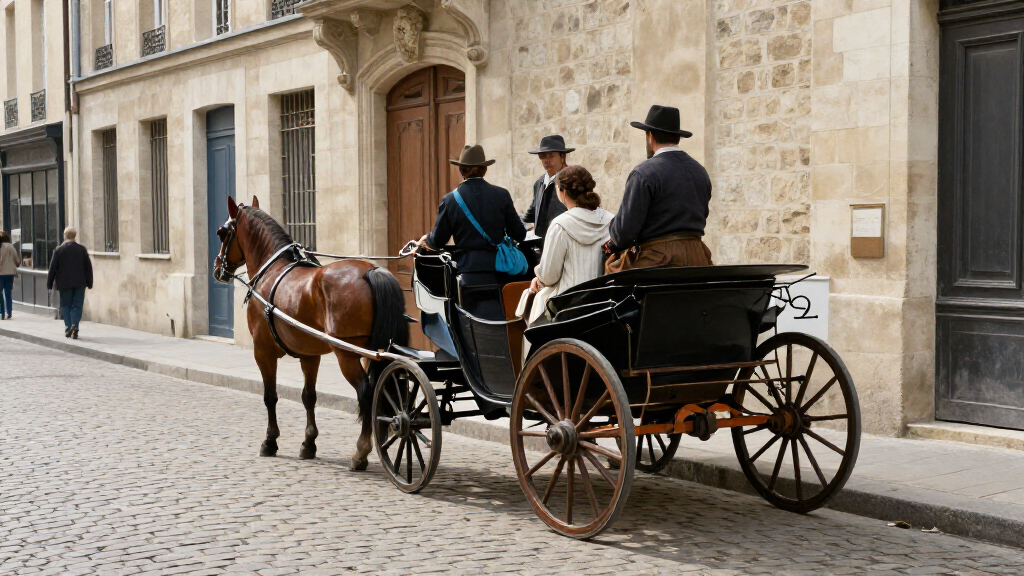
Pascal’s service was called carrosses à cinq sols, translated in the report as “five penny carriages.” It used horse-drawn vehicles carrying eight passengers. Unlike a hired carriage that could travel from one destination to another on request, these vehicles followed designated paths through Paris. Walker says their route signs identified their endpoints and that the routes worked together as a network.
The report says the first line began operating on March 18, 1662, and that the full network was in service by July. Its stated intervals ranged from 7.5 to 15 minutes, frequent enough, Walker argues, that passengers could wait without relying on a precise timetable. The account also describes overcrowding and passengers being unable to board some vehicles, a problem that reflects demand but also limited capacity.
Walker characterizes the system as an important innovation because it applied fixed paths to land transport in a city where carriages could, in principle, travel across the street network. He says the report’s map shows routes connecting at major destinations, including an orbital route around the city. The article’s broader historical claim—that Pascal invented fixed-route public transport—is the author’s interpretation of the evidence, rather than a claim supported in the supplied material by a detailed review of earlier transport systems.
A Network, Not Just a Carriage
The distinction between a vehicle and a service is central to the report. Pascal did not simply put a new kind of carriage on Paris streets, Walker argues; the innovation was to make vehicles follow routes at regular intervals, allowing people to anticipate where and when they could travel. That basic operating model remains recognizable in modern buses, trams and trains.
A fixed route can make trips easier to plan and can connect places beyond a single point-to-point journey. The report notes that Pascal’s routes converged at important destinations and included a circular line, creating opportunities to transfer between services. The design features Walker identifies—straight cross-city routes, connections between lines and an orbital route—are still familiar in transit planning, although the article does not establish that modern planners directly inherited them from Pascal.
The episode also offers a historical example of demand outstripping capacity. The report says passengers sometimes could not board because carriages were full. That detail underscores both the appeal and the constraint of the service: predictable routes can attract riders, but small vehicles may not carry everyone who wants to travel.
Popular right now

Shark Rocket Pet Plus Corded Stick Vacuum, Bordeaux, HV322

De’Longhi Classic Matte Black Espresso Machine with Milk Frother

Samsung 42-Inch Class OLED S90F 4K Smart TV (2025)
As an affiliate, we earn on qualifying purchases.
Paris in 1662
Pascal is widely known for work in mathematics, physics and philosophy. Walker’s article shifts attention to a less familiar part of his life: the transport service launched in Paris during the final months before his death, aged 39, in 1662. The report presents the project as one of several areas of interest for a figure whose work crossed disciplines.
The source describes a network of multiple routes, with the first line opening on March 18, 1662 and a circular route added on June 24. It cites French writer Rémi Mathis for historical interpretation of how the routes may have developed. In a translation included by Walker, Mathis says the first route connected locations including Rue Saint-Antoine, Châtelet, the Île de la Cité, the Saint-Germain fair and Luxembourg. Mathis also suggests that the routes reflected social and political priorities, including requests for service near the Louvre and commercial streets.
Walker raises questions about the choices behind the map, including why several lines converged near Luxembourg Palace and how much the design reflected broad travel demand versus influential people and groups. The supplied report does not settle those questions. Its value is in drawing attention to a documented transport experiment and inviting further historical investigation, rather than supplying a complete account of the planning process.
“He invented fixed route public transport.”
— Jarrett Walker, Human Transit
How Much Was Pascal’s Innovation?
The source material does not establish that no earlier land-based fixed-route service existed. Walker says the idea apparently had not been used on land before Pascal, while acknowledging that ferries had long operated on fixed routes. That makes the priority claim a historical assessment that would require comparison with other records to confirm.
It is also unclear how Pascal personally designed the routes, what evidence survives about his decisions, and how much the network reflected passenger demand, royal direction, commercial lobbying or personal connections. Walker notes that the routes were not perfectly straight and asks why several converged near Luxembourg Palace. The article includes speculation attributed to Mathis but does not resolve those questions.
The report provides no ridership totals, fare-revenue data or detailed operating records. It describes crowding and gives service intervals, but readers cannot use the supplied information to quantify demand, compare the service’s performance with other transport at the time or judge how long each route remained in operation.
Further Evidence on the Routes
The report does not announce a new service or a forthcoming historical study. The next step for the account’s central claims would be more archival and comparative research: establishing what earlier land transport systems existed, documenting how Pascal’s routes were chosen and tracing how the service changed after its 1662 launch.
Walker’s article points readers toward Mathis’s French-language discussion and raises questions for historians of Paris and transport planning. Until additional evidence answers them, the safest conclusion is narrower: Pascal’s five-penny carriages operated along designated, connected routes in 17th-century Paris, and a 2024 report argues that their network anticipated key features of fixed-route public transport.
Key Questions
What was Pascal’s five-penny carriage service?
It was a Paris service using eight-passenger horse-drawn carriages that travelled on designated routes. The Human Transit report says the routes operated at regular intervals and connected as a network.
When did the service begin?
The report says the first line began on March 18, 1662. It says the full network was operating by July of that year, with a circular route opening on June 24.
Did Pascal definitively invent fixed-route public transport?
The 2024 report argues that he did, describing his network as an early land-based fixed-route system. The supplied material does not establish that no comparable land service existed earlier, so the priority claim should be treated as the author’s historical interpretation.
How often did the carriages run?
Walker reports service intervals of 7.5 to 15 minutes. The account says the vehicles could become crowded, with some passengers unable to board.
Why does the service matter to modern transport?
The report highlights a model familiar today: vehicles following predictable routes that connect with one another. It argues that Pascal’s network anticipated features of buses, trams and trains, while not proving a direct line of influence on modern systems.
Source: humantransit.org