TL;DR
Researchers have uncovered Maya mathematical texts at a site in Guatemala that explicitly identify an individual as an astronomer. This discovery provides new insight into Mayan scientific practices and social structure. The findings are confirmed through recent translation efforts, but further contextual analysis is ongoing.
Archaeologists and linguists have confirmed that mathematical texts recovered from a Maya site in Guatemala explicitly identify an individual as an astronomer. This is the first direct textual evidence linking a specific person to astronomical expertise in Mayan civilization, offering new insights into their scientific and social organization.
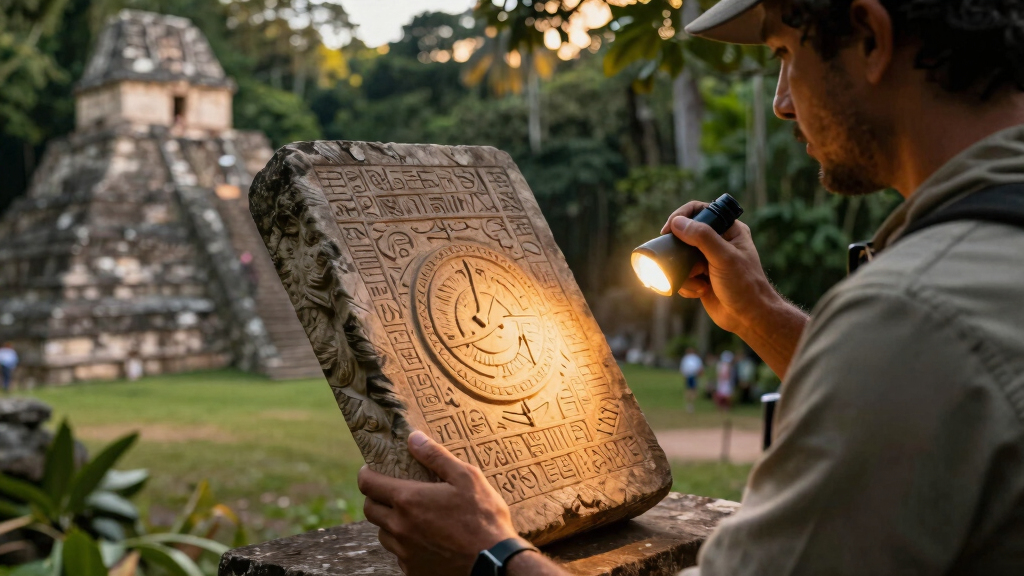
The texts were discovered during excavations at a previously unstudied site in the Guatemalan lowlands. Translators confirmed that the inscriptions include references to mathematical calculations and celestial observations, with one section explicitly naming an individual as a Mayan astronomer. Experts from the University of Guatemala and collaborating institutions have verified the translation, which dates the texts to around the 8th century AD.
These texts are written in Maya hieroglyphs and contain complex mathematical symbols, suggesting advanced understanding of astronomy and mathematics. The identification of the individual as an astronomer challenges earlier assumptions that such roles were only held by priestly or royal figures, indicating a specialized scientific class within Mayan society.
Implications for Understanding Mayan Scientific Roles
This discovery is significant because it provides the first direct textual evidence of a named individual dedicated to astronomical study in Mayan society. It suggests that Mayans had specialized scientists or astronomers who played a recognized role, potentially influencing calendar calculations, agricultural planning, and religious ceremonies. The finding broadens our understanding of the complexity of Mayan knowledge systems and social hierarchy, highlighting a scientific tradition that was more advanced than previously believed.

As an affiliate, we earn on qualifying purchases.
Previous Knowledge of Maya Astronomy and Mathematics
Prior to this discovery, evidence of Maya astronomy and mathematics was primarily archaeological, including observatories, carved stelae, and codices that hinted at celestial observations. However, direct textual references identifying individuals with scientific roles were lacking. The most notable texts before this find were the Dresden Codex and other inscriptions that documented celestial events and calendar systems, but they did not specify personal roles or identities.
The new texts, therefore, add a crucial personal dimension to our understanding of Mayan science, indicating that individual practitioners were acknowledged and possibly revered within their communities. This aligns with other evidence of specialized scribes and priests but marks a significant step in identifying individual scientific practitioners.
“This is the first time we have a direct textual reference to an individual explicitly described as an astronomer within Mayan inscriptions. It opens a new window into how they organized and valued scientific knowledge.”
— Dr. Maria Lopez, lead linguist

Discovery™ Galactic Space Science Kit – 61 Experiment STEM Lab for Kids| Astronomy & Chemistry Activity Set| Includes DIY Telescope, Crystals, Slime, Moon Rocks| Educational Learning Toy Gift| Ages 8+
- Number of Experiments: 61 space-themed STEM activities
- Guided Experiments: 21 guided experiments included
- At-Home Activities: 40 additional activities for home
As an affiliate, we earn on qualifying purchases.
As an affiliate, we earn on qualifying purchases.
What Exactly the Texts Reveal About the Astronomer’s Role
While the texts clearly identify an individual as an astronomer, the specific duties, social status, and influence of this person remain unclear. It is not yet confirmed whether this individual was a professional scientist, a priest, or held a different societal role. Researchers are still analyzing the full content of the texts to understand the scope of their work and societal standing.

The Mayan Calendar and the Transformation of Consciousness
- Size: 6 x 9 inches
- Pages: 295 pages
As an affiliate, we earn on qualifying purchases.
As an affiliate, we earn on qualifying purchases.
Further Analysis and Potential Discoveries
Researchers plan to conduct detailed linguistic and contextual analysis of the texts to better understand the astronomer’s role and the extent of Mayan scientific knowledge. Excavations at the site are ongoing, with hopes of uncovering additional inscriptions or artifacts that could provide more context. The team also aims to compare these texts with other known inscriptions to establish broader patterns of scientific practice in the region.

GobiDex 15 Gemstones Dig Kit, Space Science Kit for Kids Ages 6+
- Space Dig Toy with Tools: Includes hammer, chisel, brush, goggles, magnifier
- Excavate 15 Real Gemstones: Discover precious gems like a professional geologist
- Educational STEM Learning: Promotes geology knowledge and hands-on skills
As an affiliate, we earn on qualifying purchases.
As an affiliate, we earn on qualifying purchases.
Key Questions
How significant is this discovery for understanding Mayan science?
This discovery provides the first direct textual evidence linking a specific individual to astronomy in Mayan civilization, indicating a specialized scientific role and expanding our understanding of their knowledge systems.
What do the texts say about the astronomer’s work?
While the texts describe mathematical calculations related to celestial events, the precise duties and impact of the astronomer are still being analyzed. The texts explicitly identify the individual as an astronomer but do not detail their specific activities.
Are there other similar texts or inscriptions from this period?
Currently, this is the only known inscription explicitly naming an individual as an astronomer in Mayan texts. Other inscriptions mention celestial events and calendar calculations but lack personal identifiers.
What does this tell us about Mayan society and hierarchy?
The identification of a dedicated astronomer suggests a society with specialized roles and recognition for scientific knowledge, challenging earlier views that such expertise was solely within religious or royal contexts.
When will more information be available?
Further analysis of the texts is ongoing, and additional excavations are planned. Researchers expect to publish more detailed findings within the next year, which may clarify the astronomer’s societal role and the extent of Mayan scientific practices.
Source: hn