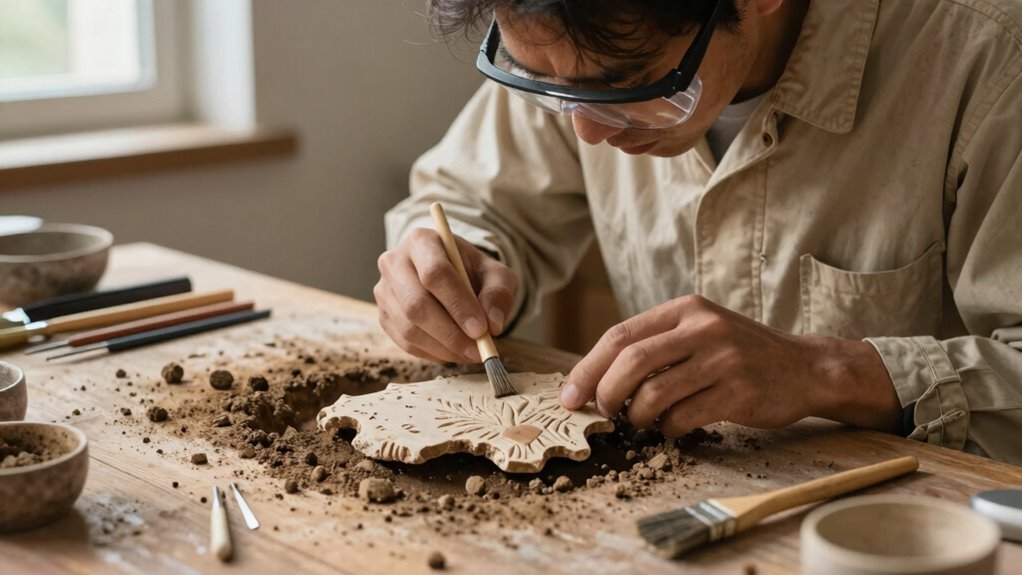

Reconstructing the past involves meticulous work where you analyze fragile artifacts and faded texts to uncover hidden stories. You examine materials, craftsmanship, and wear patterns to understand how objects were made and used. Using scientific tools and cross-referencing sources, you verify evidence and piece together coherent narratives. This detective-like process requires patience and careful interpretation, helping you bring ancient worlds back to life. Keep exploring, and you’ll discover more about the fascinating work behind uncovering history’s secrets.

Get school and study supplies delivered free — and shop member deals
- Fast, free delivery on millions of items
- Access to Prime Big Deal Days deals on October 6–7
- Prime Video, Amazon Music and more included
Key Takeaways
- Analyzing artifacts’ material, craftsmanship, and wear provides insights into their origins and usage.
- Cross-referencing multiple sources ensures evidence accuracy and helps verify historical narratives.
- Scientific techniques like radiocarbon dating and chemical tests refine the timeline and authenticity of finds.
- Carefully deciphering inscriptions reveals political, religious, and cultural details embedded in artifacts.
- Meticulous, evidence-based examination reconstructs coherent stories while acknowledging source limitations and biases.
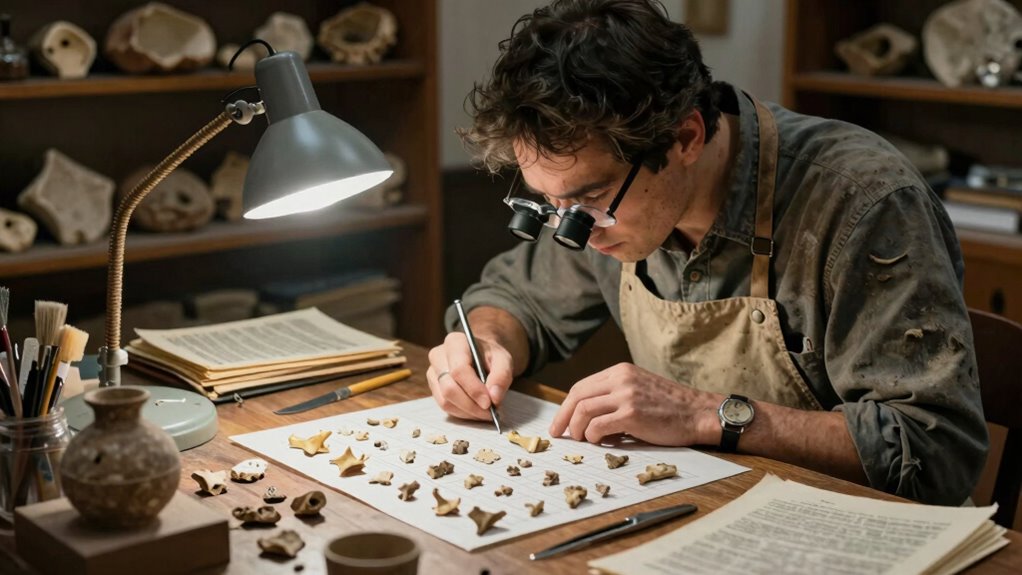
Have you ever wondered how historians piece together ancient civilizations from fragile artifacts and faded texts? It’s a meticulous process that involves careful examination, critical thinking, and a deep understanding of context. At the core of this effort is artifact analysis, a vital step where every fragment, inscription, or object is scrutinized to extract as much information as possible. You study the material, the craftsmanship, and the wear patterns, looking for clues about how these objects were made, used, and what they reveal about the people who created them. This process isn’t just about identifying what an artifact is; it’s about understanding its story and significance within a broader cultural framework.
To do this effectively, you rely on a systematic approach known as historical methodology . This approach guides you through gathering evidence, cross-referencing sources, and verifying your interpretations. You don’t just look at artifacts in isolation—you compare them with texts, inscriptions, and other finds from the same period. This cross-disciplinary method ensures your conclusions are rooted in solid evidence rather than assumptions. For example, deciphering an ancient inscription might unlock details about political structures or religious beliefs, but only if you connect it with other artifacts and documents from the era.
Using a systematic, cross-disciplinary approach to connect artifacts, texts, and inscriptions for accurate historical insights.
Artifact analysis requires patience and precision. You might use tools like microscopes or chemical tests to determine the composition of a pottery shard or to date an artifact using radiocarbon techniques. Every detail matters because small clues can lead to significant insights. For instance, a particular style of pottery might indicate trade relations or cultural exchanges that weren’t previously known. These insights help you reconstruct the daily lives, economies, and social structures of long-gone civilizations. Additionally, technological advancements such as scientific dating methods have greatly enhanced the accuracy of these reconstructions.
Throughout this process, your goal is to piece together a coherent narrative of the past, but you’re also aware of the limitations and potential biases in your sources. That’s why critical evaluation and a careful, methodical approach are essential. You synthesize all the evidence, weigh different interpretations, and build a plausible reconstruction of history. The work behind reconstructing the past may seem like detective work, but it’s grounded in rigorous analysis and a persistent pursuit of truth. In the end, your efforts help bring ancient worlds back to life, allowing us to understand the stories that shaped human history.
scientific dating tools for artifacts
As an affiliate, we earn on qualifying purchases.
As an affiliate, we earn on qualifying purchases.
Frequently Asked Questions
How Do Archaeologists Determine the Age of Artifacts?
You determine the age of artifacts using dating techniques like radiocarbon dating and thermoluminescence, which analyze the material’s chemical properties. You also examine artifact preservation, noting how well it’s maintained over time. These methods help you establish a timeline, revealing when the artifact was created. By combining scientific analysis with preservation state, you can accurately estimate an artifact’s age and better understand historical contexts.
What Tools Are Essential for Site Excavation?
Think of site excavation tools as your archaeological toolbox, each piece a key to uncover history. You need shovels and trowels for careful digging, brushes for delicate cleaning, and sieves for soil analysis. Excavation techniques guide your approach, ensuring you preserve artifacts. A level helps maintain precision, while screens sift through soil. These tools work together like a detective’s kit, revealing secrets buried beneath centuries of earth.
How Do Researchers Handle Incomplete or Damaged Fossils?
When handling incomplete or damaged fossils, you focus on fossil preservation techniques that stabilize fragile specimens. You carefully clean and consolidate the fossils, often using specialized adhesives. To restore missing parts, you might employ mineral replacement, where you replace the original material with minerals that mimic natural fossilization. This process helps preserve the fossil’s integrity, allowing you to analyze and interpret the ancient life with greater accuracy.
What Role Does Technology Play in Reconstruction Efforts?
You leverage technology like virtual reality and 3D modeling to revolutionize reconstruction efforts. Virtual reality allows you to immerse yourself in reconstructed environments, gaining better insights. Meanwhile, 3D modeling helps you digitally piece together broken or incomplete fossils with precision, filling in gaps where physical evidence is missing. These tools make it easier for you to visualize and analyze ancient life, enhancing accuracy and understanding in your research.
How Do Cultural Biases Influence Historical Reconstructions?
Cultural biases shape historical reconstructions as much as a painter’s brushstrokes influence a masterpiece. You might see cultural narratives shaping what stories are told, while bias in interpretation colors how facts are understood. These biases can obscure or distort the past, making you question whose perspective is prioritized. Recognizing these influences helps you critically evaluate history, understanding that reconstructed stories often reflect the worldview of those in power or dominant cultures.
archaeology artifact analysis kit
As an affiliate, we earn on qualifying purchases.
As an affiliate, we earn on qualifying purchases.
Conclusion
While it might seem like piecing together ancient stories is just about dusty artifacts and old texts, there’s so much more beneath the surface. You might worry that reconstruction isn’t always accurate, but each discovery gets us closer to the truth. Your curiosity fuels this work, driving experts to refine their methods. So, don’t dismiss the effort—it’s the real work behind understanding our past, helping you see history not just as facts, but as a living story.
microscope for examining artifacts
As an affiliate, we earn on qualifying purchases.
As an affiliate, we earn on qualifying purchases.
chemical testing kits for archaeological samples
As an affiliate, we earn on qualifying purchases.
As an affiliate, we earn on qualifying purchases.
Halloween Picks
halloween
As an affiliate, we earn on qualifying purchases.