🔍 Read the full analysis: How Buyers And Automation Are Reshaping Bangladesh’s Garment Industry on ThorstenMeyerAI.com

Prime made for students and young adults
- Fast, free delivery for dorm and study essentials
- Prime Video and Amazon Music included
- Member-only deals
TL;DR
Bangladesh’s garment wage board postponed a November 16 meeting without receiving an employers’ offer, while protests and factory shutdowns continued. Workers formally proposed 32,000 taka a month; the current minimum is 12,500 taka. Low buyer prices, higher costs and automation are also pressuring jobs, but the scale of factory closures and the effects of automation remain uncertain.
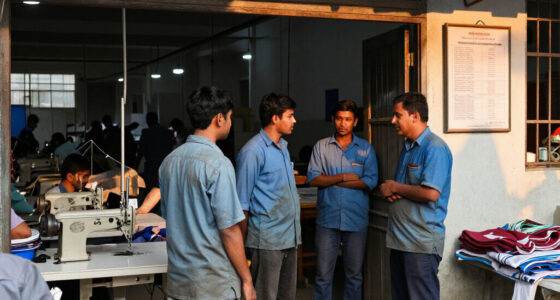
Bangladesh’s garment wage board postponed its November 16 meeting without receiving a wage proposal from factory owners, leaving workers’ demand for higher pay unresolved as protests disrupted production around Dhaka. The workers’ representatives have formally proposed 32,000 taka a month, while the current minimum is 12,500 taka; the dispute affects an industry employing about four million people and supplying international clothing buyers.
The meeting was postponed after Anwar Hossain, the workers’ permanent representative on the board, fell ill and was admitted to hospital, according to a joint statement from the Bangladesh Garment Manufacturers and Exporters Association and the Bangladesh Knitwear Manufacturers and Exporters Association. The two groups said employers were prepared to present their proposal and requested a replacement meeting date. Factory owners have not publicly put a number on the table. Before the meeting, they had discussed a figure of about 15,000 taka, The Financial Express reported.
The workers’ formal proposal of 32,000 taka is higher than the 30,000-taka demand cited at protests. Using Bangladesh Bank’s November 19 exchange rate of 124.75 taka per US dollar, those amounts are roughly $257 and $240, respectively; the current minimum is about $100. The conversions are arithmetic based on that day’s rate, not separate wage estimates.
Protests spread on November 17 across Gazipur, Savar, Ashulia and Mirpur. Media reports described highway blockades, factory closures and clashes in which police used tear gas and stun grenades; protesters threw bricks and set vehicles on fire, AFP reported. On November 18, AP, citing local media, reported that about 20,000 workers from one factory blocked the Dhaka-Aricha Highway in Savar and police used batons as well as tear gas and stun grenades. AP said it was not immediately clear how many people were injured.
Wages, Orders and Factory Jobs
The wage dispute matters beyond workers and factory owners because Bangladesh’s garment sector is a major source of employment and export production. A higher minimum would raise labour costs for manufacturers, while leaving wages at their current level would maintain pressure on workers facing a large gap between the existing floor and their representatives’ proposal.
Factory owners say higher pay could weaken Bangladesh’s cost advantage against competitors such as India and Vietnam. They also point to low prices offered by international buyers and rising energy costs. Those are employers’ arguments, not independently established measures of the effect a wage increase would have. The reports reviewed for this account did not include comments from international buyers on the current negotiations.
Automation adds another pressure on employment. A 2024 study of factories around Dhaka found automated production lines used 30.58 percent fewer workers, most of them helpers. Separately, an International Labour Organization working paper calculated that women’s share of apparel employment fell from 46.2 percent in 2016–17 to 35.2 percent in 2024. These findings describe distinct changes; they do not establish that automation alone caused the decline in women’s share.
Popular right now

Ninja Prestige Smart XL 10-in-1 Air Fryer and Countertop Oven with Pro Cook System, Stainless Steel, DT551

Samsung 65-Inch 4K OLED Smart TV with Dolby Atmos, 120Hz Refresh Rate, and Amber Protection Bundle

Shark Rocket Pet Plus Corded Stick Vacuum, Bordeaux/Silver, HV322
As an affiliate, we earn on qualifying purchases.
The Wage Board’s November Timetable
The present minimum wage of 12,500 taka a month has been in force since December 1, 2023. The wage board is now considering a new rate after workers’ representatives put forward their proposal. The board’s chairman has said the new minimum will take effect on December 1, 2026, regardless of the amount ultimately set, with workers due to receive it in their January 2027 pay.
The postponement came amid an already active protest movement. Five labour alliances representing 55 worker organisations warned that delaying the meeting could send workers the wrong message. On November 16, BGMEA sources cited by The Financial Express said 98 factories had been closed under the Labour Act’s “no work, no pay” provision and another 24 had suspended operations.
Reported shutdown totals differ by source and location. A BGMEA vice-president told The Daily Star production had halted at nearly 450 factories. The paper’s correspondents, citing industrial police and protesters, counted at least 250 closed factories in Savar, Ashulia and Hemayetpur and another 60 in Gazipur. AFP, citing sources, reported about 500 of the country’s roughly 4,500 garment factories. These figures use different reporting bases and should not be treated as a single verified count.
““We want to return to our machines.””
— A 28-year-old garment worker, speaking to AFP
The Offer and Shutdown Count
The amount factory owners will propose remains unknown. Their reported discussion of about 15,000 taka before the postponed meeting was not a formal offer, and no final wage has been announced. The November 23 meeting could clarify the employers’ position, but the board’s decision-making timetable beyond the stated effective date has not been detailed.
The full extent of work stoppages, injuries and arrests is also not settled in the available reporting. Estimates of closed factories range from hundreds to about 500, with differing geographic and source bases. AP said the number of people injured during the November 18 confrontation was unclear. Police in Savar said 117 people had been arrested since October 31 and alleged that members of various organisations, including banned groups, had entered the protest movement; the cited report did not provide evidence for that allegation. No deaths had been reported in the coverage reviewed as of 07:00 UTC on November 19.
It is also unclear whether overseas buyers will respond to the wage dispute or change the prices they pay suppliers. The available reports contain no comment from international buyers, so the effect of buyer pricing on the eventual wage agreement cannot yet be quantified.
The November 23 Board Meeting
The wage board is scheduled to meet again on November 23. Factory owners are expected to present a proposal, though the associations’ statement did not give a figure or confirm what would be submitted at the next session. The board’s chairman has said the revised wage will take effect December 1, with payment in January 2027.
In the meantime, workers, employers and authorities will face pressure to manage continuing demonstrations and disruptions. Any published shutdown or arrest totals should be read with attention to the source and area covered. The next concrete points to watch are whether employers table a number, whether the board sets a new minimum, and whether protests and factory stoppages continue before the announced wage effective date.
Key Questions
What wage have Bangladesh garment workers proposed?
The workers’ side formally proposed a monthly minimum of 32,000 taka. A 30,000-taka demand was also cited in protest coverage; the amounts are related but not identical.
What is the current garment-sector minimum wage?
The current minimum is 12,500 taka a month, in force since December 1, 2023. At Bangladesh Bank’s November 19, 2026 rate, that was about $100.
Have factory owners made a formal wage offer?
No formal amount had been presented as of 07:00 UTC on November 19. Factory owners had reportedly discussed about 15,000 taka before the postponed meeting, but that was not a formal offer.
When will the wage board meet again?
The next meeting is scheduled for November 23, 2026. The board chairman has said the new wage will take effect December 1, with workers receiving it in their January 2027 pay.
How is automation affecting garment jobs?
A 2024 study of factories around Dhaka found automated lines used 30.58 percent fewer workers, most of them helpers. The finding does not by itself establish how much automation contributed to wider changes in employment or women’s share of apparel jobs.
Source: ThorstenMeyerAI.com