
TL;DR

Prime made for students and young adults
- Fast, free delivery for dorm and study essentials
- Prime Video and Amazon Music included
- Member-only deals
Siemens is shifting its focus to physical AI for factory automation, developing the Industrial Foundation Model and partnering with NVIDIA to embed AI across manufacturing. This move aims to leverage proprietary industrial data and domain expertise, signaling a significant industry pivot.
Siemens has unveiled a comprehensive strategy to embed artificial intelligence directly into factory automation, marking a major shift from traditional automation tools. The company announced the development of the Industrial Foundation Model (IFM) and a partnership with NVIDIA to create an Industrial AI Operating System. This approach aims to harness proprietary industrial data and domain expertise to transform manufacturing processes, making AI a core component rather than an add-on.
The Industrial Foundation Model (IFM), first announced at Hannover Messe 2025, is designed to process and contextualize 3D models, 2D drawings, sensor telemetry, and automation logic, tailored specifically for industrial data modalities. Siemens’ expanded partnership with NVIDIA aims to develop an Industrial AI Operating System that integrates GPU-accelerated simulation, generative digital twins, and autonomous optimization across the entire industrial lifecycle.
The first fully AI-driven, adaptive manufacturing site under this initiative is expected to launch in 2026 at Siemens’ Electronics Factory in Erlangen, Germany. Siemens also plans to introduce Digital Twin Composer and industrial copilots to enhance simulation and operational decision-making, with early customer examples including PepsiCo experimenting with facility upgrades.
Implications of Siemens’ AI-Driven Manufacturing Shift
This move positions Siemens at the forefront of industrial AI, leveraging its extensive proprietary data and domain expertise to create tailored AI models that could significantly improve manufacturing efficiency, flexibility, and predictive maintenance. The integration of AI into physical processes could reshape factory workflows, reduce downtime, and enable real-time optimization, offering a competitive edge in the evolving industrial landscape.
industrial AI software for manufacturing
As an affiliate, we earn on qualifying purchases.
As an affiliate, we earn on qualifying purchases.
Background of Siemens’ Industrial AI Strategy
Until now, Siemens has been a leader in automation and industrial software, relying on traditional control systems and simulation tools. The company’s recent announcements at Hannover Messe 2025 and CES 2026 reflect a strategic pivot towards AI, emphasizing models trained on physical and industrial data rather than general-purpose language models. The partnership with NVIDIA builds on existing Siemens software, aiming to embed AI capabilities directly into manufacturing operations.
This initiative follows broader industry trends where digital twins, simulation, and AI are increasingly integrated into manufacturing, though Siemens claims its approach is uniquely grounded in proprietary data and domain knowledge accumulated over a century.
“Industrial AI is no longer a feature; it’s a force that will reshape the next century.”
— Roland Busch, Siemens CEO
As an affiliate, we earn on qualifying purchases.
Unconfirmed Performance Metrics and Deployment Timelines
Specific hardware configurations, performance benchmarks, and detailed deployment schedules for Siemens’ AI solutions remain undisclosed. The Erlangen lighthouse factory is targeted for 2026, but validated results and performance metrics for Digital Twin Composer and industrial copilots are not yet available. The reliance on NVIDIA infrastructure also raises questions about independence and sovereignty, especially for European customers.
As an affiliate, we earn on qualifying purchases.
Next Steps in Siemens’ Industrial AI Rollout
Siemens plans to demonstrate the fully AI-driven Erlangen factory in 2026, with further rollout of Digital Twin Composer and copilots. The company will likely publish performance results and case studies to validate its approach. Industry watchers expect broader adoption to be gradual, given the long sales cycles in manufacturing, but Siemens aims to establish a leadership position through early deployments and strategic partnerships.
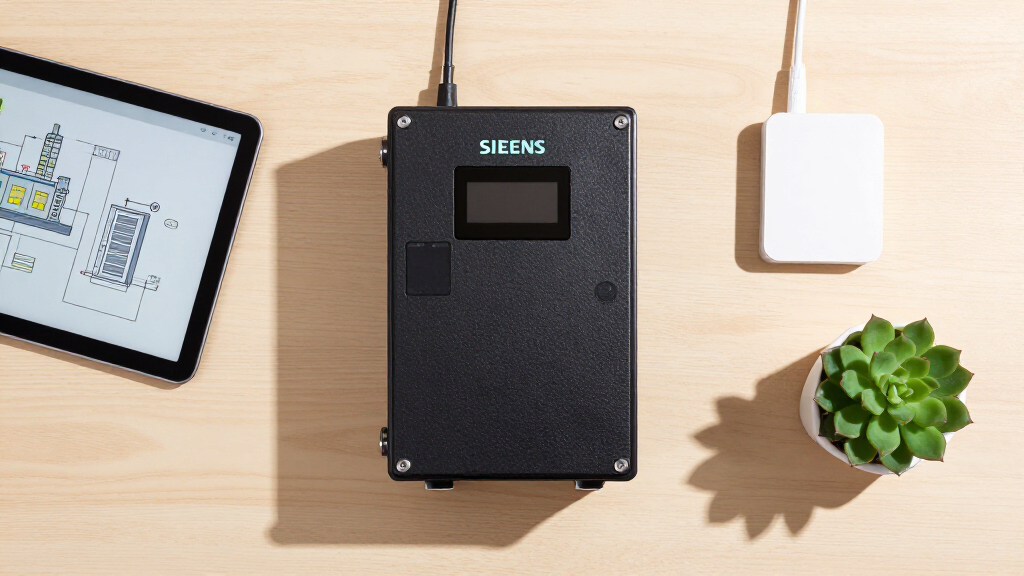
GPU-accelerated industrial computers
As an affiliate, we earn on qualifying purchases.
As an affiliate, we earn on qualifying purchases.
Key Questions
What is the Industrial Foundation Model (IFM)?
The IFM is Siemens’ tailored AI model designed to process and understand industrial data such as 3D models, drawings, and sensor telemetry, to optimize manufacturing and engineering workflows.
How does Siemens’ partnership with NVIDIA enhance its AI capabilities?
NVIDIA provides GPU-accelerated simulation, physics-based AI models, and generative digital twin technology, enabling Siemens to develop more accurate, real-time, and autonomous manufacturing solutions.
When will the fully AI-driven factory in Erlangen be operational?
Siemens targets the launch of the Erlangen factory as a fully AI-driven, adaptive manufacturing site in 2026, with demonstrations and validation to follow.
What are the potential risks of Siemens’ approach?
The reliance on NVIDIA’s infrastructure raises questions about technological dependence and geopolitical considerations, especially for European customers seeking sovereignty over critical manufacturing data.
How might this shift impact other industrial companies?
If successful, Siemens’ approach could set a new standard for integrating AI into manufacturing, prompting competitors to develop similar domain-specific AI models and partnerships.
Source: ThorstenMeyerAI.com
Halloween Picks
halloween
As an affiliate, we earn on qualifying purchases.