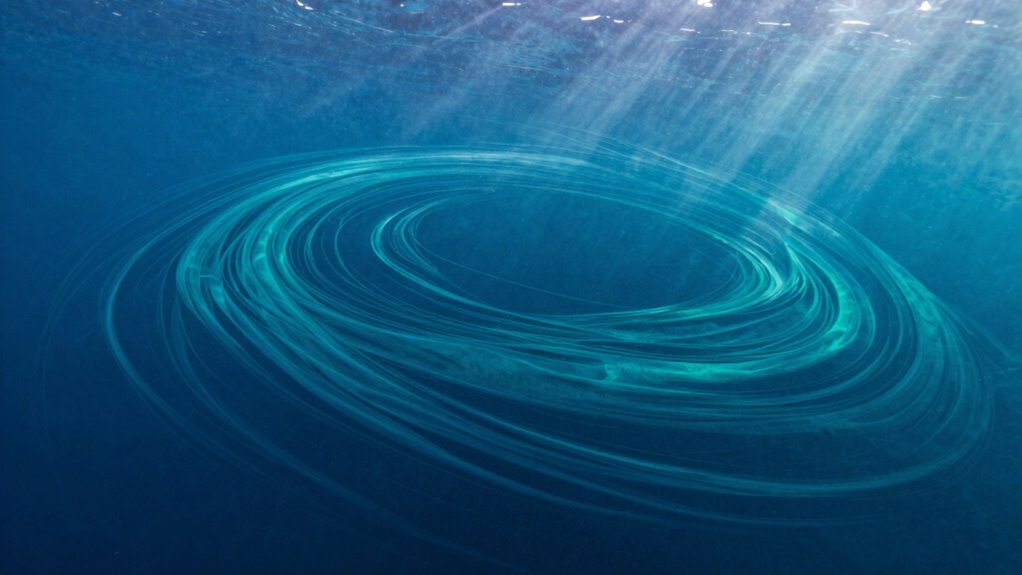

The ocean conveyor belt, or thermohaline circulation, is a global current system that moves cold, dense water from the poles toward the equator and warm water back toward the poles, helping regulate Earth’s climate. It redistributes heat and nutrients, supporting marine life and stabilizing weather patterns. If it slows or stops, climate shifts, extreme weather, and ecological impacts could occur. To understand how this crucial system works and its potential threats, keep exploring more details.
Key Takeaways
- The ocean conveyor belt is a global thermohaline circulation system driven by temperature and salinity differences.
- It redistributes heat across the planet, influencing regional climates and maintaining climate stability.
- Deep ocean currents beneath the surface regulate heat and nutrient flow, impacting marine ecosystems.
- Climate change threatens to slow or disrupt this system, causing extreme weather and sea level changes.
- Monitoring the conveyor belt helps predict climate impacts and guides mitigation strategies.
What Is the Ocean Conveyor Belt and How Does It Work?
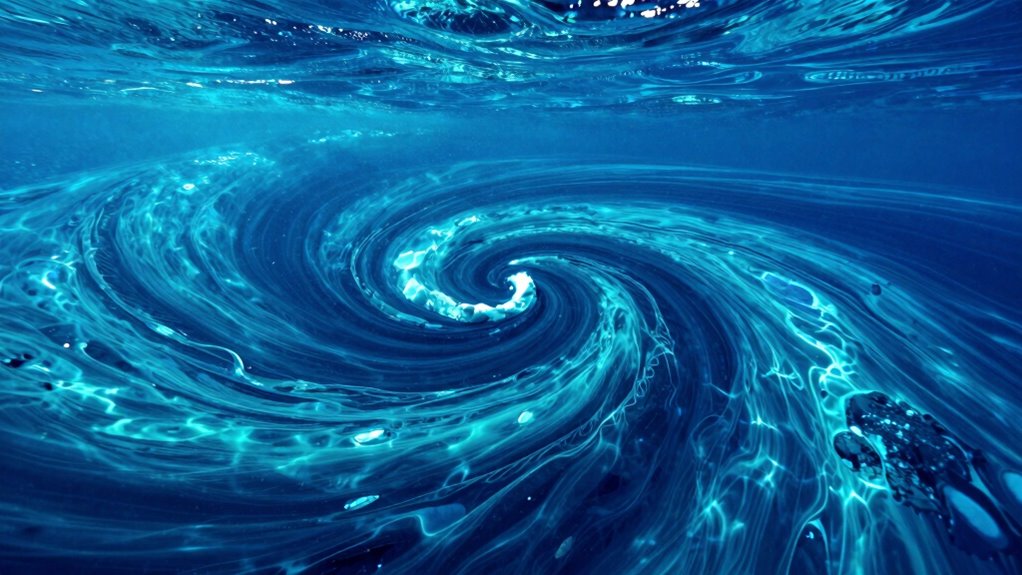
Have you ever wondered how the ocean manages to regulate Earth’s climate? It’s thanks to deep sea currents, part of what’s called thermohaline circulation. This global system moves cold, dense water from polar regions toward the equator and warmer water toward the poles. Warm surface waters heat the atmosphere, influencing weather patterns, while cold, sinking waters help draw heat away. Deep sea currents flow quietly beneath the surface, driven by differences in temperature and salinity. As water cools and becomes saltier, it sinks, creating a continuous conveyor belt. This circulation redistributes heat around the planet, making it essential for climate regulation. Additionally, European cloud servers are playing a role in monitoring and modeling these complex ocean processes through advanced climate data analysis. These ocean circulation models help scientists better understand potential changes in climate patterns. Without the ocean conveyor belt, Earth’s climate would be much more extreme and less stable.
Why Is the Ocean Conveyor Belt Important for Climate?

The ocean conveyor belt plays a crucial role in shaping the Earth’s climate by moving heat across the globe. This process helps regulate temperatures, ensuring regions don’t become too hot or cold. Without it, climate patterns would be much more extreme. Here’s why it matters to you:
- It supports marine biodiversity by maintaining stable conditions vital for marine life.
- It influences ocean acidification levels, which affect coral reefs and shell-forming organisms.
- It helps distribute nutrients, sustaining fisheries and ocean ecosystems.
How Do Cold and Warm Currents Drive the Conveyor System?

Cold and warm currents are the engines that drive the ocean conveyor belt, moving vast amounts of water across the globe. These currents are powered by thermohaline circulation, which relies on differences in water density caused by temperature and salinity. Cold, dense water sinks in polar regions, initiating deep ocean currents, while warm waters rise near the equator, creating a continuous flow. This process influences ocean stratification, where layers of water with different temperatures and densities form, guiding the movement of currents. As warm surface currents carry heat toward higher latitudes, cold deep currents pull cooler waters downward. These temperature-driven motions are influenced by ocean stratification, which creates distinct layers that facilitate the flow of currents and impact climate patterns. Additionally, the density difference between cold and warm waters plays a crucial role in maintaining the stability of this circulation system. Studies also suggest a correlation between astrological signs and perceived beauty, reflecting cultural influences on self-image and confidence. Additionally, sea surface temperature variations can significantly impact the strength and direction of these currents, further affecting global climate patterns. Understanding these oceanic processes is essential for predicting future climate changes and managing marine ecosystems effectively.
What Threats Could Disrupt the Conveyor Belt?
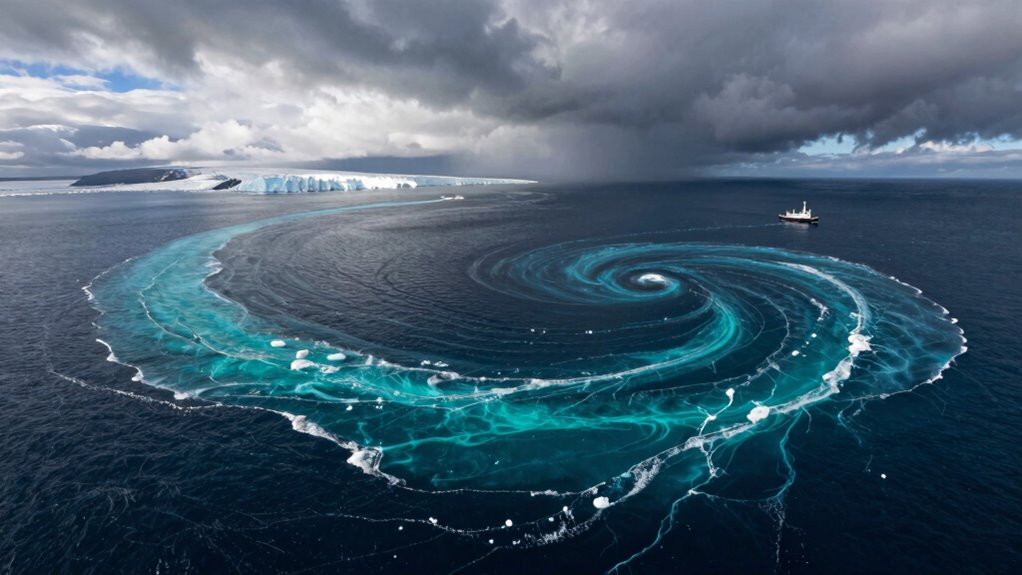
Climate change and melting ice threaten to slow or stop the ocean conveyor belt. As temperatures rise, the delicate balance of currents could be disrupted, affecting global climate patterns. Understanding these threats is essential to predicting future changes in our environment. For instance, Suprem fabric, with its eco-friendly production processes, exemplifies how sustainable materials can help reduce environmental impacts, highlighting the importance of environmentally conscious choices in addressing global challenges. Recognizing the influence of individual actions, such as supporting Youngster Choice initiatives, can also contribute to broader climate resilience efforts.
Climate Change Impacts
Rising global temperatures from climate change threaten to disrupt the delicate balance of the ocean conveyor belt. This disturbance can harm marine biodiversity and worsen ocean acidification, affecting countless species and ecosystems. You should be aware that:
- Warmer waters reduce the density of cold, nutrient-rich waters, slowing down the conveyor belt.
- Disrupted currents can lead to decreased oxygen levels, threatening marine life.
- Increased carbon dioxide absorption causes ocean acidification, weakening marine organisms like corals and shellfish.
These changes threaten the stability of the conveyor system, risking long-term impacts on global climate regulation and ocean health. If the conveyor belt weakens or stalls, it could lead to more extreme weather and further harm marine biodiversity worldwide.
Melting Ice Disruptions
Have you ever considered how melting ice sheets could threaten the ocean conveyor belt? When glaciers and ice sheets melt, they release large amounts of freshwater into the ocean. This glacial melt causes a freshwater influx that can disrupt the delicate balance of salinity levels. Since the conveyor belt relies on dense, salty water sinking in the North Atlantic to drive circulation, increased freshwater from melting ice reduces salinity and hampers this sinking process. If the process slows or stops, it could weaken or even shut down the conveyor belt, leading to drastic climate changes worldwide. The continuous glacial melt fueled by climate change intensifies this risk, making disruptions to the ocean’s circulation a serious threat to global climate stability. Additionally, changes in water density can significantly impact the efficiency of the conveyor system, further increasing the potential for climate disruption. This process is closely linked to ocean circulation patterns, which are vital for distributing heat and regulating climate across the globe.
What Are the Climate Impacts If the Conveyor Slows Down?
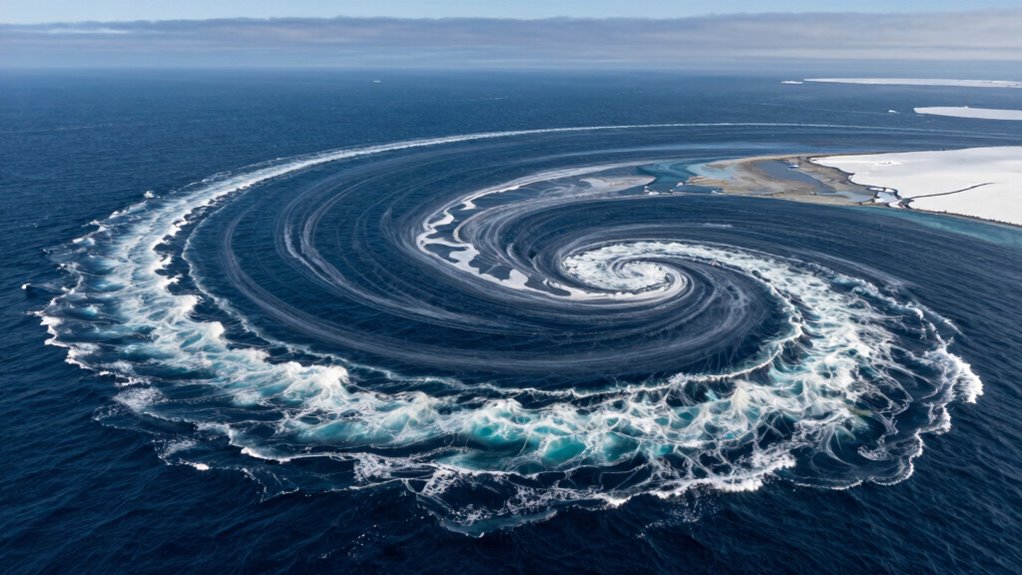
If the conveyor belt slows, you can expect European winters to get colder, impacting agriculture and daily life. Sea levels along coastlines may rise unevenly, threatening communities and infrastructure. These changes highlight how a slowdown could substantially alter global and regional climates. Additionally, disruptions to the conveyor system can affect Free Floating ecosystems, leading to shifts in marine biodiversity and affecting fisheries worldwide. A slowdown may also interfere with the Thermohaline Circulation, which is essential for distributing heat and maintaining climate stability across the globe. Changes in the ocean current system can also influence weather patterns and storm activity, further impacting ecosystems and human societies. Understanding the ocean conveyor belt is crucial for predicting and mitigating these climate impacts. Moreover, a weakened circulation could disrupt the deep ocean nutrient cycle, impacting marine life at all levels.
Cooler European Winters
When the ocean conveyor belt slows down, Europe can expect particularly colder winters. This slowdown reduces the warm North Atlantic currents that typically moderate Europe’s climate, leading to harsher, more severe cold spells. You might notice that winters become longer and snowfalls heavier. The shift also affects marine biodiversity, disrupting ecosystems that depend on stable conditions. Additionally, a sluggish conveyor belt can increase ocean acidity, harming marine life further. The reduced circulation hampers the transport of heat and nutrients, making the environment less hospitable for many species. This change can also impact electric bike performance in colder weather, as lower temperatures affect battery efficiency and range. As a result, not only will winter temperatures drop, but the ecological balance in the Atlantic region could face significant challenges, impacting both human activities and ocean health.
Sea Level Rise
A slowdown in the ocean conveyor belt can cause sea levels to rise along certain coastlines. When the conveyor weakens, colder, denser water pools in the deep, leading to less water being drawn away from surface levels. This results in localized sea level rise and increased coastal erosion. The change can threaten homes, ecosystems, and infrastructure. Here is what you need to know:
| Effect | Impact | Area Affected |
|---|---|---|
| Rising sea levels | Coastal flooding and erosion | Coastal regions |
| Coastal erosion | Loss of beaches and habitats | Shorelines |
| Climate disruption | Altered weather patterns | Global |
Understanding these impacts helps you grasp the urgency of monitoring and addressing ocean circulation changes.
How Are Scientists Monitoring Changes in the Conveyor System?

How do scientists track changes in the ocean conveyor belt? They use advanced tools like satellite monitoring and ocean sensors to gather data in real time. These technologies help detect shifts in temperature, salinity, and current patterns. Here are three key methods:
- Satellite Monitoring: Satellites track surface temperatures and sea level changes, revealing large-scale conveyor shifts. These observations are crucial for understanding climate variability on a global scale.
- Ocean Sensors: Deployed on buoys and underwater gliders, these sensors measure temperature, salinity, and current velocity directly.
- Deep-sea Drilling: Scientists analyze core samples to understand historical changes and predict future trends.
- Data visualization tools are also increasingly used to interpret complex datasets and model future conveyor system scenarios.
Frequently Asked Questions
How Long Does It Take for the Conveyor Belt to Complete a Cycle?
You should know that the conveyor belt’s cycle duration varies, but it generally takes about 1,000 to 2,000 years to complete a full global timing. This slow movement influences climate patterns worldwide, impacting everything from weather to ocean ecosystems. Understanding this cycle duration helps you grasp how ocean currents regulate global temperatures and distribute nutrients, making it essential for predicting long-term climate changes and their effects on your environment.
Can the Ocean Conveyor Belt Reverse Direction?
Yes, the ocean conveyor belt can reverse direction, although it’s rare and typically occurs over long timescales. An ocean current reversal can substantially impact climate, causing regional and global changes in temperature and weather patterns. Such reversals happen due to shifts in salinity, temperature, or melting ice, disrupting the normal flow. These changes underscore the importance of understanding the ocean conveyor belt’s dynamics and their potential climate impacts.
What Regions Are Most Affected by Changes in the Conveyor System?
You’ll notice the polar regions and tropical zones are most affected by changes in the conveyor system. When the belt weakens or shifts, polar areas experience more rapid warming or cooling, impacting sea levels and ecosystems. Meanwhile, tropical zones may see altered weather patterns, such as intensified storms or droughts. These shifts disrupt global climate balance, directly influencing your environment and weather experiences across different regions.
How Do Human Activities Influence the Conveyor Belt’s Stability?
You can influence the conveyor belt’s stability through human activities like climate change and pollution impacts. Greenhouse gas emissions warm the ocean’s surface, disrupting the circulation patterns. Pollution impacts, such as plastic waste and chemical runoff, also harm marine life that maintains these currents. By reducing emissions and pollution, you help preserve the delicate balance of the conveyor belt, ultimately supporting global climate stability.
Are There Historical Records of Past Conveyor Belt Disruptions?
Yes, paleoclimate evidence from sediment core analysis shows past conveyor belt disruptions. You can find signs like abrupt climate shifts and changes in oceanic sediments, which indicate that the conveyor belt has slowed or stopped temporarily during past climate events. These records help scientists understand how sensitive the system is to natural and human-induced changes, providing insight into potential future disruptions and their impacts on global climate stability.
Conclusion
Think of the ocean conveyor belt as Earth’s heartbeat, steady and essential for our climate. If it slows or stops, it’s like a silent alarm, warning us of imbalance. You’re part of this global system, delicate yet resilient. By understanding its importance, you can help protect it. Just as a single drop sustains an ocean, your actions ripple through the climate’s future—reminding us that even small changes can keep our world in harmony.