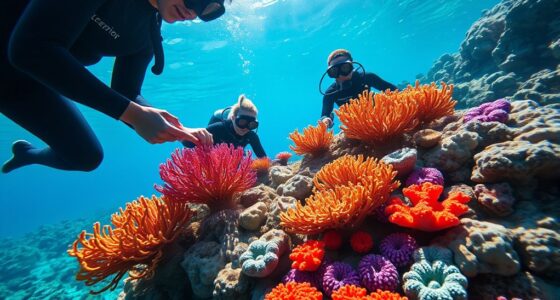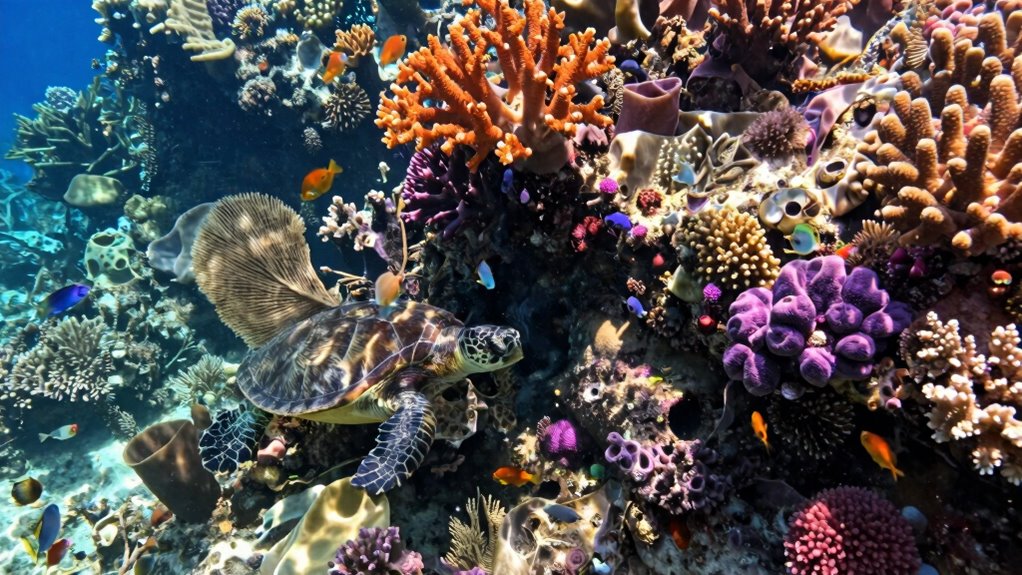

Coral reefs are fragile because their delicate structures depend on stable environmental conditions, like consistent temperatures and pH levels. Climate change causes rising sea temperatures, leading to coral bleaching and weakening reefs, while ocean acidification hampers their ability to rebuild skeletons. Despite this susceptibility, reefs are incredibly important—they support vast biodiversity, protect coastlines, provide food and livelihoods, and help regulate the Earth’s climate. Want to discover how we can help preserve these crucial marine ecosystems?

Prime made for students and young adults
- Fast, free delivery for dorm and study essentials
- Prime Video and Amazon Music included
- Member-only deals
Key Takeaways
- Coral reefs’ complex, interconnected ecosystems make them highly sensitive to environmental changes.
- Rising temperatures cause bleaching, weakening corals and threatening reef biodiversity.
- Ocean acidification impairs coral skeleton formation, reducing reef strength and resilience.
- Reefs support immense marine biodiversity and serve as nurseries for many species.
- They provide essential services like coastal protection, food, livelihoods, and climate regulation.

Have you ever wondered why coral reefs are often called the rainforests of the sea? It’s because they harbor an incredible amount of marine biodiversity. These vibrant ecosystems support thousands of species, from colorful fish and intricate invertebrates to sea turtles and sharks. Every organism plays a role, creating a delicate balance that sustains the health of the entire environment. Yet, despite their resilience, coral reefs are incredibly fragile. Small changes in their surroundings can cause devastating ripple effects, threatening their very existence.
One of the biggest threats to coral reefs is climate change impacts. Rising sea temperatures cause coral bleaching, a process where corals lose the symbiotic algae that give them color and vital nutrients. Without these algae, corals become weak, more susceptible to disease, and often die if conditions don’t improve. These temperature shifts don’t just harm individual corals—they threaten the entire reef’s health, leading to a loss of marine biodiversity. When corals die off, countless species lose their habitat, and the complex web of life that depends on reefs begins to unravel.
Coral reefs are also vulnerable to other climate change impacts like ocean acidification. As carbon dioxide levels rise, the ocean absorbs more of it, which lowers the water’s pH. Acidic waters make it harder for corals to build their calcium carbonate skeletons, weakening their structure and slowing growth. This impairment affects not only corals but also the myriad organisms that rely on the reef’s physical framework for shelter and food. As reefs decline, so does the rich diversity of marine life they support, reducing the overall resilience of ocean ecosystems. ocean acidification poses a serious threat to the structural integrity of reefs and the survival of many marine species, emphasizing the importance of understanding the marine environment. Understanding how climate change affects these ecosystems is crucial for developing effective conservation strategies.
Additionally, the interconnectedness of reef ecosystems makes them especially sensitive to environmental changes, reinforcing the need for ecosystem resilience strategies to protect them. Despite their fragility, coral reefs are incredibly important. They provide food and livelihoods for millions of people around the world, support tourism, and protect coastlines from erosion and storm surges. Their role in maintaining marine biodiversity is irreplaceable. When healthy, reefs act as nurseries for juvenile fish, help filter water, and contribute to the global carbon cycle. Protecting these ecosystems isn’t just about preserving their beauty; it’s about safeguarding the intricate balance that sustains life beneath the waves.
As an affiliate, we earn on qualifying purchases.
Frequently Asked Questions
How Do Coral Reefs Recover After Bleaching Events?
After a bleaching event, coral reefs recover through natural processes of coral resilience and bleaching recovery. You can support this by reducing stressors like pollution and overfishing, which helps corals regain strength. Healthy, resilient corals can rebuild their symbiotic algae, restoring their color and vigor. With time and proper care, these reefs can bounce back, showcasing nature’s incredible ability to recover when given a chance.
What Specific Human Activities Threaten Coral Reef Health?
Think of coral reefs as delicate tapestries, easily torn by human actions. You jeopardize their health through overfishing impacts, which disrupt the balance of marine life, and coastal development, which causes sedimentation and pollution. These activities weaken coral structures, making them more vulnerable to bleaching and disease. Your actions directly influence reef resilience, so safeguarding these vibrant ecosystems guarantees they continue to thrive and support countless species.
Are Coral Reefs Found in Freshwater or Only Saltwater?
Coral reefs are found only in saltwater habitats, specifically in warm, shallow parts of the ocean. You won’t find them in freshwater habitats, as corals need saltwater to survive and thrive. Coral reef locations are typically near coastlines in tropical and subtropical regions. Their delicate ecosystems rely on the salinity of the ocean, making freshwater environments unsuitable for these vibrant, diverse communities.
How Do Coral Reefs Benefit Local Economies?
Coral reefs boost your local economy by attracting tourists keen to experience vibrant marine biodiversity. When you visit reefs for snorkeling or diving, you support tourism revenue that benefits local businesses and creates jobs. These ecosystems also help sustain fishing industries, providing food and income for communities. Protecting coral reefs guarantees ongoing economic benefits, preserving both marine biodiversity and the livelihoods of people who depend on these invaluable natural resources.
Can Coral Reefs Be Artificially Restored or Cultivated?
Sure, coral reefs can be artificially restored through coral farming and artificial propagation. Ironically, while it’s easier than ever to grow corals in labs, these efforts highlight how fragile natural reefs are—so delicate that we need to step in. You can help by supporting these initiatives, which cultivate young corals and transplant them back into damaged areas, giving reefs a fighting chance to survive and thrive again.
marine biodiversity educational model
As an affiliate, we earn on qualifying purchases.
As an affiliate, we earn on qualifying purchases.
Conclusion
You now see how delicate coral reefs are—they’re like the heartbeat of our oceans, yet so easily shattered. If they vanish, the entire underwater world could collapse in a domino effect, threatening countless lives and ecosystems. Your actions matter more than you realize; every small effort counts. Protecting these vibrant underwater cities isn’t just about saving reefs—it’s about safeguarding the future of life on Earth itself. Don’t let their beauty be lost forever.
As an affiliate, we earn on qualifying purchases.
ocean acidification research kit
As an affiliate, we earn on qualifying purchases.
As an affiliate, we earn on qualifying purchases.
Fall Picks
fall essentials
As an affiliate, we earn on qualifying purchases.