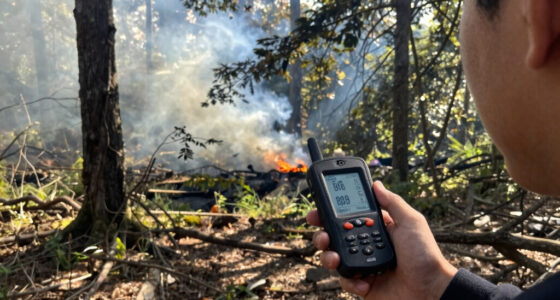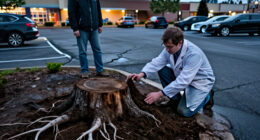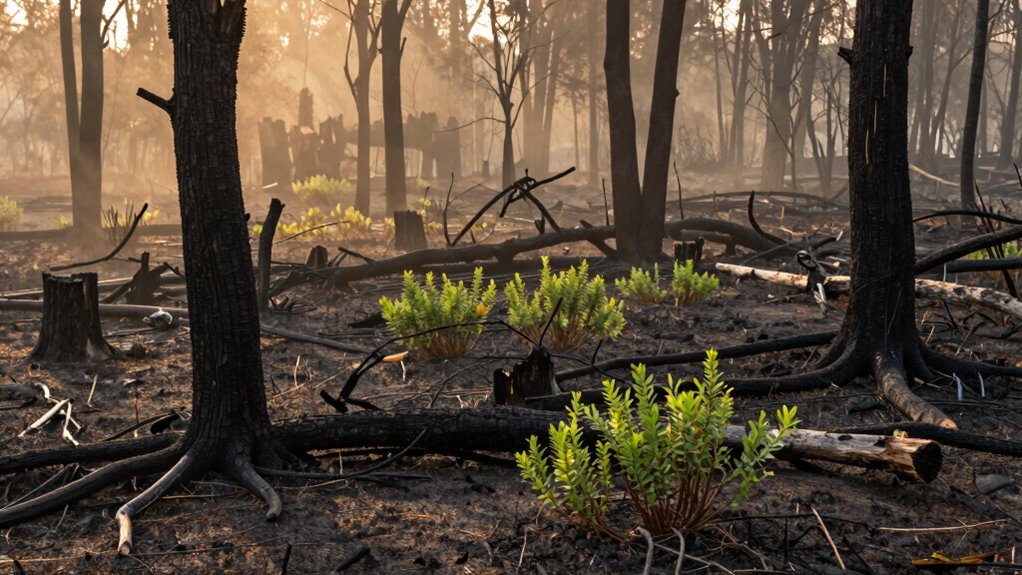

Wildfires reshape landscapes long after flames fade by clearing old growth and kickstarting natural succession. You’ll see new plants sprouting quickly, especially fire-adapted species that thrive on nutrient-rich ash. Over time, these plants create habitats for animals and lead to diverse ecosystems. Some areas develop dense forests, while others stay open, supporting different wildlife. This ongoing cycle of growth and renewal shows how fire drives long-term landscape transformation—explore further to discover how ecosystems adapt and evolve.

Get school and study supplies delivered free — and shop member deals
- Fast, free delivery on millions of items
- Access to Prime Big Deal Days deals on October 6–7
- Prime Video, Amazon Music and more included
Key Takeaways
- Wildfires clear old growth, initiating ecological succession that gradually transforms the landscape over decades.
- Fire-adapted plants stabilize soil, promote biodiversity, and create habitats long after the flames fade.
- Different areas develop into dense forests or open spaces, increasing habitat diversity and landscape complexity.
- Post-fire recovery involves stages where grasses, shrubs, and trees re-establish, shaping long-term ecosystem structure.
- The landscape’s appearance and ecological functions evolve through natural succession, demonstrating resilience and ongoing renewal.
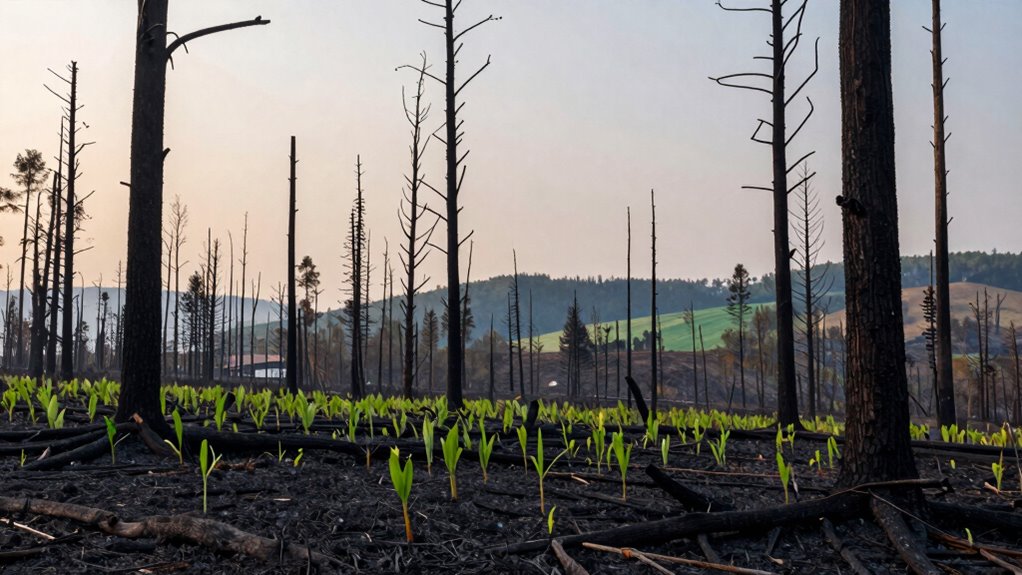
Wildfires can dramatically transform landscapes, clearing out old growth and paving the way for new ecosystems to emerge. When a fire sweeps through an area, it doesn’t just leave behind scorched earth; it initiates a complex process rooted in wildfire ecology that shapes how the land recovers and evolves over time. You might think fire marks the end of a landscape, but in reality, it often signals a beginning. The way an ecosystem responds to fire depends on numerous factors like the intensity of the blaze, the types of plants present, and the climate. Understanding wildfire ecology helps you see that fires are natural events that maintain the health of many environments, promoting diversity and resilience.
After the flames die out, post fire recovery begins. During this phase, the landscape undergoes significant changes. Some plant species, specially adapted to fire, will sprout rapidly, taking advantage of the nutrient-rich ash left behind. Others may need several years or even decades to return, depending on their seed dispersal mechanisms and growth cycles. You might notice that certain areas seem to bounce back quicker because of these fire-adapted plants, which have evolved traits like thick bark or underground storage organs to survive future fires. As these species reclaim the land, they create habitats for a variety of animals, fostering a new biodiversity that wasn’t there before. Additionally, the role of fire-adapted plants is crucial in stabilizing the soil and preventing erosion during the recovery process. Recognizing the importance of fire ecology helps in understanding how ecosystems are inherently resilient to such disturbances. The presence of fire-adapted plants also influences how quickly the landscape can return to its pre-fire state, guiding the natural succession process.
Over time, the landscape’s appearance and ecological functions continue to evolve. Succession—the natural process of change in species composition—plays a key role in post fire recovery. Grasses and shrubs often dominate early on, stabilizing the soil and preventing erosion. Gradually, trees and more complex plant communities re-establish themselves, shaping a forest or woodland once more. This process can take decades, during which the landscape’s structure and function are constantly shifting. You might observe that some areas become densely wooded, while others remain open, creating a patchwork of different habitats that support a wide array of wildlife. The ongoing cycle of growth and renewal demonstrates the dynamic nature of post-fire landscapes and their ability to adapt over time. Understanding succession and its role in ecological recovery helps emphasize the importance of natural processes in maintaining resilient ecosystems.
As an affiliate, we earn on qualifying purchases.
Frequently Asked Questions
How Do Wildfires Affect Underground Root Systems?
Wildfires can severely damage underground root systems, but they also stimulate root regrowth in many cases. You might notice new shoots emerging as roots recover, aiding the landscape’s recovery. However, intense fires can compromise underground stability, making soil more prone to erosion. By promoting root regrowth, wildfires ultimately help restore vegetation, but the extent of underground damage varies depending on fire intensity and duration.
Can Wildfires Change Local Climate Patterns Long-Term?
Think of wildfires as the Earth’s silent drumbeat during fire season, subtly altering climate patterns over time. You may not see it immediately, but these fires contribute to climate change by releasing greenhouse gases, which can shift local weather, making droughts or storms more frequent. So, long after flames die out, they influence your environment’s future, shaping the very climate you experience.
Do Wildfires Influence Nearby Water Quality?
Yes, wildfires influence nearby water quality. When a wildfire occurs, it alters the landscape, increasing water runoff which can carry ash, sediments, and contaminants into water bodies. This process also promotes contaminant leaching from burned soils and vegetation, further degrading water quality. These changes can persist long after the flames disappear, affecting aquatic ecosystems and water supplies for years to come.
How Do Animals Adapt to Post-Fire Landscapes?
You observe that animals adapt to post-fire landscapes by shifting their behaviors and habitats. Wildlife migration increases as animals seek new food sources and safer spaces, while some species quickly return to areas during habitat recovery. Others, like certain plants and animals, develop resilience, thriving in the disturbed environment. This adaptation helps sustain biodiversity, ensuring ecosystems rebuild and maintain balance long after the flames have gone.
Are Certain Plant Species More Resilient to Wildfire Damage?
Yes, certain plant species are more resilient to wildfire damage. You’ll find that fire-adapted species, like some conifers and grasses, thrive after fires due to their unique adaptations. These plants often rely on strategies like seed dormancy or rapid plant regeneration to recover quickly. By understanding which species are fire-adapted, you can better appreciate how plant regeneration plays a crucial role in restoring ecosystems long after wildfires pass.
wildfire recovery soil stabilization products
As an affiliate, we earn on qualifying purchases.
As an affiliate, we earn on qualifying purchases.
Conclusion
As the ashes settle and the flames fade, what lies beneath might surprise you. The landscape you thought was forever changed continues to evolve in ways you can’t see—hidden forces shaping its future. Wildfires leave behind more than just scars; they set the stage for new life, mysteries, and unforeseen transformations. So, next time you witness a burned forest, remember—what appears gone might just be the beginning of something entirely new, waiting to emerge.
As an affiliate, we earn on qualifying purchases.
post-wildfire landscape restoration tools
As an affiliate, we earn on qualifying purchases.
As an affiliate, we earn on qualifying purchases.
Fall Picks
fall essentials
As an affiliate, we earn on qualifying purchases.