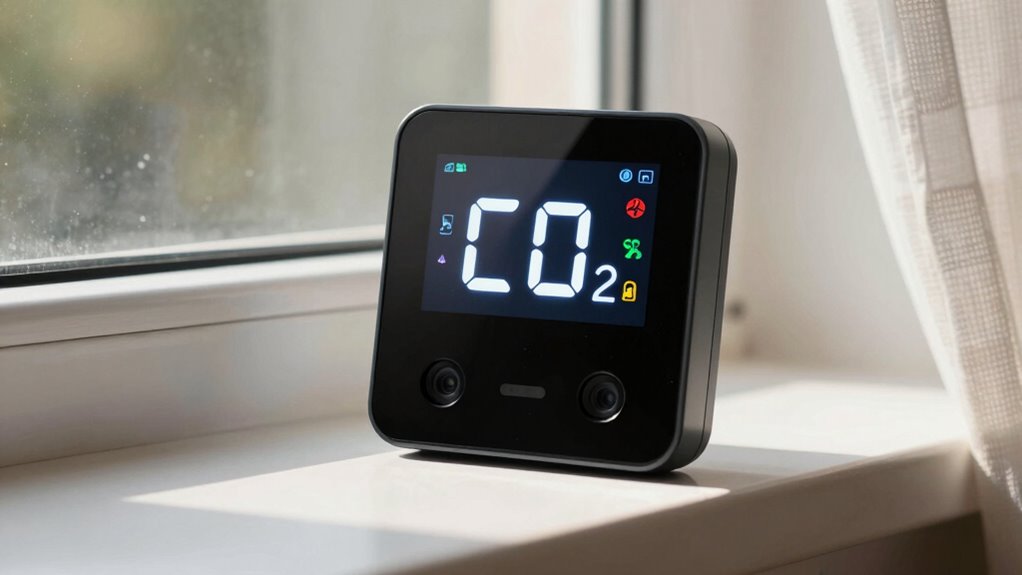

Relying solely on CO2 levels doesn’t give you the full picture of indoor air quality, as it only shows ventilation efficiency and occupancy, not harmful pollutants like VOCs, dust, or chemicals. These pollutants can affect your health even if CO2 is okay. Regular calibration and multiple sensors help detect hidden issues, ensuring your space is truly safe. Want to understand how a thorough approach can keep your air healthier? Keep exploring to find out more.

Prime made for students and young adults
- Fast, free delivery for dorm and study essentials
- Prime Video and Amazon Music included
- Member-only deals
Key Takeaways
- CO2 levels indicate ventilation, not overall pollutant presence or air safety.
- Relying only on CO2 misses harmful chemicals, allergens, and particulate matter.
- Sensor drift and aging can cause inaccurate readings, requiring regular calibration.
- Multi-parameter detection identifies hidden pollution sources like VOCs and PM2.5.
- Comprehensive monitoring provides a complete picture for effective indoor air quality management.
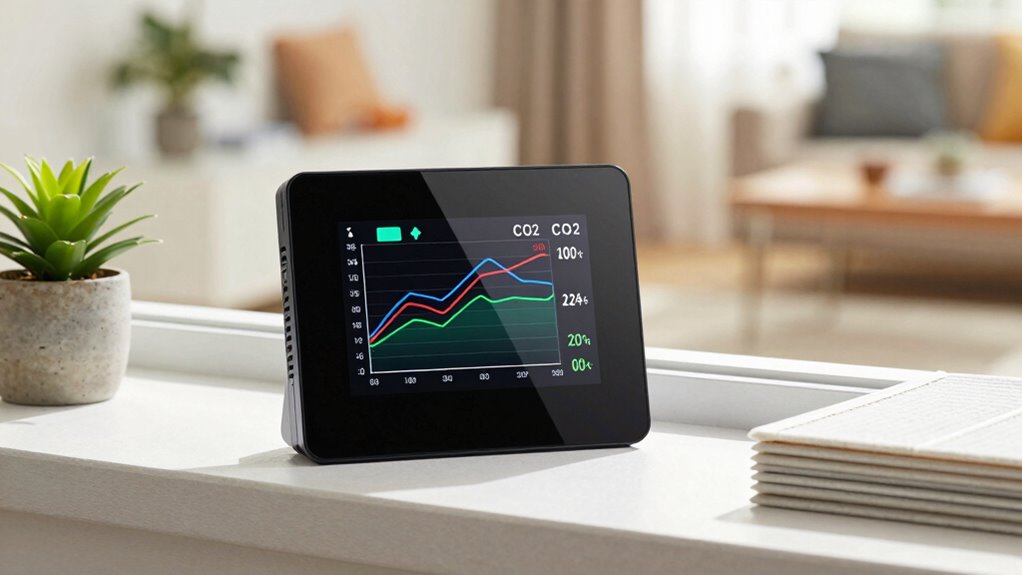
Have you ever wondered how clean the air you breathe truly is? Many people focus solely on the CO2 levels in their environment, assuming that a simple number tells the whole story. But the truth is, air quality is much more complex than just CO2. Indoor pollutant sources like cooking fumes, cleaning agents, pet dander, and smoke can all contribute to poor air quality, and relying only on a CO2 reading can be misleading. CO2 levels indicate ventilation efficiency and occupancy, but they don’t reveal the presence of harmful chemicals, allergens, or particulate matter that can affect your health. That’s why air quality monitors need to measure multiple parameters and not just provide a single number.
Relying solely on CO2 levels overlooks other harmful indoor pollutants affecting your health.
Another essential aspect often overlooked is sensor calibration. If your air quality monitor isn’t properly calibrated, the readings it provides can be inaccurate, leading you to make decisions based on faulty data. Over time, sensors can drift, and calibration ensures that the measurements stay precise and reliable. Without regular calibration, you might think your indoor air is safe when it’s actually filled with pollutants. Proper calibration involves comparing the monitor’s readings to known standards and adjusting it accordingly. This process is fundamental, especially when monitoring pollutants like volatile organic compounds (VOCs), particulate matter, or formaldehyde, which can fluctuate unexpectedly. Additionally, sensor drift over time can affect the accuracy of your readings, emphasizing the importance of ongoing calibration. Regular maintenance and understanding sensor lifespan are also crucial for sustained accuracy. Monitoring the sensor’s performance can help you identify when calibration or replacement is needed to maintain data integrity. Furthermore, understanding the effects of sensor aging can help you prevent inaccurate readings caused by wear and tear. Recognizing the impact of sensor quality can guide you in choosing more reliable devices and ensuring consistent results.
You need an air quality monitor that considers the variety of indoor pollutant sources. It should detect not only CO2 but also VOCs, PM2.5, and other harmful substances. These sensors can help you identify hidden sources of pollution, like lingering cooking odors or off-gassing from new furniture, that a simple CO2 measurement would never catch. More advanced monitors also come with features like automatic sensor calibration, ensuring ongoing accuracy without constant manual adjustments. This way, you get a clearer, more complete picture of your indoor environment, empowering you to take targeted steps to improve air quality.
In the end, understanding why air quality monitors need more than just a CO2 number comes down to recognizing the complexity of indoor pollution. Indoor pollutant sources are diverse and can pose health risks even at low CO2 levels. Proper sensor calibration is essential to maintaining accurate readings over time. When you choose a monitor that measures multiple pollutants and guarantees calibration, you’re better equipped to create a safer, healthier indoor environment. Don’t settle for a single number—look for a device that provides comprehensive insights into your air quality, so you can breathe easier knowing you’re truly safe.
multi-parameter indoor air quality monitor
As an affiliate, we earn on qualifying purchases.
As an affiliate, we earn on qualifying purchases.
Frequently Asked Questions
How Do Air Quality Monitors Detect Pollutants Other Than CO2?
Air quality monitors detect pollutants beyond CO2 by using various sensors, like electrochemical sensors for gases such as VOCs, particulate sensors for dust and allergens, and sensors for humidity and temperature. You can improve detection by adding indoor plants, which naturally filter some pollutants, and maintaining good air circulation, which helps disperse contaminants. These features allow your monitor to give an all-encompassing view of your indoor air quality.
What Specific Sensors Are Used in Advanced Air Quality Monitors?
Advanced air quality monitors use sensor technologies like electrochemical sensors for gases such as CO, NO2, and O3, and laser particle counters for particulate matter. You’ll find these sensors calibrated according to strict standards to guarantee accuracy. By combining different sensor technologies, these monitors provide extensive data on various pollutants, helping you better understand air quality beyond just CO2 levels and ensuring reliable readings.
Can Air Quality Monitors Distinguish Between Indoor and Outdoor Pollutants?
Yes, air quality monitors can distinguish between indoor sources and outdoor pollution. They analyze various pollutants like particulate matter, volatile organic compounds, and gases to identify whether the contamination originates outside or inside your space. This helps you understand if outdoor pollution is seeping indoors or if indoor activities, like cooking or cleaning, are affecting air quality. Accurate detection enables you to take targeted actions to improve your indoor environment.
How Often Should Air Quality Monitors Be Calibrated for Accuracy?
You should calibrate your air quality monitor at least once every six months to guarantee sensor calibration and accuracy maintenance. Regular calibration helps detect drift in sensor readings over time, keeping measurements reliable. If your monitor detects sudden changes or shows inconsistent data, calibrate more frequently. Follow the manufacturer’s guidelines, and consider professional calibration if your monitor is used for critical health or safety decisions.
Are There Health Implications From Low CO2 Levels Alone?
You might think low CO2 levels are harmless, but they can still signal poor air quality with high indoor allergens, which can trigger respiratory effects. While low CO2 generally indicates good ventilation, it doesn’t guarantee the absence of pollutants or allergens that impact your health. So, even with low CO2, you should be mindful of other indoor air contaminants that could cause respiratory issues.
VOC and PM2.5 air quality sensor
As an affiliate, we earn on qualifying purchases.
As an affiliate, we earn on qualifying purchases.
Conclusion
Remember, relying solely on a CO2 number is like judging a book by its cover—you miss the full story. Air quality monitors should give you a complete picture, including pollutants, particulates, and humidity. Think of it as having your own personal “air butler” from the future, guiding you through the maze of pollutants. Don’t settle for just one number—seek the whole story to truly breathe easier in your space.
As an affiliate, we earn on qualifying purchases.
comprehensive indoor air quality device
As an affiliate, we earn on qualifying purchases.
As an affiliate, we earn on qualifying purchases.
Halloween Picks
halloween
As an affiliate, we earn on qualifying purchases.