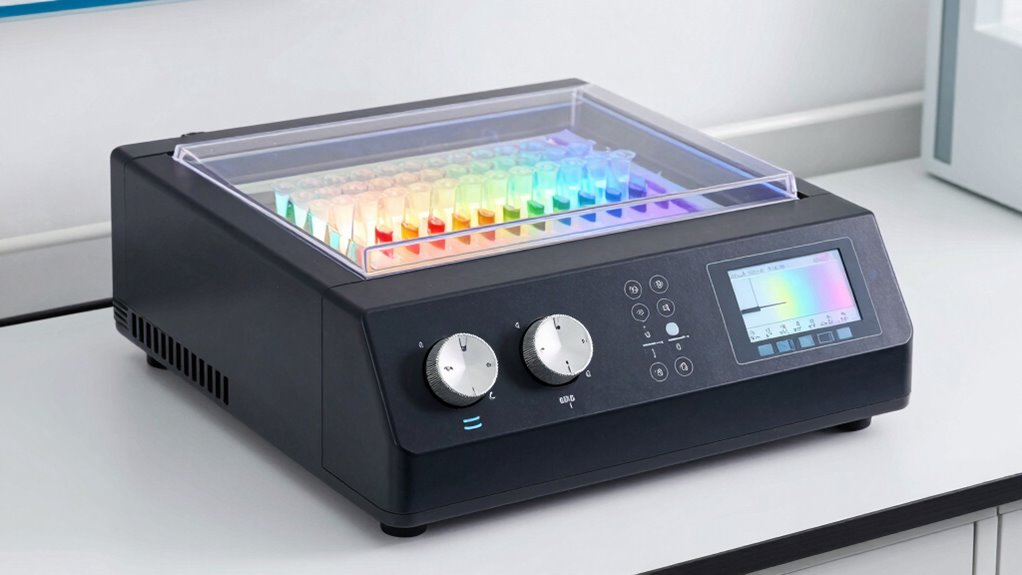

A spectrophotometer tells you how much light a sample absorbs at different wavelengths, giving insight into its molecular makeup and purity. It measures the interaction between light and your sample, revealing concentrations of molecules like DNA, proteins, or pigments. Accurate results depend on proper calibration and maintenance. By understanding these readings, you can assess sample quality and monitor changes over time. Keep exploring to discover how this powerful tool can enhance your analysis skills.

Get school and study supplies delivered free — and shop member deals
- Fast, free delivery on millions of items
- Access to Prime Big Deal Days deals on October 6–7
- Prime Video, Amazon Music and more included
Key Takeaways
- It reveals the concentration of specific molecules like DNA, proteins, or pigments in a sample.
- It indicates sample purity by measuring absorbance at particular wavelengths.
- It tracks changes in samples over time, showing chemical or physical transformations.
- It provides data on how much light a sample absorbs at different wavelengths.
- It helps identify the presence of specific compounds based on their characteristic absorption patterns.
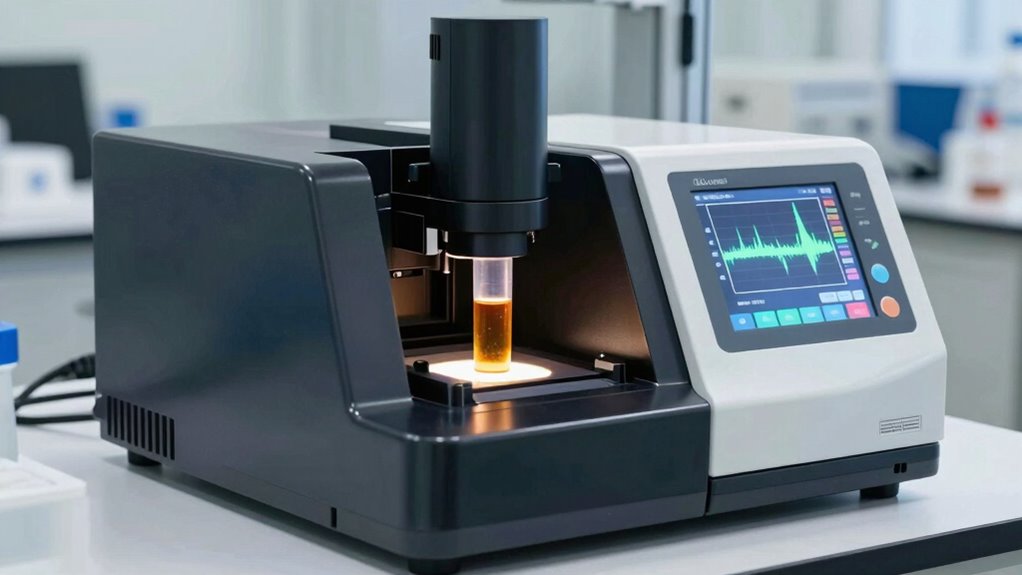
A spectrophotometer is a scientific instrument that measures how much light a substance absorbs at different wavelengths. When you use one, you’re essentially translating the interaction between light and your sample into valuable data. This data can tell you about the concentration of specific molecules, the purity of a substance, or even how a sample changes over time. To ensure your readings are accurate, proper calibration techniques are essential. Regularly calibrate your instrument with standard solutions that have known absorbance values, and always follow the manufacturer’s recommendations for calibration frequency. Doing so minimizes errors caused by drift or aging components, helping you trust your results.
Proper calibration ensures accurate spectrophotometer readings and reliable sample analysis.
Instrument maintenance plays a crucial role in what a spectrophotometer can tell you. You should regularly clean the optical components, such as cuvettes and lenses, to prevent contamination or dirt from skewing your readings. Keep the lamp and detectors in good condition by following scheduled checks and replacements, as a worn-out lamp can produce inconsistent light intensity, leading to unreliable data. Proper maintenance also involves inspecting the instrument for any loose connections or mechanical issues that could affect performance. When you stay on top of maintenance, you reduce downtime and ensure your measurements stay precise. Additionally, understanding how instrument calibration impacts your results helps you interpret data more accurately. Maintaining an awareness of instrument drift is also important, as it can subtly affect your measurements over time.
Furthermore, understanding how spectral range influences your analysis helps in selecting the most relevant wavelengths for specific samples, ultimately improving measurement accuracy. You might also consider the light source stability of your instrument, as fluctuations can impact data reliability and repeatability. Regularly reviewing instrument performance can help identify potential issues before they significantly affect your results. What a spectrophotometer reveals depends heavily on how well it’s calibrated and maintained. When you analyze your sample, the instrument measures how much light passes through or is absorbed by it at a specific wavelength. From this, you can deduce the concentration of compounds like DNA, proteins, or pigments, based on their characteristic absorption patterns. It’s important to understand that these readings are only as accurate as your calibration and maintenance practices. If the instrument isn’t properly calibrated or is poorly maintained, your data might be misleading, leading to incorrect conclusions.
In essence, what a spectrophotometer actually tells you is rooted in the quality of your setup. It provides quantitative insights into your samples, but only if you ensure consistent calibration techniques and diligent instrument maintenance. When used correctly, it becomes a powerful tool for scientists, researchers, and lab technicians to make informed decisions. So, take the time to keep your instrument in top shape, calibrate it regularly, and interpret your data with an understanding of the underlying principles. That way, you’ll unlock the true potential of what your spectrophotometer can reveal about your samples.
spectrophotometer for DNA analysis
As an affiliate, we earn on qualifying purchases.
As an affiliate, we earn on qualifying purchases.
Frequently Asked Questions
How Is a Spectrophotometer Calibrated for Accurate Measurements?
You calibrate a spectrophotometer by first checking the optical alignment to guarantee the light path is correct. Then, you use calibration standards with known absorbance or transmittance values to adjust the device. You compare the readings from these standards to their expected values, making necessary adjustments to guarantee accurate measurements. Regular calibration with standards maintains precision and reliability in your spectrophotometric analyses.
What Are Common Sources of Error in Spectrophotometry?
Ever wonder what can mess up your spectrophotometry results? Common errors include poor sample preparation, which can cause inconsistent readings, and stray light, which interferes with accurate absorbance measurement. These issues skew your data, leading to inaccurate conclusions. Ensuring proper sample handling and minimizing stray light during measurements helps improve accuracy. Regular calibration and maintenance also reduce errors, so your spectrophotometer gives trustworthy, reliable results every time.
Can Spectrophotometers Analyze Non-Liquid Samples?
Yes, spectrophotometers can analyze non-liquid samples, but you’ll need to prepare solid samples first. This involves techniques like grinding, pelletizing, or creating thin films to guarantee proper interaction with light. Solid sample preparation is essential because it helps achieve uniformity and accurate readings. By adapting your sample to fit the spectrophotometer’s requirements, you can effectively perform non-liquid analysis and obtain reliable data.
How Does Temperature Affect Spectrophotometer Readings?
Temperature fluctuations can considerably impact your spectrophotometer readings by affecting sample stability and instrument performance. As temperature varies, it can cause changes in sample absorbance, leading to inaccurate results. To guarantee reliability, you should keep samples and the device in a controlled environment, avoiding sudden temperature shifts. Regular calibration and proper maintenance help minimize temperature-related errors, ensuring your readings remain precise and consistent.
What Are the Limitations of Spectrophotometer Accuracy?
Think of a spectrophotometer as a delicate musical instrument—its precision can be thrown off by tiny imperfections. Limitations in accuracy often stem from sample preparation techniques, which can introduce errors or inconsistencies. Even small deviations affect readings, making it essential for you to carefully control conditions and calibration. While powerful, the device’s accuracy depends on your meticulous attention to detail and understanding its inherent limitations.
laboratory spectrophotometer calibration kit
As an affiliate, we earn on qualifying purchases.
As an affiliate, we earn on qualifying purchases.
Conclusion
In the end, a spectrophotometer is like a detective revealing hidden secrets in a sample’s color story. It tells you how much light a substance absorbs, helping you understand its composition and concentration. Think of it as a window into the unseen, showing what’s happening at the molecular level. With this tool in hand, you gain a clearer picture of materials, turning abstract data into tangible insights, much like turning a blurry photograph into a sharp, vivid image.
UV-Vis spectrophotometer with cuvettes
As an affiliate, we earn on qualifying purchases.
As an affiliate, we earn on qualifying purchases.
spectrophotometer maintenance tools
As an affiliate, we earn on qualifying purchases.
As an affiliate, we earn on qualifying purchases.
Halloween Picks
halloween
As an affiliate, we earn on qualifying purchases.