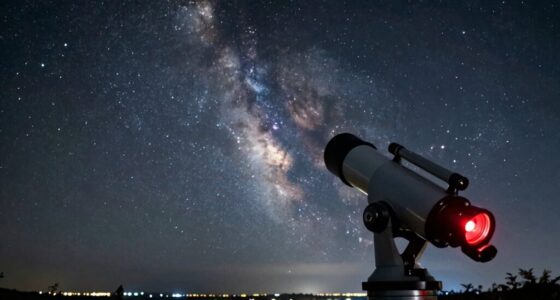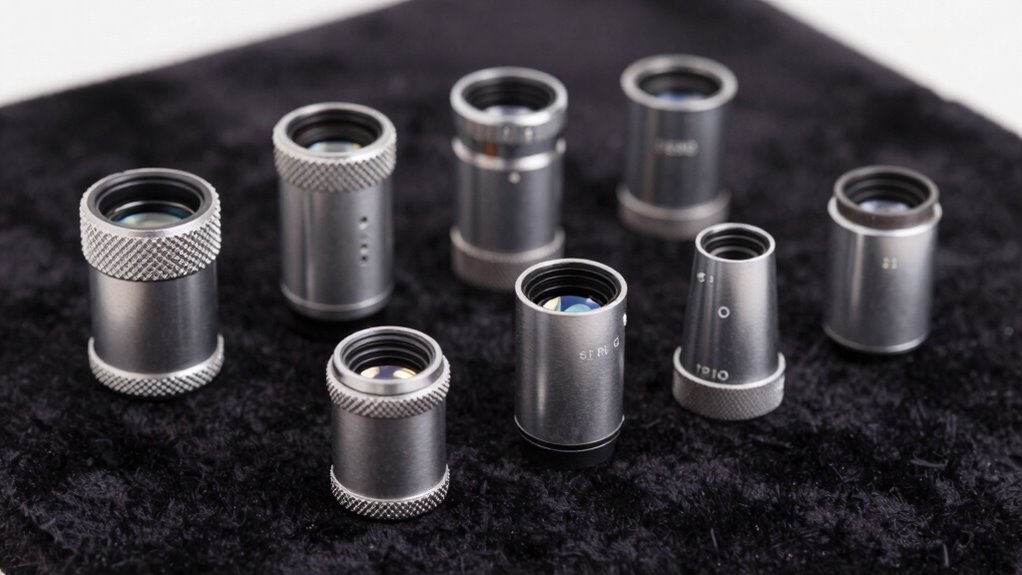
Telescope eyepieces are the lenses you look through to see distant objects clearly. They affect your view’s brightness, detail, and sharpness, with different types suited for wide sky scans or close-up planetary details. High-quality eyepieces reduce distortions, boost contrast, and give brighter images, making your observations more enjoyable. Choosing the right eyepiece depends on your telescope and what you want to observe. Keep exploring to discover how to choose the best ones for you.

Prime made for students and young adults
- Fast, free delivery for dorm and study essentials
- Prime Video and Amazon Music included
- Member-only deals
Key Takeaways
- Eyepieces determine magnification, image sharpness, and brightness, directly affecting viewing quality.
- Different types (low-power, high-power) suit wide sky scans or detailed planetary views.
- High-quality lenses and coatings reduce distortions and enhance contrast for clearer images.
- Focal length influences magnification; shorter focal lengths offer higher magnification.
- Investing in quality eyepieces improves overall observing satisfaction and image clarity.
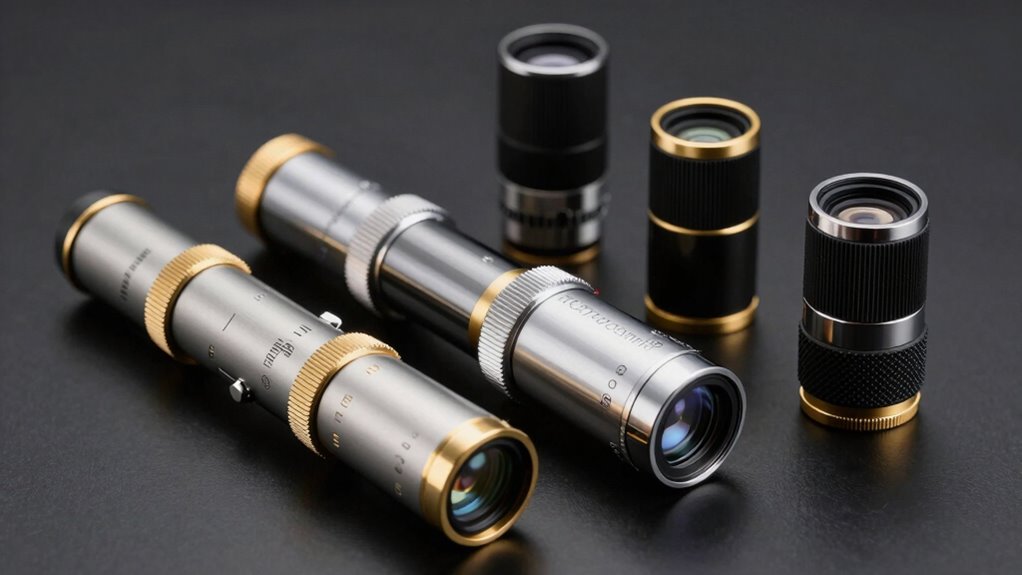
Telescope eyepieces are essential accessories that directly impact your viewing experience by determining the level of detail and magnification you can achieve. When it comes to eyepiece selection, understanding the different types and their optical qualities helps you make better choices tailored to your observing goals. The key is to focus on optical quality, which influences how sharp, bright, and true-to-life your images will appear. High-quality eyepieces are crafted with precision lenses and coatings, ensuring minimal distortion and maximum light transmission. This results in clearer, more detailed images that enhance your overall observing experience. This means you’ll see more details in planetary images, crisper views of distant galaxies, and brighter images overall.
Choosing the right eyepiece involves considering your telescope’s specifications and what you want to observe. For example, a low-power eyepiece with a wide field of view is perfect for scanning the sky or locating objects, while a high-power eyepiece is better suited for detailed planetary views. The focal length of the eyepiece directly affects magnification; shorter focal lengths produce higher magnification, but they can also introduce more optical aberrations if the quality isn’t high. That’s why optical quality becomes *paramount*—cheaper eyepieces might seem tempting because of their lower price, but they often produce fuzzy or dim images, reducing your overall enjoyment and clarity of observing.
When you’re selecting eyepieces, pay attention to the glass elements and coatings used. Multi-coated lenses improve light transmission and reduce glare, giving you brighter, more contrast-rich images. Good optical quality also involves careful design to minimize issues like chromatic aberration or edge distortion, which can distort your view and obscure details. Investing in well-made eyepieces means fewer frustrations and more rewarding sessions. Additionally, understanding the importance of optical quality can help you choose gear that provides consistently superior images and a more satisfying experience.
high quality telescope eyepieces
As an affiliate, we earn on qualifying purchases.
As an affiliate, we earn on qualifying purchases.
Frequently Asked Questions
How Do I Choose the Best Eyepiece for My Telescope?
To choose the best eyepiece for your telescope, consider the desired magnification and field of view. If you want higher detail, pick an eyepiece with a higher magnification; for broader views, select one with a wider field of view. Think about your observing targets—planets or deep-sky objects—and match the eyepiece’s specs accordingly. Experimenting with different focal lengths helps find what suits your preferences best.
What Is the Difference Between Plössl and Kellner Eyepieces?
While Plössl eyepieces offer a wider field of view, Kellner eyepieces tend to be simpler and more affordable. The difference lies in their design and coatings—Plössls have multiple lens elements with better coatings, providing sharper images and less distortion. Kellners, with fewer elements and basic coatings, deliver decent views but lack the clarity and eye relief of Plössls. Your choice depends on your preference for image quality versus budget.
How Does Eye Relief Affect Viewing Comfort?
Eye relief directly impacts your viewing comfort; longer eye relief means you can see the entire field of view without straining or pressing your eye against the eyepiece. When eye relief is short, you might experience eye fatigue or miss parts of the image, reducing your overall viewing experience. Selecting eyepieces with adequate eye relief guarantees you enjoy clearer, more comfortable sky observations, especially during extended sessions.
Can I Use Different Brands of Eyepieces Together?
Yes, you can use different brands of eyepieces together, but brand compatibility matters. Some brands may require specific adapters to fit your telescope’s focuser, so check for adapter requirements beforehand. While most eyepieces share standard barrel sizes, variations can occur. Ensuring your eyepieces are compatible with your telescope and using the correct adapters will help you switch smoothly between brands and enjoy your viewing experience.
What Maintenance Is Required for Telescope Eyepieces?
Think of your telescope eyepieces as delicate gems—you need to treat them with care. Regular cleaning procedures involve gently wiping the lenses with a microfiber cloth to remove dust and smudges, avoiding harsh chemicals. For storage, keep your eyepieces in a cool, dry place, preferably in padded cases to prevent scratches. This routine keeps your eyepieces clear, functioning well, and ready for sharp, detailed views whenever you need them.
As an affiliate, we earn on qualifying purchases.
Conclusion
So, after all this talk about focal lengths, eye reliefs, and magnifications, you now see how vital your eyepiece choice really is—yet, it’s amusing how something so simple can seem so complex. You might think you’ve got it all figured out, only to realize there’s always another lens or setting to explore. But hey, isn’t that the beauty of stargazing? The universe’s endless mysteries keep us humble, no matter how much we think we understand.
wide field of view telescope eyepiece
As an affiliate, we earn on qualifying purchases.
As an affiliate, we earn on qualifying purchases.
high magnification telescope eyepiece
As an affiliate, we earn on qualifying purchases.
As an affiliate, we earn on qualifying purchases.
Halloween Picks
halloween
As an affiliate, we earn on qualifying purchases.