
TL;DR

Prime made for students and young adults
- Fast, free delivery for dorm and study essentials
- Prime Video and Amazon Music included
- Member-only deals
NASA has created a computer emulator for Voyager 1’s Flight Data System, allowing scientists to access and analyze onboard data that has been inaccessible for decades. This development could enhance our understanding of the spacecraft’s current state and the environment beyond our solar system.
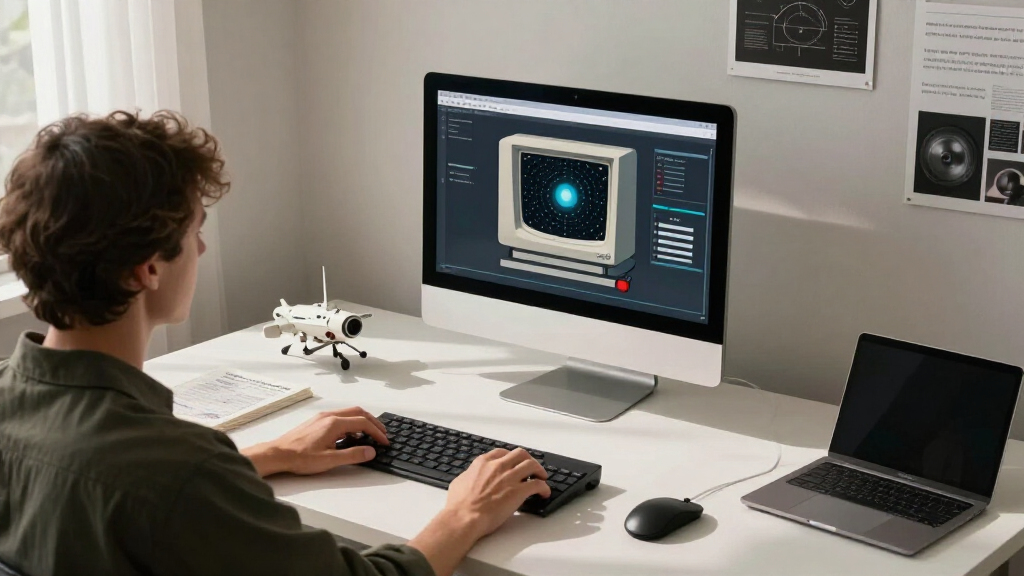
NASA has developed a computer emulator that replicates Voyager 1’s original Flight Data System (FDS), enabling scientists to access onboard data that has been inaccessible since the spacecraft’s launch in 1977. This breakthrough offers new opportunities to study Voyager 1’s current status and environment beyond the solar system, marking a significant step in spacecraft data preservation and analysis.
The emulator was created by a team at NASA’s Jet Propulsion Laboratory (JPL) using archival hardware specifications and software algorithms. According to NASA officials, this emulator allows for the retrieval and interpretation of data transmitted from Voyager 1, which has been difficult due to the aging hardware and software systems originally onboard the spacecraft.
NASA confirmed that the emulator has successfully decoded several recent data packets received from Voyager 1, including measurements related to cosmic rays, magnetic fields, and plasma environment. This achievement is the first time in over 40 years that scientists have been able to access this specific onboard data directly, without relying solely on the limited data relay capabilities of the Deep Space Network.
While the emulator does not replace the spacecraft’s original systems, it provides a valuable tool for ongoing analysis and could inform future missions or spacecraft design. NASA emphasizes that this development is a proof of concept that demonstrates the potential for restoring data access through emulation of vintage spacecraft systems.
Implications for Spacecraft Data Preservation and Analysis
This development matters because it opens new avenues for understanding Voyager 1’s current environment and health, which has been challenging due to the limited data received over the past decades. The emulator enables scientists to analyze detailed onboard measurements, potentially revealing insights into the interstellar medium, magnetic field interactions, and spacecraft longevity. It also demonstrates the feasibility of restoring data access to other aging spacecraft, which could be crucial for future long-term missions or for retrieving data from spacecraft that have lost their original systems.
As an affiliate, we earn on qualifying purchases.
Historical Challenges in Accessing Voyager 1 Data
Since Voyager 1’s launch in 1977, it has operated far beyond the reach of most real-time control, relying on the Deep Space Network for data relay. Over the decades, its onboard systems have aged, and the original hardware has become inoperable, limiting the scope of data accessible to scientists. Previous efforts focused on decoding limited telemetry, but comprehensive onboard data analysis was not possible until now.
In recent years, NASA has prioritized preserving and restoring data from aging spacecraft, leading to innovations like the Voyager 1 emulator. This effort builds on prior work to archive and simulate spacecraft systems, aiming to maximize scientific return from missions that are now decades past their prime.
NASA Voyager 1 data analysis tools
As an affiliate, we earn on qualifying purchases.
As an affiliate, we earn on qualifying purchases.
Remaining Technical Limitations and Data Reliability
It is not yet clear how fully the emulator can replicate all onboard systems or how reliably it will interpret the data over extended periods. Some data types may still be inaccessible or require further calibration, and the long-term stability of the emulator remains untested.
space exploration educational kits
As an affiliate, we earn on qualifying purchases.
As an affiliate, we earn on qualifying purchases.
Next Steps for Data Validation and Broader Application
NASA plans to continue testing and refining the emulator, aiming to validate its accuracy across more data types. Future efforts may include applying similar emulation techniques to other aging spacecraft, potentially extending their operational data analysis capabilities. Additionally, the agency will monitor the quality of data retrieved through this method to assess its scientific utility.
vintage spacecraft hardware models
As an affiliate, we earn on qualifying purchases.
As an affiliate, we earn on qualifying purchases.
Key Questions
What is the Voyager 1 FDS emulator?
The Voyager 1 FDS emulator is a computer program developed by NASA that replicates the spacecraft’s original Flight Data System, allowing scientists to access onboard data that has been inaccessible for decades.
Why is this development important?
It enables detailed analysis of Voyager 1’s current environment and health, providing insights into interstellar space and demonstrating methods to preserve data from aging spacecraft.
Can the emulator replace the spacecraft’s original systems?
No, it is a simulation tool that allows data access but does not physically replace or repair the spacecraft’s onboard hardware.
What are the limitations of the emulator?
Its accuracy across all data types is still being validated, and some onboard data may remain inaccessible or require further calibration.
Will this technique be used for other spacecraft?
NASA intends to explore applying similar emulation methods to other aging missions to extend their scientific utility.
Source: hn
Columbus Day / Indigenous Peoples' Day Picks
long weekend sales
As an affiliate, we earn on qualifying purchases.