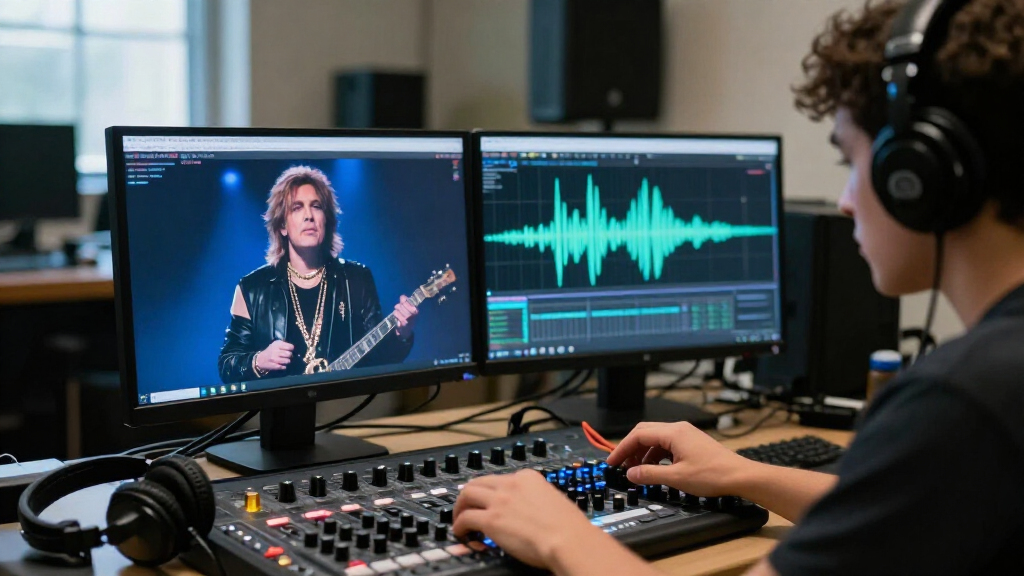

🔍 Read the full analysis: An AI Odyssey And A Digital Ozzy: Where Fan Objections Begin on ThorstenMeyerAI.com

Prime made for students and young adults
- Fast, free delivery for dorm and study essentials
- Prime Video and Amazon Music included
- Member-only deals
TL;DR
An AI-generated Odyssey episode drew criticism over its execution, while Jack Osbourne said backlash to a planned Ozzy Osbourne avatar was his fault. A visual-effects artist also accused A$AP Rocky’s video of using his footage through AI; that claim had not received a published response from Rocky’s representatives in the source report. The cases point to differing audience concerns about craft, consent and credit.
An AI-made Odyssey episode, backlash to a planned digital Ozzy Osbourne avatar and an unanswered accusation over an A$AP Rocky music video have brought different sources of fan concern into focus: the quality of AI work, permission and credit. The developments were reported between October 19 and 26; the Rocky-related claim remains an allegation, not an established finding.
On October 23, an account for xAI’s Grok Imagine posted a roughly seven-minute clip identified as “Episode 1” of an Odyssey series. The post credited Wonder Studios and director Dev Walker as collaborators. The clip followed Elon Musk’s July promise that Grok Imagine would make a full-length, historically accurate adaptation of Homer’s Odyssey before the end of 2026. The posted episode is not that promised full-length film.
Reviews focused on the clip’s execution. TechCrunch’s Anthony Ha noted moments that could resemble actors at sea, but described the overall result as “completely airless.” The source report said Rolling Stone counted about four million views at press time. Separately, Jack Osbourne said on a podcast published October 21 that the reaction to a planned avatar of his late father was “my own fault.” He said he had not been properly prepared to explain the project and that some people understood it as Ozzy Osbourne being used to sell products.
A visual-effects artist identified as Cache Bunny accused the makers of “Shroom Clouds,” released October 19, of using his 2019 footage and processing it with AI to replace a figure with Rocky. The video credits list AI artists, but that does not establish whether the specific shot copied the artist’s work or whether permission was obtained. The source report said no response from Rocky’s side had been published by October 26. At a concert on October 24, Jay-Z urged listeners to “question everything in this world of AI,” a warning about trust rather than a specific objection to a named project.
Consent and Credit Shape Fan Reactions
The episodes show why disputes about AI in entertainment do not turn only on whether a tool was used. The Odyssey clip was presented openly as an AI project, yet reviewers criticized its craft and emotional effect. In the Ozzy case, the family’s involvement and stated control did not prevent backlash: Jack Osbourne’s commercial-template example led some listeners to picture the late singer being used in advertising. A project can have family consent and still meet resistance over how that permission is described or what uses audiences expect.
The Rocky dispute raises a separate question: whether an artist’s earlier work was used without credit or authorization. That remains unverified in the available reporting, but it illustrates why disclosure that AI artists contributed is not the same as explaining the source of particular material. For performers, creators and companies, permission, attribution and clear descriptions of intended use can shape reception alongside the finished work itself.
There are also practical and legal stakes. The source report says the EU AI Act’s deepfake-disclosure requirements for deployers took effect on August 2, 2026, with a lighter, non-intrusive duty for evidently artistic work. That makes disclosure part of the regulatory landscape, although disclosure alone does not settle questions about rights, consent or audience response.
Popular right now

Breville Bambino Espresso Machine, Brushed Stainless Steel

De'Longhi Dinamica Plus Fully Automatic Espresso Machine

Dyson Big Ball Multi Floor Canister Vacuum, Yellow
As an affiliate, we earn on qualifying purchases.
Four Disputes, Different AI Questions
The events were not one coordinated controversy. Musk’s remarks about Nolan’s film began with criticism of casting, according to the source report, before he promised a competing AI-made Odyssey. Nolan had called the casting criticism irrelevant. The later Grok Imagine post was labeled as an episode and identified as a creative collaboration, making its status as an AI project visible to viewers. The source report contrasted the short clip with Nolan’s film, which it said had grossed more than $1.78 billion worldwide; the two productions differ greatly in scale and form.
The Ozzy plan was announced by Sharon and Jack Osbourne on May 20, 2026, at Licensing Expo in Las Vegas. They said Hyperreal and Proto Hologram were developing an interactive avatar based on the singer’s voice, image and movement. Jack described the concept as preserving the “digital DNA” of his father. The planned appearance in Proto Luma units in the United States and United Kingdom was expected from late summer, but the source report said that debut had not occurred by October 26.
Other examples help distinguish the cases without resolving them. The Beatles’ “Now and Then” used machine learning to clean up a John Lennon demo and won a Grammy, while Randy Travis’s AI-assisted comeback song was made with his and his family’s involvement, according to the source material. Those examples were presented as projects involving consent and collaboration; they do not establish a universal audience response to AI music or video.
““The backlash, it was my own fault.””
— Jack Osbourne, on the Great Company podcast
What the Claims Do Not Establish
The most direct unresolved allegation concerns “Shroom Clouds.” The artist’s claim that his 2019 footage was reused and altered with AI has not been independently established in the source material. It is not clear whether the video’s creators licensed the footage, whether the artist was credited for it, or how Rocky’s representatives would respond. The presence of AI artists in the credits does not answer those questions.
The Ozzy avatar’s schedule and final form also remain uncertain. The planned late-summer appearance had not happened by October 26, but the source report does not establish whether the project was canceled, delayed or changed. It is also unclear what commercial uses, if any, the family ultimately intends to permit. For the Odyssey, the posted episode does not confirm whether a full-length film will be completed by year’s end or whether it will meet Musk’s stated description of historical accuracy.
Responses and Release Plans to Watch
The next useful developments are concrete rather than speculative: a response from Rocky’s representatives or the “Shroom Clouds” creators, and any documentation about the disputed footage’s origin or use. For the Ozzy project, the family or its partners could clarify its launch timing, the avatar’s permitted uses and whether commercial templates remain part of the plan. No revised date was given in the source report.
For Grok Imagine, viewers can compare any later episodes or a full-length release with the promise made in July, while keeping the short October 23 episode distinct from a completed film. Until those details emerge, the confirmed record is a labeled AI clip, Jack Osbourne’s acknowledgment of backlash, and an artist’s unresolved allegation. Those developments show competing concerns, but they do not establish that audiences reject AI entertainment as a whole.
Key Questions
Did Grok Imagine release a full-length Odyssey film?
No. On October 23, 2026, the Grok Imagine account posted a roughly seven-minute episode. Musk had promised a full-length film before the end of the year, but the source report does not say that one had been released.
Why did Jack Osbourne say the Digital Ozzy backlash was his fault?
He said he was not properly prepared to explain the project. He also acknowledged that people interpreted his example about inserting an avatar into an advertising template as meaning Ozzy Osbourne could be used to sell products.
Is it confirmed that A$AP Rocky’s video copied the artist’s footage?
No. Visual-effects artist Cache Bunny alleged that “Shroom Clouds” reused his 2019 footage through AI. The source report said the allegation had not been independently established and that no response from Rocky’s side had been published by October 26.
When was the Ozzy avatar expected to appear?
The planned debut in Proto Luma units in the United States and United Kingdom was expected from late summer 2026. The source report said it had not happened by October 26, and gave no new launch date.
What do these cases suggest about objections to AI entertainment?
They raise different concerns: reviewers criticized the Odyssey clip’s execution, some fans objected to how the Ozzy avatar might be commercialized, and the Rocky-video allegation concerns credit and permission. The examples do not prove that audiences hold one uniform view of AI work.
Source: ThorstenMeyerAI.com