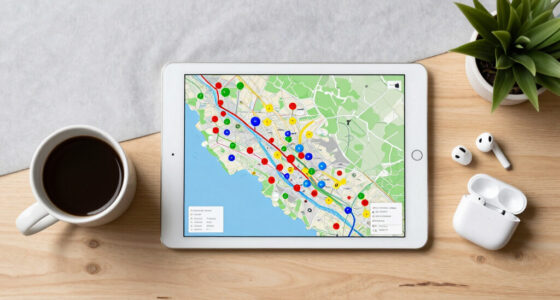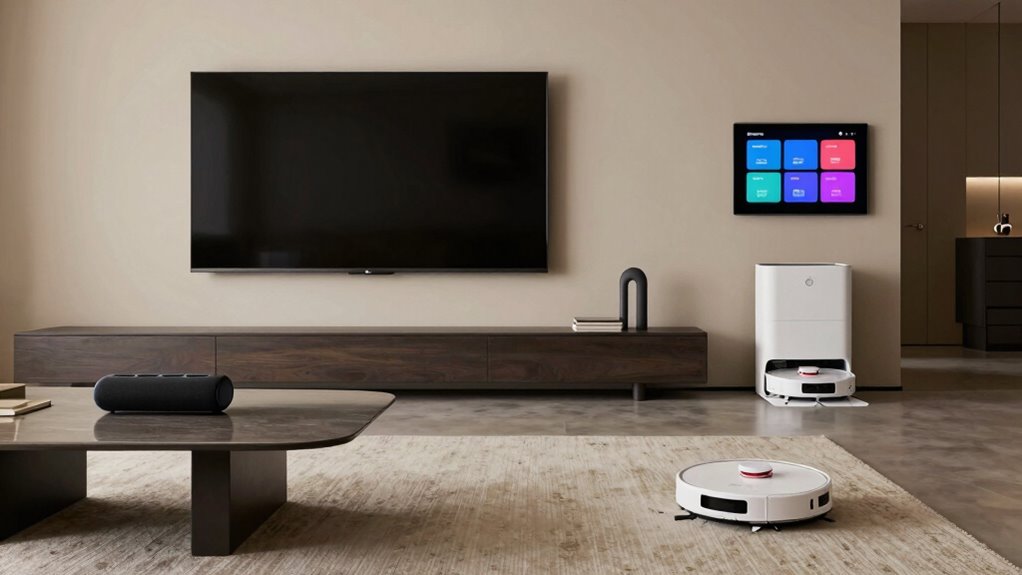

Smart homes learn your habits and preferences through voice commands, device usage, and routine patterns. They understand when you like the lights dimmed or the thermostat adjusted and can anticipate your needs. However, this data is collected and stored, raising privacy concerns like hacking or unauthorized access. While many innovations now process data locally to protect your privacy, you should stay informed about what your smart home knows and controls. Keep exploring to discover how to better protect your privacy and enjoy smarter living.

Get school and study supplies delivered free — and shop member deals
- Fast, free delivery on millions of items
- Access to Prime Big Deal Days deals on October 6–7
- Prime Video, Amazon Music and more included
Key Takeaways
- Smart devices learn habits and preferences to provide personalized control over lights, thermostats, and appliances.
- Voice recognition technology collects extensive data on conversations, raising privacy and security concerns.
- Advances in local processing reduce data transmission, enhancing privacy without sacrificing device responsiveness.
- Users should regularly update software, manage settings, and understand data policies to protect personal information.
- Responsible use and awareness help balance smart home convenience with privacy and security considerations.
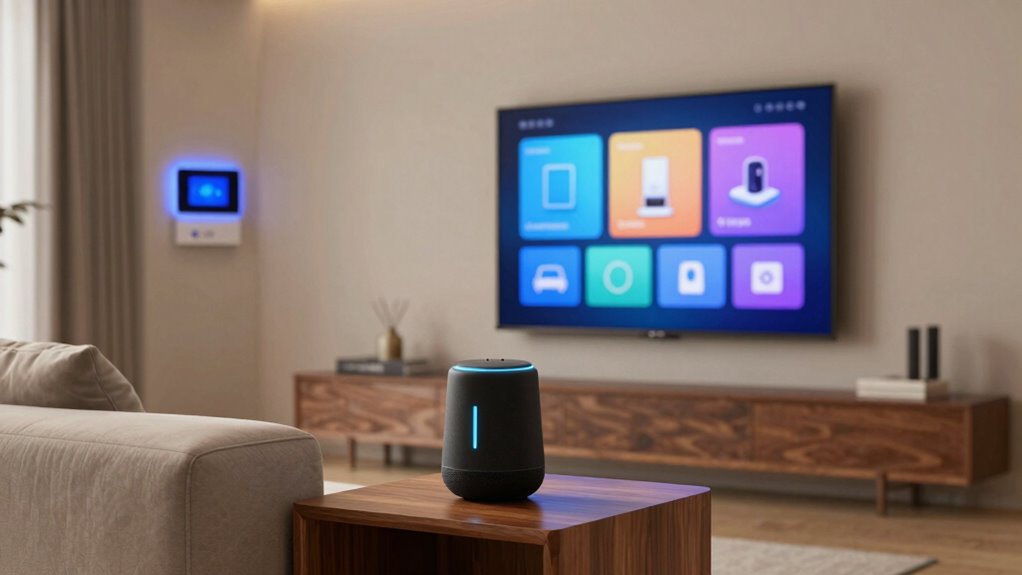
Smart homes are rapidly transforming how we live, with devices that not only connect but also understand our habits and preferences. These innovations are designed to make everyday life more convenient, intuitive, and efficient. You might find yourself asking, “What exactly do these smart devices understand about me?” The answer lies in their ability to process voice recognition and analyze your routines. Voice-activated assistants like Alexa, Google Assistant, and Siri are at the forefront, allowing you to control lights, thermostats, and even appliances simply by speaking. Over time, these devices learn your speech patterns, preferences, and commands, making interactions smoother and more personalized. This constant learning enables your smart home to anticipate your needs, such as adjusting the temperature before you arrive home or playing your favorite music when you wake up.
However, with this level of understanding comes significant privacy concerns. As voice recognition technology becomes more sophisticated, it collects vast amounts of data about your daily habits, conversations, and routines. You might worry about who has access to this information and how securely it’s stored. Many devices are connected to cloud servers, meaning your voice commands and personal data travel over the internet, potentially exposing you to hacking or unauthorized surveillance. While manufacturers often implement encryption and security measures, no system is entirely foolproof. You need to stay vigilant about what data your devices collect and how it’s used. Turning off voice recognition features when not needed, regularly updating software, and reading privacy policies can help you retain control over your information. Additionally, understanding data security mechanisms can help you better protect your personal data from potential threats.
Despite these concerns, smart homes are becoming more adept at understanding you without crossing privacy boundaries. Manufacturers are increasingly focusing on local processing, where your voice data remains within your device rather than being sent to the cloud. This shift aims to balance convenience with privacy, giving you more confidence that your personal information isn’t being misused. Additionally, advancements in local data processing are making it possible for smart devices to understand and respond to commands without transmitting sensitive information externally. These innovations are also contributing to privacy-preserving technologies that minimize the amount of personal data shared externally. As awareness of data security grows, many companies are implementing privacy-focused features to empower users to control their information more effectively. Understanding how these data management practices work can help you make more informed decisions about your smart home setup. Ultimately, these innovations mean your home becomes more responsive to your habits, but it’s up to you to manage the privacy trade-offs. You can enjoy the benefits of a home that listens, learns, and adapts, provided you stay informed about the privacy implications and take steps to protect yourself. As technology advances, understanding what your smart home truly “knows” about you becomes essential for enjoying its conveniences while safeguarding your personal data.
smart home privacy protection devices
As an affiliate, we earn on qualifying purchases.
As an affiliate, we earn on qualifying purchases.
Frequently Asked Questions
Do Smart Homes Track User Activity Beyond Device Commands?
Yes, smart homes often track your activity beyond simple device commands, raising privacy concerns. They collect data on your habits, routines, and preferences to personalize experiences or improve functionality. You might not fully own this data, as companies often control and analyze it. Be aware of privacy implications and data ownership issues, and review privacy policies carefully to understand what information is collected and how it’s used.
How Secure Are Smart Home Devices From Hacking?
Smart home devices are like open books if security isn’t tight, making you vulnerable to hacking. While many use data encryption to guard your privacy, vulnerabilities still exist, raising privacy concerns. Hackers can exploit weak points, so it’s essential to update firmware regularly and use strong, unique passwords. Staying vigilant helps confirm your smart home remains a safe sanctuary rather than a digital open house.
Can Smart Homes Recognize Individual Family Members?
Yes, smart homes can recognize individual family members through voice recognition technology. This enables personalized automation, where your devices respond uniquely based on who’s speaking. For example, your smart speaker can adjust music, lighting, or temperature settings specifically for you. This feature enhances convenience and security, making your smart home feel more tailored and intuitive. Just keep in mind that voice recognition isn’t perfect and may sometimes misidentify users.
What Data Do Smart Homes Collect About Residents?
Like a sponge soaking up everything around it, your smart home collects data about you, including voice commands, temperature preferences, motion patterns, and device usage. This information helps it run smoothly but raises privacy concerns, especially with data retention policies. You should know what data is stored, how long it’s kept, and who can access it, so you’re aware of your personal privacy within your digital living space.
Are Smart Homes Capable of Understanding Emotional Cues?
Smart homes aren’t fully capable of understanding emotional cues yet. They mainly use emotional recognition and behavioral analysis to gauge your mood by analyzing voice tone, facial expressions, or activity patterns. However, their understanding remains limited and automated, often relying on preset algorithms rather than genuine emotional comprehension. While they can detect certain signs of mood changes, true emotional understanding and empathy are still beyond current smart home technology.
local processing smart home devices
As an affiliate, we earn on qualifying purchases.
As an affiliate, we earn on qualifying purchases.
Conclusion
So, now you know that smart homes are smarter than they seem, but they still have their limits. They understand enough to make your life easier, but not everything — don’t put all your eggs in one basket. Remember, technology is a double-edged sword; it’s a helpful tool, but you still need to stay in the driver’s seat. Keep your eyes open, and don’t let the smart home run the show.
voice recognition privacy shield
As an affiliate, we earn on qualifying purchases.
As an affiliate, we earn on qualifying purchases.
As an affiliate, we earn on qualifying purchases.
Halloween Picks
halloween
As an affiliate, we earn on qualifying purchases.