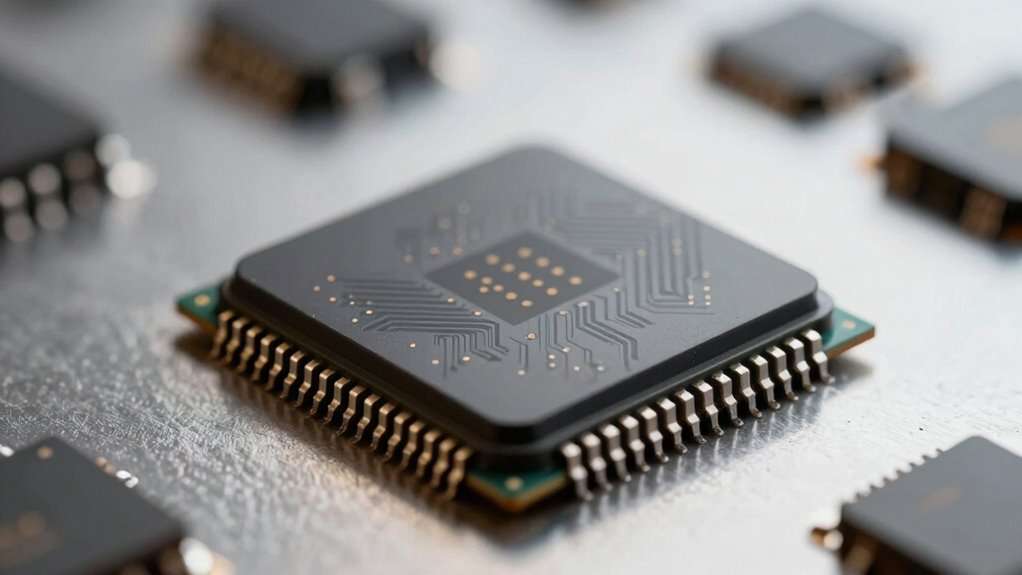
Tiny chips, smaller than a grain of rice, now shape big decisions because they power revolutionary advancements in quantum computing and data analysis. They enable industries like finance, healthcare, and cybersecurity to solve complex problems faster and more efficiently. However, their rapid growth raises ethical and security concerns, challenging us to find safeguards. If you’re curious how these tiny devices could impact your world and what’s next, keep exploring to uncover more.
Key Takeaways
- Tiny chips house qubits, enabling advanced quantum computing that drives innovation across industries.
- Their small size allows integration into diverse devices, expanding technological capabilities.
- They enable breakthroughs in data analysis, encryption, and problem-solving, impacting sectors like finance and cybersecurity.
- Manufacturing and deployment raise ethical, security, and environmental concerns that influence their broader adoption.
- Future challenges include ensuring ethical use, security, and sustainable production to maximize societal benefits.
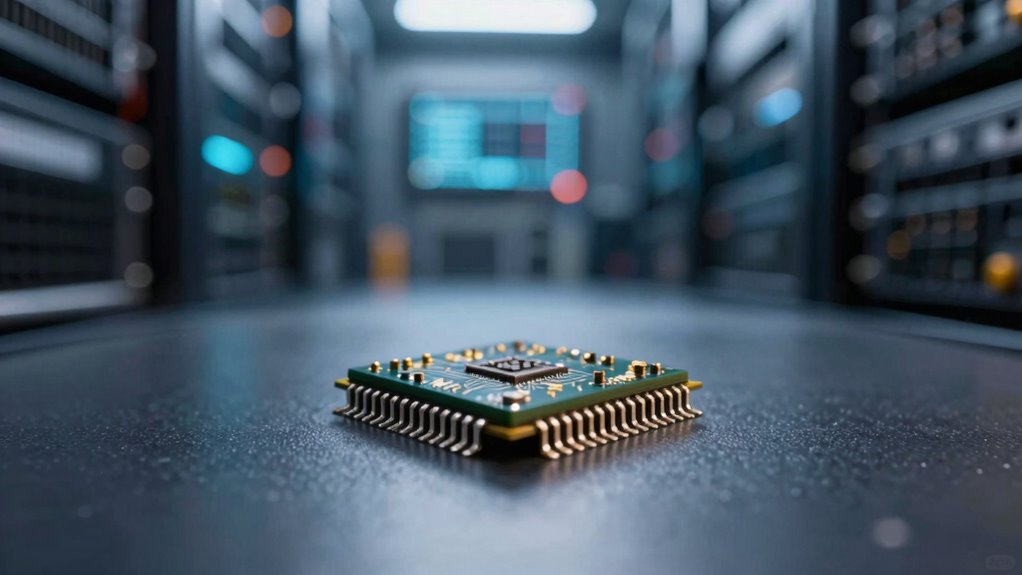
Tiny chips, often no larger than a grain of rice, are quietly transforming the way we live and work. These small devices are at the heart of breakthroughs in technology, especially in areas like quantum computing, where their power and efficiency are revolutionizing processing capabilities. Quantum computing, with its potential to solve complex problems faster than traditional computers, relies heavily on these tiny chips. They house qubits—the fundamental units of quantum information—that enable calculations once thought impossible. As a result, industries like pharmaceuticals, finance, and cybersecurity are keen to harness this technology, pushing the boundaries of what’s achievable in data analysis, encryption, and problem-solving.
Tiny chips revolutionize quantum computing, enabling faster problem-solving and transforming industries like finance, healthcare, and cybersecurity.
But with this rapid advancement comes a set of ethical implications you need to contemplate. As these tiny chips become more integrated into everyday life, questions about privacy, security, and control grow louder. For example, quantum computers could crack previously unbreakable encryption, exposing sensitive personal and corporate data. This potential makes you wonder: who should control such powerful technology? Are safeguards in place to prevent misuse? The development of these chips prompts a broader debate about responsibility—who’s accountable when these devices are used maliciously or cause unintended harm? It’s essential to think about regulations and ethical frameworks now, before these chips become ubiquitous. Moreover, as manufacturing processes evolve, there’s a need to consider sustainable chip production to mitigate environmental impacts. Additionally, advancements in miniaturization technology are making these chips even more powerful and versatile. As research progresses, the importance of ethical development in the design and deployment of these chips becomes increasingly clear. Furthermore, the integration of quantum-resistant encryption is vital to ensuring that data remains protected as these advancements unfold. Recognizing the potential societal impacts**** is crucial to prevent disparities and ensure equitable access to these transformative technologies.
You might also worry about the societal impacts. As tiny chips influence big decisions—like how your financial transactions are secured or how autonomous vehicles operate—they could widen existing inequalities if access is limited to a select few. This digital divide could deepen, creating a future where only certain groups benefit from the latest innovations. Furthermore, the ethical implications extend to the environment. Manufacturing these tiny chips requires resources and energy, raising concerns about sustainability and ecological footprints. You may feel that as much as these chips promise progress, they also demand responsible development and deployment.
In essence, the reason tiny chips now decide so many big things is rooted in their immense potential and the powerful capabilities they enable, especially in quantum computing. But their influence isn’t just technological—it’s deeply ethical. You must stay informed about these implications, advocate for responsible use, and support regulations that safeguard society. These small devices, while seemingly insignificant, hold the key to shaping the future—so it’s up to you to ensure that future is fair, secure, and ethically sound.

The Quantum Chip Revolution: How Tiny Qubits Are Reshaping Our Technological Future
As an affiliate, we earn on qualifying purchases.
As an affiliate, we earn on qualifying purchases.
Frequently Asked Questions
How Do Tiny Chips Compare to Larger Processors in Performance?
Tiny chips today can outperform larger processors thanks to advancements in chip miniaturization and quantum computing. Their smaller size allows for more transistors, increasing processing power and efficiency. Quantum computing further boosts performance by handling complex calculations faster. You’ll find that these tiny chips deliver impressive speed and capabilities, making them suitable for cutting-edge applications, while their compact design helps reduce energy consumption and improve device portability.
What Materials Are Used to Make These Small Chips?
You’ll be amazed to learn that tiny chips are primarily made from silicon, a material that’s vital for their semiconductor properties. Despite manufacturing challenges like miniaturizing components, material innovations have enabled these chips to become smaller and more efficient. These advancements allow manufacturers to improve performance while reducing size and cost, making tiny chips essential for today’s tech revolution. Their material composition is fundamental for powering everything from smartphones to AI devices.
Are Tiny Chips More Energy-Efficient Than Traditional Ones?
Tiny chips are more energy-efficient than traditional ones, reducing power consumption markedly. Their smaller size means they require less energy to operate, which also lowers environmental impact by decreasing greenhouse gas emissions. As technology advances, these chips optimize processing power while maintaining minimal energy use, making devices more sustainable. You’ll notice longer battery life and a reduced carbon footprint, showing how tiny chips contribute positively to both your device’s efficiency and the environment.
How Do Tiny Chips Impact Data Security?
Tiny chips enhance data security by enabling advanced features like quantum encryption and biometric authentication. You benefit from faster, more secure data transmission, making it harder for hackers to intercept information. These chips support biometric authentication, ensuring only authorized users access sensitive data. Their small size allows integration into various devices, providing robust security without sacrificing space or performance, ultimately keeping your data safer in an increasingly connected world.
What Industries Are Most Affected by Tiny Chip Technology?
Imagine tiny chips as the unsung heroes guiding a smart city’s heartbeat. You’re most affected in industries like urban development, where these chips power smart city infrastructure, and wearable tech, which personalizes your health and daily routines. These miniature marvels influence transportation, healthcare, and entertainment. As they weave into your life, they drive innovation, making everyday experiences smarter, more connected, and efficient—changing how you live, work, and play.

Cryptography Apocalypse: Preparing for the Day When Quantum Computing Breaks Today's Crypto
As an affiliate, we earn on qualifying purchases.
As an affiliate, we earn on qualifying purchases.
Conclusion
So, next time you hold a tiny chip in your hand, remember it’s more than just small tech—it’s shaping our future. While some say these chips hold endless power, others warn about overreliance and ethical concerns. But the truth likely lies somewhere in between: these tiny marvels do influence big decisions, yet our choices in how we use them will determine whether they remain tools for progress or sources of unforeseen problems.
quantum processor development kit
As an affiliate, we earn on qualifying purchases.
As an affiliate, we earn on qualifying purchases.

50 Pcs Miniature Snacks Food Mini Resin Potato Chips Set Mini Candy Bags Store Grocery Accessories
Size: 18-19*25mm
As an affiliate, we earn on qualifying purchases.
As an affiliate, we earn on qualifying purchases.