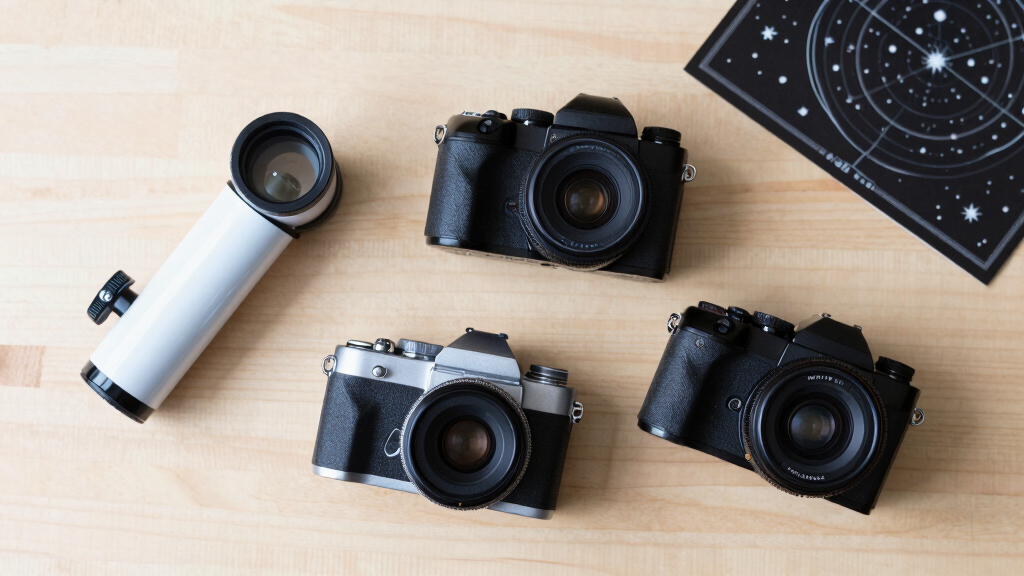
If you’re starting in astrophotography, choosing the right astronomy camera can feel overwhelming. The best options balance ease of use with decent image quality, making it easier for beginners to capture the night sky. The SVBONY SV205 stands out as a solid entry-level choice thanks to its affordability and user-friendly features. For those seeking more advanced capabilities, the SVBONY SV405CC offers higher resolution and cooling, though it comes with a steeper learning curve. The main challenge for beginners is finding a camera that’s simple to operate yet capable of producing satisfying images. Keep reading for a full breakdown of the top picks and how to choose the right one for your needs.
Key Takeaways
- The most important factor for beginners is ease of setup and use, which favors models like the SVBONY SV105 and SVBONY SV205.
- Higher resolution cameras, such as the SVBONY SV405CC and SVBONY SV705C, deliver better detail but require more experience to operate effectively.
- USB 3.0 connectivity generally offers faster data transfer, making models like the SVBONY SV405CC and ZWO ASI662MC more appealing for quick image processing.
- Built-in cooling is a significant advantage for longer exposures and deep sky imaging but adds complexity and cost, as seen in the SVBONY SV405CC.
- Price points vary widely; entry-level options tend to be more affordable but may lack advanced features, whereas premium models deliver better performance at higher costs.




More Details on Our Top Picks
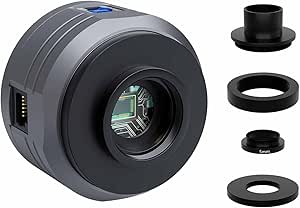
SVBONY SV405CC Cooled Telescope Camera, 11.7 MP USB 3.0, BI IMX294 CMOS Color Sensor for Astrophotography
The SVBONY SV405CC stands out for its high-resolution 11.7 MP sensor combined with effective cooling, making it ideal for capturing intricate deep-sky objects. Compared with the SVBONY SV205, which excels at planetary imaging, this model provides vastly superior detail in long exposures, though it requires a sturdier mount due to its weight. The cooling system significantly reduces noise, a critical advantage over similar non-cooled cameras, but adds complexity to setup and increases cost. Its compatibility across operating systems and fast USB 3.0 transfer makes it versatile, though the size and complexity might challenge total beginners. This pick makes the most sense for users ready to invest in serious astrophotography, willing to handle a steeper learning curve.
Pros:- High-resolution 11.7 MP sensor captures detailed deep-sky images
- Effective cooling reduces noise during long exposures
- Fast USB 3.0 interface ensures smooth data transfer
- Wide compatibility with major OS and software
Cons:- Relatively heavy at over 3 pounds, requiring a sturdy mount
- Complex setup may overwhelm beginners unfamiliar with astrophotography gear
Best for: Beginners with some experience looking to expand into deep-sky astrophotography and long exposures
Not ideal for: Absolute novices seeking a simple, plug-and-play camera for lunar or planetary shots only
- Sensor:IMX294 CMOS
- Sensor Size:4/3″
- Resolution:4144×2822 (11.7 MP)
- Pixel Size:4.63μm
- Cooling:Two-stage TEC, down to 30°C below ambient
- Interface:USB 3.0
- Buffer:256 MB DDRIII
- Frame Rate:Up to 19 fps (RAW8), 16 fps (RAW16)
Bottom line: This camera is best suited for motivated beginners prepared for a higher learning curve and aiming for detailed deep-sky imaging.
SVBONY SV205 Astrophotography Camera, 1.25″ 7.05MP IMX415 Sensor, USB3.0 CMOS Telescope Camera, Electronic Eyepiece for Beginners
The SVBONY SV205 makes capturing planetary and lunar images straightforward with its 7.05 MP IMX415 sensor and plug-and-play usability. Unlike the more advanced SVBONY SV405CC, it sacrifices some resolution and cooling features for simplicity and portability, making it perfect for those just starting out. Its real-time video recording at 2K resolution offers immediate results, but the manual focus can be a challenge for newcomers who lack experience with focus adjustments. Compatibility with both Windows and Mac systems adds flexibility, yet it falls short for mobile users or those seeking automated focusing. This camera makes sense for beginners eager to try planetary imaging without investing heavily in equipment complexity.
Pros:- High-resolution 7.05 MP sensor captures detailed planetary images
- Plug-and-play design simplifies setup for new users
- Supports real-time video at 2K resolution
- Compatible with Windows and Mac systems
Cons:- Manual focus may be difficult for absolute beginners
- Limited to planetary and lunar imaging, not suitable for deep-sky projects
Best for: Beginners interested in planetary and lunar imaging who want an easy, portable solution
Not ideal for: Users aiming for deep-sky or long-exposure astrophotography, as it lacks cooling and high resolution
- Sensor Type:CMOS
- Sensor Size:1/2.8 inch
- Resolution:7.05MP
- Pixel Size:1.45µm
- Connectivity:USB 3.0
- Adapter Size:1.25 inch
- Maximum Video Resolution:2K (1920×1080)
- Frame Rate:up to 30FPS at 2K
Bottom line: This camera is ideal for beginners eager to explore planetary imaging with minimal fuss and setup complexity.
SVBONY SC715C Planetary Camera – 1.45μm IMX715 Color Astronomy Camera with 512MB DDR3 Cache
The SVBONY SC715C offers impressive planetary imaging with its 1.45μm IMX715 sensor and 4K imaging potential. Compared with the SV305C, which is more entry-level, this model delivers sharper, more detailed planetary videos and images thanks to its higher dynamic range and low noise. Its lightweight design and fast USB 3.0 data transfer make it suitable for portable setups, but focus adjustment requires a dedicated telescope focuser, which could complicate basic setups for beginners. Its compatibility with popular astronomy software like SharpCap enhances its appeal, yet the need for external focusing means it’s better suited for users with some experience. Overall, this camera is ideal for those wanting high-res planetary captures without the complexity of deep-sky features.
Pros:- High-resolution 4K imaging captures detailed planetary features
- Low noise and high dynamic range improve image clarity
- Lightweight and durable for outdoor use
- Fast data transfer at 45.5 fps
Cons:- Focus adjustment requires external telescope focuser, adding setup complexity
- Not compatible with smartphones; requires dedicated software
Best for: Beginners with some familiarity seeking high-resolution planetary captures
Not ideal for: Absolute newcomers who prefer cameras with fixed focus and simpler operation
- Sensor:IMX715
- Pixel Size:1.45μm
- Memory:512MB DDR3
- Interface:USB 3.0
- Weight:147g
- Dimensions:1.44 x 2.46 x 2.46 inches
- Compatibility:SharpCap, AstroDMX
- Autoguider Interface:ST4
Bottom line: This camera suits users ready to explore high-resolution planetary imaging with some technical setup involved.
SVBONY SV105 Telescope Camera, 1.25″ USB2.0 IMX307 CMOS Color Astrophotography Camera for Beginners
The SVBONY SV105 offers an accessible entry point into astrophotography with its 1.25-inch mount and straightforward USB2.0 interface. It’s designed for lunar and planetary shots, providing decent resolution (1920×1080) and a simple plug-and-play experience. Compared to higher-end models like the SV305C, it lacks advanced features like removable filters or high-speed video, but its ease of use makes it appealing for absolute beginners. The manual focus allows for some control but may frustrate those unfamiliar with focusing procedures. Compatibility with multiple OS makes it versatile, yet its fixed mount limits flexibility for more advanced setups. This camera is perfect for those just starting and wanting immediate results without complex configurations.
Pros:- Easy to use with plug-and-play setup
- Suitable for beginners with clear, decent resolution
- Compatible with multiple operating systems
- Affordable price point
Cons:- Limited to 1.25-inch mounts, restricting upgrade options
- Manual focus can be challenging for new users
Best for: Beginners seeking an affordable, simple camera for lunar and planetary imaging
Not ideal for: Users interested in deep-sky imaging or high-speed video capture, as it’s limited to basic planetary work
- Sensor:IMX307 CMOS
- Mount:Fixed 1.25″
- Resolution:1920×1080
- Frame Rate:Up to 30 fps
- Focus Type:Manual
- Compatibility:Windows, Linux, Android, macOS
Bottom line: This camera is well-suited for beginners seeking a straightforward, affordable way to start lunar and planetary astrophotography.
SVBONY SV305C Astrophotography Camera, 2.1MP IMX662 Color Telescope Camera with Removable UV/IR Cut Glass, 1.25″ Electronic Eyepiece for Planetary and Lunar Imaging
The SVBONY SV305C offers a solid entry point for amateur astronomers focused on planetary and lunar detail, thanks to its 2.1 MP IMX662 sensor and removable UV/IR filter. Compared with the SV105, which is more straightforward, this model provides higher sensitivity and better low-light performance, making it a good choice for capturing nuanced surface features. The removable filter adds flexibility for different lighting conditions, but the small 1.25-inch mount can limit future upgrading options. Its fast shutter speed and multiple shooting modes support diverse imaging needs, yet the device’s compatibility and focus adjustments require some familiarity. It’s best for those who want a budget-friendly, adaptable planetary camera with room to grow.
Pros:- High sensitivity and low noise for detailed planetary imaging
- Removable UV/IR cut filter for versatile lighting conditions
- Fast shutter speeds support quick captures
- Multiple shooting modes and easy one-key settings
Cons:- Small 1.25″ mount limits future upgrades
- Requires some familiarity with astrophotography software and focusing
Best for: Amateurs wanting a versatile planetary camera with added filter options for lunar and planetary imaging
Not ideal for: Complete beginners seeking a plug-and-play device without the need for filter handling or extensive setup
- Sensor:IMX662
- Pixel Size:2.9μm
- Resolution:2.1MP
- Shutter Speed:Fast, Long Exposure
- Image Buffer:128MB DDRIII
- Interface:1.25″ with CS interface
- Removable Glass:Yes (UV/IR cut filter)
- Compatibility:Focal reducer, guide camera, telescope
Bottom line: This camera suits users seeking a flexible, budget-friendly planetary imaging tool with advanced filtering options.
Sky-Watcher Star Adventurer 2i Pro Pack – Motorized DSLR Night Sky Tracker Equatorial Mount
This portable, motorized tracking platform stands out for its flexibility, making it ideal for astrophotographers who want a lightweight solution that can double as an equatorial mount with optional accessories. Unlike the dedicated cameras in this roundup, it requires additional equipment like a DSLR or mirrorless camera to capture images, but its Wi-Fi control through a smartphone app simplifies setup and operation. The all-metal gears promise durability and high accuracy, especially beneficial for deep-sky images. However, the need for optional accessories and the somewhat complex setup may challenge beginners who prefer a plug-and-play experience. Compared to static cameras like the ZWO ASI662MC, this system offers more versatility but sacrifices the simplicity of dedicated imaging devices. Overall, it makes sense for hobbyists who want a portable, multi-use platform that can grow with their skills, despite the initial setup learning curve.
Pros:- Lightweight and portable for travel and field use
- Wi-Fi control simplifies remote operation
- All-metal gears provide durability and precise tracking
- Versatile for astrophotography, time-lapse, and panoramas
Cons:- Requires optional accessories to fully function as an equatorial mount
- Limited payload capacity restricts larger telescopes
- Setup can be complex for new users
Best for: Beginners who want a flexible, portable tracking platform to experiment with astrophotography and panoramas.
Not ideal for: Absolute beginners seeking an all-in-one, straightforward camera setup without additional accessories or assembly.
- Product Dimensions:13.9 x 9.6 x 6.3 inches
- Item Weight:7 pounds
- Payload Capacity:11 pounds
- Control:Wi-Fi via Sky-Watcher SAM Console app
- Mount Type:Portable tracking platform / Equatorial mount (with optional base)
- Weight:2.4 pounds
Bottom line: This mount suits beginners willing to invest time in learning setup while seeking a versatile platform for multiple astrophotography types.
4K 8MP Astrophotography Telescope Camera – 1.25″ Electronic Eyepiece with IR Filter, Plug & Play for Astronomy
This 8MP camera offers crisp, detailed lunar and planetary images with its high-resolution sensor and 4K video capability, making it a strong choice for beginners focusing on planetary observation. Unlike the ZWO ASI662MC, which excels at planetary detail but is more expensive, this model provides a more accessible price point with a straightforward plug-and-play design. Its support across Windows, macOS, and Linux eliminates compatibility headaches, but manual focus can be tricky for those new to astrophotography, potentially requiring patience and practice. The IR filter enhances low-light performance, similar to more specialized planetary cameras, but it lacks the versatility for deep-sky imaging. Overall, this camera makes the most sense for newcomers primarily interested in lunar and planetary shots without complex setup requirements.
Pros:- High-resolution 8MP sensor captures fine lunar and planetary details
- Plug & Play operation across multiple OS without drivers
- Lightweight, durable aluminum body
- Includes IR filter for enhanced image contrast
Cons:- Manual focus may challenge beginners unfamiliar with focusing techniques
- Limited to planetary and lunar imaging, not suited for deep sky
- Lacks advanced processing software compatibility info
Best for: Beginner planetary astrophotographers seeking high-res, easy-to-use imaging with minimal software fuss.
Not ideal for: Users aiming to explore deep-sky objects or needing automated focusing and processing features.
- Sensor Resolution:8MP
- Video Resolution:4K@30fps
- Compatibility:Windows 10/11, macOS 12+, Linux
- Mount Type:1.25″ focusers
- Interface:USB
- Weight:110g
Bottom line: This camera is ideal for beginners wanting straightforward, high-quality planetary imaging without complex setup.
ZWO ASI662MC 2.1 Megapixel USB3.0 Color Astronomy Camera for Astrophotography
The ZWO ASI662MC excels at capturing sharp, detailed images of planets thanks to its 2.1MP CMOS sensor and infrared sensitivity. Compared with the more general-purpose cameras like the SVBONY SV705C, this model focuses on planetary detail, making it less suitable for deep-sky imaging but invaluable for close-up solar system shots. Its low-noise, zero amp glow design ensures clearer images, especially in high-contrast scenes. However, its higher price and specialized focus mean it’s less versatile for those wanting a single camera for all types of astrophotography. For beginners primarily interested in planetary imaging, this camera offers a significant step up, but those looking for more general use might find it limiting.
Pros:- High-resolution planetary images with fine detail
- Infrared sensitivity enhances planetary surface features
- Low-noise images due to zero amp glow design
- USB 3.0 for fast data transfer
Cons:- Limited to planetary and solar system imaging, not suitable for deep sky
- Higher cost for a specialized camera
- Requires compatible planetary imaging gear
Best for: Beginners interested in high-detail planetary imaging and willing to invest in specialized equipment.
Not ideal for: Those seeking a general-purpose astrophotography camera that covers deep sky and wide-field imaging.
- Sensor:IMX662 CMOS
- Resolution:1920×1080
- Megapixels:2.1 MP
- Pixel Size:2.9 microns
- Connectivity:USB 3.0
- Features:Zero amp glow, infrared sensitivity
Bottom line: This camera makes sense for beginners focusing on planetary detail, provided they are prepared for its specialized use and price.
WiFi Telescope Eyepiece Camera for Astronomy – 4MP Electronic Eyepiece Camera for Astrophotography, Planetary and Bird Watching, Fits 25mm-50mm Telescopes and Microscopes
This 4MP WiFi-enabled electronic eyepiece offers a flexible approach to astrophotography, combining high-resolution imaging with remote control and easy sharing. Its compatibility with a broad range of telescopes and microscopes makes it appealing for both celestial and terrestrial observation. Unlike dedicated astro-cameras like the SVBONY SV705C, which focus on image quality, this device emphasizes convenience, with features like interval shooting and time-lapse. The main tradeoff involves setup complexity and limited battery life, which could hinder casual users or those unfamiliar with connecting WiFi-based devices. For beginners wanting a portable, multi-purpose device that simplifies capturing images and videos, this pick offers significant versatility, but it may require patience for initial setup.
Pros:- High-resolution 4MP imaging captures fine details
- WiFi connectivity enables remote operation and sharing
- Compatible with various telescopes and microscopes
- Supports interval shooting and time-lapse
Cons:- Smartphone app setup can be complex for new users
- Battery life limited to around 4 hours
- Initial setup may be challenging for beginners unfamiliar with WiFi devices
Best for: Beginners seeking a multi-use, wireless imaging device for astronomy, bird watching, or microscopy.
Not ideal for: Users needing long battery life or a dedicated, high-precision astrophotography camera for serious deep-sky imaging.
- Eyepiece Lens Diameter:25mm-50mm
- Maximum Video Resolution:2K HD (2560×1440/30fps)
- Photo Resolution:Up to 24MP
- WiFi Connectivity:Yes
- Power Source:Battery (included)
- Additional Features:Interval shooting, time-lapse
Bottom line: This device is well-suited for beginners wanting portable, wireless imaging with versatile applications beyond astronomy.
SVBONY SV705C Telescope Camera with IMX585 Sensor, High-Resolution Astronomy Camera for Moon, Planets, and Deep Sky Imaging
The SVBONY SV705C, equipped with the IMX585 sensor, targets serious amateur astronomers interested in detailed lunar, planetary, and deep sky images. Its high resolution of 3856×2180 allows capturing intricate celestial features, setting it apart from entry-level cameras like the SVBONY SV205. The near-infrared sensitivity improves deep sky imaging, making it a versatile choice for enthusiasts. However, its more complex setup and need for additional accessories might be daunting for complete beginners without prior experience. Unlike the simpler, plug-and-play models, this camera offers advanced imaging capabilities suitable for those ready to expand their astrophotography toolkit, though it isn’t ideal for quick, casual sessions.
Pros:- High-resolution images with rich celestial detail
- Enhanced near-infrared sensitivity improves deep sky imaging
- Supports a variety of lenses via C-mount and CS-mount
- Reliable build with lifetime warranty
Cons:- Setup can be complex for newcomers
- Requires additional accessories for optimal use
- May be overkill for basic lunar and planetary imaging
Best for: Beginner astronomers ready to step up to high-resolution deep sky and planetary imaging with some technical setup.
Not ideal for: Absolute beginners seeking a straightforward, all-in-one camera solution without the need for extra accessories.
- Sensor:IMX585
- Resolution:3856×2180
- Sensor Size:1/1.2 inches
- Image Area:11.2mm×6.3mm
- Near-Infrared Sensitivity:1.7× previous
- Interface:USB 3.0
Bottom line: This camera suits beginners eager to pursue high-res deep sky photography but willing to handle some setup complexity.
How We Picked
To evaluate the best astronomy cameras for beginners, I focused on performance, ease of use, build quality, and value. Compatibility with common telescopes and straightforward setup were key factors, along with image quality relative to the price. I also considered features like connectivity options, sensor size, and special capabilities such as cooling or planetary imaging. The ranking reflects a balance between affordability and potential for growth, ensuring that even newcomers can start with a reliable device and upgrade later if desired. Cameras with more intuitive interfaces and robust support scored higher, as these minimize frustration for first-time users.
Factors to Consider When Choosing Best Astronomy Cameras For Beginners
Choosing the right astronomy camera as a beginner involves balancing features and ease of use. While higher-end cameras offer better image quality, they often come with increased complexity and cost. Conversely, entry-level models are simpler but may have limitations in resolution and capabilities. The key is to select a camera that matches your current skill level and future ambitions without overwhelming you or breaking the bank. Consider these factors carefully to find the best fit for your astrophotography journey.Ease of Use and Compatibility
For beginners, a camera with a straightforward setup process and compatibility with popular telescopes is essential. Cameras that connect via USB and have user-friendly software reduce the learning curve. Compatibility with your existing equipment, whether it’s a DSLR mount or dedicated astrophotography scope, ensures smoother integration. Avoid overly complex models if you prefer quick results and minimal frustration during initial attempts.
Sensor Size and Resolution
Sensor size directly impacts image quality and sensitivity. Larger sensors, like those in higher-resolution models, can capture more detail and perform better in low-light conditions. However, they often require more advanced processing and understanding of astrophotography techniques. For beginners, a moderate resolution sensor often strikes the best balance, giving decent detail without overwhelming processing requirements.
Cooling and Long-Exposure Capabilities
Cooling features help reduce noise during longer exposures, which is crucial for deep sky imaging. While cooling adds complexity and cost, it greatly improves image quality for more serious beginners. If your primary interest is planetary or lunar photography, cooling may be less critical, and a simpler camera will suffice. Decide based on your target objects and willingness to handle more technical setup.
Connectivity and Software Support
Reliable connectivity options, such as USB 3.0, enable faster data transfer and smoother operation. Software support is equally important; a camera with compatible, well-supported software reduces setup headaches. Look for models with good community support, tutorials, and firmware updates that help you troubleshoot and expand your capabilities over time.
Price and Future Growth
Entry-level cameras are more budget-friendly but may lack features needed for more advanced projects. Investing slightly more upfront can provide better image quality and flexibility, delaying the need for an upgrade. Consider your long-term goals—if you plan to deepen your astrophotography skills, choosing a camera with upgrade potential makes sense. Avoid overspending on features you won’t use immediately, but don’t skimp on quality if you want satisfying results from the start.
Frequently Asked Questions
Can I use these cameras without a dedicated telescope?
Many of these cameras, especially those with electronic eyepieces, can be used as standalone devices or with basic telescopes. Some models are compatible with smartphones or tablets via WiFi or USB, allowing for handheld operation or simple planetary viewing. However, for deep sky imaging or astrophotography, connecting to a proper telescope or mount is recommended to get stable, clear images. Always check the camera’s compatibility with your existing equipment before purchasing.
Do I need to buy additional accessories like filters or mounts?
While some cameras include basic mounting options, additional accessories like filters, adapters, or mounts can significantly improve your imaging quality. Filters help reduce light pollution or enhance specific wavelengths, especially for planetary or deep sky imaging. A sturdy, compatible mount provides stability during long exposures, which is vital for sharper images. Consider these extras as potential future upgrades once you’re comfortable with basic operation.
What is the best camera for a total beginner with no prior experience?
For complete newcomers, a camera like the SVBONY SV105 offers a good balance of simplicity and performance. It’s straightforward to set up and use, with minimal additional accessories needed. Its compatibility with common telescopes and basic software allows you to learn the fundamentals of astrophotography without being overwhelmed by technical details. Starting with an easy-to-use model helps build confidence before moving on to more advanced equipment.
Should I prioritize resolution or sensitivity when choosing a beginner camera?
For beginners, sensitivity is often more important than resolution because it directly affects your ability to photograph faint objects in the night sky. Cameras with larger sensors and better low-light performance can produce clearer images even with modest resolution. As your skills grow, you can consider higher-resolution models to capture more detail, but initially, focus on cameras that perform well in low-light conditions and are easy to operate.
Is a cooled camera worth the extra cost for a beginner?
Cooled cameras improve image quality by reducing thermal noise during long exposures, which can be beneficial if you aim to capture deep sky objects. However, they are more complex and expensive, and may not be necessary for planetary or lunar photography. If your main interest is planets or quick shots, a non-cooled camera may suffice while being easier to handle. For serious deep sky work, investing in cooling can pay off, but for starting out, simpler models are usually enough.
Conclusion
Overall, the SVBONY SV205 makes a great choice for beginners seeking an affordable and straightforward entry into astrophotography. If you’re willing to invest more for higher resolution and longer exposures, the SVBONY SV405CC offers better performance with cooling capabilities. For hobbyists focused on planetary imaging, models like the SVBONY SC715C or SVBONY SV305C provide excellent options. If simplicity and value are your priorities, starting with the SVBONY SV105 or WiFi Telescope Eyepiece Camera can help you learn without technical headaches. Choose based on your budget, target objects, and how much you want to grow your astrophotography skills over time.