
Finding the best workstations for deep learning at home in 2026 involves balancing raw performance, expandability, and budget. The GEEKOM A9 Mega AI Workstation stands out as the overall top choice thanks to its high-end specs and robust build. For those seeking a compact option, the Lenovo ThinkStation P3 Tiny Gen 2 offers impressive power in a small footprint. Meanwhile, the NOVATECH AI Workstation shines for high-performance computing with its premium GPU and cooling. The main tradeoffs include balancing cost against power and considering whether you prioritize expandability or space efficiency. Continue reading for a detailed breakdown of these top options and what makes each one suitable for different needs.
Key Takeaways
- The highest-performing workstations feature top-tier GPUs like the RTX 5080 or RTX PRO 6000, essential for intensive deep learning tasks.
- Compact workstations can deliver excellent power in small sizes but often come with limitations in upgradeability and RAM capacity.
- Price varies widely; premium models focus on maximum compute power, while more affordable options still handle many deep learning workloads effectively.
- Cooling solutions and expandability are key considerations for sustained performance, especially in high-demand training sessions.
- Choosing between a desktop tower or small form factor depends heavily on available space and future upgrade plans.




More Details on Our Top Picks
GEEKOM A9 Mega AI Workstation Desktop PC, Ryzen AI Max+ 395, 128GB RAM, 2TB SSD, Radeon 8060S, Win 11 Pro
The GEEKOM A9 Mega stands out for its exceptional processing power, featuring the Ryzen AI Max+ 395 with 126 TOPS and 16 Zen 5 cores, making it a top choice for demanding AI training and creative projects. Compared with the Lenovo ThinkStation P3 Ultra, it offers significantly more RAM and GPU capacity, though at a higher energy cost and complexity in setup. Its advanced cooling system and support for up to 8K displays translate into a workstation capable of handling multiple large datasets and visualizations simultaneously. The tradeoffs include limited supply due to high-end components and a potentially steep price, which may not suit all budgets. This pick is ideal for AI researchers, deep learning practitioners, and creative professionals who need maximum raw power in a durable, professional-grade chassis.
Pros:- Exceptional AI processing power with 126 TOPS and 16 Zen 5 cores
- Massive 128GB RAM and 2TB PCIe Gen4 SSD for large datasets
- Supports 8K multi-display setups with advanced connectivity
Cons:- High price due to premium components and scarcity
- Complex setup may require technical knowledge
- Large power consumption under peak loads
Best for: AI researchers and deep learning professionals seeking peak performance in a compact form factor
Not ideal for: Budget-conscious hobbyists or users with limited technical expertise, due to its high cost and setup complexity
- Processor:Ryzen AI Max+ 395 (126 Tops)
- RAM:128GB LPDDR5X
- Storage:2TB PCIe Gen4 SSD
- Graphics:Radeon 8060S (96GB VRAM)
- Cooling System:IceBlast 5.0 Vapor Chamber
- Display Support:Up to 8K Quad Display
Bottom line: This workstation is best suited for professionals who need maximum AI and visual processing in a durable, high-performance package.
Lenovo ThinkStation P3 Ultra Small Form Factor Gen 2 Workstation with Intel Core Ultra 9 285 vPro, NVIDIA RTX 4000 SFF ADA, 64GB RAM, 2TB SSD, WiFi 7, Windows 11 Pro
The Lenovo ThinkStation P3 Ultra SFF Gen 2 offers a compact yet powerful workstation with an Intel Core Ultra 9 285 vPro processor, reaching speeds up to 5.40 GHz, and NVIDIA RTX 4000 graphics, making it well-suited for AI, 3D modeling, and multitasking in tight spaces. Compared with the larger GEEKOM A9 Mega, it sacrifices some raw processing power for its small form factor, but still delivers enterprise-grade security and reliability. Its high-speed DDR5 RAM and PCIe Gen 5 SSD enable fast data access, while its small size makes it ideal for environments where space is at a premium. The main tradeoff involves limited upgrade options due to its tiny chassis and a premium price for this compact design. It’s a perfect choice for professionals needing a high-performance workstation that fits into a small office or lab.
Pros:- Compact design fits into tight workspaces
- High-performance Intel Core Ultra 9 processor
- Enterprise-grade security and reliability
Cons:- Limited expandability and upgrade options
- Premium price for a small form factor
- Requires technical knowledge for upgrades
Best for: AI developers, 3D artists, and content creators with limited workspace seeking enterprise-grade performance
Not ideal for: Users planning extensive hardware upgrades or needing high expandability, due to its small form factor
- Processor:Intel Core Ultra 9 285 vPro
- Graphics:NVIDIA RTX 4000 SFF Ada
- Memory:64GB DDR5
- Storage:2TB PCIe Gen 5 SSD
- Wireless:Wi-Fi 7
- Form Factor:Ultra Small
Bottom line: This workstation is ideal for professionals who need powerful AI and graphics in a small, space-efficient package.
Corsair AI Workstation 300 Desktop PC – AMD Ryzen AI Max 385, 64GB RAM, 1TB SSD, Black
The Corsair AI Workstation 300 offers a balanced blend of power and portability, featuring AMD Ryzen AI Max 385 processors with high AI acceleration, and supporting up to 96GB of variable graphics memory. Compared with the GEEKOM A9 Mega, it provides a more compact size, making it suitable for space-constrained setups, though it relies on AMD’s integrated Radeon 8050S GPU rather than dedicated graphics. Its 64GB RAM and 1TB SSD deliver quick data access for AI workflows and local large models, but the limited upgrade options and absence of a discrete GPU can be a drawback for intensive tasks. This system works best for users who need a portable yet powerful AI workstation for local LLMs, training, or creative workloads without the bulk of larger desktops.
Pros:- Compact and space-efficient design
- High AI acceleration with AMD Ryzen AI Max 385
- Supports up to 96GB graphics memory
Cons:- No dedicated graphics card; relies on integrated GPU
- Limited upgradeability due to small size
- Potentially high cost for high-end hardware
Best for: AI developers and creative professionals who need a portable, high-performance workstation
Not ideal for: Heavy GPU-intensive tasks or extensive future upgrades, due to limited graphics and upgrade options
- Processor:AMD Ryzen AI Max 385
- Graphics:AMD Radeon 8050S with up to 48GB vRAM
- Memory:64GB LPDDR5X
- Storage:1TB M.2 SSD
- Form Factor:Compact
- Operating System:Windows 11 Home
Bottom line: This system suits AI practitioners who prioritize portability without sacrificing core processing power.
GEEKOM 2026 Edition Mini PC AI A7 MAX with AMD Ryzen 9 7940HS, 16GB DDR5, 1TB SSD, Radeon 780M Graphics, 8K Support
The GEEKOM A7 MAX combines impressive power in a tiny footprint, featuring an AMD Ryzen 9 7940HS processor with 8 cores and 16 threads, suitable for multitasking, gaming, and AI workloads. Compared with the Corsair 300, it offers a more balanced CPU with better multitasking capabilities, though it relies on integrated Radeon 780M graphics, which limits raw GPU power for intensive AI training. Its expandable RAM and SSD, plus support for 8K output, make it a flexible choice for those who want a small, quiet, and capable machine. The main tradeoff is that out of the box, it has only 16GB RAM, which may require upgrades for demanding AI tasks. This mini PC suits users who need portability with enough power for AI inference, video editing, or gaming.
Pros:- Powerful AMD Ryzen 9 7940HS CPU
- Expandable RAM and storage for future upgrades
- Supports 8K output and quiet operation
Cons:- No dedicated GPU; relies on integrated Radeon 780M
- Limited to 16GB RAM initially, requiring upgrades
- Higher price for a mini PC with high-end specs
Best for: AI hobbyists, developers, and content creators needing a compact, versatile machine
Not ideal for: Heavy AI training or large-scale deep learning, due to limited GPU capacity and initial RAM
- Processor:AMD Ryzen 9 7940HS
- Graphics:Radeon 780M
- Memory:16GB DDR5 (expandable to 128GB)
- Storage:1TB NVMe SSD
- Connectivity:USB4, dual Ethernet, HDMI
- Dimensions:5.47 x 5.2 x 1.71 inches
Bottom line: This mini PC fits well for AI inference, media tasks, and general use where space and noise are concerns.
Lenovo ThinkStation P3 Tower Desktop AI PC, Intel Core Ultra 5 225, 16GB DDR5, 512GB SSD, Support 3-Display 4K, Wi-Fi 7, HDMI, DP, Windows 11 Pro, Business Workstation Bundle
The Lenovo ThinkStation P3 Tower offers a solid balance of performance and expandability, powered by the Intel Core Ultra 5 225 with 10 cores and 10 threads, making it suitable for multitasking and professional AI workloads. Its ability to support three 4K displays enhances productivity for data analysis, training visualization, or content creation. Compared with the GEEKOM A9 Mega, it is less powerful in raw AI performance but excels in multi-monitor setups and general business tasks. Its fast SSD and decent RAM ensure smooth operation, while the bundle including a 64GB USB flash drive adds convenience. The main limitation is its bulkier size and lower AI processing capacity, so it’s best for users focused on productivity rather than intensive AI training.
Pros:- Supports three 4K displays for multitasking
- Powerful multi-core CPU suitable for productivity
- Includes a high-capacity USB flash drive bundle
Cons:- Bulkier design not ideal for small spaces
- Less AI computational power compared to high-end desktops
- Pre-installed software may need updates
Best for: Business professionals and data analysts needing multi-display setups and reliable performance
Not ideal for: High-end AI training or deep learning projects, due to its lower processing power
- Processor:Intel Core Ultra 5 225
- Memory:16GB DDR5
- Storage:512GB PCIe M.2 SSD
- Graphics:Intel Graphics
- Display Support:Supports 3 x 4K displays
- Connectivity:Wi-Fi 7, HDMI, DP
Bottom line: This tower is best for professionals who need reliable multitasking and high-resolution display support over raw AI processing power.
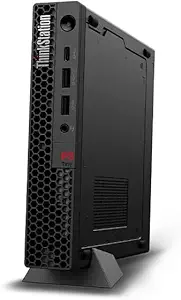
Lenovo ThinkStation P3 Tiny Gen 2 Workstation (2026 Model) – Intel Core Ultra 9 285, NVIDIA RTX A1000 8GB, 64GB RAM, 1TB Gen5 NVMe SSD, Windows 11 Pro
The Lenovo ThinkStation P3 Tiny Gen 2 stands out for offering high-end workstation performance in a remarkably small footprint. Compared with larger options like the NOVATECH AI Workstation, this model sacrifices some expandability but excels in space-constrained environments. Its Intel Core Ultra 9 285 processor paired with NVIDIA RTX A1000 graphics delivers solid deep learning capabilities, especially for users who prioritize a tidy desk. However, the limited upgrade paths and premium price make it less ideal for those seeking future-proofing or extensive hardware customization. This pick makes the most sense for professionals needing a compact, reliable workstation that doesn’t compromise on core deep learning specs.
Pros:- Compact and space-saving design
- High-performance Intel Core Ultra 9 processor
- Professional-grade NVIDIA RTX A1000 graphics
- Fast 1TB Gen5 NVMe SSD
Cons:- Limited upgrade options due to small form factor
- No mention of additional ports or expandability
- Premium price may be high for some users
Best for: Data scientists and AI practitioners working in small labs or shared spaces who need high performance without bulk
Not ideal for: Enthusiasts looking to upgrade hardware frequently or those with very high GPU demands requiring more than 8GB VRAM
- Processor:Intel Core Ultra 9 285 vPro
- Operating System:Windows 11 Pro
- Graphics Card:NVIDIA RTX A1000 8GB GDDR6
- Memory:64 GB DDR5-5600MT/s
- Storage:1 TB SSD M.2 2280 PCIe Gen5
- Power Supply:300W
- WiFi:Intel Wi-Fi 7 BE200 2×2
- Bluetooth:5.4
- Mounting Option:Vertical Stand
Bottom line: This workstation is ideal for professionals who need a compact yet powerful machine for deep learning tasks in tight spaces.
NOVATECH AI Workstation Desktop PC – Intel Core i9-14900K, RTX 5080, 64GB RAM, 2TB SSD, Liquid Cooling
The NOVATECH AI Workstation makes a compelling case for power users who demand top-tier specs, especially compared to the Dell Tower Plus. Its Intel Core i9-14900K, combined with an RTX 5080 GPU and 64GB DDR5 RAM, ensures smooth handling of deep learning, 3D rendering, and large data sets. The liquid cooling system supports sustained high performance, making it suitable for prolonged workloads. Still, its large size and premium cost may deter casual or space-limited users. This workstation is best suited for professionals who need maximum computational muscle for demanding AI and rendering projects.
Pros:- Exceptional processing power with high-core-count CPU
- High-end RTX 5080 GPU for intensive tasks
- Robust liquid cooling for sustained workloads
- Fast 64GB DDR5 RAM and 2TB SSD for seamless workflows
Cons:- Likely expensive for many buyers
- Large footprint requiring ample space
- Designed mainly for professional use, not casual or gaming
Best for: AI researchers and 3D artists handling complex models and large datasets who require peak performance
Not ideal for: Those with limited space or budget constraints, as the system’s size and cost are significant factors
- Processor:Intel Core i9-14900K, 24 cores, 3.2 GHz (max 6 GHz)
- Graphics Card:NVIDIA RTX 5080, 16GB GDDR7
- RAM:64GB DDR5 6000MHz
- Storage:2TB NVMe SSD
- Cooling:Liquid cooling
- Power Supply:850W 80+ Gold
Bottom line: This workstation caters to users who need maximum processing and graphics power for AI and rendering tasks, accepting the tradeoffs of size and cost.
Lenovo ThinkStation P3 Tiny Gen 2 Workstation with Intel Core Ultra 7 265 vPro, NVIDIA RTX A1000 8GB, 32GB DDR5, 1TB SSD, WiFi 7, Windows 11 Pro
The Lenovo ThinkStation P3 Tiny Gen 2 with an Intel Core Ultra 7 265 vPro processor and NVIDIA RTX A1000 offers impressive performance in a tiny 1L form factor. It compares favorably to larger desktops like the Dell Tower Plus in terms of space efficiency, yet still delivers capable deep learning performance. Its 32GB DDR5 memory and 1TB SSD make it suitable for smaller-scale projects or early-stage models. The tradeoff lies in limited upgrade paths and the absence of high VRAM GPUs beyond the A1000. This workstation makes the most sense for professionals working in tight environments who still require robust computational power.
Pros:- Extremely compact and lightweight design
- High-performance components in a tiny package
- Advanced security features including ThinkShield and TPM
- Fast Wi-Fi 7 connectivity
Cons:- Limited upgrade options due to small size
- No high-VRAM GPU options beyond NVIDIA RTX A1000
- Premium price for the compact size
Best for: AI developers and researchers who need a powerful machine for limited desk space or portable setups
Not ideal for: Users needing extensive GPU memory for large models or frequent hardware upgrades
- Processor:Intel Core Ultra 7 265 vPro
- Graphics:NVIDIA RTX A1000 8GB GDDR6
- Memory:32GB DDR5-5600MT
- Storage:1TB SSD PCIe Gen5
- Dimensions:7.0 x 7.2 x 1.5 inches
- Weight:Approximately 3 lbs
Bottom line: This tiny workstation suits space-limited professionals who need reliable deep learning performance without bulk.
Dell Tower Plus EBT2250 Workstation Desktop, Next-gen XPS (Intel 15th Gen Ultra 7-265, 32GB DDR5, 1TB PCIe SSD, GeForce RTX 5060, 460W PSU, WiFi 7, Bluetooth 5.4, Windows 11 Pro)
The Dell Tower Plus EBT2250 combines high processing power with flexible connectivity, making it a strong contender for users who balance deep learning with other creative tasks. Its Intel 15th Gen Ultra 7-265 and GeForce RTX 5060 provide a capable platform, especially when compared to the GEEKOM A9 Mega which is more limited in GPU options. The system’s multiple ports and Wi-Fi 7 support enhance workflow integration. The main tradeoff is the high power consumption and size, which may be restrictive in smaller environments. This system is best for professionals who need a versatile machine capable of handling AI workloads alongside multimedia editing and multitasking.
Pros:- Powerful 15th Gen Intel CPU
- Multiple high-speed connectivity options including WiFi 7
- High-performance GeForce RTX 5060 GPU
- Ample 32GB DDR5 RAM for multitasking
Cons:- High power draw with 460W PSU
- Size may limit placement options
- Premium pricing for high-end specs
Best for: Creative professionals and AI developers who require a balanced workstation with broad connectivity
Not ideal for: Users seeking ultra-compact setups or those with strict energy budgets
- Processor:Intel Ultra 7-265, 20 cores
- Graphics:GeForce RTX 5060 8GB GDDR7
- Memory:32GB DDR5
- Storage:1TB PCIe SSD
- Power Supply:460W
- Connectivity:WiFi 7, Bluetooth 5.4
Bottom line: This desktop offers a flexible blend of deep learning power and connectivity, suited for multi-purpose professional use.
PCSP Z4 G4 Workstation Tower with Intel Xeon W-2133, 64GB DDR4, 512GB NVMe SSD, 2TB HDD, Quadro M4000 8GB, Windows 11 Pro (Refurbished)
The PCSP Z4 G4 Workstation Tower offers a compelling option for those needing professional-grade performance without the cost of new high-end systems. Its Intel Xeon W-2133, combined with 64GB DDR4 RAM and NVIDIA Quadro M4000, handles deep learning and CAD tasks effectively. Compared with newer systems like the Lenovo P3 Tiny Gen 2, this refurb provides a more affordable entry point, although it sacrifices some modern features and upgrade potential. Its 750W power supply and dual storage options enhance usability for complex workflows. This workstation is best suited for budget-conscious professionals in engineering and design fields who prioritize reliability over latest hardware innovations.
Pros:- High-performance Xeon processor
- Ample 64GB DDR4 RAM for multitasking
- Certified refurbished with warranty
- Dual storage with SSD and HDD
Cons:- No optical drive included
- Older hardware may limit future upgradeability
- Refurbished status might concern some buyers
Best for: Engineers and 3D artists seeking a reliable, professional workstation at a lower upfront cost
Not ideal for: Power users who need the latest hardware or plan to upgrade frequently
- Processor:Intel Xeon W-2133 6-Core
- Memory:64GB DDR4
- Storage:512GB NVMe SSD, 2TB HDD
- Graphics:NVIDIA Quadro M4000 8GB
- Power Supply:750W
- Operating System:Windows 11 Pro
Bottom line: This workstation strikes a balance between professional capability and affordability, ideal for budget-conscious users in demanding workflows.
Mastering AI Workstations for High-Performance Computing
This guide stands out for professionals who need detailed instructions on setting up AI workstations to extract maximum performance. Compared with ready-made options like the GMKtec Mini PC, this guide offers deep insights into tuning hardware for AI workloads, making it ideal for advanced users. However, its lack of specific hardware recommendations and technical focus can be overwhelming for beginners. It’s best suited for data scientists and AI researchers who want to fine-tune their systems and understand the nuances of high-performance setup, rather than casual enthusiasts. Tradeoff: this isn’t a plug-and-play solution but a resource for those comfortable with hardware customization and performance tuning.
Pros:- In-depth guidance on configuring AI hardware for peak performance
- Focus on optimizing system for high-performance computing tasks
- Useful for professionals aiming to maximize productivity in AI workloads
Cons:- Lacks specific hardware or software setup details for quick implementation
- Highly technical, potentially inaccessible for beginners
Best for: AI professionals and technical enthusiasts who want to optimize their existing hardware or build tailored AI workstations.
Not ideal for: Beginners or users seeking simple, out-of-the-box solutions without technical setup experience.
- Focus:Hardware configuration and performance tuning
Bottom line: This resource is perfect for experienced users looking to master AI workstation configuration and optimization.
Dell Tower Plus Desktop EBT2250 – Intel Core Ultra 9-285, 32GB DDR5, 2TB SSD, NVIDIA GeForce RTX 5070 12GB, Windows 11 Home, Black
The Dell Tower Plus offers a compelling mix of performance and versatility, making it suitable for demanding deep learning tasks. Its Intel Core Ultra 9-285 processor and 32GB DDR5 RAM provide robust multitasking capabilities, while the 2TB SSD ensures fast data access. Compared to the GMKtec Mini PC, this tower provides a more expandable platform, especially with its dedicated NVIDIA RTX 5070 GPU, which accelerates training and inference. The main tradeoff is its high power consumption of 750 Watts and heavier weight, which might limit portability. This makes it ideal for users who need a powerful, upgradeable machine without strict space constraints.
Pros:- Powerful Intel Core Ultra CPU suited for intensive workloads
- Ample 32GB DDR5 RAM for multitasking and large models
- Fast 2TB SSD for data-heavy applications
- Dedicated NVIDIA RTX 5070 GPU accelerates deep learning training
Cons:- High power consumption may increase energy costs
- Relatively heavy and less portable
Best for: AI practitioners and content creators who need a high-performance, expandable home workstation.
Not ideal for: Users with limited space or seeking portable solutions, due to its size and power draw.
- Processor:Intel Core Ultra 9-285
- RAM:32GB DDR5
- Storage:2TB SSD
- Graphics Card:NVIDIA GeForce RTX 5070 12GB
- Power Consumption:750 Watts
- Size:16.8 x 6.81 x 14.68 inches
Bottom line: This desktop works best for serious deep learning users who prioritize expandability and raw power over portability.
NOVATECH Apex WS9995X AI Workstation & Gaming PC – AMD Ryzen Threadripper PRO 9995WX, RTX PRO 6000, 512GB RAM, 10TB SSD
The NOVATECH Apex WS9995X makes a clear statement as the ultimate deep learning station, with unmatched processing power. Its 96-core AMD Ryzen Threadripper PRO 9995WX CPU and 96GB GDDR7 RTX PRO 6000 GPU provide exceptional parallel processing, ideal for complex model training and large-scale data science. The 512GB DDR5 ECC RAM ensures stability and speed for intensive tasks, while the massive 10TB SSD offers storage for colossal datasets. Its size and power requirements make it unsuitable for small spaces or less experienced users, but for those with the space and budget, it’s a game-changer. Compared with the Dell Tower Plus, this machine is designed for those who need top-tier performance, regardless of cost or complexity.
Pros:- Unmatched processing power with 96-core CPU and 96GB GPU
- Large, stable 512GB DDR5 ECC RAM for heavy data tasks
- Massive 10TB SSD for extensive data storage
- Built for professional-grade AI and data science work
Cons:- Very high price limits accessibility
- Size and power consumption restrict placement options
Best for: Data scientists and AI researchers handling massive datasets and demanding workloads.
Not ideal for: Casual deep learning hobbyists or users with space constraints due to its size and cost.
- Processor:AMD Ryzen Threadripper PRO 9995WX, 96 cores
- Graphics Card:Nvidia RTX PRO 6000, 96GB GDDR7
- Memory:512GB DDR5 ECC
- Storage:10TB SSD
- Form Factor:Computer Tower
Bottom line: This workstation is suited for those who need maximum computational capacity for large-scale AI and data projects and can accommodate its size and cost.
GMKtec Mini PC Workstation with Intel Core i9-13900HK, 32GB DDR5, 1TB SSD, 8x USB, HDMI, DisplayPort, COM Port, WiFi6, Bluetooth 5.2
The GMKtec Mini PC delivers impressive processing in a compact form, making it a strong choice for those who need a portable yet capable deep learning workstation. Its Intel Core i9-13900HK processor and 32GB DDR5 RAM handle moderate AI tasks comfortably, while the support for multi-screen 8K displays opens options for advanced visualization. Compared with larger towers like the Dell Tower Plus, this mini PC sacrifices some upgradeability but gains in space efficiency. Its reliance on integrated graphics may limit training speed for very large models, and its cooling needs must be managed carefully at 45W power draw. Best for professionals needing mobility without sacrificing too much performance.
Pros:- Powerful Intel Core i9-13900HK CPU for demanding tasks
- Supports multi-screen 8K setup for professional visualization
- Compact and lightweight for mobility
- Extensive connectivity including COM port and WiFi6
Cons:- Lack of dedicated GPU may limit training speed
- Limited upgrade options due to small size
Best for: Mobile AI practitioners and professionals who need a compact, high-performance workstation with extensive connectivity.
Not ideal for: Users requiring dedicated GPU power for heavy training tasks or extensive future upgrades.
- Processor:Intel Core i9-13900HK
- RAM:32GB DDR5
- Storage:1TB SSD
- Graphics:Intel Iris Xe Graphics
- Display Support:8K multi-screen
- Power Consumption:45W
Bottom line: This mini workstation offers a good balance of power and portability for professionals who need mobility and multiple display support.
How We Picked
Our evaluation focused on performance, expandability, build quality, and value. We prioritized systems equipped with high-end GPUs suitable for deep learning, such as the RTX 4080, RTX 5080, or professional-grade cards like the RTX A1000. RAM capacity was crucial, with many picks offering at least 32GB, ideally 64GB or more for large models. We also considered cooling solutions, ease of upgrade, and overall reliability, as these factors impact long-term usability. Systems were ranked based on a balance of raw power, future-proofing, and cost-effectiveness, ensuring options for a range of budgets and needs.Factors to Consider When Choosing Best Workstations For Deep Learning At Home
Selecting the best workstation for deep learning at home involves understanding key factors that influence performance, usability, and longevity. Balancing these factors helps ensure your investment aligns with your workload demands and future growth. Here are critical considerations beyond just specs that can impact your decision.GPU Power and Compatibility
The GPU is the core component for deep learning workloads, so prioritize high-performance models like the RTX 4080, RTX 5080, or professional cards such as the RTX A1000. Compatibility with your chosen deep learning frameworks and software is key, and some cards offer better support for machine learning tasks. Keep in mind that more powerful GPUs often come with higher power consumption and heat output, so ensure your system’s cooling can handle sustained workloads.
RAM and Storage Capacity
Deep learning models require substantial RAM to process large datasets efficiently. Aim for at least 32GB, with 64GB or more ideal for larger models. Storage should be fast and ample; SSDs are essential for quick data access, with 1TB or larger recommended depending on your dataset size. Consider future expandability—systems that support additional RAM and storage slots can prolong the workstation’s useful life.
Cooling and Power Supply
Sustained training sessions generate significant heat; thus, effective cooling solutions are vital. Liquid cooling or high-quality air cooling can prevent thermal throttling. A reliable, sufficient power supply ensures stable operation under load, especially with high-end GPUs. Overlooking these can lead to reduced performance or hardware failure over time.
Expandability and Future-Proofing
Look for workstations that allow upgrades—additional RAM slots, extra PCIe slots for GPUs, and larger power supplies. Systems with modular designs tend to support upgrades more easily, providing better value over time. Avoid models with limited upgrade options if you anticipate scaling your workload or adding new hardware components.
Form Factor and Space Considerations
Decide whether a full tower, small form factor, or mini PC best fits your workspace. Compact systems save space but may limit expansion and cooling options. Larger towers typically support more hardware upgrades and better cooling but require more room. Assess your space constraints and future needs before choosing.
Frequently Asked Questions
Can I use a gaming GPU for deep learning?
Yes, many gaming GPUs like the RTX 4080 or RTX 5090 are capable of handling deep learning tasks effectively, especially for smaller to medium-sized models. They are often more affordable than professional-grade cards and provide excellent performance. However, professional GPUs like the RTX A1000 or Quadro series may offer better stability, driver support, and memory capacity for large-scale training. Your choice depends on your workload size and budget.
How much RAM do I need for training large models?
For most deep learning projects involving large datasets or models, a minimum of 32GB of RAM is recommended. Larger models or datasets benefit from 64GB or more, especially if you run multiple training sessions or work with high-resolution data. Insufficient RAM can lead to bottlenecks, forcing data swapping and significantly slowing down training. Investing in ample RAM improves workflow efficiency and reduces frustration.
Is a small form factor workstation suitable for deep learning?
Small form factor workstations can offer impressive power in a compact design, but they often come with tradeoffs in upgradeability and cooling. They are suitable if space is limited and your work demands are moderate, but they might struggle with sustained high workloads or future expansion. Careful selection of components and cooling solutions can mitigate some limitations, making them a viable option for dedicated, space-constrained setups.
How important is cooling in a deep learning workstation?
Cooling is critical because deep learning tasks generate substantial heat, especially with high-performance GPUs working continuously. Poor cooling can cause thermal throttling, reducing performance and risking hardware damage. Systems with liquid cooling or high-quality air cooling tend to sustain performance longer under load. Investing in proper cooling solutions is essential for maintaining stable, long-term operation.
Should I prioritize GPU or CPU for deep learning?
The GPU plays the most significant role in accelerating deep learning workloads, often more so than the CPU. A powerful GPU like the RTX 5080 or RTX PRO 6000 will dramatically speed up training times. However, a balanced system with a capable CPU, ample RAM, and fast storage complements the GPU and prevents bottlenecks. For most deep learning tasks, prioritizing GPU power yields the best performance gains.
Conclusion
For general deep learning at home, the GEEKOM A9 Mega AI Workstation offers a balanced mix of power and expandability, making it the best overall choice. Budget-conscious users who still need substantial GPU capability should consider the Corsair AI Workstation 300. Those with limited space or future upgrade plans may favor the Lenovo ThinkStation P3 Tiny Gen 2, offering compact power. Beginners or hobbyists can start with more affordable, pre-configured systems, while professionals requiring maximum throughput should look at premium options like the NOVATECH AI Workstation. Your ideal choice depends on your workload size, budget, and workspace constraints.