Among these science activity kits for kids, the UNGLINGA 150 Experiments kit is my best overall pick for families seeking variety across hands-on activities. National Geographic’s Gross Science kit stands out for kids drawn to messy, surprising demonstrations, while the Grow ‘N Glow Terrarium offers a slower nature project instead of a succession of experiments. The main tradeoff is breadth versus focus: a large experiment count can offer more options, but a kit built around one subject may hold a child’s attention better. Age fit, adult setup, and whether activities use up supplies also shape the choice. Read on for the full breakdown and help matching a kit to your child’s interests.

Prime made for students and young adults
- Fast, free delivery for dorm and study essentials
- Prime Video and Amazon Music included
- Member-only deals
Key Takeaways
The UNGLINGA 150 Experiments kit leads on breadth, while National Geographic’s volcano, gross science, and earth science kits each give kids a more focused theme.
For younger first-time experimenters, Doctor Jupiter’s My First Science Experiments kit is age-positioned for 4+, unlike many kits aimed at ages 8–12.
Experiment counts do not tell the whole story: a terrarium grows over time, and a microscope encourages observation, so both offer a different rhythm from step-by-step experiment sets.
The lineup spans distinct kinds of science—chemistry, earth science, life science, microscopy, and coding—so the best match depends on a child’s curiosity, not just the number of activities.
There are overlapping choices to compare carefully: Doctor Jupiter appears twice, and two handheld microscope listings may serve similar needs, making age, screen style, portability, and included activities useful tie-breakers.
| UNGLINGA 150 Experiments Science Kits for Kids Chemistry Lab S.T.E.MToys |  | Best for Experiment Variety | Listed experiments: 150 | Topics: Earth science, surface tension, chemistry, physics, and more | Manual: Illustrated, step-by-step science manual | VIEW LATEST PRICE | See Our Full Breakdown |
| Doctor Jupiter My First Science Experiments Kit for Kids Ages 4+ |  | Best for Young Beginners | Recommended age: 4 years and up | Experiments: More than 100 combined across the instruction manual and bonus booklet | Lab equipment: 2 beakers, conical flask, spatula, stirring sticks, spray bottles, cups, funnel, goggles, and tray | VIEW LATEST PRICE | See Our Full Breakdown |
| National Geographic Gross Science Kit with 45 Experiments for Kids 8-12 |  | Best for Gross-Out Chemistry | Recommended age: 8 years and up | Listed experiments: 45 total | Experiments with included materials: 15 | VIEW LATEST PRICE | See Our Full Breakdown |
| National Geographic Ultimate Volcano Science Kit for Kids Ages 8-12 |  | Best for a Science-Fair Volcano | Recommended age: 8–12 years | Kit components: Volcano plaster, volcano mold, paints, paintbrush, and full-color learning guide | Eruption materials: Eruption powder and pop crystals | VIEW LATEST PRICE | See Our Full Breakdown |
| Creativity for Kids Grow ‘N Glow Terrarium Kit |  | Best for Nature Observation | Recommended age: 6 years and up | Planting cycles: 2 | Seeds: Chia and wheatgrass | VIEW LATEST PRICE | See Our Full Breakdown |
| National Geographic Science Magic Kit, Science Kit for Kids with 100+ Unique Experiments and Magic Tricks, Chemistry Set and STEM Project, A Great Gift |  | Best for Science-and-Magic Variety | Recommended age: 8 years and up | Advertised activity count: 100+ tricks and experiments | Set name: Mega Science Kit | VIEW LATEST PRICE | See Our Full Breakdown |
| Butterfly EduFields Science Kits for Kids Ages 4 5-7 6-8 | 100+ Experiments |  | Best for Young First-Time Experimenters | Suggested age range: Ages 4–8 | Advertised experiment count: 100+ | Instruction format: Illustrated, step-by-step manual | VIEW LATEST PRICE | See Our Full Breakdown |
| 1000X Handheld Microscope for Kids, 4K Digital Kids Microscope Science Kits |  | Best for Observation and Discovery | Optical magnification: 200x–1000x | Digital zoom: 1x–4x | Display: 2.4-inch IPS color screen | VIEW LATEST PRICE | See Our Full Breakdown |
| UNGLINGA 50+ Science Lab Experiments Kit for Kids, STEM Activities |  | Best for Cross-Topic Variety | Advertised experiment count: 50+ | Activity themes: Earth science, chemistry, and magic | Example activities: Volcano, foamy fountain, gemstones, and color-changing flower | VIEW LATEST PRICE | See Our Full Breakdown |
| Doctor Jupiter My First Science Experiments Kit for Kids Ages 4+ |  | Best for Preschool-Friendly Guided Experiments | Recommended age: Ages 4+ | Advertised experiment count: 50+ | Included tools: Cups, stirring sticks, spatula, beaker, test tube, mini volcano, tray, spray bottle, funnel, dinosaur mould, and dropper | VIEW LATEST PRICE | See Our Full Breakdown |
| National Geographic Junior Chemistry Set with 50 Experiments for Kids |  | Best for Young Chemistry Beginners | Recommended age: 4 years and up | Experiment count: 50 | Included lab tools: More than 20 | VIEW LATEST PRICE | See Our Full Breakdown |
| Science Kit for Kids, 80 Science Lab Experiments, Scientist Role Play |  | Best for Experiment Variety | Recommended age: 6 years and up | Experiment count: 80 | Included chemical materials: 6 | VIEW LATEST PRICE | See Our Full Breakdown |
| 1000X Handheld Digital Microscope for Kids: Pocket Microscope with 2.0″ IPS Screen |  | Best for Digital Nature Observation | Maximum advertised magnification: 1000x | Display: 2.0-inch IPS screen | Camera: 2 MP | VIEW LATEST PRICE | See Our Full Breakdown |
| National Geographic Earth Science Kit with 100+ Activities for Kids 8-12 | 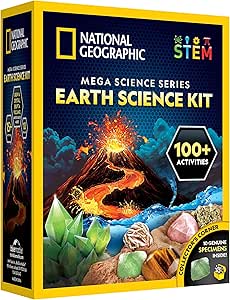 | Best for Earth Science Projects | Recommended age: 8–12 years | Theme: Earth science | Listed activities: More than 15 experiment activities; product title also states 100+ activities | VIEW LATEST PRICE | See Our Full Breakdown |
| Makeblock mBot STEM Coding Toys Robotics for Kids Ages 8-12 | 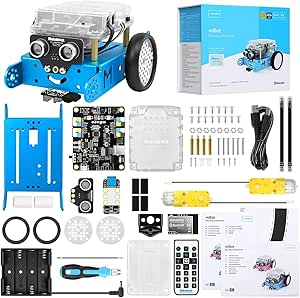 | Best for Robotics and Coding | Recommended age: 8–12 years | Robot build time: About 15 minutes | Programming options: Scratch and Arduino | VIEW LATEST PRICE | See Our Full Breakdown |
| science activity kits for kid | Recommended age |
|---|---|
| UNGLINGA 150 Experiments Scien | — |
| Doctor Jupiter My First Scienc | 4 years and up |
| National Geographic Gross Scie | 8 years and up |
| National Geographic Ultimate V | 8–12 years |
| Creativity for Kids Grow ‘N Gl | 6 years and up |
| National Geographic Science Ma | 8 years and up |
| Butterfly EduFields Science Ki | — |
| 1000X Handheld Microscope for | — |
| UNGLINGA 50+ Science Lab Exper | — |
| Doctor Jupiter My First Scienc | Ages 4+ |
| National Geographic Junior Che | 4 years and up |
| Science Kit for Kids | 6 years and up |
| 1000X Handheld Digital Microsc | — |
| National Geographic Earth Scie | 8–12 years |
| Makeblock mBot STEM Coding Toy | 8–12 years |
More Details on Our Top Picks
UNGLINGA 150 Experiments Science Kits for Kids Chemistry Lab S.T.E.MToys
150 listed experiments give this kit the widest activity menu among these picks, spanning chemistry, physics, earth science, and surface tension. That breadth makes it a strong fit for families who want to revisit a kit over many weekends rather than focus on one subject. Compared with the National Geographic Ultimate Volcano Science Kit, which builds around one repeatable earth-science project, UNGLINGA offers more kinds of activities but less depth in any single topic. Its illustrated, step-by-step manual and included lab tools help children get started, though many experiments rely on household materials that adults will need to gather. The product information does not specify an age range, so caregivers should check whether the instructions suit their child. Its main tradeoff is breadth over a tightly focused learning path.
Pros:- Lists 150 experiments across several science topics.
- Illustrated, step-by-step manual supports guided activities.
- Includes kid-friendly lab tools and goggles.
- Household-material experiments can extend use beyond the supplied components.
Cons:- Many activities require household items that are not included.
- The provided product details do not state an age range.
- Broad topic coverage may offer less depth than a subject-specific kit.
Best for: Families with an adult available to help source household supplies and children who want to sample several science subjects.
Not ideal for: Buyers seeking a tightly themed kit, a clearly stated age recommendation, or experiments that use only materials supplied in the box.
- Listed experiments:150
- Topics:Earth science, surface tension, chemistry, physics, and more
- Manual:Illustrated, step-by-step science manual
- Included equipment:Lab tools and goggles
- Additional materials:Many experiments use household items
- Material type:Plastic
- Item dimensions:11.42 × 8.67 × 3.94 inches
Our verdict“Choose UNGLINGA for a broad rotation of activities when you are comfortable supplying some materials and helping match experiments to your child’s age.”
Doctor Jupiter My First Science Experiments Kit for Kids Ages 4+
For a child’s first structured science activities, Doctor Jupiter My First Science Experiments pairs an age-4-plus recommendation with familiar, hands-on tasks and illustrated instructions. The included beakers, flask, funnel, tray, goggles, and other tools give young children a more complete lab setup than the Creativity for Kids Grow ‘N Glow Terrarium Kit, which centers on planting and observing one small ecosystem. Its two booklets list more than 100 experiments combined, but the kit’s supplied ingredients are a limited set, so some activities may call for adult help or additional materials. Compared with the broader-topic UNGLINGA 150 Experiments, Doctor Jupiter makes a clearer starting point for younger children; it is less suited to older kids seeking more specialized or challenging projects.
Pros:- Recommended for children ages 4 and up.
- Includes a varied set of lab tools, including goggles and a tray.
- Illustrated step-by-step instructions are designed for children and adults to follow.
- Two booklets provide more than 100 experiments combined.
Cons:- The included ingredients cover only a selection of possible experiments.
- Young children will likely need adult guidance with setup and instructions.
- Its introductory focus may feel simple to older or experienced young scientists.
Best for: Caregivers introducing preschool and early-elementary children to guided experiments with a dedicated set of basic lab tools.
Not ideal for: Older children wanting advanced, single-subject investigations or families who expect every listed experiment to use only included ingredients.
- Recommended age:4 years and up
- Experiments:More than 100 combined across the instruction manual and bonus booklet
- Lab equipment:2 beakers, conical flask, spatula, stirring sticks, spray bottles, cups, funnel, goggles, and tray
- Included ingredients:Food essences, food additives, dried leaves, and food coloring
- Manual:Illustrated, step-by-step instruction manual and bonus experiment booklet
- Item dimensions:12.6 × 9.45 × 1.97 inches
- Item weight:660 g
Our verdict“Pick Doctor Jupiter as a first science kit for a young child who benefits from clear guidance and a ready assortment of basic lab tools.”
National Geographic Gross Science Kit with 45 Experiments for Kids 8-12
Gross, memorable demonstrations are the point here: activities such as boiling boogers, glowing worms, and test-tube vomit use silliness to draw children into topics including polymers, pH, and chemical reactions. The kit includes materials for 15 experiments, plus a booklet of 30 more activities that use common household items. That split is a real tradeoff: the headline total of 45 offers plenty to explore, but not all experiments are ready to run from the box. Compared with the National Geographic Ultimate Volcano Science Kit, this set covers more chemistry-style activities rather than repeating one dramatic eruption project. Its recommended age of 8 and up also makes it a less suitable starting point than Doctor Jupiter My First Science Experiments for younger children. Expect mess and adult supervision around the hands-on activities.
Pros:- Combines gross-out themes with learning about polymers, pH, and chemical reactions.
- Includes materials for 15 experiments.
- Adds 30 household-material experiments in a bonus booklet.
- Illustrated instructions explain the activity steps and science concepts.
Cons:- Only 15 of the 45 listed experiments come with kit materials.
- Messy demonstrations may require close adult supervision and cleanup.
- The gross-out theme will not suit every child or household.
Best for: Children ages 8 and up who enjoy gross humor and want chemistry concepts wrapped in dramatic, hands-on demonstrations.
Not ideal for: Younger children, families avoiding messy activities, or buyers who want all listed experiments supplied with kit materials.
- Recommended age:8 years and up
- Listed experiments:45 total
- Experiments with included materials:15
- Additional experiments:30 using common household products
- Science topics:Polymers, chemical reactions, pH science, and more
- Instruction guide:Illustrated, kid-friendly instructions with science explanations
- Battery requirement:No batteries required
- Item dimensions:11.81 × 8.66 × 3.15 inches
- Item weight:2.1 pounds
Our verdict“Choose this kit for an older child who loves goofy, messy chemistry and is happy to gather household supplies for many of the activities.”
National Geographic Ultimate Volcano Science Kit for Kids Ages 8-12
This is the lineup’s most focused pick: children assemble and paint a reusable volcano mold, then stage eruptions with included powder and sound-producing pop crystals. That hands-on build gives the eruption activity a visual payoff and makes the kit more useful for a science-fair display than a general experiment collection such as UNGLINGA 150 Experiments. A full-color guide adds geology and earth-science context, and included pumice and a geode connect the model to real volcanic rock. The tradeoff is limited range: the core activity stays centered on volcanoes, while the National Geographic Gross Science Kit offers more varied experiments across chemistry concepts. The mold is reusable, but the supplied eruption powder is finite; later experiments use common household items, so repeat eruptions may need extra preparation.
Pros:- Reusable volcano mold supports repeated builds and demonstrations.
- Includes eruption powder and sound-producing pop crystals.
- Pumice and a geode give children real rock specimens to examine.
- Full-color guide connects the activity to volcano science and geology.
Cons:- Activities focus mainly on a single volcano project.
- Included eruption powder is finite, so later eruptions may need other materials.
- Building and painting the volcano requires setup time before the experiments.
Best for: Children ages 8–12 who want to build, paint, and repeatedly demonstrate a volcano for a school project or earth-science unit.
Not ideal for: Families looking for a wide mix of science subjects or a kit with many unrelated activities ready to run.
- Recommended age:8–12 years
- Kit components:Volcano plaster, volcano mold, paints, paintbrush, and full-color learning guide
- Eruption materials:Eruption powder and pop crystals
- Rock specimens:Pumice and geode
- Mold:Reusable volcano mold
- Learning topics:Volcano science, chemistry, geology, and earth science
- Item dimensions:7.25 × 2.65 × 10 inches
- Item weight:0.83 kg
Our verdict“Pick this kit when a reusable, display-worthy volcano project matters more than a broad selection of science activities.”
Creativity for Kids Grow ‘N Glow Terrarium Kit
Unlike the chemistry demonstrations in Doctor Jupiter My First Science Experiments, this kit turns science into a slower observation project: children decorate a container, plant chia and wheatgrass seeds, then watch growth over several days. That makes the planting and care cycle a useful way to introduce seed growth and responsibility, with two planting cycles included so the activity can be repeated. Glow-in-the-dark sand, figurines, and constellation stickers add a craft element, but they are decoration rather than the main science lesson. Compared with the focused, quick payoff of the National Geographic Ultimate Volcano Science Kit, a terrarium asks for patience, light, water, and ongoing attention; growth is not an instant result. Choose this for a child drawn to plants and making things, not for a succession of fast experiments.
Pros:- Combines planting and observation with a creative decorating activity.
- Includes seeds and growing medium for two planting cycles.
- Glow-in-the-dark accents add an engaging display feature.
- A clear project can introduce plant growth and basic care.
Cons:- Plant growth takes time and depends on continued care and suitable light.
- The science focus is narrower than multi-topic experiment kits.
- Decorative craft components take up a substantial part of the activity.
Best for: Children ages 6 and up who like crafts, plants, and checking on a growing project over time.
Not ideal for: Kids seeking quick, repeatable chemical demonstrations or families unable to provide light, water, and ongoing plant care.
- Recommended age:6 years and up
- Planting cycles:2
- Seeds:Chia and wheatgrass
- Growing medium:Vermiculite potting mix
- Container:Plastic jar with lid
- Decorative materials:Glow-in-the-dark sand, stones, figurines, and stickers
- Item dimensions:10.5 × 3 × 12 inches
- Item weight:1.1 pounds
Our verdict“Choose Grow ‘N Glow for a patient, plant-loving child who will enjoy decorating a terrarium and caring for it as it grows.”
National Geographic Science Magic Kit, Science Kit for Kids with 100+ Unique Experiments and Magic Tricks, Chemistry Set and STEM Project, A Great Gift
The National Geographic Science Magic Kit suits kids who are most likely to stick with science when each activity has a surprise to show. Its advertised 100+ experiments and tricks give it a broader activity menu than UNGLINGA’s 50+ Science Lab Experiments Kit, while the magic framing adds a performance angle: children can demonstrate an effect as well as explore how it works. The kit is listed for ages 8 and up, making it a less natural first choice than Doctor Jupiter My First Science Experiments Kit for younger children. The tradeoff is that the supplied details do not identify the specific experiments or list the included tools, so buyers have less information for judging the kit’s mix or planning materials. Pick it for variety and show-and-tell appeal, not a clearly documented chemistry curriculum.
Pros:- Advertises more than 100 experiments and magic tricks.
- Combines science activities with a performance-friendly magic theme.
- Age guidance of 8 and up gives older children a more appropriate starting point than preschool-focused kits.
- Manual operation means no batteries are required.
Cons:- The available product details do not list the included experiments or tools.
- The 8-and-up age guidance makes it less suitable for younger beginners than Doctor Jupiter’s first science kit.
- The broad activity count does not by itself show how much material each experiment requires or how much science explanation is included.
Best for: Families with children aged 8 and up who want a large mix of science activities that can also be shared as magic-style demonstrations.
Not ideal for: Parents of preschoolers or buyers who want a clearly itemized set of experiments and equipment before choosing.
- Recommended age:8 years and up
- Advertised activity count:100+ tricks and experiments
- Set name:Mega Science Kit
- Brand:National Geographic
- Manufacturer:JMW Sales, Inc.
- Power:Manual; no batteries required
- Item weight:1.5 lb
- Dimensions:8.86 x 3.15 x 12 in
- Listed materials:Metal and paper
Our verdict“Choose this for an 8-plus child drawn to magic-style demonstrations and a wide activity count, but look elsewhere if you need a detailed contents list.”
Butterfly EduFields Science Kits for Kids Ages 4 5-7 6-8 | 100+ Experiments
The Butterfly EduFields Science Kit is aimed at children who need visual instructions and simple hands-on activities to get started. Its stated ages 4–8 and pictorial manual set it apart from the National Geographic Science Magic Kit, which is recommended for ages 8 and up and leans into tricks and demonstrations. Butterfly lists familiar tools such as cups, test tubes, funnels, and gloves, plus chemistry activities including volcano projects, giving an adult a better sense of the hands-on setup. The advertised 100+ experiments promise breadth, but the provided details do not name each activity or explain how many require adult assistance. Its listed size is compact, though the thin package measurements also suggest buyers should check what materials are actually included rather than assume every experiment is self-contained.
Pros:- Age guidance includes younger children from age 4 through 8.
- Illustrated, step-by-step manual is suited to readers who are still building independence.
- Includes named hands-on tools such as cups, test tubes, funnels, and gloves.
- ASTM F963-17 safety-standard compliance is stated in the product information.
Cons:- Specific experiments and their material requirements are not fully itemized in the supplied details.
- The broad age range does not clarify which activities suit each age or how much adult help is needed.
- Its younger-child focus may feel basic to kids ready for more demanding science than the National Geographic Science Magic Kit offers.
Best for: Caregivers introducing science activities to children aged 4–8 who benefit from illustrated, step-by-step directions and basic lab-style tools.
Not ideal for: Older children seeking more advanced experiments, or families who need a detailed activity-by-activity list and clear adult-supervision guidance.
- Suggested age range:Ages 4–8
- Advertised experiment count:100+
- Instruction format:Illustrated, step-by-step manual
- Listed tools:Cups, test tubes, funnels, gloves, and other tools
- Activity themes:Chemistry and volcano projects
- Safety standard stated:ASTM F963-17
- Materials:Paper and plastic
- Dimensions:10 x 5 x 1 in
- Item weight:760 g
Our verdict“Pick Butterfly EduFields as a visually guided starting kit for younger children, provided you are comfortable with limited detail about individual activities.”
1000X Handheld Microscope for Kids, 4K Digital Kids Microscope Science Kits
Unlike the chemistry-and-demonstration sets in this roundup, this handheld digital microscope gives a child one focused way to investigate: magnifying specimens and recording what appears. Its 12 prepared slides provide a ready-made starting point, while adjustable LED brightness and manual focus let children see how viewing conditions affect an image. That makes it a better fit for observation-minded kids than the activity-led UNGLINGA 50+ Science Lab Experiments Kit, which spans chemistry, Earth science, and magic. The microscope is portable at 0.38 lb and has a rechargeable battery, but its advertised 4K camera does not mean every function is equally available: video recording requires a separately purchased microSD card. A two-hour stated runtime also limits long field sessions, and this is an observation tool rather than a varied experiment kit.
Pros:- Includes 12 prepared slides for immediate specimen viewing.
- Offers 200x–1000x optical magnification, manual focus, and four brightness levels.
- Built-in screen supports viewing and photo capture without a separate computer.
- Compact 0.38 lb design and rechargeable battery support portable use.
Cons:- Video recording requires a microSD card that is sold separately.
- The stated continuous-use time is up to two hours, limiting longer sessions away from charging.
- A microscope offers a narrower activity range than the UNGLINGA 50+ Science Lab Experiments Kit.
Best for: Children who enjoy inspecting prepared specimens, taking close-up photos, and carrying a compact science tool on outings.
Not ideal for: Families looking for a broad set of chemistry experiments, or buyers who expect video recording without purchasing a separate microSD card.
- Optical magnification:200x–1000x
- Digital zoom:1x–4x
- Display:2.4-inch IPS color screen
- Camera:2MP; product description also advertises 4K HD camera
- Included slides:12 prepared slides
- Lighting:8 LED lights with four brightness levels
- Battery:Built-in 2000mAh rechargeable battery; up to 2 hours of continuous use
- Dimensions and weight:4.25 x 2.24 x 3.86 in; 0.38 lb
- Recording requirement:Video recording requires a separately sold microSD card
Our verdict“Choose this for a child who wants to inspect and document specimens, not for families seeking a varied collection of experiments.”
UNGLINGA 50+ Science Lab Experiments Kit for Kids, STEM Activities
The UNGLINGA 50+ Science Lab Experiments Kit is a good match for families who want activities across several themes rather than a kit centered on one type of discovery. Its mix of Earth science, chemistry, and magic contrasts with the National Geographic Science Magic Kit, which advertises more than 100 activities but puts magic more visibly at the center. UNGLINGA’s examples—such as a volcano, foamy fountain, gemstones, and color-changing flowers—help buyers picture the range, and its guide is described as explaining the science behind the activities. Many projects use common household items, which can make the kit easier to extend, but also means families may need to gather supplies before starting. The supplied product information does not state an age range or itemize the kit’s tools, so adult support and fit for a particular child are harder to judge in advance.
Pros:- Combines Earth science, chemistry, and magic rather than focusing on one theme.
- Names engaging sample activities, including a volcano, foamy fountain, and gemstone project.
- Guide is described as explaining the science behind the experiments.
- Household-item projects can make it possible to continue experimenting beyond the included kit materials.
Cons:- Some experiments depend on common household supplies, which may require advance preparation.
- The supplied details do not provide a recommended age range.
- Included tools and the full experiment list are not specified.
Best for: Families who want a guided mix of chemistry, Earth science, and magic activities and are comfortable supplying some household materials.
Not ideal for: Buyers who need a stated age recommendation, a complete list of included equipment, or experiments that rely only on kit-supplied materials.
- Advertised experiment count:50+
- Activity themes:Earth science, chemistry, and magic
- Example activities:Volcano, foamy fountain, gemstones, and color-changing flower
- Instruction:Detailed guide described as explaining the science behind activities
- Household materials:Some experiments use common household items
- Theme:Magic
- Material listed:Plastic
- Dimensions:9.8 x 7.5 x 3.2 in
Our verdict“Choose UNGLINGA for a guided mix of science themes if you do not mind sourcing household supplies and can judge age suitability separately.”
Doctor Jupiter My First Science Experiments Kit for Kids Ages 4+
For a first science kit, Doctor Jupiter My First Science Experiments makes its intended audience clearer than the broader UNGLINGA 50+ Science Lab Experiments Kit: it is listed for ages 4+ and includes illustrated, step-by-step instructions. The activity examples—oobleck, color experiments, volcanoes, and dinosaur squishies—favor tactile, visible results, which can help younger children stay engaged while adults guide the process. Its named contents, from cups and a beaker to food colors, baking soda, and corn starch, also give buyers a more concrete sense of what is supplied than the National Geographic Science Magic Kit’s provided listing. The tradeoff is that several activities use consumable ingredients, so the kit is not a permanent, repeatable lab on its own. Some examples also involve food essences, face masks, or other materials that call for adult oversight.
Pros:- Age guidance starts at 4+, with step-by-step illustrated instructions.
- Includes a specific list of tools and ingredients, making preparation easier to anticipate.
- Activities include tactile projects such as oobleck and dinosaur squishies alongside volcano experiments.
- The product states ASTM F963-17 safety-standard compliance.
Cons:- Consumable ingredients mean some activities cannot be repeated without replenishing materials.
- Food essences, face masks, and experiments involving household ingredients call for adult supervision.
- Its guided introductory focus is less suited to older children seeking a microscope or more advanced science work.
Best for: Adults seeking a guided first experiment set for children aged 4 and up, with tactile projects and a named selection of tools and ingredients.
Not ideal for: Families wanting a reusable, equipment-only science set or older children seeking microscope observation or more advanced investigations.
- Recommended age:Ages 4+
- Advertised experiment count:50+
- Included tools:Cups, stirring sticks, spatula, beaker, test tube, mini volcano, tray, spray bottle, funnel, dinosaur mould, and dropper
- Included food essences:Mango and rose
- Included food colors:Blue, yellow, red, and pink
- Other listed ingredients:Baking soda, corn starch, jelly powder, face masks, and lemongrass aroma bag
- Instruction:Illustrated instruction manual
- Battery requirement:No batteries required
- Dimensions and weight:11.02 x 9.84 x 1.77 in; 0.64 kg
Our verdict“Pick Doctor Jupiter for a younger child’s first guided experiments when an adult can help manage ingredients and setup.”
National Geographic Junior Chemistry Set with 50 Experiments for Kids
I’d choose this kit for a preschool-age child ready to try simple chemistry with an adult nearby. Its 50 activities and 20-plus kid-friendly tools give experiments a lab-like feel, while illustrated steps help children follow along without relying on dense explanations. Using familiar household materials such as baking soda and vinegar can make it easier to repeat activities after the included experiments are done.
Compared with the National Geographic Earth Science Kit, this set is more focused on early chemistry and younger children, rather than rocks, crystals, and earth-science projects for older kids. The tradeoff is that the age-friendly scope may not hold the attention of children ready for more involved explanations or challenging procedures. Many experiments also depend on an adult to supply household ingredients and supervise setup.
Pros:- 50 hands-on activities offer multiple ways to explore basic chemistry
- More than 20 tools, including test tubes and goggles, support a lab-style play experience
- Illustrated, step-by-step instructions suit children who are not ready for text-heavy guides
- Household ingredients such as baking soda and vinegar can make repeat experiments easier
Cons:- Many activities require household ingredients that are not included
- The early-learning focus may feel limited to older or more experienced young scientists
- Young children will need adult help with setup and supervision
Best for: Families with children around ages 4–6 who want illustrated, adult-supported introductions to chemistry using familiar household ingredients.
Not ideal for: Older children seeking advanced chemistry concepts or families wanting every experiment’s materials supplied in the box.
- Recommended age:4 years and up
- Experiment count:50
- Included lab tools:More than 20
- Included components:Chemistry kit with test tubes, goggles, and other lab tools
- Power:No batteries required
- Dimensions:11 x 4.22 x 9.64 inches
- Weight:0.72 kg
- Theme:Chemistry
Our verdict“Pick this for a young beginner who will enjoy guided chemistry play; choose the Earth Science Kit for an older child drawn to geology and crystals.”
Science Kit for Kids, 80 Science Lab Experiments, Scientist Role Play
For families who want a broad menu of activities rather than a kit tied to one branch of science, this set’s 80 experiments are its main appeal. The listed projects range from rainbow rain and volcanoes to a bottle-blown balloon, giving children several kinds of visible cause-and-effect to explore. Its mix of measuring cups, droppers, test tubes, and other pieces supports hands-on role-play, while guidance cards pair steps with explanations of the science.
Compared with the National Geographic Junior Chemistry Set, this kit lists more experiments and a wider collection of supplied materials, but its stated age recommendation starts at 6 rather than 4. That makes it a better match for school-age children, though the long activity count does not mean every experiment’s materials are included. The range of small components also calls for sorting and adult help, and the product information gives less detail about individual activity difficulty than a focused kit might.
Pros:- Lists 80 experiments across several types of hands-on science
- Includes a broad assortment of tools, from measuring cups and droppers to test tubes
- Guidance cards describe both steps and scientific principles
- Chemical materials are packaged in separate bottles with resealable lids
Cons:- The large assortment of small parts can take time to organize and supervise
- The product details do not specify the materials needed for every experiment
- Its age guidance makes it a less suitable choice than the Junior Chemistry Set for very young beginners
Best for: Families with children six and older who want a variety of guided, colorful experiments and have an adult available to organize materials.
Not ideal for: Younger preschoolers, or buyers who want a tightly focused subject kit with clear detail on which supplies each activity requires.
- Recommended age:6 years and up
- Experiment count:80
- Included chemical materials:6
- Other included items:Goggles, petri dishes, measuring cups, test tubes, gloves, droppers, measuring spoons, balloons, and additional activity pieces
- Material:Plastic
- Theme:Scientist
- Weight:0.75 kg
Our verdict“Choose this for a school-age child who values activity variety and role-play more than a narrowly focused science topic.”
1000X Handheld Digital Microscope for Kids: Pocket Microscope with 2.0″ IPS Screen
This handheld microscope takes a different route from experiment sets: it gives children a tool for examining and recording specimens instead of a sequence of prepared activities. The built-in 2.0-inch screen, adjustable LED lighting, and photo and video storage can help a child document what they notice outdoors or during a classroom project. Its manual focus invites hands-on adjustment, while a lightweight body and lanyard suit observation away from a desk.
Compared with the National Geographic Earth Science Kit, this is less of a ready-made activity collection and more of a reusable observation device; the Earth Science kit supplies guided projects such as crystal growing and geological digs. The microscope’s advertised magnification is 1000x, but the product details do not explain practical magnification ranges or include a specimen set. It also needs charging, and the screen-based format may not suit families seeking screen-free science play.
Pros:- Built-in display lets children view specimens without a separate computer
- Photo and video storage supports documenting observations and school projects
- Adjustable LED lighting offers options for different viewing conditions
- Portable design with a lanyard suits backyard and on-the-go exploration
Cons:- Unlike experiment kits, it does not provide a sequence of guided activities or listed specimens
- Requires charging, while the National Geographic Junior Chemistry Set requires no batteries
- Manual focusing may take practice for younger children
Best for: Families with children who enjoy looking closely at plants, insects, and other specimens and want to save images for projects.
Not ideal for: Buyers seeking a box of guided experiments, supplied specimens, or screen-free activities.
- Maximum advertised magnification:1000x
- Display:2.0-inch IPS screen
- Camera:2 MP
- Lighting:8 adjustable LEDs with three brightness settings
- Battery:600 mAh rechargeable battery
- Storage:32 MB
- Weight:0.22 kg
- Compatible operating systems:Windows XP through Windows 11; Mac 11.0 and later
Our verdict“Pick this for a child who wants to inspect and record real-world specimens, not for one who wants a box of step-by-step experiments.”
National Geographic Earth Science Kit with 100+ Activities for Kids 8-12
I’d put this kit near the top for children who want their experiments anchored in geology and the physical world. Its projects include crystal growing, an erupting volcano, water tornadoes, and two geologic digs, so the activities span more than one familiar science demonstration. A full-color learning guide explains the science behind the projects, giving curious kids context rather than just instructions to follow.
Compared with the Science Kit for Kids, 80 Science Lab Experiments, this option has a clearer subject identity and stronger emphasis on earth science, while the latter offers a broader mix of colorful experiment types. The tradeoff is that the listing describes more than 15 experiment activities even as its title refers to 100-plus activities; buyers should not assume 100 distinct experiments. The 8–12 focus and project-based format also make it less suitable for preschoolers or anyone seeking quick, self-contained chemistry activities.
Pros:- Distinctive earth-science focus includes crystals, volcanoes, and geologic digs
- Full-color learning guide explains scientific ideas behind activities
- Activities can be shared with family, friends, or classmates
- Project variety extends beyond a single volcano demonstration
Cons:- The listing’s 100-plus activity claim is not clearly reconciled with its description of more than 15 experiment activities
- Ages 8–12 limits its fit for younger children
- The earth-science focus is narrower than the broad experiment variety in the 80-experiment kit
Best for: Children ages 8–12 who enjoy geology, crystals, volcanoes, and learning the explanations behind hands-on projects.
Not ideal for: Preschool-age beginners or families looking for a clearly enumerated set of many distinct experiments.
- Recommended age:8–12 years
- Theme:Earth science
- Listed activities:More than 15 experiment activities; product title also states 100+ activities
- Featured projects:Water tornadoes, erupting volcano, crystal growing, and two geologic digs
- Learning materials:Full-color learning guide
- Dimensions:8.66 x 3.15 x 12 inches
- Weight:2.6 pounds
- Included components:Earth science kit
Our verdict“Choose this for an older child drawn to geology and guided projects, but favor a broader experiment set if variety across science topics matters more.”
Makeblock mBot STEM Coding Toys Robotics for Kids Ages 8-12
The mBot is the strongest fit here for children whose idea of science includes electronics, mechanics, and programming. Building the robot introduces its components, then Scratch-to-Arduino learning, coding cards, and software add a path from basic instructions to more involved projects. Line-following and obstacle-avoidance functions give children a visible result when they change how the robot behaves, which is a different kind of feedback from watching a chemistry reaction.
Compared with the National Geographic Earth Science Kit, the mBot offers a longer-running build-and-code challenge rather than a set of geology activities. That makes it the more technical choice, but also a less direct match for a roundup of hands-on experiment kits: assembly and app-based learning are central, and batteries are not included. The stated 15-minute build time may help with starting out, though children who want independent, screen-free experiments may prefer the chemistry or earth-science kits.
Pros:- Combines robot assembly with electronics, mechanics, and programming
- Learning materials support a progression from Scratch toward Arduino
- Line-following and obstacle-avoidance modes make coding outcomes visible
- Open-source system is described as compatible with add-on packs
Cons:- Requires four AA batteries and a CR2025 remote-control battery, which are not included
- App and software use makes this less suited to screen-free activity time
- Coding and robot building differ from the guided chemistry and geology experiments elsewhere in this roundup
Best for: Children ages 8–12 who like building, coding, and seeing how electronics and mechanical parts affect a robot’s movement.
Not ideal for: Families seeking screen-free science activities, a conventional experiment kit, or a robot ready to run without separately supplied batteries.
- Recommended age:8–12 years
- Robot build time:About 15 minutes
- Programming options:Scratch and Arduino
- Robot functions:Remote control, line following, and obstacle avoidance
- Software and apps:mBlock software and three Makeblock apps
- Robot batteries:Four AA batteries, not included
- Remote battery:CR2025, not included
- Materials:Metal and plastic
- Dimensions:6.69 x 3.54 x 7.87 inches
Our verdict“Choose the mBot for a child ready to build and program a robot; select the Earth Science Kit for hands-on projects without a coding focus.”

How We Picked
I compared the 15 listed options by how well they turn a child’s curiosity into a hands-on activity, with attention to stated age ranges, subject focus, experiment or activity breadth, and the likely role of adult help. I also considered whether a kit supports repeated exploration or centers on a particular project, and whether its format—such as a microscope or coding robot—offers a distinct experience from a conventional experiment set.
The ranking favors options with a clear fit for a broad range of family needs, then recognizes kits that serve a specific age, interest, or learning style especially well. A high activity count alone does not place a kit ahead: focused themes can be a better match, while kits with specialized equipment or ongoing projects may suit fewer children. The two Doctor Jupiter listings are the same named product, so they should not be treated as separate strengths in a buying decision.
Factors to Consider When Choosing Science Activity Kits For Kids
Before choosing a kit, I’d match the experience to how your child likes to learn—not just to the subject printed on the box. These factors can help distinguish a genuinely good fit from a kit that sounds exciting but is hard to use at home.
Match the kit to your child’s attention and age
A listed age range is a starting point, not a guarantee that a child can complete every activity independently. Younger children may enjoy a short demonstration with an adult, while older kids often want to read directions, make predictions, and repeat a result on their own. Think about attention span as well: a single terrarium project develops over time, while a broad experiment set offers more chances to switch activities. A common mistake is choosing for a child’s age alone and overlooking whether they prefer quick results or patient observation. If siblings will share one kit, check that its activities can be adapted to different skill levels.
Choose breadth or a subject your child already loves
Large experiment collections can make it easier to find an activity that suits the day, but a high count does not automatically mean every activity will feel different. A focused volcano or earth science kit may be more engaging for a child already fascinated by eruptions, rocks, or the planet. Broad chemistry collections make more sense when interests are still emerging or several children want different projects. Look beyond the headline number and ask whether the subjects fit your child’s current curiosity. If a child tends to revisit favorite topics, a focused kit may get more use than a larger assortment.
Check what the activities demand from adults
Some kits are best treated as shared activities, especially when a child is young or a project involves several steps. Consider whether an adult can set aside time to help with reading directions, preparing materials, or tidying up. A kit can be educational and enjoyable without being independent play, but mismatched expectations can leave it unused. Before buying, look for clear guidance about supervision and what supplies a project calls for. If you want a child to work more independently, favor a format and age range that match their reading and fine-motor skills.
Account for repeat use and consumable supplies
Some experiments use materials that may run out, while other formats support ongoing observation or repeated practice. That difference matters if you hope a kit will remain useful after its first weekend. Ask whether activities can be repeated with common household materials, whether a project changes over time, or whether the main value is a reusable tool. Avoid assuming that a larger number of listed activities means longer-lasting play; some may share supplies or rely on one-time setups. For repeat use, consider whether your child likes to redo experiments, record observations, or move on to new questions.
Think about the space and cleanup the kit needs
A science activity is more likely to happen if it fits the household routine. A tabletop experiment set may need a clear work area, while a terrarium needs a place to sit and be observed. Messy demonstrations can be a welcome part of the fun for some families and a poor match for others. Before choosing, picture where the activity will happen and who will handle cleanup and storage. A compact microscope may suit a family short on workspace, though its screen-based format differs from a hands-on chemistry project.
Decide whether you want experiments or a different STEM format
Not every science-minded kit follows the same learning path. A microscope centers on close observation, a terrarium on growth and care, and a coding robot on logic and building; these can be strong choices, but they do not replace a classic experiment set. Match the format to what your child enjoys doing with their hands and attention. If they like asking what happens when materials combine, chemistry activities may fit; if they prefer spotting details or solving build challenges, specialized tools may hold their interest longer. The common mistake is buying a kit for its STEM label without checking what the child will actually do.
Frequently Asked Questions
Which kit makes the most sense if my child has not tried science activities before?
I’d start with a kit whose stated age range and activity style match the child, rather than choosing the one with the most experiments. Doctor Jupiter’s My First Science Experiments kit is specifically positioned for ages 4+, making it a clear candidate for a young beginner with adult support. For older children, a broad kit can work well if they like trying different activities, while a focused subject may feel less overwhelming. Check whether the child can follow the directions and handle the materials with the help you can provide. A simple first activity that feels manageable is more useful than a large collection that stays on the shelf.
Is a kit with more experiments always a better choice?
No. A larger activity count can offer flexibility, but it does not tell you how varied, repeatable, or engaging the activities will be for your child. A focused kit such as the volcano or terrarium option may be a stronger fit when a child is already keen on that subject or project style. Also check whether activities use supplies that may be consumed and whether the child is likely to want to repeat them. I’d treat the count as one clue, then weigh subject fit, age suitability, and the amount of adult help required.
How should I choose between a microscope kit and an experiment kit?
Choose a microscope if your child enjoys examining small details and asking what they are seeing; choose an experiment kit if they prefer following steps to observe a reaction or result. The two handheld microscope listings offer a more observation-led experience than the chemistry and gross science sets, so they serve a different interest rather than directly replacing those kits. Consider whether the child will use a screen-based tool comfortably and whether you have objects or samples available to examine. If you are unsure, an experiment collection may provide more variety, while a microscope is a more focused choice for a budding observer.
Will an adult need to help with these science kits?
Many children will benefit from adult help, but the amount depends on age, reading ability, and the activity itself. The kits aimed at younger children, including Doctor Jupiter’s age-4+ set, are best approached as opportunities for shared exploration rather than a promise of fully independent play. Older children may handle more of the directions themselves, though preparation and cleanup can still call for a parent. Check the product’s age guidance and instructions before buying, especially if you expect the child to work alone. Planning for supervision can make an activity more enjoyable and help prevent frustration.
What should I pick if my child likes science but does not enjoy messy experiments?
Look beyond chemistry demonstrations and consider kits built around observation, growth, or structured building. A handheld microscope shifts the activity toward looking closely, while the Grow ‘N Glow Terrarium centers on a nature project that develops over time. The mBot coding robot offers a technology and problem-solving direction rather than a conventional lab session. These formats still encourage curiosity, but each asks for a different kind of attention and participation. Check the project requirements and your child’s interests so a lower-mess choice still feels engaging.
Conclusion
For the broadest mix of hands-on possibilities, I’d choose the UNGLINGA 150 Experiments kit as best overall. The best value in activity breadth is UNGLINGA’s 50+ Science Lab Experiments kit for families who want a lab-style assortment without prioritizing the largest listed count. For a first science experience, Doctor Jupiter’s My First Science Experiments kit is the clearest beginner fit because it is labeled for ages 4+. My best premium-style focused pick is the National Geographic Earth Science kit for a child drawn to a themed set of activities rather than a general assortment. For specific interests, choose Gross Science for messy demonstrations, Grow ‘N Glow for a patient nature project, a handheld microscope for observation, or mBot for coding and robotics; the best choice is the one that fits how your child likes to explore.
Halloween Picks

Star Wars Yoda and R2-D2 Inflatable Halloween Decor, 6 ft with LEDs, Indoor/Outdoor

Fun Costumes Creepy Twin Boys Halloween Animatronic

Kalolary 12ft Halloween Witch Haunted House Inflatable Archway
As an affiliate, we earn on qualifying purchases.