Shopping for educational science reference kits means sorting through dozens of boxes that all promise hundreds of experiments, so I narrowed the field to nine kits that actually deliver structured learning rather than one-off tricks. My best overall pick is the National Geographic Earth Science Kit, which pairs 100+ activities with genuine reference material — real specimens, a learning guide, and clear scientific explanations kids can return to. For younger children, the Carson Dellosa STEM Challenges kit for ages 4-7 stands out because it trades chemical mixing for guided problem-solving, and the UNGILINGA 150 Experiments kit offers the widest activity range per dollar for families who want volume. The main tradeoff in this category is depth versus breadth: big experiment counts often mean shallower instructions and more household-supplied ingredients, while smaller kits tend to explain the science better. Age fit matters just as much — a kit built for a 10-year-old will frustrate a 5-year-old no matter how good the contents are. Read on for the full breakdown of all nine kits, ranked by who they serve best.

Prime made for students and young adults
- Fast, free delivery for dorm and study essentials
- Prime Video and Amazon Music included
- Member-only deals
Key Takeaways
- The National Geographic Earth Science Kit took the top spot because it’s the only kit in this lineup that combines real geological specimens with a reference-quality learning guide, making it as much a science book as an activity box.
- Experiment count is the most misleading spec in this category — the UNGILINGA 150 Experiments kit has three times the activities of the UNGLINGA 40+ kit, but the smaller kit includes better-portioned materials and needs fewer household ingredients.
- Both Carson Dellosa kits skip chemistry entirely in favor of engineering-style challenges, which makes them the safest picks for the youngest kids but the wrong choice for anyone who wants classic beaker-and-baking-soda experiments.
- Kits aimed at ages 6-9 (Klever Kits, the 80-experiment Science Lab) overlap heavily in content — volcano, crystals, color mixing — so the tiebreaker between them is instruction clarity and material quality, not the experiment list.
- The Science Kit with 100+ experiments is the closest thing to a true ‘reference kit’ here, with a book-style manual that older kids can work through independently, while every other kit assumes adult involvement for at least the first sessions.


| educational science reference kit | Recommended Age |
|---|---|
| National Geographic Earth Scie | — |
| Carson Dellosa STEM Challenges | Ages 4-7 |
| UNGILINGA 150 Experiments Scie | — |
| Klever Kits Amazing Science Ki | 6 and up |
| UNGLINGA 40+ Experiments Scien | — |
| Science Kit for Kids | 6-9 years |
| National Geographic Junior Che | 4 and up |
| Carson Dellosa STEM Challenges | 7-10 years (grades 2-5) |
| The Science Kit: Contains More | Not stated by manufacturer |
More Details on Our Top Picks
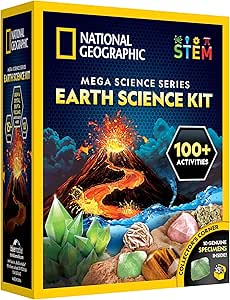
National Geographic Earth Science Kit with 100+ Activities for Kids 8-12
The National Geographic Earth Science Kit earns the top spot because it pairs one of the deepest activity counts in this roundup — over 100 experiments — with a genuine learning guide, which is exactly what an educational science reference kit should deliver. Compared with the UNGILINGA 150 Experiments kit, it covers fewer total activities, but its earth science focus (volcano eruptions, crystal growing, geologic digs) gives kids a coherent subject to return to rather than a grab-bag of unrelated tricks. The detailed guide explains the science behind each activity, so the kit keeps teaching after the supplies run low. The tradeoff: it’s built for ages 8-12, and younger or less independent kids will need an adult nearby, unlike the Carson Dellosa STEM Challenges cards that early readers can follow alone. Some materials also feel single-use, so repeat experimenters may burn through it faster than expected.
Pros:- Over 100 activities give it the strongest long-term replay value in the lineup
- Detailed learning guide explains the science, not just the steps
- Coherent earth science theme builds real subject knowledge
- Clear, easy-to-follow instructions suited to independent tweens
Cons:- Several experiments require adult supervision
- Some consumable materials limit how often activities can be repeated
- Too advanced for children under 8
Best for: Kids ages 8-12 who want a deep, guide-backed earth science curriculum they can revisit all year
Not ideal for: Preschoolers and early readers — the 8+ complexity and supervision needs will frustrate kids under 8
- Brand:Blue Marble
- Set Name:Earth Science Kit
- Age Range:8-12 years
- Activities Included:100+ science experiments & activities
- Core Topics:Volcano eruptions, crystal growing, geologic digs
- Model Number:NGMEGAEARTH
- Manufacturer:JMW Sales, Inc.
- UPC:816448027611
Our verdict“The strongest pick for elementary and middle schoolers who want a structured earth science reference they’ll actually work through cover to cover.”
Carson Dellosa STEM Challenges, Hands-On Science Kits for Ages 4-7
Most kits here assume a child who can already read instructions; the Carson Dellosa STEM Challenges set is the rare exception. Its 30 challenge cards use visual directions, hints, and plain explanations, so a preschooler or kindergartener can work through activities on insects, weather, plants, and transportation with minimal reading. Compared with the National Geographic Earth Science Kit, the science is far simpler — this is a prompt deck, not a lab — and most activities need common household materials you supply yourself. That’s the honest tradeoff: low reading prep, higher gathering prep. The oversized 7¾-by-5½-inch cards and included storage divider make it practical for classroom centers or a homeschool shelf. For ages 4-7 it’s the gentlest on-ramp in this lineup; by age 8, kids will outgrow it and want something with real lab materials like the Klever Kits set instead.
Pros:- Visual directions and hints work for children who can’t read yet
- Oversized cards and divider make classroom or center storage easy
- Covers four topic areas to keep early learners curious
- Equally usable at home, in centers, or in homeschool routines
Cons:- Requires common household materials that aren’t included
- Science stays basic — kids past age 7 will outgrow it quickly
Best for: Parents and teachers of 4-7 year olds who need screen-free STEM prompts a pre-reader can follow visually
Not ideal for: Buyers wanting an all-in-one kit — most activities require household materials you gather yourself
- Format:30 challenge cards
- Recommended Age:Ages 4-7
- Card Size:7¾ x 5½ inches
- Topics Covered:Insects, weather, plants, transportation
- Card Features:Visual directions, hints, and explanations
- Organization:Storage divider included
- Best Settings:Classroom, learning centers, homeschooling
Our verdict“The right first science kit for preschoolers and kindergarteners, as long as you’re willing to supply the everyday materials each card calls for.”
UNGILINGA 150 Experiments Science Kits for Kids – Chemistry, Physics, and STEM Educational Toy
With 150 experiments spanning chemistry, physics, and earth sciences, the UNGILINGA 150 Experiments kit offers the widest range in this roundup — nearly double what the Klever Kits 85+ set provides. That breadth matters in a reference-style kit: a child who loses interest in crystal growing can pivot to a physics activity without a new purchase. The included tools are kid-friendly, and the instructions keep most activities approachable at home or in a classroom. The tradeoffs are real, though. Like the Klever Kits set, several experiments depend on household items you supply, and small parts rule it out for very young children. It also spreads across subjects rather than going deep on one, so families wanting a structured earth-science curriculum with a proper learning guide are better served by the National Geographic Earth Science Kit. Adult supervision remains part of the deal.
Pros:- 150 experiments is the largest activity count in the roundup
- Spans chemistry, physics, and earth sciences in one box
- Kid-friendly tools included, so setup starts quickly
- Works for both home learning and school settings
Cons:- Some experiments need household items not included
- Small parts make it unsuitable for very young children
- Breadth comes at the cost of depth in any single subject
Best for: High-energy kids who cycle through interests fast and want the largest experiment library available
Not ideal for: Families with toddlers in the house — small parts make it unsafe for very young siblings
- Experiment Count:150
- Topics Covered:Chemistry, physics, earth sciences
- Included:Science tools and materials
- Audience:Kids
- Use Settings:Home or school
- Adult Supervision:Recommended for some experiments
Our verdict“Buy this for a curious kid who wants maximum variety and will dip into different sciences week after week.”
Klever Kits Amazing Science Kits – 85+ Experiments Educational Toys, STEM Activities with Erupting Volcano and Growing Crystal Tree for Kids Aged 6-8+
The Klever Kits Amazing Science Kit sits in the middle of this lineup — 85+ experiments for ages 6 and up — and its real strength is how well it suits shared play. Headline pieces like the erupting volcano and growing crystal tree are natural group projects, unlike the largely solo challenge cards in the Carson Dellosa STEM Challenges set. Compared with the UNGILINGA 150 Experiments kit, you get roughly half the activity count but a friendlier age floor of 6, which makes it the safer pick for mixed-age siblings working side by side. The tradeoffs: some experiments turn messy fast, adult supervision is assumed, and there’s little information on how durable the materials are over repeated use. Families wanting a deep reference guide to keep consulting will get more long-term mileage from the National Geographic Earth Science Kit.
Pros:- 85+ experiments designed for collaborative, family-style play
- Erupting volcano and crystal tree make memorable group activities
- Age-6 floor welcomes younger kids than most chemistry kits
- Easy-to-follow instructions keep setup hassle low
Cons:- Experiments can get genuinely messy
- Little information on material durability over repeated use
- Adult supervision required for a share of the activities
Best for: Families with 6-8 year olds who want weekend projects siblings and parents can do together
Not ideal for: Mess-averse households — several flagship experiments involve eruptions and spills
- Experiment Count:85+
- Recommended Age:6 and up
- Headline Activities:Erupting volcano, growing crystal tree
- Topics Covered:Chemistry, earth sciences, water studies
- Skills Targeted:Critical thinking and problem-solving
- Format:Family-friendly collaborative activities
Our verdict“The best choice here for turning science time into family time with elementary-aged kids.”
UNGLINGA 40+ Experiments Science Kit for Kids – STEM Chemistry Set, Educational Toy Gift
The UNGLINGA 40+ Experiments kit is the smallest commitment in this roundup, and that’s precisely the point. Where the UNGILINGA 150 Experiments kit can overwhelm a first-timer, this one sticks to 40+ chemistry activities — bouncy balls, lava lamps — with most materials included and instructions a child can actually follow. Compared with the National Geographic Earth Science Kit, it lacks the in-depth learning guide that makes a kit feel like a reference book; this is a taster, not a course. The 8-year minimum age sits above the Klever Kits set’s age-6 floor, and a few experiments still call for household extras. Storage and durability details are thin, so treat it as a trial run: if a child burns through all 40 activities and asks for more, that’s your signal to graduate them to one of the bigger kits in this lineup.
Pros:- Most materials included, so it works straight out of the box
- Clear, child-friendly instructions build independent confidence
- Manageable 40+ activity count won’t overwhelm beginners
- Crowd-pleasing experiments like bouncy balls and lava lamps
Cons:- Some household items still needed for certain experiments
- No detailed learning guide, so the science context stays shallow
- Sparse storage and durability information
Best for: Gift-givers and parents testing whether a kid’s science interest is real before investing in a bigger kit
Not ideal for: Kids who already own a science kit — the 40-activity count will feel like a repeat purchase
- Brand:UNGLINGA
- Experiment Count:40+
- Minimum Age:8 years (96 months)
- Learning Objectives:Creative skills, imagination, observation
- Set Name:40+ experiments kit
- Materials:Most components included; some household items needed
- Best Sellers Rank:#9,767 in Toys & Games
- Manufacturer Part Number:HZDZKH52
Our verdict“A low-risk first chemistry kit for 8-year-olds — ideal as a gift or a trial before committing to a larger set.”
Science Kit for Kids – 80 Science Lab Experiments, STEM Educational Toy for Children Ages 6-9
This is the kit I’d point most families toward first. With 80 guided experiments and nearly every consumable already in the box — goggles, test tubes, pigments, even a color-changing flower — it skips the supply scavenger hunt that card-based sets like the Carson Dellosa STEM Challenges still require. Compared with the National Geographic Junior Chemistry Set, the activities skew slightly older and cover more ground, which fits the 6-to-9 window better than a chemistry-only focus. The tradeoffs are real, though: adult supervision is assumed throughout, small parts rule out households with toddlers, and the chemical materials need a safe storage spot between sessions. Against the 100+ experiment volume of The Science Kit, it trades raw count for clearer age targeting and labeled, ready-to-use materials.
Pros:- 80 experiments with nearly all materials included, so no extra shopping
- Real lab hardware (test tubes, petri dishes, droppers) teaches proper technique
- Safety gear (goggles, gloves) comes in the box
- Activities are well matched to the 6-9 attention span
Cons:- Adult supervision is required for every session, limiting independent play
- Small components are a choking hazard around younger siblings
- Chemical materials need dedicated safe storage between uses
Best for: Parents of 6- to 9-year-olds who want a big, self-contained experiment library with all consumables included
Not ideal for: Homes with children under 3 — small parts and chemicals demand constant supervision and careful storage
- Number of Experiments:80
- Recommended Age:6-9 years
- Safety Gear Included:Goggles and gloves
- Lab Tools:Test tubes, petri dishes, droppers, measuring cups and spoons
- Consumables:Chemical materials, pigments, effervescent tablets, rainbow candy
- Specialty Items:Color-changing flower, balloons, pingpong ball
- Supervision:Adult supervision required
- Small Parts Warning:Yes — choking hazard for younger children
Our verdict“The strongest all-around choice for elementary-age kids whose adults can supervise regular hands-on sessions.”
National Geographic Junior Chemistry Set with 50 Experiments for Kids
For preschool and kindergarten scientists, this is the gentlest on-ramp in the lineup. The 20+ child-safe lab tools are sized for small hands, and the illustrated instructions assume no reading fluency — a genuine advantage over the Science Kit for Kids 80-experiment set, which expects a six-year-old’s patience plus an adult nearby. Because the experiments run on household staples like baking soda and vinegar, restocking costs nothing, unlike consumable-heavy boxes such as the Klever Kits set. The tradeoff is ceiling: kids past about six will burn through it fast, and it stays inside basic chemistry, where the Carson Dellosa STEM Challenges cards range across earth, space, and life science. The Toy of the Year Award pedigree adds confidence, but I’d treat this as a first kit, not a long-term reference.
Pros:- Tools sized and built for children as young as 4
- Illustrated instructions work for pre-readers
- Experiments use cheap household staples, so restocking is free
- Toy of the Year Award winner from a trusted science brand
Cons:- Narrow chemistry-only scope with no earth or life science coverage
- Kids outgrow it quickly — realistic ceiling around age 6
- Fewer experiments (50+) than most kits in this roundup
Best for: Families with 4- to 6-year-olds doing science together for the first time, with zero prep budget
Not ideal for: Kids aged 7 and up — the experiments will feel too simple within weeks and there’s no room to grow
- Number of Experiments:50+
- Recommended Age:4 and up
- Lab Tools Included:20+ child-safe pieces
- Core Materials:Household items (baking soda, vinegar)
- Instructions:Illustrated, beginner-friendly
- Award:Toy of the Year Award
- Brand:National Geographic
- Realistic Age Window:4-6 years
Our verdict“The right first science kit for a 4- to 6-year-old, with the understanding that a harder set will follow within a year or two.”
Carson Dellosa STEM Challenges Hands-On Science Kits for Kids Ages 7-10
This pick works less like a chemistry set and more like a reference deck of challenges — 30 cards spanning earth, space, physical, and life science, each listing materials, steps, and the reasoning behind the result. That breadth beats single-subject kits like the National Geographic Junior Chemistry Set when a child asks ‘why’ across domains, and the boxed divider makes it the easiest option here to shelve, reuse, and hand to the next student — which teachers and homeschoolers will value. The catch: materials are mostly not included, so each card starts with a small supply run that the Science Kit for Kids 80-experiment box would have already covered. A few activities also lean classroom-sized rather than kitchen-table-sized, and younger kids in the 7-10 range still need an adult close by. It’s the strongest choice for adults who want to teach concepts, not just supervise messes.
Pros:- Covers four science domains instead of a single subject
- Cards explain the science behind each challenge, supporting real instruction
- Organized storage box with divider holds up to repeated classroom use
- Sized for individual, small-group, or center-based work
Cons:- Activity materials are largely not included — expect prep before each session
- Only 30 activities, the lowest count in this roundup
- Some challenges need supervision or group scaling for younger kids
Best for: Homeschoolers, teachers, and learning-center organizers who want structured, multi-subject challenges for grades 2-5
Not ideal for: Parents seeking a gift-ready box — you’ll need to source your own supplies before the first activity
- Number of Activity Cards:30
- Card Size:7¾ x 5½ inches
- Divider Size:7¾ x 8 inches
- Recommended Age:7-10 years (grades 2-5)
- Science Domains:Earth, space, physical, and life science
- Materials:Household/classroom supplies, mostly not included
- Storage:Boxed set with organizing divider
- Intended Settings:Classroom, homeschool, learning centers
Our verdict“The best pick for structured teaching across multiple science topics, as long as you’re willing to gather your own materials.”
The Science Kit: Contains More Than 100 Experiments
On raw count, nothing else in this roundup touches it: more than 100 experiments in one box, ahead of the 85 from Klever Kits and double the 50 in the National Geographic Junior set. The problem is documentation. There’s no stated age range, tool list, or safety guidance in the listing, so I’d buy it only for an older, already-motivated kid whose adult can fill in the blanks — the opposite of the clearly scaffolded Carson Dellosa STEM Challenges cards. Compared with the Science Kit for Kids 80-experiment set, you’re trading labeled consumables and precise age targeting for sheer variety at a usually lower price. If you can open the box and verify contents on arrival, it’s a volume bargain; if you need predictability for a gift or a classroom, nearly every other pick here is safer.
Pros:- 100+ experiments — the largest count in the roundup
- Broad exposure to general scientific principles
- Typically priced below better-documented competitors
- Enough material to sustain months of weekly sessions
Cons:- No published age recommendation or safety guidance
- Listing lacks any detail on included tools or materials
- Quality control is a gamble until you inspect the box
Best for: Budget-minded buyers with an independent, science-obsessed older kid and an adult willing to improvise
Not ideal for: Gift buyers or teachers who need a confirmed age rating, contents list, and safety documentation up front
- Number of Experiments:100+
- Format:Boxed experiment kit
- ASIN / ISBN-10:0756688647
- Recommended Age:Not stated by manufacturer
- Included Tools:Not detailed in listing
- Subject Coverage:General science principles
- Safety Guidance:Not specified
Our verdict“A high-volume gamble worth taking only for self-directed kids with an adult who can verify and supplement the contents.”
How We Picked
I evaluated each kit through the lens the title promises: a kit should work as a reference a child learns from, not just a box of activities they burn through in a weekend. That meant weighing five factors in order of importance. First, instructional depth — does the manual explain the science behind each experiment, or just list steps? Second, age accuracy — does the reading level, supervision demand, and dexterity required match the stated age range? Third, material completeness — how much of what’s pictured is actually in the box versus how much you supply from the kitchen? Fourth, safety and supervision load, especially for chemistry sets with real reagents. Fifth, repeat value — whether a child returns to the kit after the first week.
The ranking reflects those priorities directly. National Geographic’s Earth Science Kit ranks first because it scores highest on instructional depth and repeat value. The UNGILINGA and Klever kits sit in the middle because they trade explanation quality for experiment volume. The Carson Dellosa entries rank on age fit rather than chemistry content, and the book-style Science Kit rounds out the list as the strongest option for independent readers, even though its materials are the most basic of the group. Where two kits felt interchangeable — the 80-experiment Science Lab and Klever Kits, for instance — the differentiator came down to how well the written guide teaches, not what’s in the box.
Factors to Consider When Choosing Educational Science Reference Kits
The nine reviews above cover what each kit contains. This section covers the questions that apply across the whole category — the things I wish more buyers checked before clicking purchase.Match the Kit to the Child’s Reading Level, Not Just Their Age
Age ranges on these boxes are marketing estimates, and they mostly describe safety suitability, not learning fit. A kit labeled for ages 8-12 assumes the child can read multi-step instructions, measure quantities, and wait for results — skills that vary wildly at that age. The most common mistake I see is buying up an age bracket to ‘grow into’ the kit, which usually means the adult ends up running every experiment while the child watches. If your child is a reluctant reader, favor kits with picture-led instructions like the Carson Dellosa challenge cards, even if the child is technically older than the stated range. A confident reader, by contrast, will get more from a book-style manual with real explanations, because that’s what turns an activity into a reference they’ll revisit. When in doubt, pick the kit whose manual your child could read alone in the bathroom — that’s the honest test of fit.
Understand What the Experiment Count Actually Means
Manufacturers count generously. A kit advertising 150 experiments often includes dozens of minor variations — mixing the same two ingredients with different food colorings counts as three experiments. What separates a good kit from a padded one is the number of distinct scientific concepts covered, not the headline number. Before buying, look for the experiment list or manual preview and count how many genuinely different setups there are; anything above 30-40 distinct activities is solid for a chemistry-style kit. Also check how many experiments require household ingredients like vinegar, oil, or dish soap — that’s normal, but if more than half the list depends on your pantry, you’re paying mostly for a booklet. The flip side is that reusable ‘reference’ style kits with fewer experiments often teach more, because kids repeat them and actually absorb the underlying principle rather than racing to the next page.
Decide Between Chemistry Sets and Challenge-Based Kits
Two philosophies run through this category, and choosing the wrong one is the fastest route to a kit that gathers dust. Chemistry-style sets — the UNGILINGA, Klever, and National Geographic Junior options — deliver the classic lab experience: powders, reactions, eruptions, and crystals. They thrill kids who love visible results, but they demand adult supervision, create mess, and many reactions are one-shot, meaning the included chemicals run out. Challenge-based kits like the Carson Dellosa line give kids a problem and a set of materials to solve it with, which builds reasoning skills and can be repeated endlessly with household substitutes, but there’s no ‘wow’ reaction for kids craving spectacle. Neither approach is better in the abstract — the question is whether your child is motivated by results or by puzzles. If you’re unsure, watch how they play: kids who build and tinker lean challenge-based, kids who mix potions and concoctions lean chemistry.
Budget for the Real Total Cost, Including Refills and Supervision Time
The sticker price of these kits is only part of what you’ll spend. Chemistry sets are consumable products — once the citric acid and color tablets are gone, the kit is a box of plasticware, and refill packs or replacement chemicals add up over a year of use. Challenge-based and specimen kits cost more in patience than money, but they’re effectively reusable forever. There’s also a hidden time cost: any kit with real chemical reactions needs an adult present, so a ‘great value’ 150-experiment box is only great value if someone has hours to supervise. For busy households, a smaller kit with self-contained experiments and a strong manual often delivers more finished sessions than a giant box that waits for a free Saturday. My rule of thumb: under roughly $25, expect to supply ingredients and heavy supervision; $25-45 buys better materials and clearer guides; above that, you should be getting durable components, real specimens, or a genuinely reusable system.
Check What Makes It a ‘Reference’ Kit Rather Than a Toy
Since you’re shopping specifically for educational reference value, scrutinize the learning guide before anything else in the box. A real reference kit explains the ‘why’ behind each experiment in language a child can reread — the better kits in this lineup include glossaries, fun-fact callouts, or specimen identification charts that kids consult long after the experiments are done. A toy disguised as a kit has a thin leaflet of steps and nothing else. One reliable signal is whether the manual names the actual science — acids, bases, crystallization, density — instead of hiding behind vague ‘magic’ framing. Another is organization: kits that group experiments by concept (reactions, crystals, physics) support browsing and rereading, while a random numbered list of 150 tricks supports neither. If long-term educational value is your priority, weight the manual and any included specimens or charts at least as heavily as the experiment hardware itself.
Frequently Asked Questions
What age should a child be before their first chemistry-style science kit?
Based on the kits in this lineup, age 6 is the practical floor for chemistry-style sets, and that’s with an adult doing the pouring. Kits like Klever Kits and the UNGLINGA 40+ set are designed around that threshold: small quantities, mild household-grade reagents, and short experiments that match a young child’s attention span. Below age 6, the challenge-based Carson Dellosa kit for ages 4-7 is the safer route — it builds scientific thinking through building and testing rather than mixing powders. The bigger jump comes around age 8, when kids can read instructions independently and handle multi-step procedures, which is why the National Geographic Earth Science Kit and the 100+ experiment book-style kit target the 8-12 bracket. Ignore any temptation to buy ahead of your child’s age; an advanced kit with a frustrated kid teaches nothing.
Is a kit with more experiments always better value?
No — and this roundup made that clearer than I expected. The 150-experiment UNGILINGA kit and the 40-experiment UNGLINGA kit sit near each other in my ranking because the smaller kit has tighter curation: better-portioned materials, less repetition, and experiments that each teach something distinct. Inflated counts usually come from counting minor variations separately, so a ‘150 experiments’ box might contain 40-50 genuinely different activities. The real value equation is distinct concepts covered, divided by price, plus how much you need to supply from your kitchen. A mid-count kit with a strong learning guide — like the National Geographic options — often teaches more total science than a high-count kit with a bare-bones leaflet. Compare experiment lists and manual quality, not the number printed on the front.
How much adult supervision do these kits actually require?
More than the boxes suggest, at least at the start. Every chemistry-style kit here — UNGILINGA, Klever Kits, the National Geographic Junior Chemistry Set, and the 80-experiment Science Lab — needs an adult present for every session, both for safety and because kids under 10 rarely measure accurately on their own. The challenge-based Carson Dellosa kits are more forgiving; once a child understands the format, they can attempt challenges semi-independently with household materials. The book-style Science Kit with 100+ experiments is the best option for independent work, but only for confident readers around age 9 and up. A realistic expectation for any kit: plan to co-run the first five to ten experiments, then hand over gradually as the child proves they can follow steps and clean up. Kits that claim ‘kids can do it alone’ for ages 6-7 are overstating the case.
What happens when the included chemicals run out?
This is the question most buyers forget to ask, and it splits the category in two. Consumable chemistry kits — the UNGILINGA sets, Klever Kits, and the Junior Chemistry Set — have a finite lifespan: once the included powders and tablets are used up, you’re left with beakers, droppers, and a manual. Many of the remaining experiments can still run on household staples like vinegar, baking soda, and dish soap, so the kit isn’t dead, but the signature reactions (color-changing liquids, growing crystals) need specific refills you may have to source yourself. The non-consumable kits avoid this entirely: the National Geographic Earth Science Kit’s specimens and the Carson Dellosa challenge cards work indefinitely. If long-term use matters to you, either pick a reusable kit or treat a chemistry set like a craft supply — something with a natural end, priced accordingly.
Should I choose a themed kit like earth science, or a general chemistry kit?
Match the theme to the child’s existing curiosity, because engagement differences here are large. A general chemistry kit — the UNGILINGA or Klever options — offers variety and spectacle: volcanoes one day, crystals the next, color reactions after that. It’s the safer gift when you don’t know the child’s interests well, and the variety helps you discover what clicks. A themed kit like the National Geographic Earth Science Kit goes deeper into one subject, with real specimens and reference material that support sustained interest — but only if the child already cares about rocks, volcanoes, or how the planet works. Kids who love collecting and classifying things thrive with themed specimen kits; kids who love cause-and-effect thrills do better with general chemistry. When a child has already burned through one general kit, a themed kit is the smarter second purchase, because it adds depth rather than repeating the same volcano with different packaging.
Conclusion
After comparing all nine kits, the right choice depends on who’s opening the box. For most families, the National Geographic Earth Science Kit is the best overall pick — it’s the only option here that genuinely functions as a reference, with real specimens and a learning guide kids return to long after the activities are done. If you want the best value by experiment volume, the UNGILINGA 150 Experiments kit covers the most ground per dollar, accepting that the instructions run thinner than the premium picks. Beginners and the youngest scientists should start with the Carson Dellosa STEM Challenges kit for ages 4-7, which builds scientific thinking without any chemicals, mess, or reading barrier. Buyers after a premium chemistry experience should look at the National Geographic Junior Chemistry Set, which brings the brand’s guide quality to a classic 50-experiment lab format. And for independent readers aged 9 and up, the book-style Science Kit with 100+ experiments is the strongest self-directed option, trading fancy hardware for a manual a kid can actually work through alone. Whichever you choose, pick for the child’s reading level and interests first — that’s what decides whether the kit becomes a reference or a relic.
Fall Picks
fall essentials
As an affiliate, we earn on qualifying purchases.