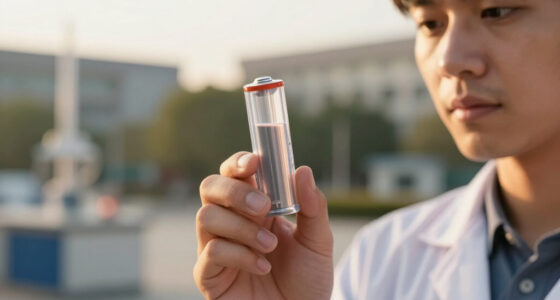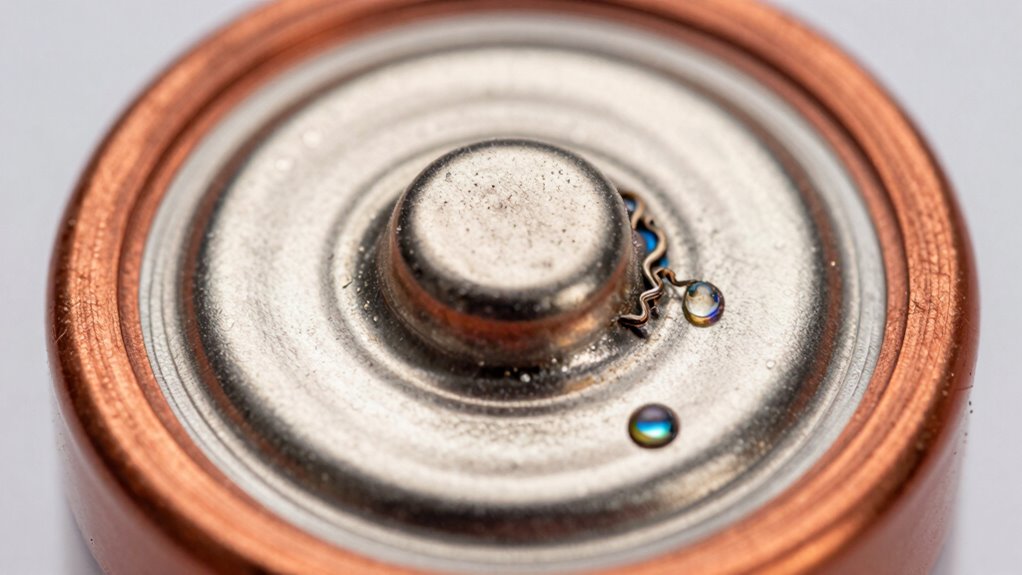

Inside your everyday batteries, complex electrochemical reactions occur at the atomic level, transforming chemical energy into electrical power. Ions move between electrodes through an electrolyte, while electrons flow to power your devices. Over time, material degradation and impurities can disrupt this process, reducing efficiency and lifespan. Although battery design and chemistry aim to improve durability, understanding these hidden reactions reveals why batteries age and perform the way they do. Keep exploring to uncover more about this fascinating inner world.
Key Takeaways
- Electrochemical reactions convert chemical energy into electrical energy, involving ion movement and electron flow within the battery.
- Material degradation from repeated cycles causes capacity loss and reduces battery lifespan.
- Impurities and electrode wear disrupt ion flow, decreasing efficiency and overall battery performance.
- Battery design incorporates resistant materials and structures to slow aging but cannot prevent it entirely.
- Advances in chemistry improve lifespan, safety, and understanding of internal processes inform better device maintenance.
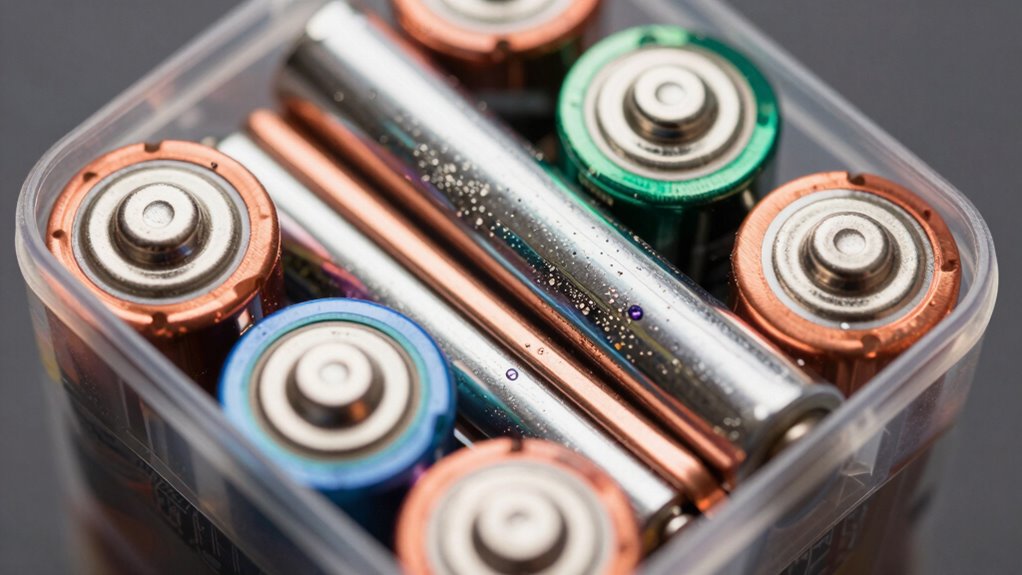
Batteries power everything from your smartphones to remote controls, but what’s happening inside them is often overlooked. At the core of every battery are electrochemical reactions—complex processes where chemical energy transforms into electrical energy. When you press your phone’s power button, these reactions kick into gear, moving ions between electrodes through an electrolyte. This movement generates the flow of electrons that powers your device. Understanding these reactions helps explain how batteries store and release energy, and why they eventually wear out.
Batteries use electrochemical reactions to store and release energy, powering our devices through ion and electron movement.
Your battery’s lifespan largely depends on the stability of these electrochemical reactions. Every charge and discharge cycle causes minor changes at the atomic level, gradually degrading the materials within the battery. Over time, the electrodes might develop tiny cracks or lose active material, which reduces the battery’s ability to hold a charge. High temperatures or frequent rapid charging accelerate this wear, shortening the overall lifespan. That’s why your battery might not last as long after a few years of use, or why it might feel less responsive over time.
You might not realize it, but the balance of electrochemical reactions is delicate. When a battery is charging, lithium ions (in lithium-ion batteries, for example) move from the cathode to the anode, storing energy. During use, these ions reverse direction, releasing energy that powers your device. If something disrupts this process—like impurities building up or the electrodes degrading—the efficiency drops. This directly impacts your battery’s lifespan, making it less capable of delivering the same performance as when it was new.
Manufacturers aim to optimize electrochemical reactions to extend battery life, often by choosing materials that resist degradation or designing the internal structure to accommodate repeated cycles. Still, no battery is immortal. Eventually, the electrochemical reactions become less efficient, and your device’s battery will need replacing or recharging less frequently. Proper care, like avoiding extreme temperatures and not overcharging, can help maintain the delicate balance of electrochemical reactions longer, preserving battery health and extending its lifespan.
Additionally, advances in battery chemistry continue to improve how well these reactions are managed, leading to longer-lasting and safer batteries. In essence, what’s happening inside your battery is a finely tuned dance of ions and electrons driven by electrochemical reactions. These reactions are the heartbeat of energy storage, but they’re also the reason batteries age. A better understanding of these electrochemical processes can help consumers make informed decisions about usage and care. Recognizing the importance of material stability in battery components can lead to innovations that further prolong battery life.
By understanding this hidden science, you gain insight into how your devices work—and why, even with the best care, batteries have a limited lifespan.
As an affiliate, we earn on qualifying purchases.
Frequently Asked Questions
How Long Do Different Battery Types Typically Last?
Battery lifespan varies depending on the type and your usage patterns. For example, alkaline batteries last around 5-10 hours of continuous use, while lithium-ion rechargeable batteries can last 2-3 years with proper care. If you frequently drain and recharge batteries, expect their lifespan to shorten. To maximize longevity, avoid overusing or exposing batteries to extreme temperatures, and always follow manufacturer recommendations for your specific battery type.
Are There Environmentally Friendly Alternatives to Traditional Batteries?
Yes, there are environmentally friendly options like biodegradable batteries that use eco-friendly materials, reducing harmful waste. These batteries break down naturally over time, minimizing environmental impact. You can choose products made with sustainable components, which are safer for the planet. By opting for biodegradable batteries, you help decrease pollution and promote a greener future, all while powering your devices efficiently with innovative, eco-conscious technology.
How Do Temperature Changes Affect Battery Performance?
When the weather shifts, your battery acts like a delicate dancer, affected by thermal expansion and contraction. Cold temperatures slow down chemical reactions, causing your device to weaken or die early, while heat can lead to thermal runaway, risking damage. Maintaining temperature stability is essential; extreme changes can impair performance, shorten battery life, and jeopardize safety. Keep your batteries in moderate environments to guarantee they perform like a well-choreographed performance.
Can Batteries Be Safely Recycled at Home?
You shouldn’t recycle batteries at home because it can be unsafe. Improper home disposal poses risks like leaks or fires, especially with lithium or rechargeable batteries. Instead, you should take used batteries to designated recycling centers that follow safety protocols. Recycling safety is essential to prevent environmental harm and personal injury. Always check local guidelines for proper disposal, ensuring batteries are handled and recycled responsibly to protect yourself and the planet.
What Innovations Are Emerging in Battery Technology?
Think of battery technology as a race car constantly pushing for faster speeds and better fuel efficiency. Innovations now focus on advanced battery chemistry, such as solid-state batteries, which promise higher energy density and improved safety. Researchers are also exploring new materials that could make batteries lighter, more durable, and charge faster. These breakthroughs aim to transform how you power devices, making everything more efficient and eco-friendly in the race toward a sustainable future.
As an affiliate, we earn on qualifying purchases.
Conclusion
Now that you understand the hidden science behind everyday batteries, you can appreciate their power even more. Imagine a scientist designing a battery for electric cars, optimizing materials to last longer and charge faster. With your newfound knowledge, you see how each small component works together—like a team—making devices run smoothly. Next time you use your phone or remote, remember the fascinating, unseen science fueling your daily life, turning simple batteries into marvels of engineering.
As an affiliate, we earn on qualifying purchases.
As an affiliate, we earn on qualifying purchases.