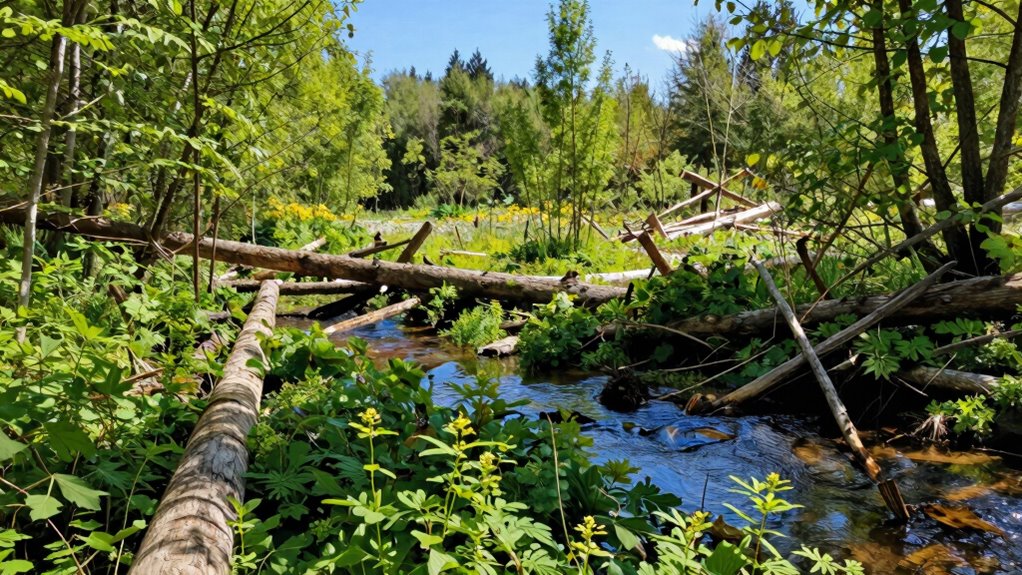

Rewilding transforms entire ecosystems, not just animal populations. It restores natural processes like fire regimes, water flow, and predator-prey relationships, which maintain landscape health and stability. These efforts boost biodiversity, strengthen resilience against environmental shocks, and promote soil and water quality. By actively managing ecosystems, you help create self-sustaining habitats that benefit both wildlife and communities. Exploring further reveals how these changes support broader ecological health and long-term sustainability for the planet.
Key Takeaways
- Rewilding restores natural ecological processes, enhancing biodiversity and ecosystem resilience beyond just increasing animal populations.
- It promotes healthier soils and water systems through the reintroduction of natural fire regimes, wetlands, and river flows.
- Rewilding supports broader landscape stability and productivity, benefiting human communities and climate change mitigation.
- Active management fosters self-sustaining ecosystems capable of adapting to environmental changes.
- It helps control herbivore populations naturally through predator reintroduction, preventing overgrazing and habitat degradation.
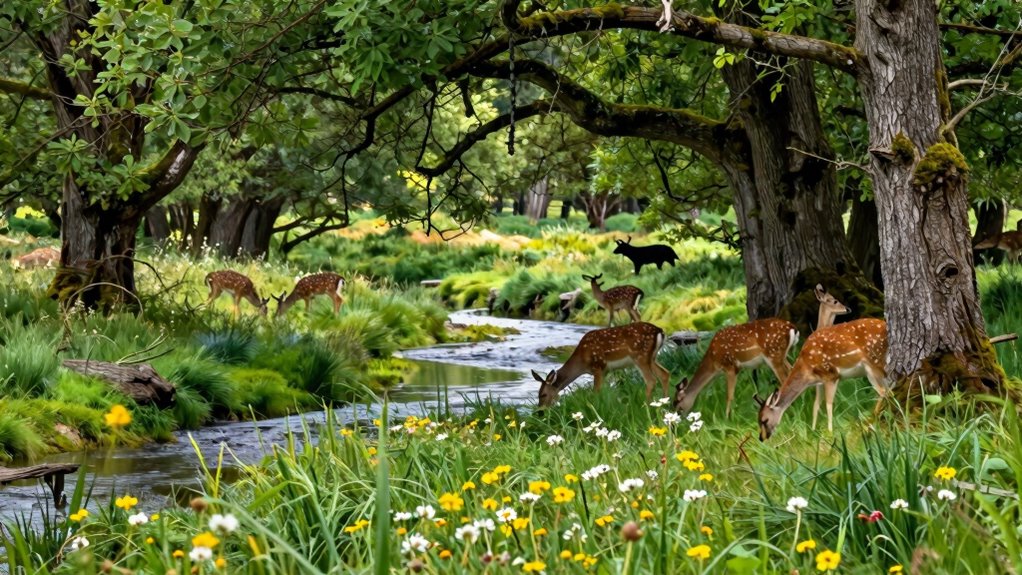
Rewilding is transforming landscapes and ecosystems in ways that restore natural processes and boost biodiversity. When you engage in rewilding projects, you’re not just increasing animal numbers; you’re actively shaping the health and stability of entire ecosystems. One of the key benefits is improving ecosystem resilience. By allowing nature to take its course—reintroducing native species, removing human-made barriers, and restoring natural habitats—you help create systems that can better withstand environmental shocks like droughts, floods, or disease outbreaks. This resilience means ecosystems are less likely to collapse or degrade rapidly, ensuring long-term sustainability that benefits both wildlife and humans.
Biodiversity enhancement is another essential aspect of rewilding that extends beyond simply adding more animals. As you reintroduce keystone species, plant life, and other native organisms, you foster a more complex and interconnected web of life. This diversity strengthens the ecosystem’s ability to recover from disturbances and adapt to changing conditions. When you see a landscape flourish with a variety of species, you’re witnessing the positive feedback loop where biodiversity supports ecosystem functions like pollination, soil health, and water filtration. These functions are critical for maintaining the landscape’s productivity and stability, which in turn supports the animals and plant life that depend on them. Recognizing the importance of ecological processes can help guide effective rewilding efforts and foster a deeper understanding of ecosystem health. Additionally, understanding how interconnected systems function enhances our ability to implement sustainable and effective rewilding strategies.
Rewilding also influences ecological processes on a broader scale. For example, predator reintroduction can control herbivore populations naturally, preventing overgrazing and promoting healthier plant communities. This dynamic balance enhances habitat quality and encourages more species to thrive. Furthermore, restoring natural fire regimes, wetlands, or river flows helps maintain the landscape’s ecological integrity. When these processes are allowed to operate freely, they contribute to the self-sustainability of ecosystems, making them more robust and adaptable. Additionally, fostering biodiversity and natural processes creates healthier soils and water systems that benefit both the environment and human communities. Understanding the interconnectedness of ecological systems is vital for designing successful rewilding strategies that maximize ecological benefits. Recognizing the importance of ecological processes can help guide effective rewilding efforts and foster a deeper understanding of ecosystem health.
Your role in rewilding fosters a shift from passive conservation to active ecosystem management. It’s about creating conditions where nature can regenerate itself, leading to more resilient and diverse environments. By focusing on ecosystem resilience and biodiversity enhancement, you’re helping to build landscapes that not only support a wider array of species but also better withstand the impacts of climate change and human development. Essentially, rewilding transforms ecosystems into dynamic, self-sustaining systems capable of thriving amid change, proving that the benefits extend far beyond animal populations. It’s a powerful reminder that healthy ecosystems are the foundation of a healthy planet, and your efforts can make a lasting difference.
rewilding ecosystem restoration kit
As an affiliate, we earn on qualifying purchases.
As an affiliate, we earn on qualifying purchases.
Frequently Asked Questions
How Does Rewilding Impact Local Communities Economically?
Rewilding boosts your local economy by increasing eco-tourism benefits, attracting visitors who spend on accommodations, dining, and activities. It also creates local employment opportunities, from guides to conservation workers, helping your community thrive. As more tourists explore rewilded areas, businesses grow, and new jobs emerge, fostering economic resilience. Overall, rewilding brings sustainable growth, enriching your community’s financial stability while supporting conservation efforts.
What Are the Potential Risks of Reintroducing Predators?
You face the risk of predator behavior disrupting the ecological balance, like a sudden storm unsettling a calm lake. Reintroducing predators might lead to unforeseen consequences, such as prey species declining too rapidly or livestock being threatened. This balance is delicate; predators play a crucial role, but if their behavior isn’t carefully managed, it could threaten local livelihoods and biodiversity, creating a ripple effect that’s hard to control.
Can Rewilding Efforts Conflict With Agricultural Interests?
Rewilding efforts can conflict with agricultural interests because wildlife corridors and land use changes might restrict farming activities or require land set aside for conservation. You may face challenges balancing ecological goals with farming needs, as rewilding can lead to land being reallocated or altered. While it benefits ecosystems, farmers often worry about reduced productivity or access, creating tension between conservation and agriculture.
How Is Rewilding Monitored and Evaluated Over Time?
Rewilding is like tending a delicate garden—you need constant care and observation. You monitor and evaluate it over time using wildlife tracking and ecological indicators, which act as your compass. These tools help you see how species thrive, habitats restore, and ecosystems rebalance. Regular data collection and analysis guarantee that your efforts adapt to changes, making sure the rewilding journey stays on course toward a healthier, more resilient environment.
What Role Do Indigenous Peoples Play in Rewilding Projects?
You play a crucial role in rewilding projects through Indigenous stewardship, guiding efforts with traditional knowledge. Your cultural preservation practices help maintain ecosystems and foster sustainable interactions with the land. By sharing your insights, you guarantee rewilding respects local heritage and biodiversity. Your involvement promotes a balanced approach, blending modern conservation with cultural values, ultimately strengthening both environmental health and Indigenous communities’ identities.
natural fire regime simulation tools
As an affiliate, we earn on qualifying purchases.
As an affiliate, we earn on qualifying purchases.
Conclusion
As you witness rewilding’s quiet transformation, it’s not just the animals that flourish—you’ll see rivers carving new paths and forests reclaiming lost ground. Where once barren lands lay silent, now life pulses with vibrant energy, like a heartbeat echoing through the wilderness. Rewilding rewrites the story of nature’s resilience, reminding you that restoring ecosystems isn’t just about animals, but about breathing new life into the very fabric of the land itself.

Aquascape PRO AquaBlox Large Water Matrix Bulk Pallet – Water Storage Solution for Ponds, Waterfalls, and Wetland Filtration, 52 Count, 51003
Bulk Pallet of 52 LARGE AquaBlox Units: Designed for large-scale projects to provide efficient, high-capacity water storage.
As an affiliate, we earn on qualifying purchases.
As an affiliate, we earn on qualifying purchases.
predator reintroduction educational kits
As an affiliate, we earn on qualifying purchases.
As an affiliate, we earn on qualifying purchases.