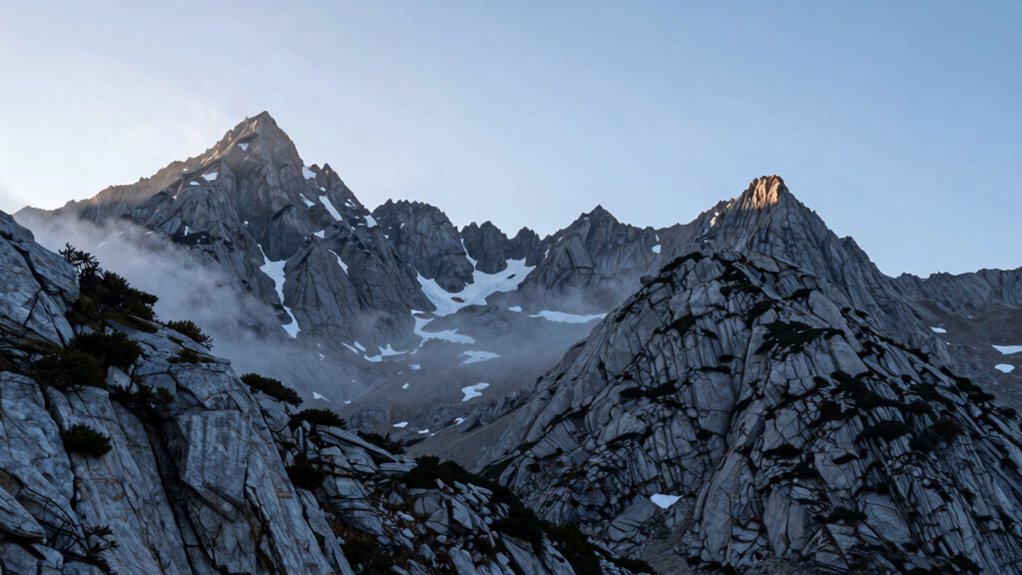

Mountain ecosystems are highly sensitive to change because they rely on exact conditions of temperature, water, and soil that can easily be disrupted. Alpine plants are specially adapted to harsh environments, so even small shifts in climate or glacial melting can threaten their survival. These changes impact not just plants but the entire web of life, including animals and water flow. If you keep exploring, you’ll discover how fragile and essential these ecosystems truly are.

Prime made for students and young adults
- Fast, free delivery for dorm and study essentials
- Prime Video and Amazon Music included
- Member-only deals
Key Takeaways
- Mountain ecosystems depend on narrow ranges of temperature, water, and soil conditions, making them highly vulnerable to environmental shifts.
- Alpine flora are specialized for harsh, high-altitude environments and cannot easily adapt to rapid changes.
- Glacial retreat alters water flow, soil stability, and microclimates, disrupting ecosystem balance.
- Small environmental changes can cause significant disruptions in biodiversity and ecosystem stability.
- The fragile balance makes mountain ecosystems highly sensitive to climate change and glacial melting.
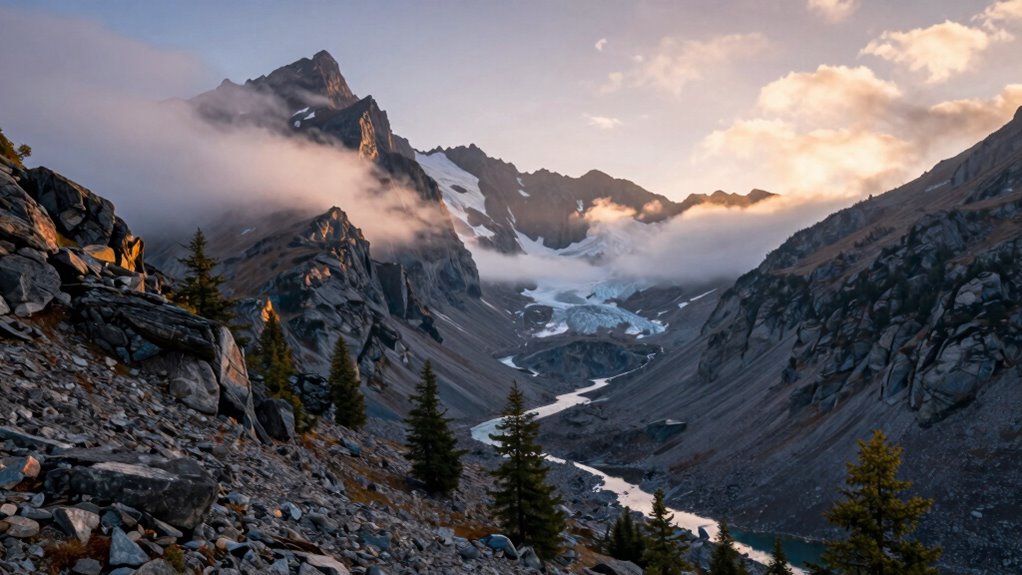
Have you ever wondered how ecosystems adapt to the constant changes around them? Mountain ecosystems are especially sensitive because they operate on a delicate balance that’s easily disrupted. Take a closer look, and you’ll see that the alpine flora—those hardy plants thriving at high elevations—are particularly vulnerable. These plants have adapted over centuries to survive harsh conditions, but even small changes in temperature or snow patterns can threaten their existence. As the climate warms, glaciers are retreating at an alarming rate, and this glacial retreat profoundly impacts the entire ecosystem. When glaciers shrink, they alter water flow, soil stability, and local microclimates, which directly affect the plants and animals that depend on stable conditions.
Mountain ecosystems are fragile, with alpine plants vulnerable to climate change and glacial retreat disrupting their delicate balance.
You might notice that as glaciers melt, new land is exposed, but that land isn’t always immediately suitable for the existing alpine flora. These plants are specialized; they’ve evolved to survive in nutrient-poor soils and extreme conditions. When glaciers retreat, the landscape often becomes unstable or prone to erosion, making it difficult for these plants to establish themselves. Over time, some species may disappear, unable to adapt quickly enough to the rapidly changing environment. This loss of alpine flora signals a broader shift in the ecosystem, one that could cascade through the food chain, impacting insects, birds, and larger mammals that rely on these plants for food and shelter. Additionally, the changing landscape can affect biodiversity, leading to further ecological imbalance.
The retreat of glaciers also influences water availability. As ice melts, streams swell and then diminish, creating a fluctuating water supply that challenges plants and animals alike. In some cases, the loss of glaciers leads to drier conditions downstream, which can push certain species out of their habitat. These changes happen fast enough that they don’t give the ecosystem time to adjust naturally. You might not see it immediately, but the long-term effects threaten the very foundation of mountain biodiversity. Furthermore, the decreased glacial mass accelerates climate change, further stressing these fragile ecosystems. Understanding the interdependence of environmental factors is crucial to grasping the full impact of glacial retreat on mountain environments.
In essence, mountain ecosystems are so sensitive because they depend on a narrow range of conditions—temperature, water, soil—that are easily disturbed. The ongoing glacial retreat exemplifies this fragility, highlighting how climate change accelerates these shifts. As glaciers continue to melt, you’ll witness the slow transformation of these landscapes, where even the hardy alpine flora struggle to survive. This delicate balance underscores why mountain ecosystems are among the most vulnerable to change, reminding us that small disruptions can have lasting impacts on these unique environments.
As an affiliate, we earn on qualifying purchases.
Frequently Asked Questions
How Do Mountain Ecosystems Recover From Environmental Disturbances?
When a mountain ecosystem faces environmental disturbances, it recovers through natural processes like soil stabilization and vegetation regrowth. You can help by protecting existing plants and preventing soil erosion, which supports the recovery process. Over time, plants re-establish, stabilizing the soil and creating a foundation for further ecological restoration. Your efforts in conserving native vegetation and reducing human impact accelerate recovery and maintain the fragile balance of mountain environments.
What Role Do Mountain Ecosystems Play in Global Climate Regulation?
You play a crucial role in mountain ecosystems’ climate regulation by helping maintain their functions. These ecosystems contribute through the albedo effect, reflecting sunlight and cooling the planet, and by sequestering carbon, reducing greenhouse gases. Preserving mountain environments supports these processes, stabilizing global climate. Your actions, like reducing emissions and protecting natural habitats, help sustain their ability to regulate climate and buffer against climate change impacts.
Are Mountain Species More at Risk of Extinction Than Other Habitats?
Yes, mountain species are more at risk of extinction than those in other habitats. You see, high altitude biodiversity is fragile, and many species have specialized alpine adaptations that suit their environment. When climate change causes temperatures to rise, these species struggle to survive as their habitats shrink or shift upward. Their limited range and unique adaptations make them especially vulnerable to environmental changes, increasing their extinction risk.
How Do Indigenous Communities Adapt to Changing Mountain Environments?
You see, indigenous communities adapt to changing mountain environments through indigenous resilience and traditional knowledge. You actively observe shifts in climate and wildlife, using age-old practices to adjust farming, hunting, and water management. By passing down stories and skills, you preserve ecological understanding that helps you respond to environmental changes effectively. This resilience enables you to sustain your way of life, ensuring your community remains connected and balanced with the mountain landscape.
What Are the Economic Impacts of Ecosystem Changes in Mountains?
You might think mountain changes are just nature’s way, but they hit your wallet hard. As ecosystems shift, economic tourism declines because fewer visitors explore the majestic landscapes. Agriculture sustainability suffers too, forcing farmers to adapt or abandon traditional practices. Ironically, these natural changes threaten the very livelihoods that depend on them, risking a cycle of economic loss that’s hard to reverse, leaving communities vulnerable and economies fragile.
As an affiliate, we earn on qualifying purchases.
Conclusion
As you stand beneath these towering mountain giants, remember they’re delicate tapestries woven with fragile threads. Just a small change—like a whisper in the wind—can unravel their intricate beauty and balance. These ecosystems are like glass sculptures, stunning yet easily shattered. So, when you see these majestic peaks, understand they’re whispering a warning: protect them fiercely, for their future depends on how gently we treat their fragile harmony.
As an affiliate, we earn on qualifying purchases.
As an affiliate, we earn on qualifying purchases.
Fall Picks
fall essentials
As an affiliate, we earn on qualifying purchases.