
TL;DR

Prime made for students and young adults
- Fast, free delivery for dorm and study essentials
- Prime Video and Amazon Music included
- Member-only deals
Educational science kits for kids make learning science fun and hands-on. They boost curiosity, critical thinking, and problem-solving, especially with recent tech integrations and eco-friendly options. Choosing the right kit depends on age, safety, and interest.
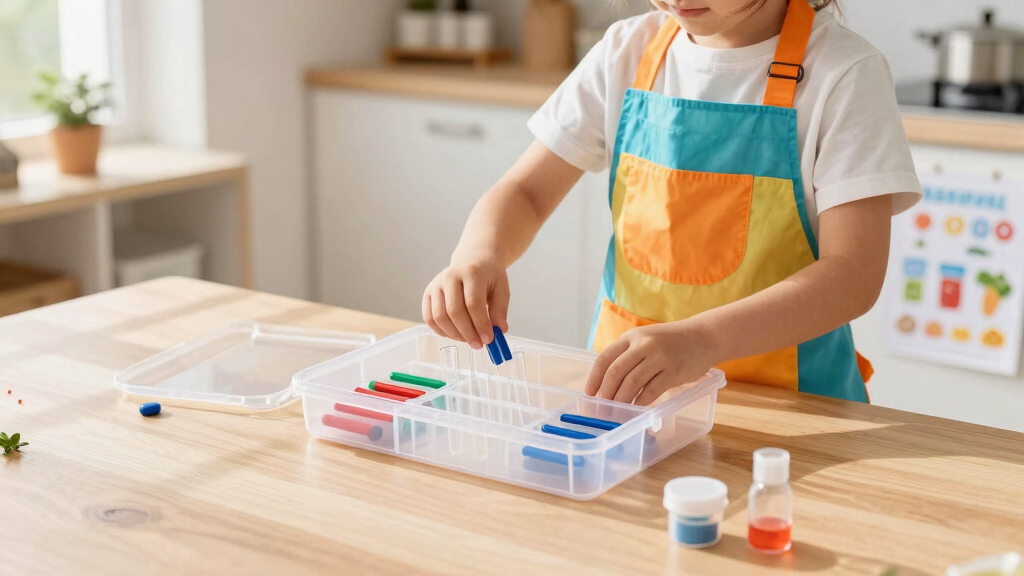
Imagine a box filled with vibrant chemicals, tiny magnets, or miniature robots. It’s not just play—it’s a portal into the world of science. These kits turn curious kids into mini scientists, making complex concepts tangible and exciting.
If you’re considering one for your child or classroom, understanding what makes a great science kit can help you pick the perfect match. They’re more than just fun; they’re building blocks for future innovators.
Choose science kits that match your child’s age, safety needs, and interests for maximum engagement.
Look for kits with clear explanations and multiple experiments to extend learning and curiosity.
Recent trends include AR integration, themed content (like space or environmental science), and eco-friendly materials.
Science kits can reinforce school lessons and even inspire future STEM careers.
Subscription models offer ongoing hands-on learning, keeping curiosity alive all year.
Why Choosing Age-Appropriate Science Kits Matters
Kids’ brains develop quickly, but what’s safe and stimulating at 4 isn’t at 10. Age-appropriate science kits match a child’s developmental stage, safety needs, and curiosity levels. For instance, a toddler’s kit might have large, non-toxic components and simple experiments, like mixing colors with water.
In contrast, kits for older kids might introduce basic circuitry or biology experiments that require more precision and understanding. Choosing the right age range ensures kids stay safe while staying engaged.
For example, a 7-year-old exploring basic chemical reactions will find a kit with clear instructions and sturdy materials perfect. Meanwhile, an 11-year-old interested in robotics will thrive with a kit that allows programming and building.
Understanding these distinctions is crucial because a mismatch can either lead to frustration or safety hazards. Properly matched kits foster confidence and curiosity, encouraging children to explore without feeling overwhelmed or unsafe. This tailored approach supports steady cognitive growth and helps develop a lifelong love of learning.
As an affiliate, we earn on qualifying purchases.
How to Pick the Best Science Kit for Your Child in 3 Easy Steps
- Match the kit to your child’s age and interests. If they love space, find a kit about planets or rockets. If they’re curious about animals, look for biology kits. Understanding your child’s passions helps sustain their engagement and makes learning feel relevant.
- Check safety standards. Ensure the kit uses non-toxic materials, has clear safety guidelines, and sturdy components. Reading reviews for insights on durability and safety can prevent problems later. Remember, a safe kit not only protects but also builds trust and confidence in the learning process.
- Consider the learning scope. Does the kit explain the science behind the experiments? Does it offer multiple activities to extend learning? Kits that include explanatory materials and varied experiments help deepen understanding and keep curiosity alive.
Remember, selecting a kit thoughtfully can turn a rainy afternoon into a mini science class, fostering not just knowledge but also a sense of wonder and discovery that lasts.
As an affiliate, we earn on qualifying purchases.
Compare Top 4 Popular Science Kits for Kids Right Now
| Feature | National Geographic Science Kit | Thames & Kosmos Chemistry Set | KiwiCo Tinker Crate | Scientific Explorer Kit |
|---|---|---|---|---|
| Age Range | 8-12 | 10+ | 9-14 | 5-12 |
| Topics Covered | Earth & space, biology | Chemistry, physics | Engineering, robotics | Environmental science, chemistry |
| Reusability | High (many experiments) | High | Moderate (build projects) | Limited (single experiments) |
| Price Range | $30-$60 | $40-$70 | $50-$80 | $20-$50 |
This table highlights key differences—think about your child’s interests and your budget when choosing. Understanding these distinctions helps you pick a kit that aligns with your educational goals and your child’s curiosity—ensuring the experience is both engaging and meaningful. For instance, if your child shows a strong interest in space, a kit focused on astronomy might inspire them to pursue further exploration, while a kit emphasizing environmental science could foster a deeper appreciation for sustainability. Balancing these factors helps in making a choice that maximizes learning outcomes and keeps your child motivated.
As an affiliate, we earn on qualifying purchases.
The Latest in Science Kits: Tech, Themes, and Sustainability
Science kits are evolving fast. Today, many incorporate **augmented reality (AR)** apps that bring experiments to life with a tap on your phone. Imagine watching a model volcano erupt in 3D or exploring planets with interactive guides. This integration of digital technology not only makes experiments more engaging but also helps children visualize complex processes that are difficult to grasp through static models alone.
Trending themes include **renewable energy**, **space exploration**, and **environmental science**—topics that resonate with current global challenges and future innovations. These themes help children connect classroom learning to real-world issues, fostering a sense of responsibility and curiosity about the planet’s future. Brands are also focusing on **eco-friendly materials**, using biodegradable plastics and recycled packaging to reduce environmental impact. This shift reflects a broader commitment to sustainability, teaching children the importance of caring for the planet while learning science.
Subscription models are gaining popularity, offering a new experiment each month. This approach provides continuous engagement, encouraging kids to develop a sustained interest in science and innovation. It also allows families to explore a variety of topics over time, helping kids discover their passions and deepen their understanding of complex scientific concepts.
eco-friendly science kits for kids
As an affiliate, we earn on qualifying purchases.
As an affiliate, we earn on qualifying purchases.
How Science Kits Can Improve School Learning and Beyond
Science kits aren’t just toys—they’re powerful learning tools with profound implications. They bridge the gap between abstract scientific concepts and tangible understanding, which is crucial because many scientific principles are inherently invisible or counterintuitive. When children engage with physical materials—like building circuits or growing plants—they develop a concrete understanding that often translates into better academic performance and deeper interest in STEM subjects.
For example, building a simple electric circuit helps children grasp how electricity works, which is difficult to conceptualize through diagrams alone. This hands-on experience makes the invisible forces visible and tangible, fostering a more intuitive understanding. Such experiential learning enhances critical thinking and problem-solving skills, which are essential in STEM careers and everyday problem-solving.
Many educators now incorporate these kits into their curricula, recognizing their ability to make science accessible and engaging. The active participation required in experiments fosters curiosity, resilience, and confidence—traits that are vital for success in any field. Furthermore, these kits can inspire students to pursue careers in science, technology, engineering, and mathematics by providing early, positive encounters with scientific inquiry. When children see themselves as capable scientists, they are more likely to pursue further education and careers in these fields.
Ultimately, these kits do more than teach—they ignite passions. When a child’s eyes light up after successfully completing an experiment, it’s a powerful reminder that hands-on science fosters not just knowledge, but also a lifelong love of discovery and innovation.
Frequently Asked Questions
Are science kits safe for young children?
Yes, reputable science kits follow strict safety standards with non-toxic, child-safe materials. Always supervise experiments and follow safety instructions for peace of mind.
What age should I start with science kits?
There are kits designed for toddlers (ages 3-5), early elementary (6-8), and older children (9+). Select a kit tailored to your child’s developmental level for the best experience.
How do I pick the right science kit?
Focus on your child’s interests, check safety ratings, and ensure the kit offers enough experiments for ongoing engagement. Reading reviews helps gauge quality and suitability.
Can science kits supplement school lessons?
Absolutely. They reinforce classroom concepts, making abstract ideas tangible and memorable. Plus, they turn learning into an adventure.
Are eco-friendly science kits available?
Yes, many brands now prioritize sustainability with biodegradable materials, recycled packaging, and environmentally conscious manufacturing practices.
Conclusion
Smart parents know that the right science kit can turn everyday moments into big discoveries. It’s about inspiring curiosity, fostering confidence, and planting seeds for the future.
Pick a kit that excites your child, keeps them safe, and sparks a lifelong love of science. After all, the best experiments happen when curiosity leads the way.
Columbus Day / Indigenous Peoples' Day Picks
long weekend sales
As an affiliate, we earn on qualifying purchases.